Over the weekend, the unexpected roar of fighter jets cut through Chicago’s skies as NORAD moved to intercept a high number of aircraft that had violated temporary flight restrictions during President Trump’s visit.
Residents across the Chicago area reported multiple US fighter jets overhead on September 27 as North American Aerospace Defense Command (NORAD) aircraft responded to violations of a Temporary Flight Restriction (TFR).
The Federal Aviation Administration (FAA) had imposed the restriction around Medinah Country Club in the northwest suburbs for the final day of the Presidents Cup golf tournament, where Trump served as honorary chairman.
NORAD is a binational initiative between the United States and Canada that includes missions such as aerospace warning, control, and defending North American airspace. When the FAA establishes a TFR around the president, NORAD enforces it as part of its homeland defense mission under Operation Noble Eagle and related air sovereignty roles.
NORAD officials stated that 15 aircraft violated the TFR over the area, and fighter jets were deployed to intercept at least 10 of them. Although the reports did not say which aircraft were used for these interceptions, we know the F-16 Fighting Falcons have been the primary fighter type used for these operations. In fact, videos surfaced on social media showing F-16s flying in Chicago skies with a full loadout.
The unusually high volume of interceptions is noteworthy.
A few accidental TFR breaches around presidential travel happen fairly often as pilots mistakenly fly into restricted areas and rarely make headlines. However, double-digit violations with multiple intercepts in a single afternoon are rare, especially as it piqued public curiosity.
In at least two of the 10 intercepts conducted on September 27, 2026, the NORAD jets used flares to alert the pilots, according to authorities, who noted that the flares burn out quickly and do not endanger the public.
According to flight trackers and open-source intelligence experts, one of the aircraft that got an extra nudge with flares was a Cessna, while the other was a Robinson R-22 helicopter.
Some videos attributed to these interceptions have since surfaced online, but the EurAsian Times could not confirm their authenticity.
Ear muff it for me kids, but HO-LEE SH*T! Probably the first video ever to exist of a F-16 intercepting a Robinson R-44 helicopter. The R-44 maybe does 120 knots on a good day and the NORAD F-16 is on the brink of stalling enforcing the TFR.
This is real world stuff, thank you… https://t.co/49S7SSXqlh pic.twitter.com/ysnHBE3ZCu
— Thenewarea51 (@thenewarea51) September 28, 2026
Flares are bright, sudden lights that are highly visible in the pilot’s peripheral vision and serve as an unmistakable “wake-up” signal that they have entered restricted airspace and must reverse course or follow the next instructions.
Flares are used when quieter methods fail. Under the standard intercept sequence, the first step is radio calls on emergency frequencies, followed by a visual join-up in which the fighter approaches, rocks its wings, or performs a “guide pass” or “headbutt” maneuver. However, if the pilot still does not respond, the fighter deploys flares.
In the latest incident, the NORAD officials told the media that all incidents were “resolved safely,” without giving more information.
That said, the high volume of intercepts underscored NORAD’s robustness and the persistent challenge of keeping general aviation fully informed and compliant.
Some netizens on X mocked the intruding pilots for displaying ignorance and not checking their NOTAMs (Notices to Airmen) before taking on their scheduled flights. Meanwhile, some pilots and aviation observers noted that the Chicago TFR did not display cleanly on the public FAA TFR list or certain charting apps.
Interestingly, though, the Chicago incident is part of a recurring pattern of civilian aircraft repeatedly entering Temporary Flight Restrictions, prompting NORAD fighter intercepts.
NORAD Remains Vigilant
Multi-aircraft intercepts have occurred around Trump’s other stops this year. NORAD and officials have repeatedly reminded pilots to check NOTAMs before flying, noting that many violations appear to stem from pilots simply not reviewing the restrictions.
Earlier, as President Trump attended the FIFA World Cup Final in July 2026, more than 10 general aviation aircraft entered restricted airspace despite a TFR notified over Bedminster and East Rutherford, New Jersey, beforehand. NORAD intercepted three of the intruding aircraft (most of them civilian), and at least two had to be flared.
In June, NORAD said in an official statement that it had responded to more than a dozen unauthorized aircraft incursions into FAA-issued Temporary Flight Restrictions in the New York and New Jersey region this month alone.
On August 9, NORAD intercepted two general aviation aircraft that violated the TFR while the US President was spending the weekend at his golf club in Bedminster. Just two days later, on August 11, F-16s intercepted a civilian aircraft over the youth sporting event Trump was attending, and flares were deployed. This was at least the fourth violation that week related to his travel following the Bedminster incidents.
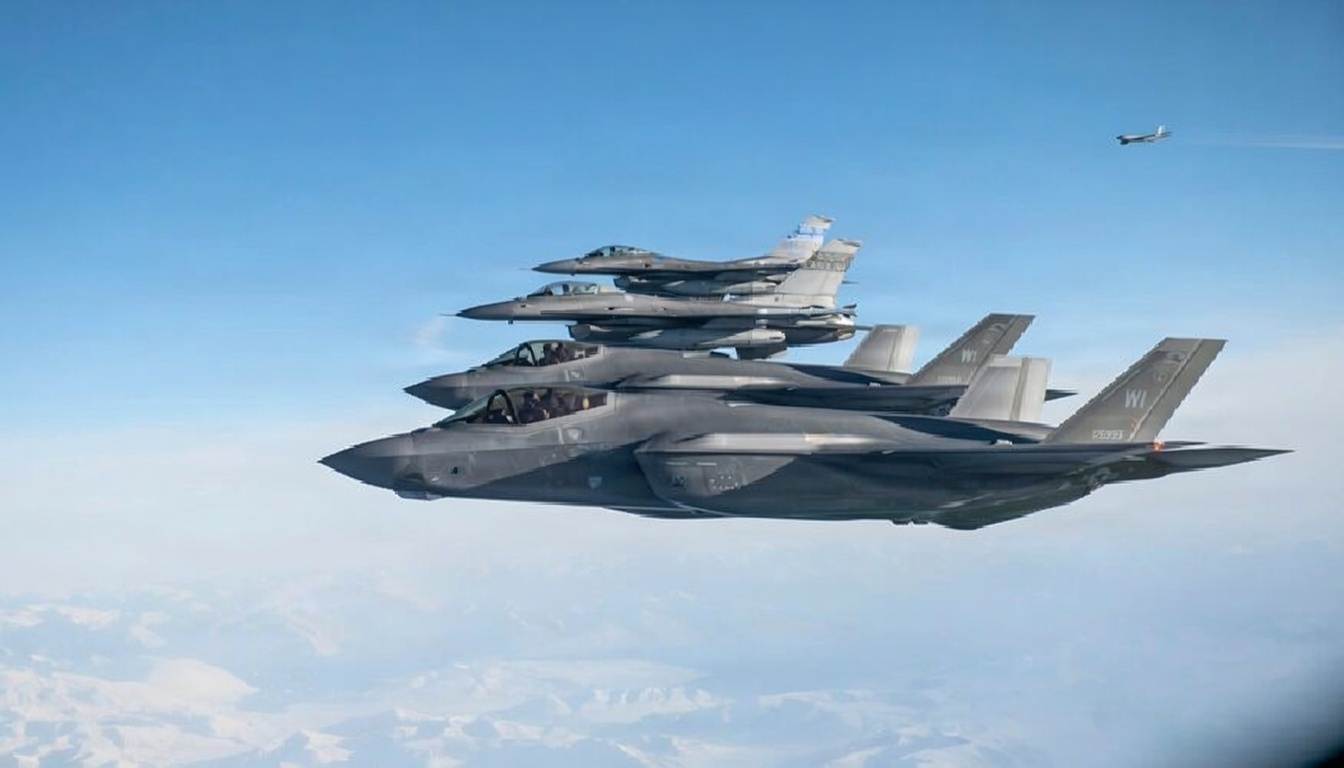
NORAD F-16s intercepted five general aviation aircraft that violated the TFR while Trump was in the city on August 28, 2026. This prompted NORAD to specifically call out “multiple recent TFR violations in Texas” and stress the need to reduce them.
Nonetheless, the pattern has continued and even culminated in the interception of an aircraft that violated restricted airspace over Camp David, as Fox News reported. A permanent no-fly zone covers the site, with additional restrictions when the president is there.
These incidents have been non-hostile and resolved without injury. However, TFRs create an operational boundary: any unauthorized aircraft inside is treated as a threat until proven otherwise. That boundary has taken on added weight amid heightened threat assessments, especially as the President has warned that Iran could attempt to assassinate him.
Last month, for instance, Trump was spotted playing golf and hitting the links with the Army’s Avenger short-range air defense (SHORAD) system, as the EurAsian Times reported.
Not only that, during his departure from Ankara after the NATO Summit, the US President boarded the old Air Force One jet in front of television cameras, but quickly exited the aircraft and secretly boarded another smaller jet as part of an elaborate ruse.
Moreover, since the deadly 9/11 attacks, the airspace around the President became one of the most tightly protected, and it is believed that a single unauthorized aircraft near Air Force One, the motorcade, or a venue could create a serious security risk.
Against that backdrop, TFRs convert an FAA paper restriction into an active, real-time air-defense mission that NORAD executes without failure or laxity.
- Contact the author at sakshi.tiwari13 (at) outlook.com
- Follow EurAsian Times on Google News