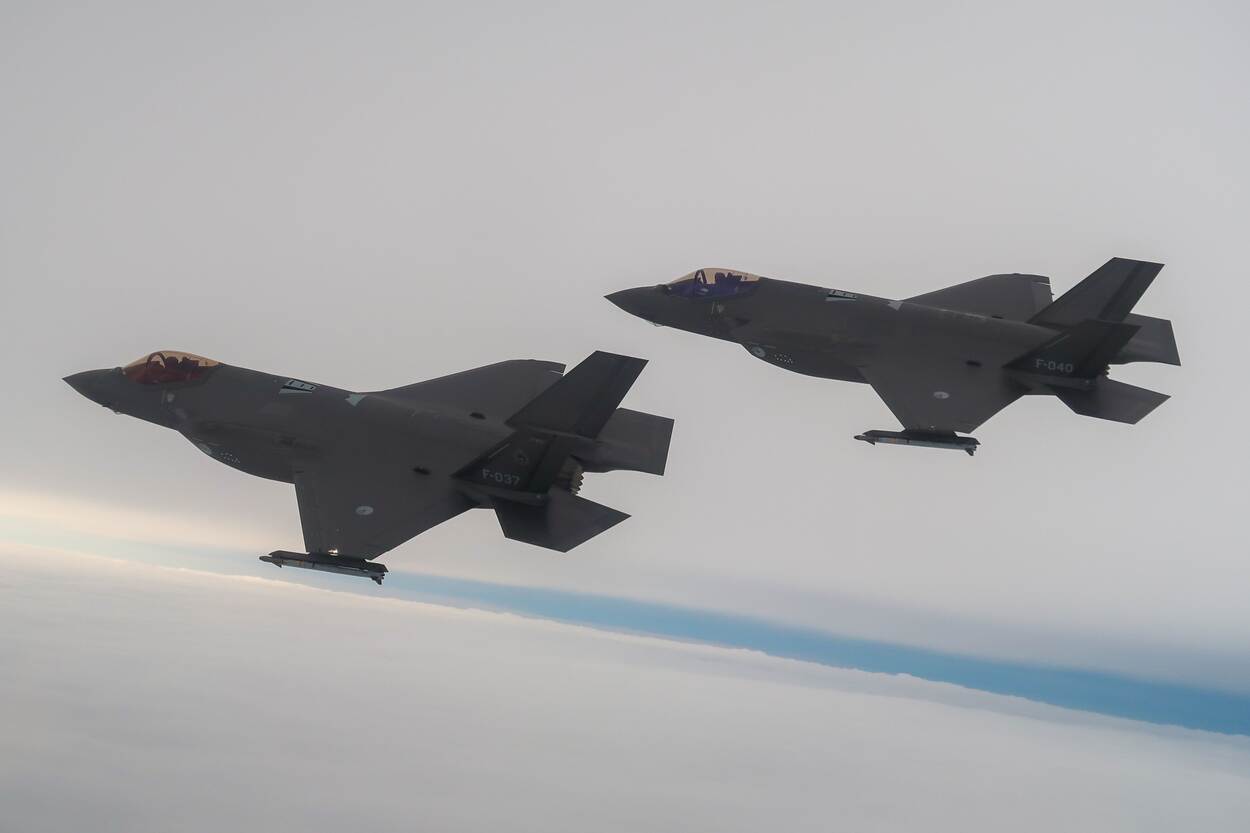
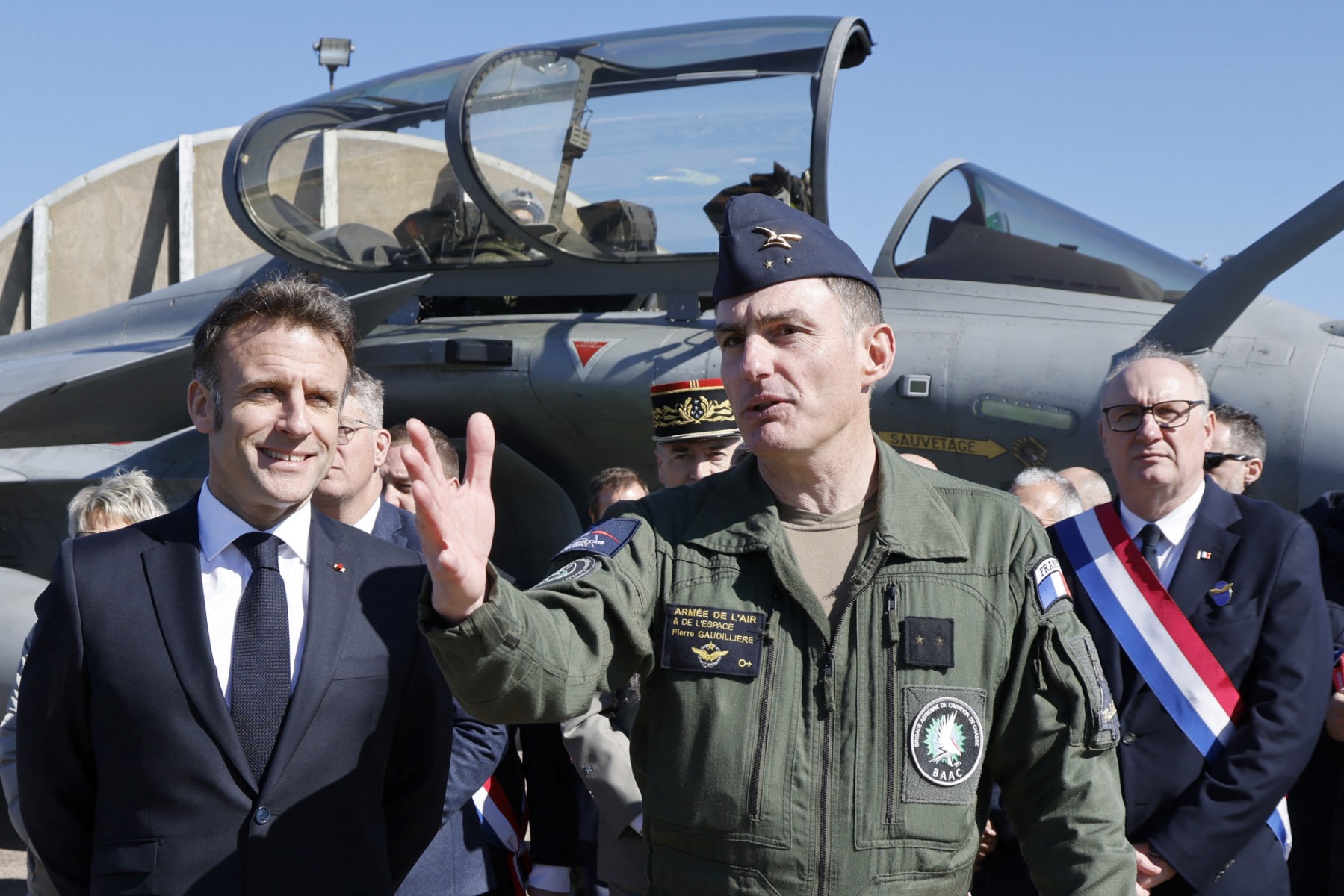
The Netherlands quietly became the first European country to formally join the American CCA (Collaborative Combat Aircraft) program and to fund the purchase of two of the first CCA, even as the European continent stares at a fractured relationship with the US.
The US Air Combat Command announced a landmark agreement with the Netherlands last month. “The Department of the Air Force and the Netherlands Ministry of Defense have formalized a partnership to acquire prototype Collaborative Combat Aircraft, advancing a shared strategy to bring greater affordable mass to deter, and if necessary, defeat adversaries,” it said in a press statement.
The statement noted that the partnership will focus on jointly developing autonomous, open-architecture, platform-agnostic technologies that facilitate seamless data exchange and interoperability across joint operations. Additionally, it emphasized that the Department of the Air Force (DAF) is fast-tracking cooperation with international partners in multiple areas of CCA capabilities development.
“The future fight will be fought [in collaboration] with allies and partners,” Air Force Secretary Troy Meink was quoted as saying. “By aligning our approaches early, we ensure interoperability and shared advantage in the era of human-machine teaming.”
Notably, the formalization of the partnership comes months after the Royal Netherlands Air Force (RNLAF) signed a letter of intent (LoI) to join the CCA program in October 2025. “By signing the letter of intent, the Netherlands is demonstrating its desire to make progress with innovation and cooperation in the field of unmanned systems,” the Dutch Defense Ministry had said at the time.
The concept is that using inexpensive, attritable drones to accompany costly, manned aircraft will improve both the survivability of the manned platform and mission success, particularly when facing a near-peer foe in a contested environment.
Previous reports indicate that during its initial deployment, these CCAs will primarily operate as airborne “missile trucks,” flying in formation with crewed jets to deliver additional firepower. However, discussions are underway to expand their mission profile to include intelligence gathering, electronic warfare, surveillance, reconnaissance, and, in the future, fully autonomous missions.
The USAF had earlier stated that it intends to develop at least 1,000 CCA to fly alongside fifth-generation fighters, such as the F-22 Raptor and the F-35 Lightning II, as well as the sixth-generation F-47. These drones will bolster combat capability by supporting crewed aircraft by carrying extra air-to-air munitions, extending sensor coverage, and executing missions that would otherwise put human pilots at risk.
Dutch F-35s To Get Their Own CCAs
Like the USAF, the RNLAF also operates F-35As. Therefore, the acquisition and integration of CCAs would dramatically increase their combat power by giving each F-35 multiple “wingmen” to provide more sensors, weapons, and reach, without buying many more expensive crewed fighters.
The Netherlands would likely gain full access to the program, including development, data, and operational concepts, as an early partner. This would essentially allow Dutch engineers and pilots to help shape the drones and tactics, including for unique European scenarios—the Dutch view Russia as the biggest threat to their security, as do many other European states.
The partnership focuses on open-architecture systems, which will allow the Dutch and US forces to seamlessly operate together. The US Combat Command announced that the Dutch personnel will train and conduct experiments alongside Americans at the USAF’s Experimental Operations Unit at Nellis Air Force Base, Nevada.
“The prototype CCA aircraft will be part of the Netherlands’ contribution to the CCA program, in which the Netherlands will learn alongside the U.S. at the Experimental Operations Unit (EOU), headquartered at Nellis Air Force Base, Nevada. The EOU serves as the engine for developing concepts of operations for CCA, creating a tight feedback loop between the warfighter and developer. This experimental approach allows for continuous refinement of mission autonomy in realistic scenarios, demonstrating safe and effective human-machine teaming,” it stated.
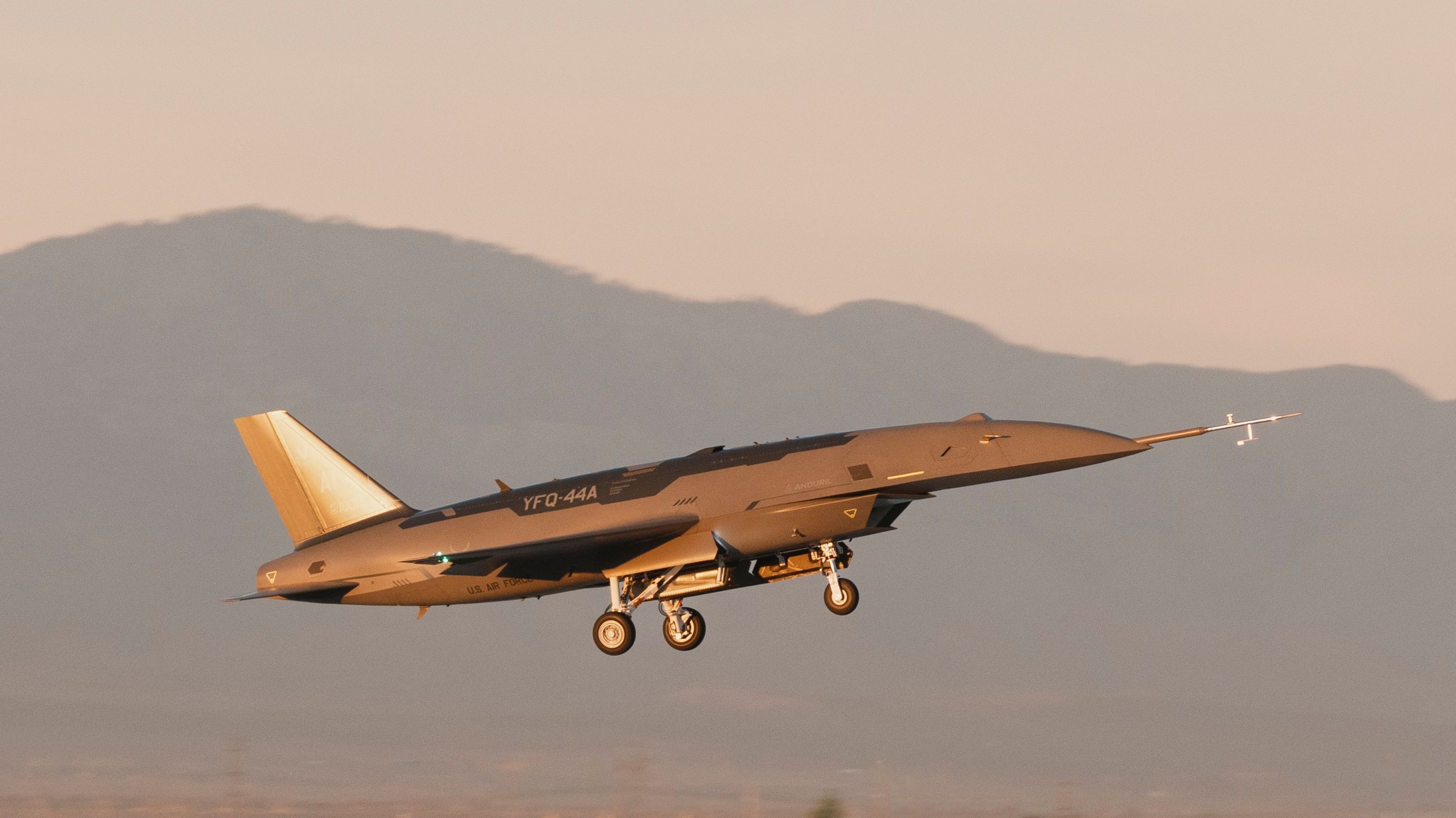
The USAF has downselected two CCA prototypes: YFQ-42A, developed by General Atomics, and the YFQ-44A, developed by Anduril Industries. The Dutch government could choose between these two drones or buy one of each, as Air and Space Forces Magazine noted, citing a response from a USAF spokesperson.
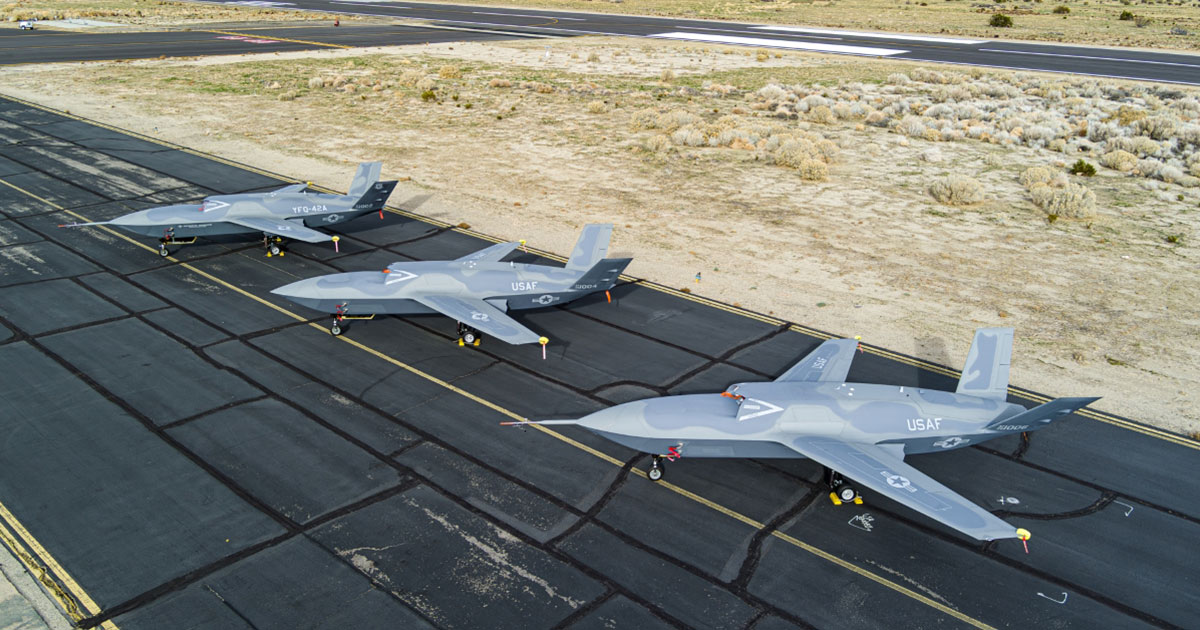
Both drones are currently in development under the first phase, Increment 1, which aims to field a minimum viable capability to provide immediate force. The USAF needs to select one of the two prototypes before it can begin purchasing, although reports indicate that a downselect or dual award for Increment 1 production is anticipated by the end of FY2026, as previously reported by the EurAsian Times.
On its part, the US Air Force is expected to select between Anduril’s YFQ-44 and the YFQ-42A for “Increment 1” of the program before it can begin purchasing CCAs.
Both designs accentuate stealth, internal weapons bays, semi-autonomous air-to-air roles, and affordable mass production. In fact, the USAF is running parallel tests with different autonomy software: Collins Aerospace’s Sidekick on the YFQ-42A and Shield AI’s Hivemind on the YFQ-44A. Meanwhile, Northrop Grumman’s YFQ-48A has reportedly emerged as another possible contender.
The USAF’s fiscal 2027 budget request reportedly includes $996.5 million in procurement funding to start the production of Increment 1 CCA. Additionally, it is seeking $150 million in advance procurement for FY28.
The USAF is also reportedly refining plans for Increment 2 of the CCA program, which will launch a new generation of drones with enhanced capabilities. These next-generation CCAs are expected to be more sophisticated and possibly more costly, even though their exact mission profiles and technological developments remain unknown.
For now, it is safe to say that the Netherlands is investing in the future of air warfare by teaming expensive F-35s with cheaper autonomous drones.
- Contact the author at sakshi.tiwari13 (at) outlook.com
- Follow EurAsian Times on Google News