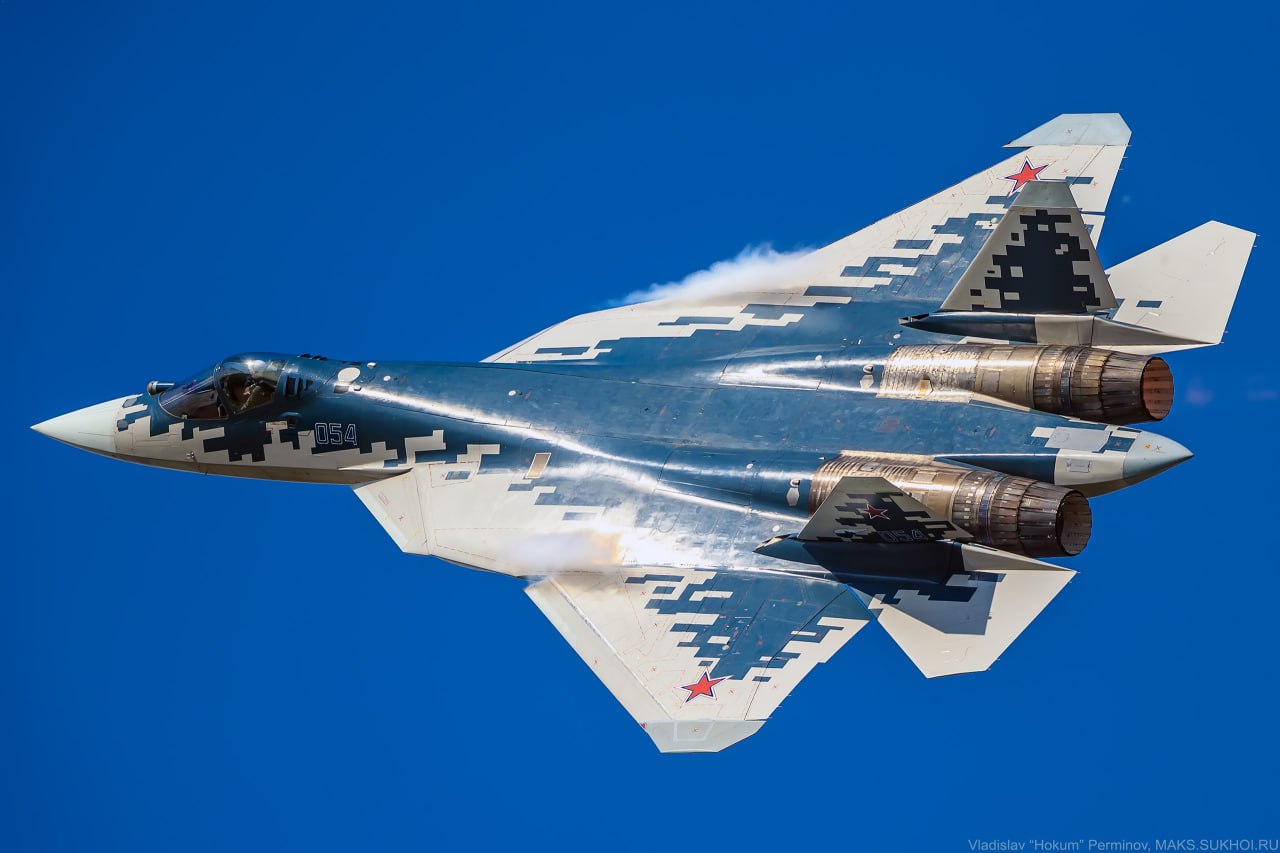
Continuing its streak of attacks on high-value targets inside Russia, Ukraine has claimed hitting “several” Su-57 Felon stealth fighters several kilometers away from the frontline.
The Ukrainian military has claimed that it struck some of Russia’s most advanced fighters, including a Su-34 fighter bomber and a Su-57 stealth fighter, at Shagol Airfield in the Chelyabinsk region, which is about 1,700 kilometers from the Ukrainian border.
The attack reportedly occurred on April 25, 2026, and media reports suggest at least one Su-34 and “several” Su-57 were hit.
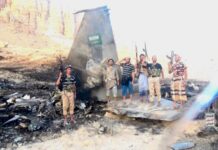
The Unmanned Systems Forces (USF), a unit of the Ukrainian Armed Forces, took responsibility for the attack in a post on X, accompanied by a video comprising satellite imagery as visual evidence, as seen below.
“Hunting for Su-34 multi-role fighter-bombers and Su-57 fifth-generation fighter jets is of critical importance for reducing the enemy’s strike potential. The Su-34, as the main strike platform, is capable of carrying a wide range of guided bombs and missiles, delivering strikes on critical infrastructure, military facilities, and civilian targets at a distance of up to 1,000 km. Every destroyed Su-34 means a reduction in the number of airstrikes, saved civilian lives, and a decreased burden on air defense systems. The Su-57, as the most modern russian fighter jet with low-observable technologies, poses a special threat to aviation and air defense systems,” —Commander of the USF Robert “Magyar” Brovdi said.
Unmanned Systems Forces struck Su-57 and Su-34 fighter jets
It has been confirmed that on April 25, at the Shagol airfield in the Chelyabinsk region of russia, operators of the 1st Separate Center struck two Su-57 fighter jets, an Su-34 fighter-bomber, and an SU of unknown… pic.twitter.com/N8KA057gGD
— 🇺🇦 Unmanned Systems Forces (@usf_army) May 1, 2026
Satellite images of the affected Russian airfield were published on social media as soon as the news broke, showing the remains of a vehicle used to maintain the jets and confirming the strike. The aircraft were allegedly moved to enclosed hangars following the attack, according to reports in local Ukrainian media.
While the full extent of the damage has yet to be assessed, any hit on a Su-57 is likely to be very bad news for the Russian Aerospace Forces (VKS), which currently operates a relatively small number of these fifth-generation fighters.
However, this is not the first time Ukraine has claimed an attack on the stealthy Su-57. For instance, the Ukrainian Armed Forces claimed that they managed to hit at least one of these aircraft at Akhtubinsk Air Base in Russia’s Astrakhan Oblast. Some reports in local media later claimed that at least two Su-57s had been damaged.
It is worth noting, though, that in both cases the Su-57 was struck while on the ground, not in the air. In fact, despite being Russia’s most advanced tactical fighter jet to date, the stealth aircraft has remained absent from the skies over Ukraine, unlike the Su-34, which is frequently spotted operating at the frontline and launching glide bombs at Ukrainian cities.
So far, the Russians have deployed their only operational stealth fighter to launch standoff attacks from the safety of the Russian airspace rather than carrying out aggressive deep strikes, probably in an attempt to keep them safe from Ukrainian surface-to-air missiles.
“The Russians have already employed the Su-57 aircraft, but they are attempting to keep it at a safe distance since they are aware that it could be targeted by our air defense. This is a really pricey “rattle” that they protect. This is a costly but unique toy for them, Ilya Yevlash, the Head of Public Relations for Ukraine’s Air Force, revealed in a 2024 interview, as reported by the EurAsian Times at the time.
Interestingly, not much has changed since.
In fact, Russia’s decision to keep its stealth aircraft out of the frontline and within its own airspace has not helped its pitch to potential customers, such as India. Although Moscow has hailed the aircraft as a “game-changer,” consistently promoted its cutting-edge capabilities, and offered a “golden deal” to India, several Indian experts remain unimpressed by its absence from the frontline in Russia’s war.
In fact, several Indian experts have cast doubt on India’s potential purchase, citing a lack of tangible data on the aircraft’s combat performance.
Su-57 Absent From The Frontline
The Su-57 has only been launching long-range Kh-69 and Kh-59 missiles at Ukraine, although the CEO of Russia’s state-run corporation Rostec, Sergey Chemezov, told reporters in December 2025 that the Su-57 was evading enemy radars and electronic warfare systems in the “special military operation.
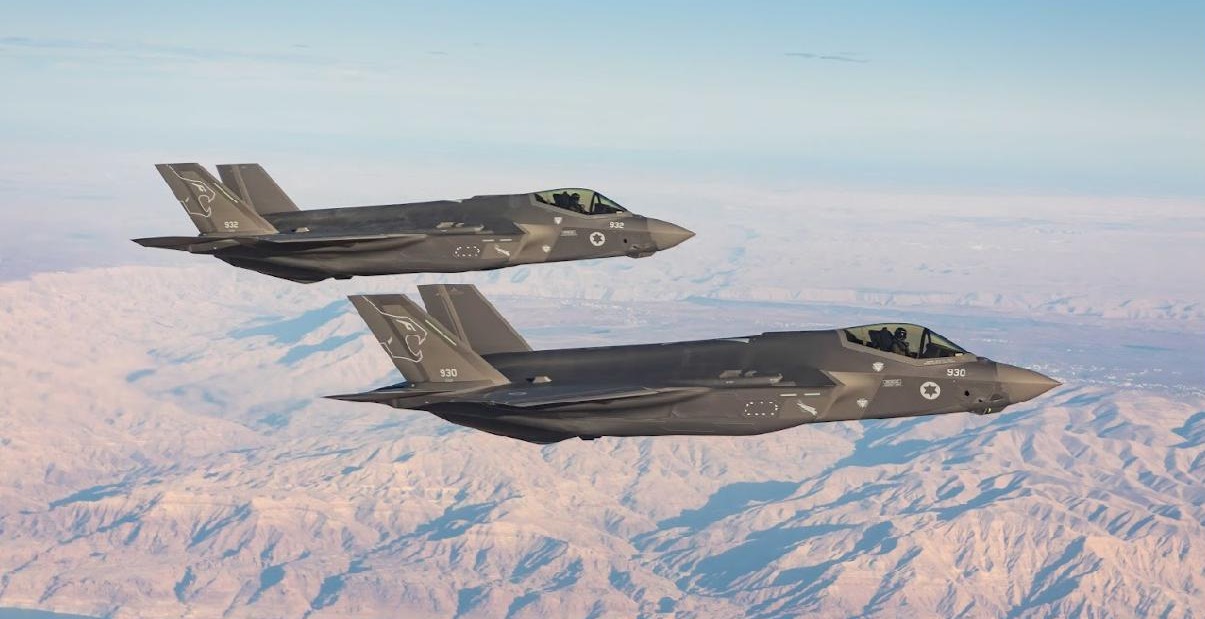
While Russia has deployed the Su-57 cautiously and avoided assigning it any overflight missions in combat, countries like the US and Israel have extensively deployed their respective F-35 Lightning II stealth fighters in combat against Iran, both in the June 2025 12-Day War and during Operation Epic Fury launched in February 2026.
In fact, one of the American F-35s reportedly took a hit during the recently halted hostilities, as previously reported by EurAsian Times.
Critics believe Moscow is wary of having its flagship fifth-generation Su-57 downed and its technology accessed by Ukraine, and passed on to NATO, which would not just compromise sensitive technology but further weaken the aircraft’s export potential.
“Russia is highly likely to prioritize avoiding the reputational damage, reduced export prospects, and the compromise of sensitive technology which would come from any loss of FELON over Ukraine. This is symptomatic of Russia’s continued risk-averse approach to employing its air force in the war,” the UK’s MoD had said in a briefing earlier.
Meanwhile, some critics speculate that the aircraft is simply not “stealthy enough” to survive the onslaught from Ukrainian air defense systems, such as the Patriot, emphasizing that the Su-57 has impressive front-aspect stealth but suffers in overall stealth capabilities, particularly against ground-based radars.
However, when probed over the matter, the Indian Air Force veteran Group Captain Johnson Chacko cast a doubt on Ukraine’s capabilities instead, arguing, “If Ukraine does not have a radar worth evading, why expose a Su-57? Russia has the capability to attack any target of value in Ukraine using standoff weapons and missiles. The F-35s had to be deployed because Iran had air defense radars. I heard that one of them got shot.”
“Stealth aircraft are not immune to all air defense systems. There are ways to defeat stealth. Iran demonstrated it, I think,” he added, referring to the Su-57’s stealth question.
A former Vice Chief of Air Staff (VCAS) of the Indian Air Force (IAF) and seasoned commentator, Air Marshal Anil Khosla (retd), put the matter in perspective.
“Russia has not used its full military potential in the Ukraine War for a host of reasons: 1) Trying to achieve objectives with lesser force using older equipment; 2) Preserving top-end military capability for a more capable adversary; 3) Russia does not want to risk an important asset now that the main objectices have been achieved and the war is down to sporadic retaliatory strikes by Ukraine and punitive response from Russia. 4) Loss of an important asset would invite global criticism, casting a shadow on Russian military capabilities,” Air Marshal Khosla told the EurAsian Times.
Nonetheless, some critics argue that caution in deploying Su-57 in combat stems from the limited number of these jets in service.
Unlike the United States, which operates hundreds of F-35s across variants, Russia has fewer than 50 Su-57s in service, with some reports estimating the number at fewer than 40. Analysts contend that Russia keeps the jets out of hostile airspace to prevent losses, as production remains constrained by international sanctions, hindering scaling.
The absence of Su-57 from the frontline continues to make headlines year after year, driving an array of discourses and rationales for the move. This has, however, not dissuaded Ukraine from damaging the stealth fighters in Russia, significantly increasing the cost of war for Russia with little expense of its own.
- Contact the author at sakshi.tiwari13 (at) outlook.com
- Follow EurAsian Times on Google News