OPED by Wg Cdr J P Joshi (Retd)
For nearly eight decades, NATO has been the most successful military alliance in modern history. Created in 1949 to deter Soviet expansion and defend Western Europe, it prevented a major conflict on the continent, survived the Cold War, adapted after the collapse of the USSR, expanded from the founding 12 to 32 members, and regained strategic relevance after Russia’s invasion of Ukraine.
Yet NATO’s success has produced an unexpected dilemma.
The Alliance has never been militarily stronger. European Allies and Canada are assuming greater responsibility for their security, defense spending is increasing, defense industries are expanding, and capabilities are improving. But military strength alone does not determine the effectiveness of an alliance.
The more fundamental question is political: For what purpose should that military power be employed?
The challenge confronting NATO today is no longer merely building stronger armed forces. It is achieving a common political understanding among 32 sovereign democracies about when, where and why those forces should be used.
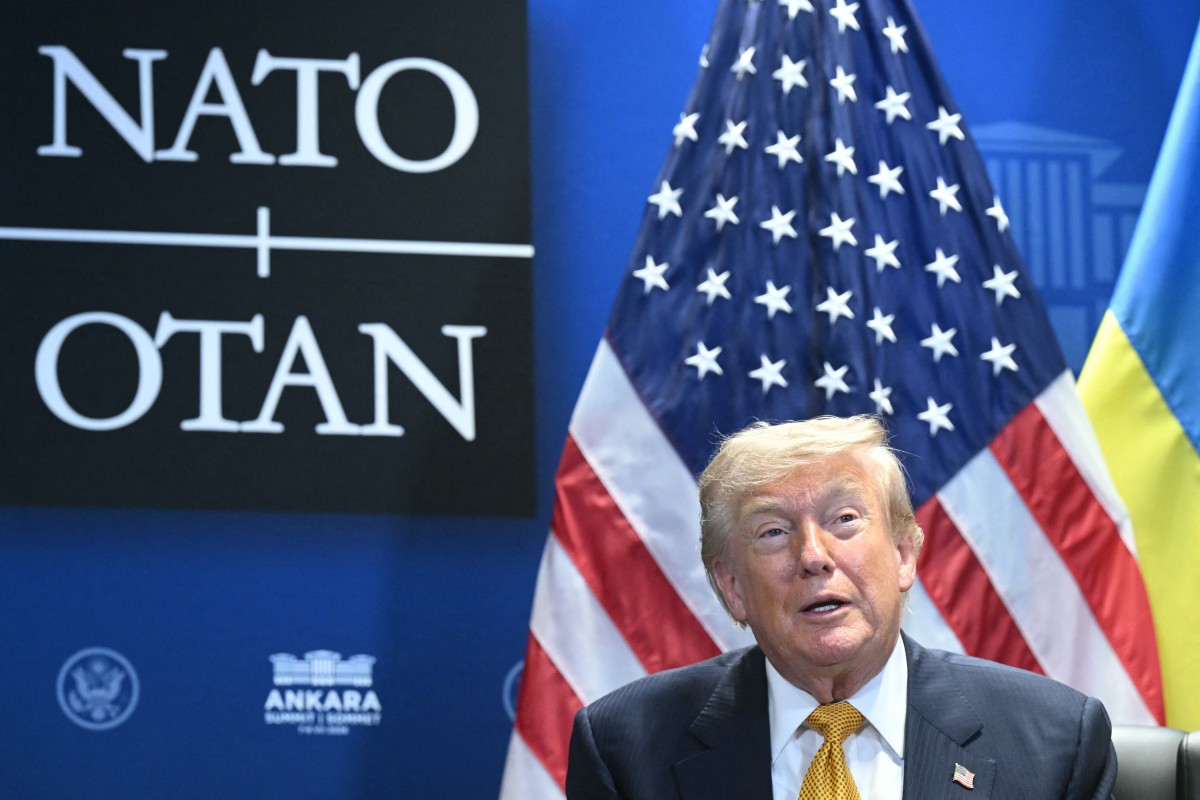
The NATO Summit held in Ankara in July 2026 brought this paradox into sharp focus.
President Donald Trump described the summit as a “tremendously successful summit.”
The statement was significant because the meeting took place amid considerable political turbulence. In the period preceding the summit, President Trump had criticized Allies over defense spending, questioned burden-sharing, described Spain as a “terrible partner” and a “wasted cause,” and adopted a more transactional approach towards alliance relationships.
Yet the institutional message from NATO was one of confidence.
Secretary General Mark Rutte emphasized that the Alliance had delivered: increased defense investment, improved capabilities, expanded defense-industrial production and greater responsibility being assumed by European Allies and Canada. “We are rebalancing our security for the better, and that is what NATO 3.0 is all about,” he stated.
The Ankara Summit Declaration reaffirmed the traditional foundation of the Alliance by stating, “We, the Heads of State and Government of the North Atlantic Alliance, have gathered in Ankara to reaffirm our ironclad commitment to our collective defense under Article 5 of the Washington Treaty and to the transatlantic bond.” Thus, measured against immediate objectives, Ankara was a success. NATO demonstrated unity. It strengthened deterrence. It accelerated military adaptation. However, beneath the declarations of unity lies a deeper question.
Has NATO’s military adaptation proceeded faster than its political adaptation? The Ankara summit answered the question of capability. It did not fully answer the question of purpose.
The Original NATO Compact
To understand the current dilemma, it is necessary to return to its origins.
When the Washington Treaty was signed in 1949, the strategic environment was fundamentally different from today. The threat was identifiable, geography was defined, and the nature of conflict was understood.
The Soviet Union represented the principal military challenge. NATO was created to answer a straightforward question: What should the Alliance do if the Soviet Union attacked Western Europe?
The answer was Article 5, which stated, “The Parties agree that an armed attack against one or more of them in Europe or North America shall be considered an attack against them all.” Article 6 further defined the geographical scope of this commitment.
The original NATO framework rested on three assumptions: a defined geographical theatre; a clearly identifiable adversary; a conventional understanding of armed attack.
These assumptions created strategic clarity.
However, another feature of Article 5 was equally important: ambiguity.
The Article did not create an automatic declaration of war by all members following an attack. Instead, it stated that each Ally would take “such action as it deems necessary, including the use of armed force.”
This ambiguity was deliberate. The architects of NATO understood that an alliance of sovereign democracies could not function if governments surrendered independent control over decisions involving war and peace. The United States Senate would not have accepted an unconditional commitment to fight in every possible circumstance. European democracies would not have accepted such a structure either. The compromise was thus carefully designed.
Article 5 created deterrence by assuring adversaries that an attack against one Ally would involve all. At the same time, it preserved political sovereignty by allowing each member to determine the nature and scale of its response. The ambiguity was not a weakness. It was the political innovation that made NATO possible. During the Cold War, this formula worked because the political compass and the military instrument were aligned: The adversary was clear, the geography was clear, and so was the purpose.
Today, the challenge is not that Article 5 has become irrelevant. The challenge is that the world in which Article 5 operates has changed from one threat to multiple challenges.
The first major test of NATO’s traditional understanding of collective defense came not from a conventional military adversary, but from terrorism. The attacks of 11 September 2001 transformed the strategic environment. For the first, and only, time in NATO’s history, Article 5 was invoked.
The United States had suffered an attack on its territory, but the attacker was not another state. It was Al Qaeda, a transnational terrorist organization, operating from Afghanistan. The invocation demonstrated political solidarity. However, the military response revealed an important distinction. NATO could agree that an attack had occurred.
Achieving agreement on the objectives, duration and methods of response proved far more difficult. The operations in Afghanistan were supported by individual Allies according to national decisions and domestic political processes. The United Kingdom joined the United States in military operations against the Taliban. Germany’s participation required parliamentary approval. Other Allies faced their own political constraints.
The lesson was significant. Collective defense and collective action were not necessarily the same. This distinction became even clearer during the Iraq War. Although Iraq was not an Article 5 operation, the conflict produced deep divisions among Allies. Some supported the intervention; others opposed it.
Afghanistan and Iraq demonstrated that even close allies may agree on the existence of a security challenge while differing on the appropriate response. The ambiguity built into Article 5 remained intact. But the political consensus required to employ military power became more difficult to achieve.
A Larger Alliance, A More Complex Consensus
The post-Cold War period transformed NATO in ways its founders could not have anticipated. The disappearance of the Soviet Union removed the adversary around which the Alliance had been organized.
Some questioned whether NATO had a future. Instead, it adapted: It expanded; it developed partnerships; it undertook crisis-management operations; it addressed new forms of conflict. This adaptability became NATO’s greatest strength.
However, it also introduced a fundamental challenge: the broader the Alliance became, the more difficult it became to maintain a single strategic perspective. NATO’s expansion from 12 founding members to 32 members today represents one of the Alliance’s greatest achievements.
For countries that had experienced Soviet domination, membership represented not merely a military commitment but a historic political transformation. It brought former adversaries into a community built around democratic values and collective security. Yet enlargement also changed the internal dynamics of NATO.
The original members largely shared a common understanding of the Soviet threat. Today, Allies do not necessarily perceive security challenges in the same way. For countries on Russia’s flank, particularly after Russia’s invasion of Ukraine, Moscow remains the immediate and existential concern.
For southern European members, instability in the Middle East and North Africa, terrorism and migration pressures remain significant security challenges.
For the United States, strategic competition with China increasingly defines the long-term challenge.
These differences do not indicate a failure of Alliance solidarity. They reflect the reality that a larger alliance of sovereign democracies will naturally contain different national priorities. The challenge is to convert these different priorities into a common strategic purpose.
It is not only the different priorities; the strategic environment has also transformed over the years.
A Changing Definition of Attack
In 1949, geography largely defined security; an attack meant military forces crossing borders; aircraft striking territory or naval forces threatening allied nations.
Today, conflict increasingly occurs across multiple domains. Cyber operations can disable critical infrastructure without conventional military action. Attacks on satellites can affect military capabilities and civilian systems.
Sabotage of undersea cables can disrupt communications and economic activity. Disinformation campaigns can weaken democratic institutions. Economic coercion can become a strategic weapon. The question facing NATO is therefore more complex than it was during the Cold War.
What constitutes an attack serious enough to trigger collective defense? Would a major cyberattack qualify? Would destruction of critical infrastructure? Would sustained hybrid operations designed to destabilize an Ally?
These questions do not make Article 5 obsolete. They make political interpretation more important. The ambiguity that strengthened deterrence during the Cold War now requires greater clarity among Allies about how emerging forms of aggression should be addressed.
In 1949, geography defined the threat and military force defined the attack. In 2026, neither assumption remains sufficient.
The China Question
The rise of China represents perhaps the most significant debate about NATO’s future role. The United States increasingly views China as the principal long-term strategic competitor. Washington has encouraged European Allies to recognize that economic, technological and military competition with Beijing has implications beyond the Indo-Pacific.
However, European perspectives remain more cautious. Many European countries recognize China’s growing military capability and strategic influence, but do not view Beijing as a direct military threat to European territory in the same way as Russia. To them, China represents an economic partner, a technological competitor, and a strategic challenge simultaneously. This complexity makes consensus difficult.
The limited emphasis on NATO’s Indo-Pacific partnerships at the Ankara Summit reflected this unresolved debate. The fundamental question remains: Should NATO remain primarily a Euro-Atlantic defense alliance, or should it evolve into a broader organization addressing global security challenges?
Both approaches carry risks. An alliance that expands its mission excessively risks strategic overreach. An alliance that refuses to adapt risks strategic irrelevance.
Iran and the Limits of Military Solidarity
Iran illustrates another dimension of NATO’s challenge. Most Allies recognize concerns regarding Iran’s nuclear ambitions, missile capabilities, regional influence, and support for proxy groups. Yet recognizing a threat does not automatically create agreement on the use of force.
The US-Israel military operation against Iran highlighted this distinction. The decision for military action was primarily a US-Israel decision. However, expectations that NATO Allies would support secondary tasks, including maritime security operations in the Strait of Hormuz, revealed differing political perceptions.
The issue was not simply whether Allies possessed the capability. The issue was whether they possessed the political mandate. Military power is ultimately a tool to achieve political ends. Without political consensus, even the most capable alliance faces limitations.
Ukraine: Unity With Boundaries
The war in Ukraine has been the most significant test of NATO’s post-Cold War relevance. The Alliance demonstrated remarkable unity. Members provided weapons, intelligence, training, financial assistance and political support. However, Ukraine did not receive NATO membership or the security guarantee of Article 5. This reflected a difficult balance.
NATO wanted to support Ukraine’s sovereignty and resist Russian aggression. At the same time, Allies sought to avoid direct military confrontation between NATO and Russia. Ukraine therefore illustrates both NATO’s strength and its restraint. The Alliance possesses enormous military capability. However, political decisions determine how that capability is employed.
The Trump Factor: An Accelerator, Not the Cause
President Trump’s transactional approach to alliances has intensified debates within NATO. His criticism of defense spending, questioning of burden-sharing and expectations of greater Allied support have brought existing tensions into sharper public view.
However, these challenges did not originate with one individual or one administration.
Differences over defense priorities, Russia, China, European strategic autonomy and the global role of NATO have existed for years. President Trump has acted less as the cause of NATO’s uncertainty than as an accelerator, forcing Allies to confront unresolved questions.
Ankara: A Stronger Sword, But an Uncertain Compass
The Ankara Summit should therefore be viewed in context. It was a success in terms of military adaptation. Defense spending commitments increased. Capabilities improved.
Industrial capacity expanded. NATO demonstrated that it could sharpen its sword. But the summit also highlighted the continuing challenge of political purpose.
Disagreements over defense commitments, China, Iran, Ukraine and the future role of NATO indicate that the Alliance’s central challenge is not military weakness.
It is strategic convergence.
The Political Compass: Article 2 and Article 5
The future of NATO depends not only on Article 5 but also on Article 2. Article 5 is the sword. Article 2 is the compass.
The Washington Treaty’s Article 2 commits members to “strengthening free institutions”, by “promoting conditions of stability and well-being”, maintaining consultation among Allies. During the Cold War, political consultation created the shared understanding necessary for collective defense.
Today, NATO’s military commitment remains strong. The greater challenge is maintaining the political consensus required to determine when that commitment should be employed.
The present dilemma is therefore not primarily an Article 5 problem. It is an Article 2 problem. The Alliance does not lack a collective defense commitment.
It faces a more difficult question: Can thirty-two democracies maintain a shared strategic understanding of the threats they face and the circumstances under which military power should be used?
Conclusion: NATO’s Sharper Sword Needs a Clearer Strategic Compass
NATO has repeatedly demonstrated its ability to adapt. It adapted after the Cold War. It adapted after 9/11. It adapted after Russia’s invasion of Ukraine.
The Ankara Summit demonstrated another phase of military adaptation. Defense spending is rising. Capabilities are improving. The defense industrial base is expanding.
NATO has sharpened its sword. But history shows that military power alone does not determine the success of alliances.
The effectiveness of an alliance depends on the relationship between capability and purpose. The ambiguity of Article 5 was not a weakness in 1949. It was a carefully designed political achievement that allowed sovereign democracies to unite while preserving national decision-making. The question today is whether that same flexibility can continue to provide strategic clarity in a world where threats are increasingly complex and perceptions increasingly diverse.
NATO’s future will not be determined solely by defense budgets, weapons systems or military readiness. It will depend on whether its members can sustain a shared political purpose that provides direction to their collective power. The challenge confronting NATO is no longer merely building stronger armed forces. It is achieving a common understanding of when, where and why those forces should be employed.
NATO has sharpened the sword. Whether it also possesses a shared political purpose that can serve as a reliable strategic compass remains the defining question confronting the Alliance.
- Wg Cdr J P Joshi is a veteran of the IAF, a regular contributor, who has commanded a front-line fighter squadron; is a graduate of Air Command and Staff College, Maxwell AFB, AL, USA; and has been a Directing Staff at the Defense Services Staff College, Wellington.
- Contact the author at: jpjoshiindia (at) yahoo.co.in