New details of a Pakistani ballistic missile strike during the brief but intense Indo-Pakistan conflict of May 2025 have emerged, as India marked the first anniversary of the Pahalgam attack on April 22, 2025.
India accused Pakistan-based Lashkar-e-Taiba (LeT), which had already been designated as a terror organization by the United Nations, and the Resistance Front (TRF) of “planning, facilitating and executing” the attack. The Indian government swiftly linked the terrorists to hubs deep inside Pakistan, where these outfits were alleged to be operating with impunity under the patronage of the Pakistani state.
Determined to avenge the Pahalgam terror attack and punish the perpetrators, the Indian Armed Forces launched “Operation Sindoor” on May 7, 2025, with coordinated precision strikes on pre-determined targets (terror camps) inside Pakistan. However, Pakistan reacted rather swiftly to the unprecedented aggression and launched its counter-operation, “Operation Bunyan al-Marsus,” triggering a four-day intense conflict that ended in a ceasefire on May 10, 2025.
According to reports in the Indian media, during the height of this conflict, an Indian air defense unit managed to intercept a Pakistani ballistic missile mid-air over Sirsa, Haraya, before it could reach its presumed target, Delhi. The missile is believed to be from the Fatah or Shaheen series, the reports claimed.
The EurAsian Times could not independently verify the exact type of ballistic missile used by Islamabad due to a lack of official information from the Indian Ministry of Defense. Moreover, it is possible that the missile was intended for Sirsa Air Force Station, a key forward airbase under the Indian Air Force (IAF) Western Command, since hitting New Delhi would have constituted a major escalation in the conflict.
We know that the Fatah-class missiles have different variants: the Fatah-1 has a range of about 140 kilometers, while the Fatah-2 can travel up to 400 kilometers, meaning only the latter has the aerial range to strike New Delhi, assuming it was the intended target. Meanwhile, the Shaheen-class is a longer-range surface-to-surface ballistic missile with a range of 750-2,500 kilometers.
Video footage published on X during the war showed a massive interception, which netizens at the time alleged was of a ballistic missile. Debris was later recovered from the area, further confirming the attempted ballistic missile strike.
On 10th may this video shows the large derby falling out, won't be a 200-300mm rocket but something large & this video conforms this was a balletic missile likely shaheen class intercepted by likely IAF S-400 system. #OperationSindoor https://t.co/YBgcFtOpow pic.twitter.com/1OlhekB2mP
— 𝐊𝐔𝐍𝐀𝐋 𝐁𝐈𝐒𝐖𝐀𝐒 (@Kunal_Biswas707) May 18, 2025
Notably, the ballistic missile was reportedly shot down by an Indian Air Force (IAF) air defense unit led by Air Commodore Rohit Kapil, Air Officer Commanding of 45 Wing, whose command decision proved to be decisive in averting a major threat and saving hundreds of lives. He was later awarded the Yudh Seva Medal in 2025 for his leadership throughout the conflict, including both defensive and offensive planning.
Notably, the successful interception demonstrated that India’s integrated air defense system performed effectively against relentless aerial attacks by Pakistan.
India currently operates a range of air defense systems—including the S-400, the Barak-8, the Akash and Spyder, the 2K22 Tunguska, the L-70 anti-aircraft gun, and the ZSU-23-4 Shilka—all of which helped prevent damage to an Indian military facility during the four-day war.
It must be noted that it was the Barak-8 that intercepted the Pakistani ballistic missile, according to Indian reports.
What Do We Know About Barak-8?
Developed jointly by Israel’s Ministry of Defense and India’s Defense Research and Development Organization (DRDO), the Barak-8 is an all-weather missile system that uses several cutting-edge, state-of-the-art systems, including digital radar, command and control, launchers, interceptors with contemporary RF seekers, data link, and system-wide connectivity, to engage sea-skimming to high altitude targets.
Barak-8’s core technological “heart”—the seeker and advanced electronics—originated in Israel.
The missile system, which means “Lightning” in Hebrew, is operated by both countries. While India has developed the solid-fuelled rocket motor/propulsion system and thrust-vector controls, Israel has developed the electronics seeker that guides the missile in its terminal phase, critical avionics, and command-and-control (C2) system.
Barak-8 has a length of about 4.5 meters, a diameter of 0.225 meters, a wingspan of 0.94 meters, and a weight of 275 kilograms. It can intercept aircraft, low-flying anti-ship and cruise missiles, and stealthy targets, and comes in both sea-launched and land-based variants.
The missile can reach speeds of up to Mach 2 and carries a 60-kilogram warhead that explodes close to its target. Additionally, it can receive and process continuous updates on the target’s position and flight trajectory, and use these updates to adjust its own flight to best intercept and destroy the target.
The Barak-8 has two variants.
The MRSAM (Medium Range Surface-to-Air Missile) is a land-based system used by the Indian Air Force & Army. It is mounted on mobile launchers and primarily used to protect airbases, cities, and mobile ground forces. Meanwhile, the LRSAM (Long Range Surface-to-Air Missile) is a naval system used by the Indian Navy. It is fired from warships using the Vertical Launch System (VLS) and is mainly used for ship defense.
The Israel Aerospace Industries (IAI) secured a US$777 million contract in 2018 with India’s BEL to supply the marine variant of the Barak-8 for seven warships. This followed an earlier US$630 million order for the same system. The naval variant, widely tested by the Indian Navy, operates alongside the Israeli-developed Multi-Functional Surveillance and Threat Alert Radar (MF STAR) for detection, tracking, and guidance of the missile, and provides point-and-area air defense.
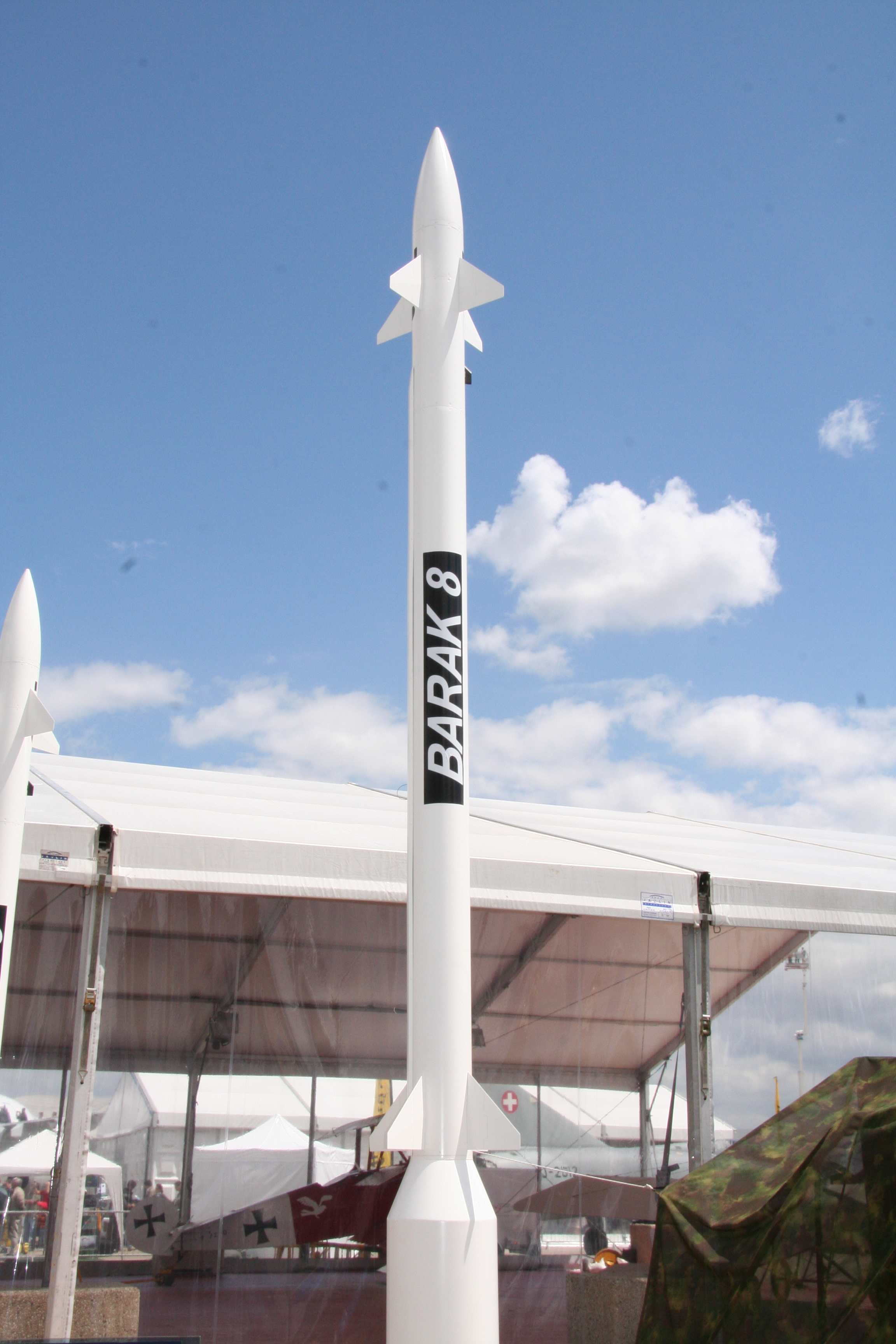
Barak-8 reaches a range of 70-100 kilometers and an altitude of 20 kilometers, achieving Mach 2 speeds via dual-pulse motors and thrust vectoring. The Barak-Extended Range (ER) variant has a range of about 150 kilometers.
The Barak-8 can be employed against all types of airborne threats, including helicopters, fixed-wing aircraft, unmanned aerial vehicles, anti-ship missiles, ballistic missiles, and cruise missiles. The missile can engage multiple targets simultaneously using its multifunction surveillance, tracking, and guidance capabilities.
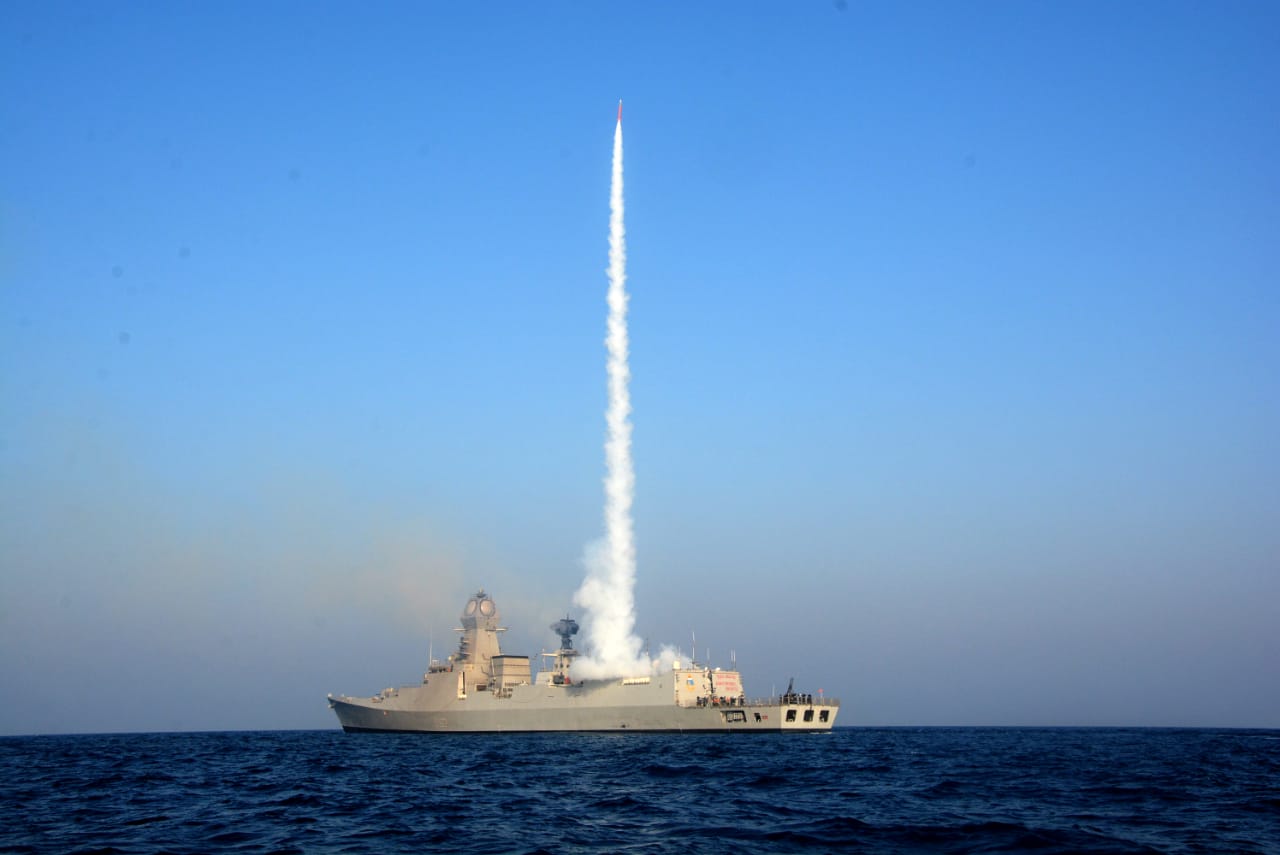
Barak-8 significantly strengthens air defense capabilities, especially against modern precision-guided weapons and saturation attacks, making it a key component of India’s layered defense system, as demonstrated during the Indo-Pakistan conflict.
In India’s layered air defense network, the Barak-8 falls in the medium-range air defense system, with the S-400 making up the long-range and Akash and Spyder systems making up the short-range.
Following the successful development of the Barak-8, IAI moved on to a new Barak-MX multi-layered air defense system that employs different missiles for different interception ranges, similar to the Russian S-400 Triumf air defense system.
The MX version provides a single integrated solution for multiple, simultaneous aerial threats from different sources and different ranges, according to the IAI. The system features four missile variants: 15 km (short range), 35 km (medium range), 70 km (long range), and 150 km (extended range), offering a multi-layered air defense network through a single system.
Earlier, IAI President and CEO Boaz Levy said during successful tests in India, “The Barak System provides advanced and innovative defense against a wide range of air and missile threats. The success of these tests strengthens the technological cooperation between our countries and reflects our partnership with the Indian Ministry of Defense, as well as with industries in both Israel and India.”
- Contact the author at sakshi.tiwari13 (at) outlook.com
- Follow EurAsian Times on Google News