Before the start of Operation Epic Fury, many defense analysts had dismissed the US-Iran war as a David-and-Goliath conflict.
Especially, the Iranian Air Force was dismissed as no match for the technologically superior US Air Force (USAF).
After all, Iran’s outdated Air Force, largely composed of 1970s US combat aircraft such as the F-4 Phantom, F-5 Tiger, and F-14 Tomcat, as well as a few Soviet fighter jets, including the MiG-29, Su-24, and the Chinese F-7.
The USAF, meanwhile, remains the world’s largest and most technologically advanced air force, with roughly 1,450 fighter and fighter-attack aircraft in its active inventory—including nearly 200 F-22 Raptors and over 400 F-35A Lightning IIs, giving it unmatched fifth-generation stealth capability.
In fact, in the run-up to the war, a peculiar incident from 2013 was recounted as a stark warning to Iran.
Back then, two Iranian F-4 Phantoms moved to intercept a U.S. MQ-1 Predator drone flying in international airspace.
However, the Iranian pilots were in for a surprise of their lifetime. The Iranian pilots closed in on the drone and prepared to shoot it. However, an American stealth fighter jet had been flying undetected just below the belly of an Iranian jet.
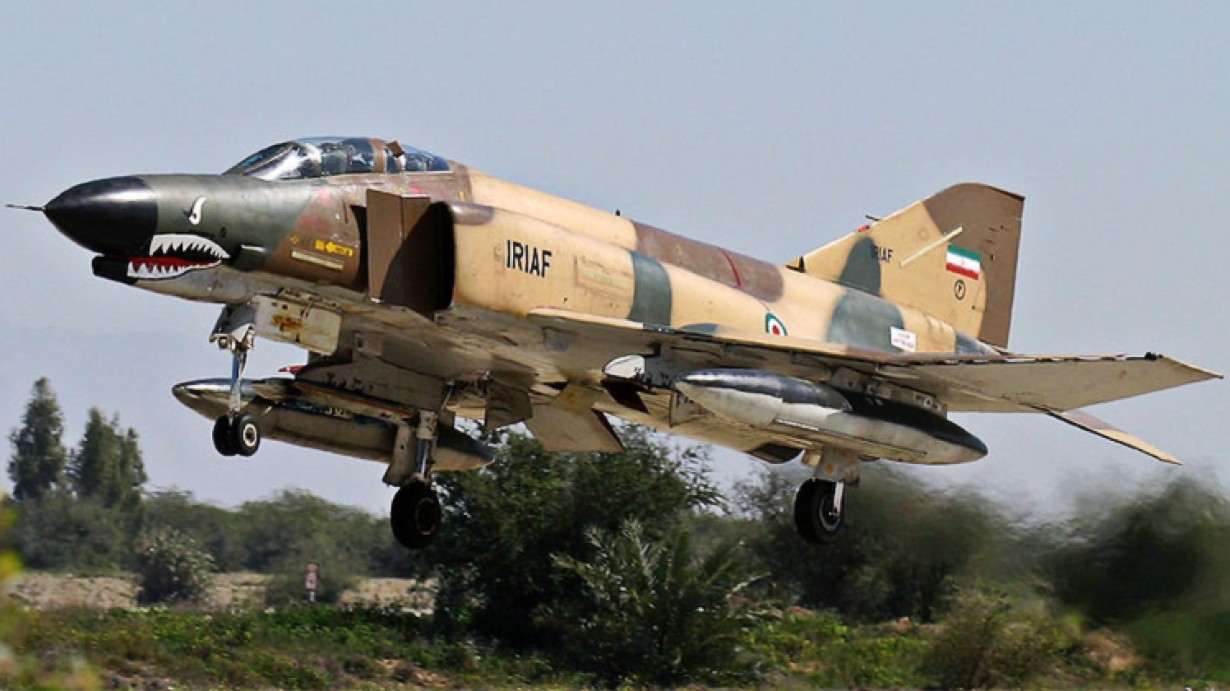
Soon, the US fighter pilot pulled up to the left side of the Phantom and issued a stark warning that the Iranian pilot, perhaps, would remember for the rest of his life.
“You really oughta go home.”
That one incident symbolized the significant difference between the capabilities of the Iranian Air Force and the USAF.
However, in modern air warfare, while technological superiority is critical, it can be upended by skill, improvisation, timing, routing, deception, and adversary complacency.
At least on two occasions, Iran has demonstrated that just platform prestige is not enough for survivability in contested airspace.
In March, Iran became the first country to shoot a F-35 stealth fighter jet using short-range infrared-guided missiles. The F-35 was damaged and made an emergency landing at a US air base in the Middle East.
The successful strike exposed a critical vulnerability of the US$2 trillion F-35 program. The F-35’s stealth technology is designed to evade radar, but it cannot hide the high heat signature produced by its engines.
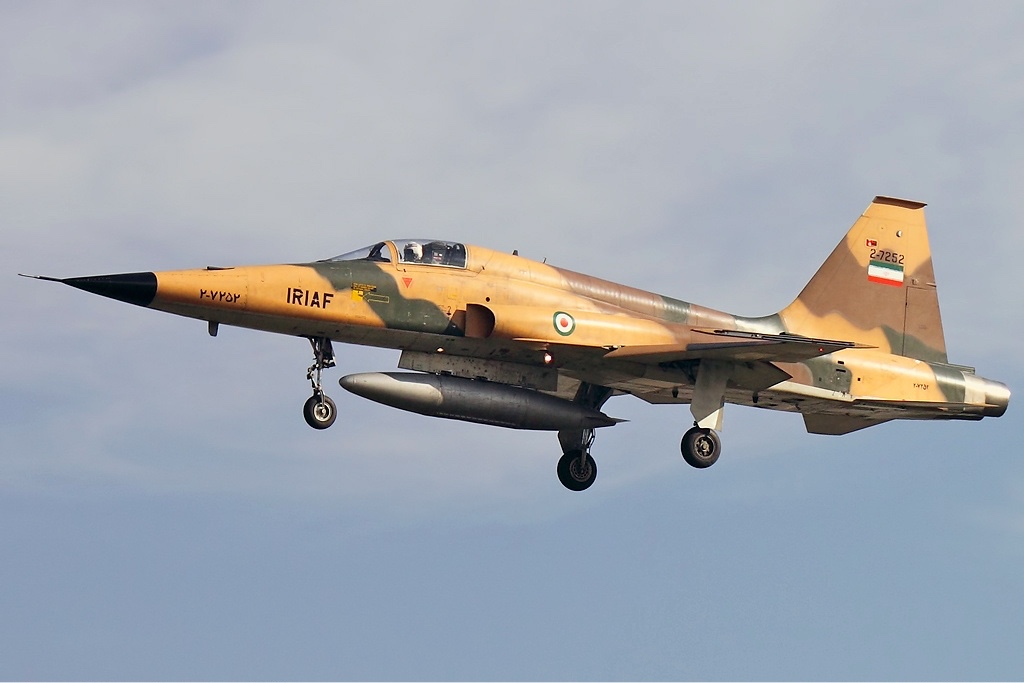
Now, reports have emerged that an Iranian F-5 Tiger was able to penetrate well-defended Kuwaiti airspace and bomb Camp Buehring, one of the largest US military bases in the Middle East.
Reportedly, this was the first time in many years that a hostile aircraft had hit a U.S. military base.
Iran’s F-5 Breached U.S. Missile Defense Shield in Kuwait
Camp Buehring (also known as Al Udairi) in northwestern Kuwait serves as a major U.S. Army staging, training, and logistics hub in the Middle East.
The base can accommodate up to 14,000 troops at peak capacity.
While the exact number of troops stationed at any military base is never publicly disclosed, Kuwait as a whole hosts 13,500 U.S. personnel (including contractors) across multiple sites, such as Camp Arifjan, Ali Al Salem Air Base, and Camp Buehring.
Notably, the base has layered air defenses, including Patriot missile batteries, multiple shorter-range systems, advanced radar coverage, and persistent regional surveillance networks.
Furthermore, during the war, all these systems were on high alert.
However, despite the presence of these layered air defense systems, an Iranian second-generation F-5 Tiger II fighter jet was able to penetrate the Kuwaiti airspace and bomb the strategic Camp Buehring military base.
NBC reported that although air defense systems protected the base, the Iranian pilot managed to evade them and drop a bomb.
The F-5 had its first flight in July 1959, and it entered service in 1964. The fighter jet had its combat debut during the Vietnam War.
The Iranian Air Force started receiving these jets in 1965.
In total, Iran purchased over 350 F-5 jets before the 1979 Islamic Revolution.
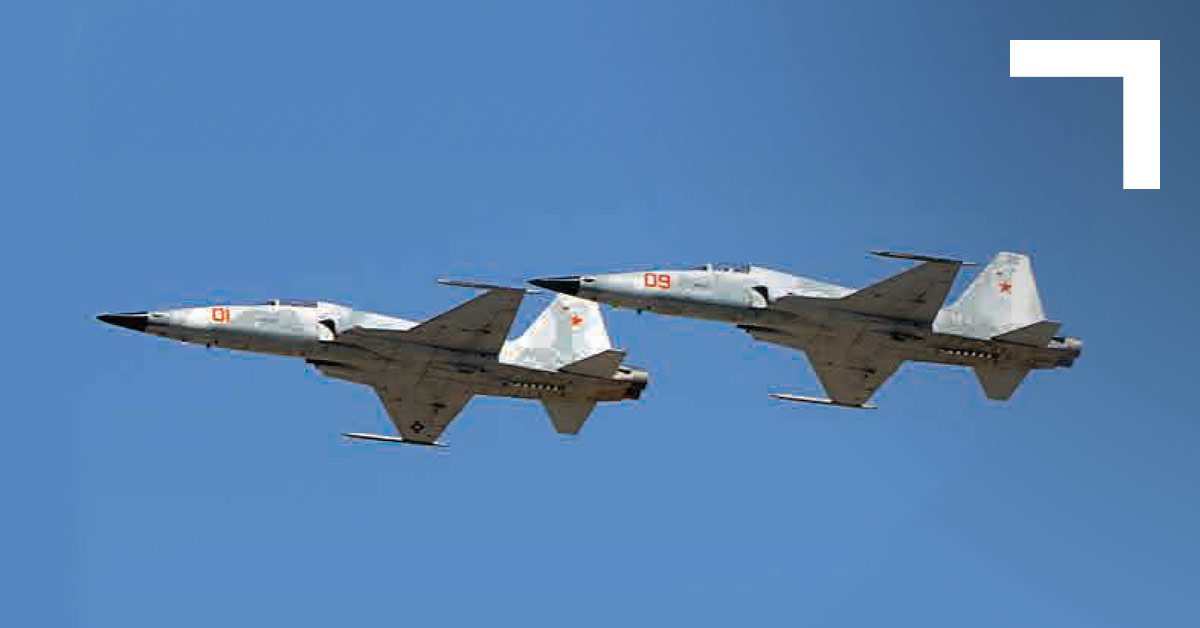
However, decades of sanctions meant that Iran could not properly maintain its F-5 fleet. Still, Iran operated the largest remaining F-5 fleet in the world before the war began on February 28.
According to various reports, Iran had a fleet of nearly 35-50 F-5 jets before the war broke out.
However, given that these aircraft are over five decades old, no one expected Tehran to employ these jets during the war, much less use them for penetrating and bombing US military bases in nearby Gulf countries.
This belief, perhaps, created a sense of overconfidence and complacency in the US troops stationed in the region.
Apparently, the F-5 jet made a shallow incursion into the Kuwaiti airspace.
Still, once again, Iran has exposed a strategic vulnerability of US air defense systems. If Iran could penetrate a layered air defense network operated by US forces with a second-generation fighter jet, then peer-group adversaries, such as China and Russia, could do the same with their latest fifth-generation stealth fighter jets, including the J-20, J-35A, and Su-57.
According to U.S. officials cited in reporting, the Iranian F-5 approached at low altitude and executed what was described as a “dumb bomb” attack, bypassing Patriot systems and short-range air defense networks that were expected to create overlapping interception zones.
While Patriots are optimized for ballistic missile defense, shorter-range air defense systems should, at least in theory, close gaps and vulnerabilities against shallow incursions by manned fighters.
However, Iran has shown that significant vulnerabilities still exist, raising serious doctrinal questions regarding radar horizon limitations.
Additionally, Iran has also targeted at least four THAAD AN/TPY-2 X-band missile defense radars in the region.
Notably, Kuwait has absorbed some of the deadliest Iranian strikes during the war.
In early March, an Iranian drone attack at the Shuaiba port in Kuwait killed six US service members and injured dozens of others.
Furthermore, three USAF F-15 fighter jets were shot down in Kuwait, in a suspected case of friendly fire in the first week of March.
During the war, Iran has used its vintage air force for other high-risk operations as well.
For instance, on March 2, Qatar’s Defense Ministry announced that its air force shot down two Iranian Su-24 tactical bombers that had come from Iran. These jets were flying very low, reportedly below 100 feet, to evade radar detection while carrying bombs and guided munitions.
They were heading toward Al Udeid Air Base, the largest US military installation in the Middle East, which hosts over 10,000 US troops. The nearby energy facilities of Ras Laffan could have been another target.
Worryingly, the Iranian bombers were only about 2 minutes from their targets when intercepted by Qatari F-15 fighter jets.
Both Iranian fighter jets were shot down. The event also marked Qatar’s first-ever air-to-air kill.
However, the fact that Iranian fighter jets were able to fly within two minutes of the strategic Al Udeid Air Base again underlined the existing vulnerabilities in multi-layered air defense systems.
Like Kuwait, Qatar has a multi-layered air defense network.
Qatar fields 11 Patriot PAC-3/PAC-2 AD firing units, NASAMS II, THAAD, short-range systems such as Skynex, as well as the AN/FPS-132 Block 5 Upgraded Early Warning Radar (UEWR).
Furthermore, Iran targeted Qatar’s AN/FPS-132 Block 5 UEWR.
These incursions and drone strikes on frontline AD systems underline the fact that, despite an obsolete air force, Iran was able to penetrate contested airspace and launch precision drone strikes on high-value radars.
The NBC report also highlighted that the damage on US military bases in the Middle East is far greater than the government is willing to acknowledge. The report estimates that just the infrastructure repair work at these bases could cost the US over US$5 billion.
Iran, despite its limited resources, has punched much above its weight and inflicted serious damage on US military assets in the region and has even targeted the US’s high-prestige platforms, inflicting long-term reputational damage to US weapons systems.
- Sumit Ahlawat has over a decade of experience in news media. He has worked with Press Trust of India, Times Now, Zee News, Economic Times, and Microsoft News. He holds a Master’s Degree in International Media and Modern History from the University of Sheffield, UK.
- VIEWS PERSONAL OF THE AUTHOR.
- He can be reached at ahlawat.sumit85 (at) gmail.com