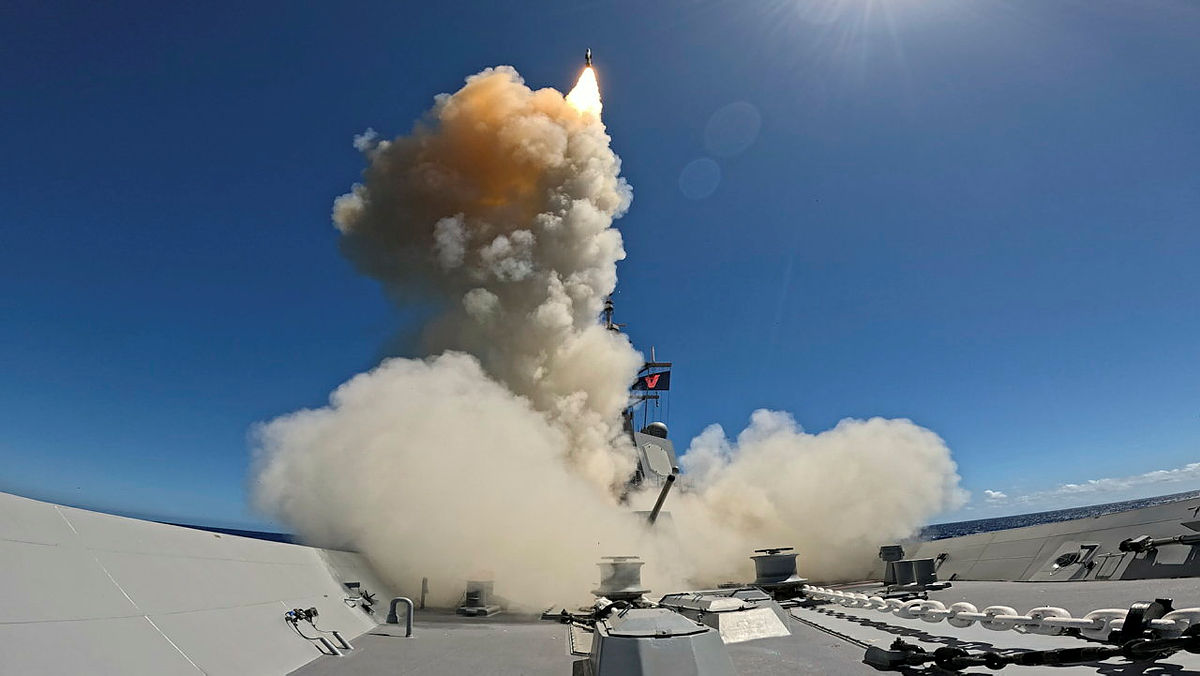
Every major war in history has been a brutal yet effective teacher for the world’s militaries. Conflicts expose weaknesses, shatter assumptions, and compel radical change in military tactics and weapons systems.
The 40-day Iran War — Operation Epic Fury — is proving no different.
While the war is still not over and hostilities can start again any day, the war is already forcing radical changes in the US military tactics, priorities, and its plans for future weapons systems.
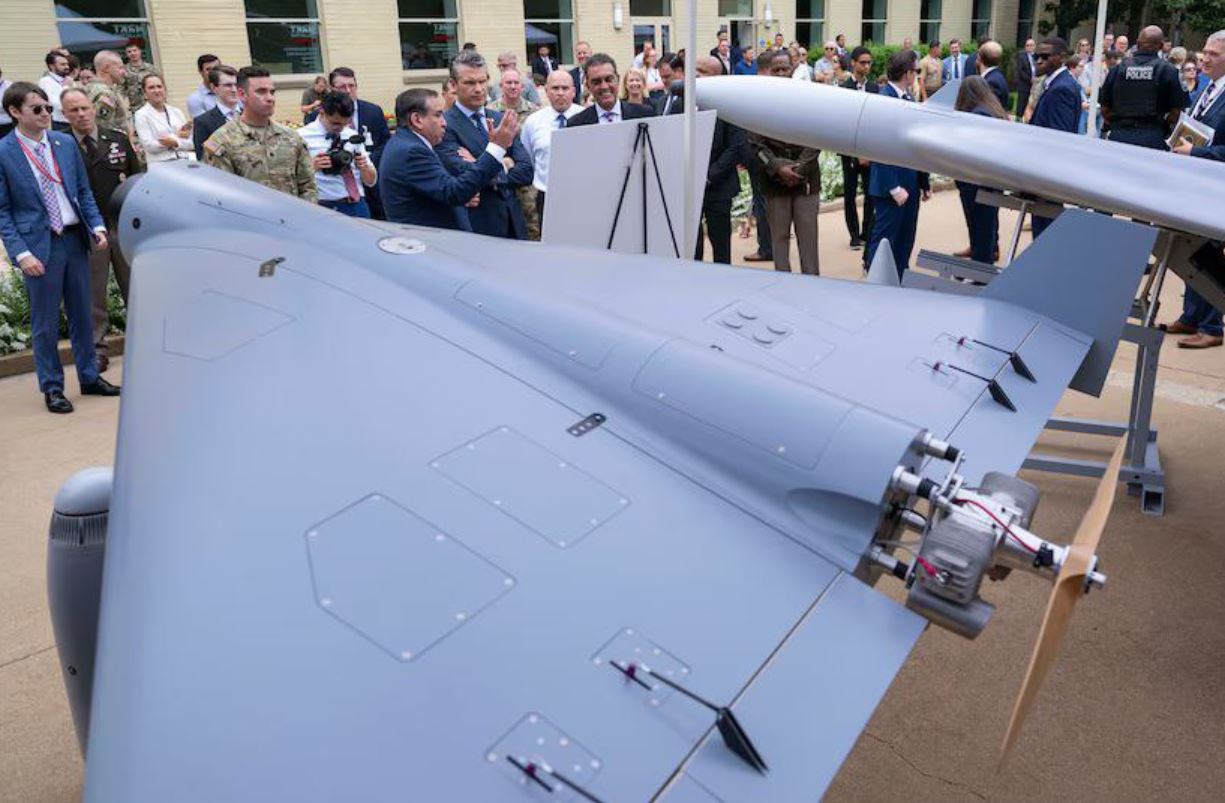
In his first House Armed Services Committee appearance since the Iran war began, Adm. Brad Cooper said the US military has changed even in the past eight weeks, as highlighted by its reliance on Low-Cost Uncrewed Combat Attack System (LUCAS), which was used extensively in the Iran War.
Adm. Cooper described the LUCAS drone, a US reverse-engineered version of the Iranian Shahed-136 drone, as a “game-changer.”
“Lucas, indispensable. As many of you know… this was an original Iranian drone design. We captured it, pulled the guts out, sent it back to America, put a little ‘Made in America’ on it, brought it back here, and we’re shooting it at the Iranians,” Adm. Cooper said.
Earlier in a March press conference, Adm. Cooper highlighted how LUCAS helped the US “flip the cost curve,” using cheap US one-way attack drones to force Iran to expend expensive air defenses.
The US military conducted its first combat use of the LUCAS on February 28, the first day of the Iran War.
The kamikaze drones were deployed by Task Force Scorpion Strike during Operation Epic Fury to strike key military targets in Iran.
The LUCAS drone’s success in the Iran War means that the US military will use it in future conflicts as well.
Furthermore, when Rep. John McGuire asked Adm. Cooper what additional support was needed, the four-star admiral outlined what he believed should be the three top priorities for the U.S. military going forward.
“I’d put three things: more electronic warfare, keep counter-UAS on the leading edge—tactics change very quickly—and we need to invest more in hard and deeply buried targets,” Cooper said. “Everybody is going underground.”
He noted that Iran and its proxies — such as Hamas, Hezbollah, and the Houthis — are increasingly relying on underground facilities, tunnels, and hardened bunkers.
Though Adm. Cooper did not state it explicitly, these deeply buried and fortified sites are the primary reason the United States has struggled to fully achieve its war objectives against Iran.
U.S. Vs Iran’s Underground Bunkers
In June 2025, the US launched its first air strikes on Iran since the 1979 Islamic Revolution.
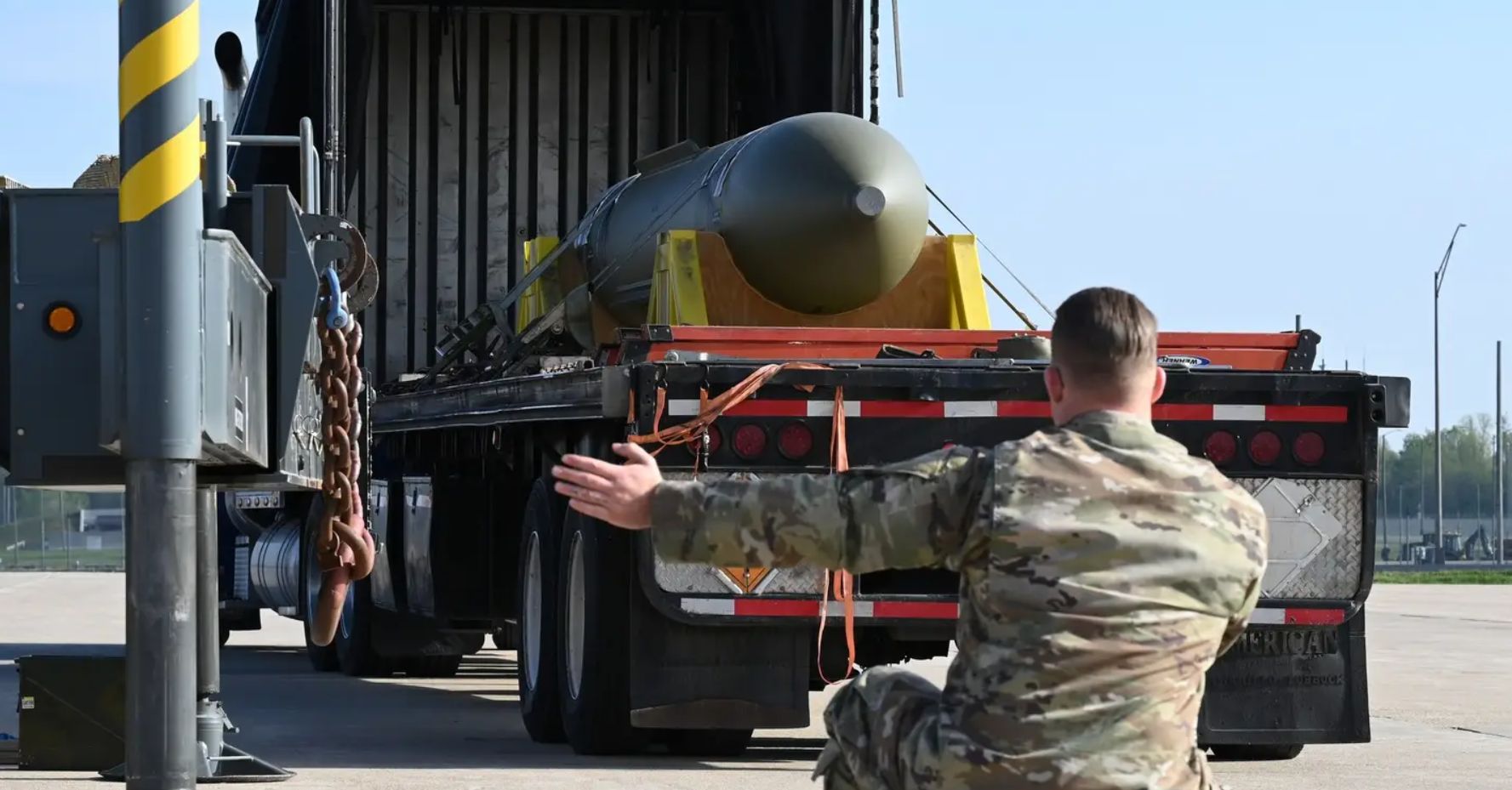
Seven B-2 Spirit stealth bombers flew non-stop from the US to Iran and dropped 14 GBU-57 Massive Ordnance Penetrator (MOP), also known as bunker buster bombs, on two Iranian nuclear sites – Fordow Uranium Enrichment Plant and Natanz Nuclear Facility.
Notably, though GBU-57 MOP bombs were developed in the 2010s, this was the first combat use of these 30,000-pound bunker buster bombs that can penetrate 200 feet (60 meters) before exploding.
In fact, when the US bombed Iranian nuclear sites, Israel had been pounding Iran already for 11 days. However, Israel knew that it did not have any missiles or ammunition capable of penetrating 200 feet of rock or hard concrete to destroy Iran’s deeply-buried nuclear sites.
However, following the US air strikes, a classified preliminary US intelligence report concluded that American strikes on Iran set back Tehran’s nuclear program by just a few months, rather than destroying it.
The aerial bombardments and missile strikes sealed off entrances to some facilities without destroying underground buildings, according to the report.
The failure of US air strikes in June 2025 to destroy Iran’s enriched Uranium stockpile necessitated a second campaign by the US and Israel, which commenced in February and March this year.
However, once again, the US faced similar limitations. None of the US missiles or ammunition was capable of penetrating over 300 feet of hard rock; hence, the only way the US could have destroyed or captured the Iranian enriched Uranium stockpile was through a high-risk ground operation.
To address this shortcoming, the US began work on the GBU-57 MOP successor as soon as the war in June 2025 ended.
In September 2025, the US Air Force Life Cycle Management Center’s (AFLCMC) Munitions Directorate at Eglin Air Force Base in Florida awarded a two-year contract to Applied Research Associates (ARA) for designing and prototyping the successor of the enormous MOP bunker-busting bomb.
ARA will “serve as the System Design Agent for the development of a prototype air-to-ground Next Generation Penetrator weapon system,” said a company press release. “ARA will also produce and test sub-scale and full-scale prototype munitions. This effort will evaluate capabilities against hard and deeply buried targets that pose critical challenges to US national security.”
ARA will develop the next bunker-buster bomb in close collaboration with Boeing, the prime contractor for the GBU-57 MOP.
Notably, the idea for the GBU-57 MOP itself came from lessons learned from the Iraq War. Though the bomb was developed as part of the “Big BLU” program that was initiated in 2002, its development intensified after the invasion of Iraq in 2003, which revealed flaws in the existing weapons against targets that were deeply buried underground. The GBU-57 MOP went into service in 2011.
However, it had to wait a full 14 years before its first combat use in Iran in June 2025.
Similarly, the failure of the GBU-57 MOP to fully oblitrate the Iranian nuclear program is fueling work on its successor, the Next Generation Penetrator (NGP) weapon system.
Another learning of the Iran War has been the high loss ratio of the MQ-9 Reaper drones.
In the 40-day war, the US Air Force lost as many as 24 MQ-9 Reaper drones.
Earlier, during the Yemen campaign, the USAF lost seven MQ-9 Reaper drones. These losses underscore how the MQ-9 Reapers have become highly vulnerable in contested airspace.
The Reapers operate at low subsonic speeds of 300 miles per hour or less, have a large radar signature, and follow a predictable flight profile, making them highly vulnerable.
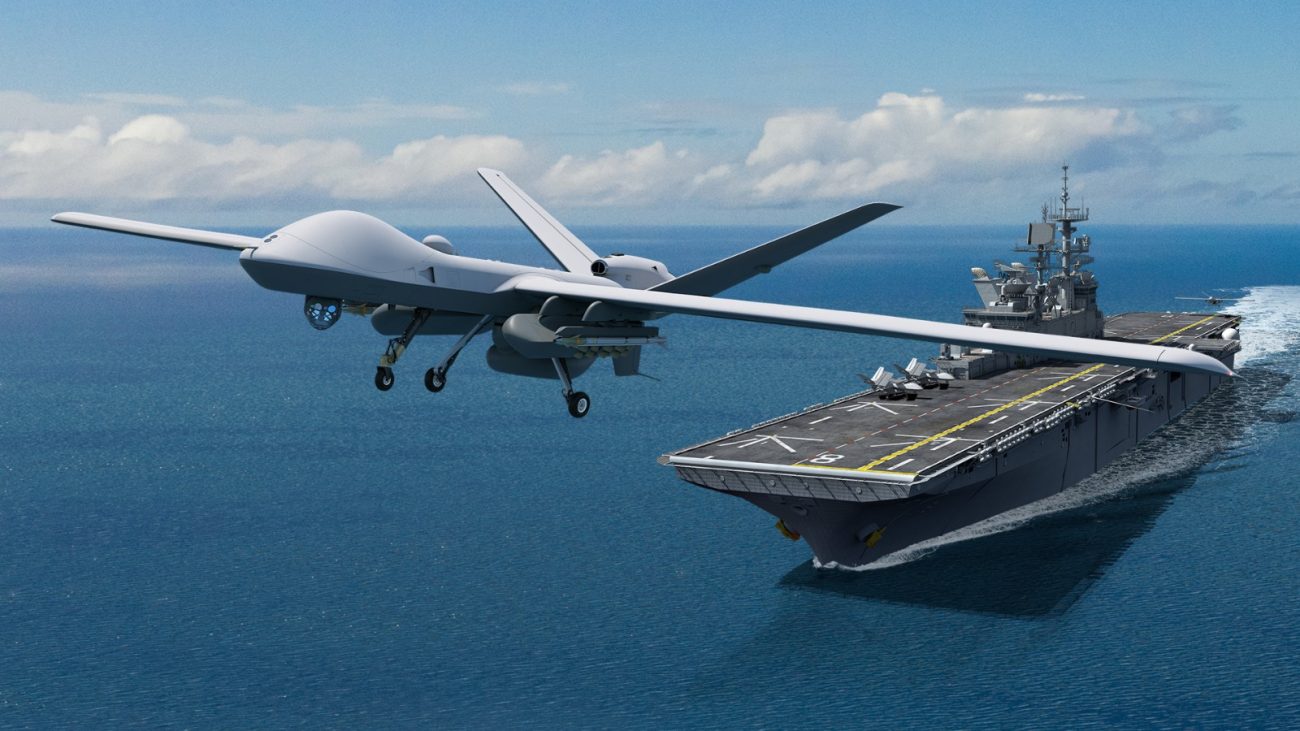
However, compared to one-way attack drones such as the LUCAS or Shahed-136, MQ-9 Reapers are many times more costly, making their loss a significant financial blow to the US military.
The US Air Force, therefore, wants a new drone to replace its expensive workhorse, the MQ-9 Reaper, one that is cheap enough to risk losing in battle.
The Reaper has a per-unit cost of over US$35 million.
The new requirements suggest that the Pentagon has accepted that, in future combat, operational losses of such UAS cannot be avoided, and hence a shift toward quantity over quality.
Testifying before a Senate Armed Services Committee hearing on May 12, Maj. Gen. Christopher Niemi, the acting head of Air Force Futures, said that a new requirements document for an MQ-9 replacement had been approved.
“We believe what is possible is to take advantage of modern manufacturing technology so that we could buy something that is more flexible, lends itself more to open architecture, is more easy to produce in mass numbers, and then ultimately you could use in a more attritable way,” Niemi said.
The industry has been waiting for an MQ-9 Reaper successor for many years now. The USAF requirements suggest that the new UAS is envisioned as less survivable than the Reaper, but also serves as a silent acknowledgment of the harsh realities of the modern battlefield, especially against near-peer adversaries, where operational losses cannot be avoided.
Separately, the Pentagon has laid out plans to buy more than 10,000 low-cost cruise missiles in just three years.
In a press statement last week, the Pentagon announced that “The Department of War has reached new framework agreements with a slate of disruptive new entrants and commercial innovators to aggressively expand the United States military’s strike capabilities.”
“Agreements with Anduril, CoAspire, Leidos, and Zone 5 will launch the Low-Cost Containerized Missiles (LCCM) program, while a parallel agreement with Castelion advances an initiative to scale low-cost hypersonic solutions.”
The @DeptofWar has reached new framework agreements with a slate of disruptive new entrants to aggressively expand the United States military’s lethal cruise missile and hypersonic missile strike capabilities.
Low-Cost Containerized Missiles (LCCM) Program:
• Anduril
•… pic.twitter.com/Fr2xAnBM7y— Department of War CTO (@DoWCTO) May 13, 2026
The Pentagon press statement underscored its new priorities in the aftermath of the Iran War: cost, rapid, repeatable production at high volume, scalability, and lethal-strike capabilities.
“Designed to move at the speed of commercial industry, the agreements establish the terms for future firm-fixed-price production contracts. This effort positions the Department to procure over 10,000 low-cost cruise missiles across these portfolios in just three years, starting in 2027.”
“The Department is creating a pathway for rapid and repeatable production of high-volume, lethal strike capabilities,” it added.
The 40-day Iran War has highlighted how cost, scalability, and rapid, repeatable, high-volume production are key to modern high-intensity warfare, especially in a war of attrition against near-peer adversaries such as Russia and China.
- Sumit Ahlawat has over a decade of experience in news media. He has worked with Press Trust of India, Times Now, Zee News, Economic Times, and Microsoft News. He holds a Master’s Degree in International Media and Modern History from the University of Sheffield, UK.
- VIEWS PERSONAL OF THE AUTHOR.
- He can be reached at ahlawat.sumit85 (at) gmail.com