The US lost/significantly damaged as many as 42 aircraft during its 40-day war with Iran, according to a new US Congress report. These aircraft losses included fixed-wing, rotary-wing, and uncrewed aircraft.
The losses also include aircraft lost in friendly fire incidents, destroyed by drones while still on the tarmac of air bases, and shot down in the air by Iranian missiles.
Furthermore, an analysis of US losses reveals a clear pattern: while MQ-9 Reaper drones were regularly shot down throughout the conflict, the majority of US fighter jets lost were downed during the final days of the war.
This pattern clearly suggests that as the war progressed, Iran learned how to optimally use its limited air defense assets.
According to defense expert and popular commentator Patricia Marins, Iran studied the flight patterns of American fighter jets during the nearly 40-day war and deployed new units with a different tactical bias. She suggests that by the fifth week of the war, the US Air Force (USAF) military tactics had become excessively predictable, giving Iran the ability to be far more efficient.
The US fighter pilot behavior, their standard entry and exit points, operational altitudes, aerial refueling schedules, and electronic jamming patterns were all fairly well known to Iranians by the last phase of the war, allowing Tehran to achieve multiple aerial shoot-downs of US fighter jets.
Which 42 Aircraft Were Lost by the US Air Force?
According to the US Congress report, the USAF lost:
- Four F-15E Strike Eagle Fighter jets
- One F-35A Lightning II stealth fighter jet
- One A-10 Thunderbolt II attack aircraft
- Seven KC-135 Stratotanker refueling aircraft
- One E-3 Sentry AWACS
- Two MC-130J Commando II Special operations aircraft
- One HH-60W Jolly Green II helicopter
- 24 MQ-9 Reaper drones
- One MQ-4C Triton drone
The US Congress report also includes a brief description of how the USAF lost all these aircraft.
How The US Air Force Lost 42 Aircraft?
On March 2, CENTCOM reported that three F-15Es were shot down and destroyed by friendly fire over Kuwait; all six aircrew ejected safely and were recovered.
The fourth F-15E was shot down by Iran during combat operations over Iran on April 5; both aircrew were safely recovered during separate search-and-rescue operations.
The USAF lost seven KC-135 Stratotankers. On March 12, CENTCOM reported that two KC-135s were involved in an incident over friendly airspace; one aircraft crashed in Iraq, resulting in the deaths of all six aircrew. The second KC-135 made an emergency landing at an undisclosed location in the region where U.S. forces are hosted.
Just two days later, on March 14, media reports claimed that five KC-135s were damaged while on the ground at Prince Sultan Air Base, Saudi Arabia, during an Iranian missile and drone attack.
Similarly, on March 28, one E-3 was struck and damaged while on the ground at Prince Sultan Air Base, Saudi Arabia, during an Iranian missile and drone attack.
Two MC-130J Commando II special operations aircraft were self-destroyed by the US Army on April 5, after they became immobilized in Iran while supporting search-and-rescue operations for a downed F-15E pilot.
Another HH-60W Jolly Green II combat search-and-rescue helicopter was lost when it sustained damage from small-arms fire during the same search-and-rescue operation for the downed F-15E pilot.
During the 40-day war, the USAF also lost as many as 24 MQ-9 Reaper medium -atitude long-endurance uncrewed aircraft. This number is significant because it shows that Iranian sensor belts and air defense units have no trouble picking up these expensive drones.
On April 14, one MQ-4C Triton high-altitude long-endurance uncrewed aircraft crashed in a mishap.
However, the biggest shock for the USAF during the entire Operation Epic Fury came on March 19, when Iran was able to damage an F-35A fighter jet over Iranian airspace.
The stealth fighter jet sustained damage in the attack but managed to make an emergency landing at a US military base in the region. Still, the event was significant as this was the first time ever that a fifth-generation stealth fighter jet was hit in the air.
The Iranian success in detecting and hitting the F-35 had global repercussions, since the fighter jet is used/ordered by 19 countries.
The total cost of these aircraft that the USAF lost in the Iran War is estimated to be over USD 2.6 billion.
In summary, the USAF lost five aircraft in accidents and friendly fire incidents, six aircraft were lost on the ground in Iranian missile and drone attacks, two aircraft were self-destroyed by US forces, and four aircraft were hit by Iranian missiles/drones or small-arms fire.
Iranian Strikes On Prince Sultan Airbase That Destroyed Six USAF Aircraft
Iran conducted at least two notable strikes on Prince Sultan Air Base (PSAB) in Saudi Arabia, one on March 27 that damaged one E-3 Sentry and an earlier strike that damaged five KC-135 Stratotankers on the ground.
According to Open Source Intelligence (OSINT) accounts, on March 27, Iran fired around six ballistic missiles, supplemented by nearly 30 drones.
Battle-damaged USAF KC-135 tanker returning from the Middle East sporting a number of patched shrapnel holes.
Likely one of the tankers damaged in an Iranian missile/drone attack on Prince Sultan Airbase. pic.twitter.com/idHs3DClIG
— OSINTtechnical (@Osinttechnical) April 12, 2026
Speculation in OSINT suggests that the ballistic missiles used by Iran may have included models such as Fateh-313 (a short-range ballistic missile, SRBM, with precision guidance), Qiam, or other solid- or liquid-fueled types from Iran’s arsenal, such as Emad, Sejjil, or Khorramshahr variants.
The drones used by Iran possibly included Shahed-series UAVs.
However, the high precision of Iranian attacks (the ability to hit specific aircraft rather than just hitting the air base in general) suggests that Tehran possibly received external intelligence support from either Russia or China.
Notably, Ukrainian President Zelenskyy publicly stated that Russian satellites imaged PSAB on March 20, 23, and 25, just before the March 27 strike—and shared this with Iran.
Furthermore, the Financial Times reported that Iran used a Chinese-built spy satellite. It imaged PSAB around March 13–15 for pre-strike targeting and post-strike damage assessment.
Besides, the USAF also lost 25 drones, all of them possibly to Iranian fire.
Even if one discounts the aircraft lost in accidents, friendly fire incidents, and on the ground, the US still lost 29 aircraft in the air: 25 drones (24 MQ-9 Reapers and one MQ-4C Triton), one F-35, one F-15E, one A-10 Thunderbolt II, and one HH-60W Jolly Green II combat helicopter.
Losing 29 aircraft in aerial combat over a 40-day campaign against a second-tier adversary — even after most of its air defense network had been degraded — remains a significant toll.
This raises a critical question: how was Iran able to consistently target and engage these aircraft?
First, let us consider the high MQ-9 Reaper losses.
How Iran Shot Down 24 MQ-9 Reapers
The MQ-9 is a propeller-driven, medium-altitude long-endurance (MALE) drone optimized for permissive environments, such as counterterrorism operations over Iraq and Afghanistan, where minimal air defenses are present.
It proved highly vulnerable in contested airspace against a state actor like Iran, which has layered defenses.
Even in Yemen, the USAF lost seven MQ-9 Reapers during six weeks of operations.
The majority of MQ-9 Reapers were shot down by Surface-to-Air (SAM) missiles.
Iran operates layered air defense systems, including legacy Soviet systems such as SA-2, S-300PMU-2, indigenous Bavar-373, and short-range Tor-M1 and Pantsir.
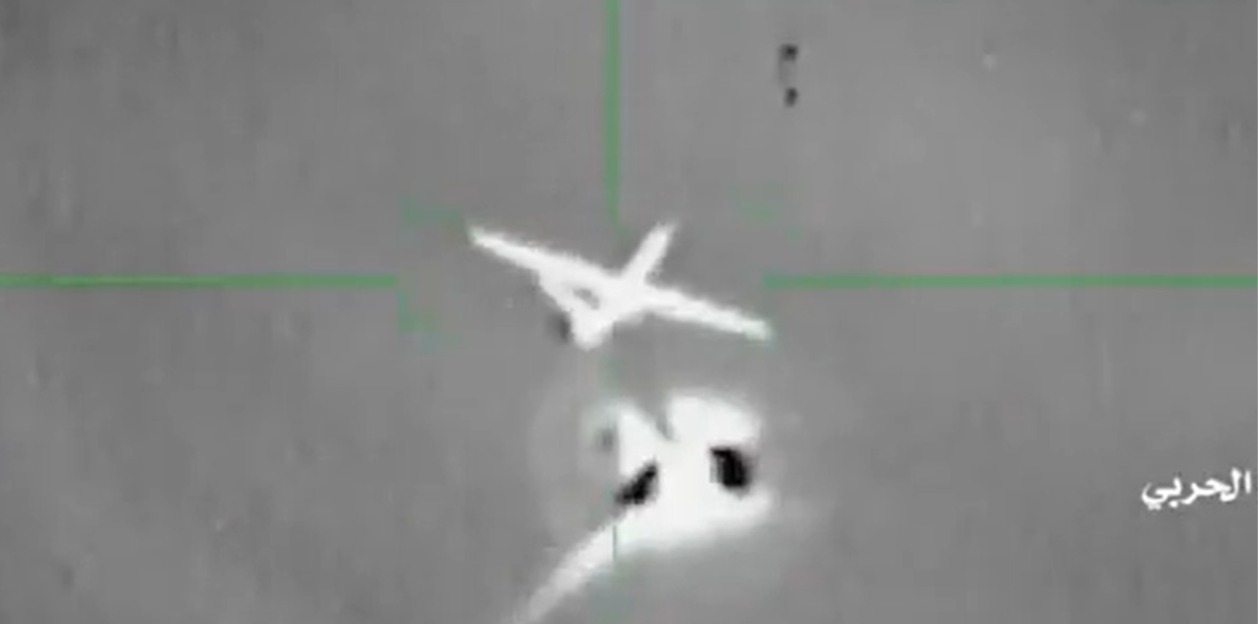
Most of these AD systems are effective against slow-moving Reaper drones. Losses clustered around well-defended cities such as Isfahan, Shiraz, Qeshm Island, and Bushehr, as well as the Strait of Hormuz, clearly indicating shoot-downs by AD systems.
Writing for National Interest, Harrison Kass explained, “The Reaper was designed for permissive environments where adversaries have no air defenses—a constant reality of the fight against Al-Qaeda in Afghanistan and Pakistan and ISIS in Iraq and Syria.
“Operating at low subsonic speeds of 300 miles per hour and below, the Reaper isn’t much faster than a Beechcraft, meaning the drone is easy to shoot down with a missile.”
“In addition to being slow, the Reaper has an enormous radar signature, and it operates with a predictable flight profile, taking long loitering patterns over a given area. These factors, when paired against Iranian air defenses like SAM systems and electronic warfare assets, have created circumstances that made the visible, slow, and predictable Reaper extremely vulnerable.”
However, electronic warfare could also have played a role. Disruption of GPS, datalinks, or communications can force drones into predictable paths, making them easy targets for SAMs.
The HH-60W Jolly Green II combat search-and-rescue helicopter was lost to small-arms fire from Iranian ground forces during the rescue operation for the downed F-15E pilot.
The Downing of F-15E and A-10 Warthog
Iran shot down a F-15E fighter jet on April 3. Iranian state media claimed that the aircraft was shot down by a mobile medium-range SAM like the Third Khordad (Sevvom Khordad) system.
However, US officials and analysts rejected these claims, suggesting that the rare hit was a lucky MANPADS strike rather than a sophisticated radar-guided engagement.
Iran operates hundreds of shoulder-fired MANPADS, including an Iranian copy of the Russian 9K38 Igla or similar heat-seeking missile.
Analysts noted that the F-15 was possibly flying at low altitude, making it vulnerable to IR-guided short-range missiles.
On the same day, a USAF A-10 Thunderbolt II (Warthog) was shot down near the Strait of Hormuz in the Persian Gulf during the search-and-rescue mission for the downed F-15E fighter jet.
The A-10 Thunderbolt was probably flying at low altitude to provide support to ground forces engaged in the search-and-rescue mission.
While there is no official explanation, the aircraft could have been shot down either by a short or medium-range SAM or even by a shoulder-fired MANPADS.
However, the real shock to the USAF came when Iran successfully targeted its stealth F-35A fighter jet, making it the first time ever that the fifth-generation aircraft was targeted in its decade-long operational service.
How Iran Targeted Stealthy F-35?
While the official probe is still ongoing, according to media reports and OSINT analysts, Iran shot down the F-35 fighter jet with its missile-drone hybrid, also known as Product-358.
“Product 358”, also known as the 358 missile or SA-67, is an Iranian-developed loitering surface-to-air missile (SAM) designed primarily as a low-cost counter to unmanned aerial vehicles (UAVs/drones), helicopters, and other slow- or low-flying aerial threats.
It is often described as a hybrid weapon, part missile and part “kamikaze” or loitering munition. Sometimes, it is also called a “drone-based air defense” system. After launch, it can patrol or circle in designated airspace while autonomously searching for targets, then dive in to intercept.
Another enemy F-35 hit and downed by our #indigenous defence systems.
Iran is a force to be reckoned with.#Iran#F35#War pic.twitter.com/q1DhkTXrm3
— Iran in Mumbai (@IRANinMumbai) April 3, 2026
The missile is initially launched by a solid-fuel rocket booster, which gets separated after burning out. The missile, then, in its cruise or loitering phase, is powered by a small turbojet engine.
It is equipped with an infrared (IR)/electro-optical seeker for terminal homing. This passive system means it emits no radar signals, making it “silent” and harder for targets to detect via radar warning receivers.
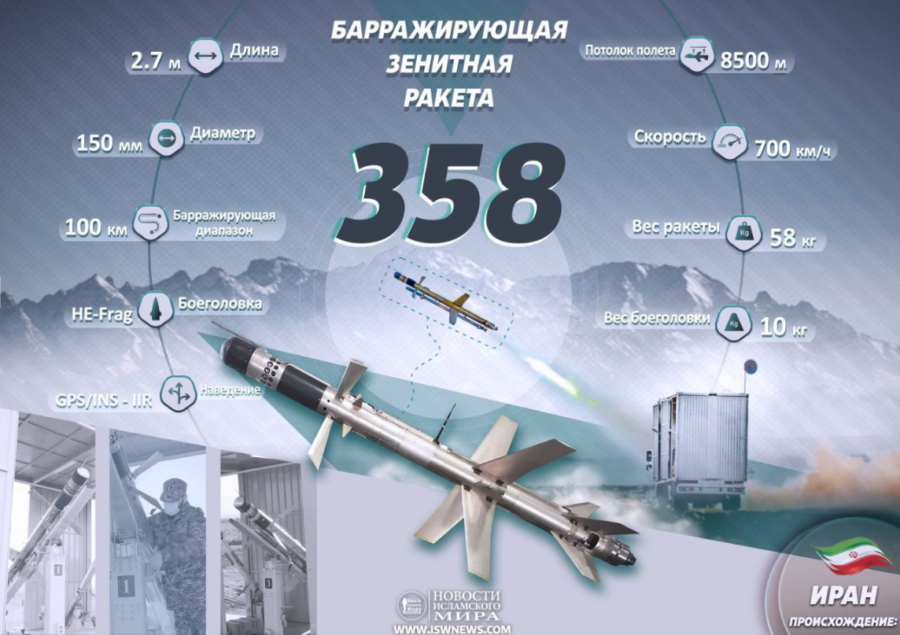
Though the USAF investigation into the incident is not yet complete and Iran has not disclosed which weapons it used to target the F-35 jet, among defense and security analysts, there is growing consensus that the Iranian missile that hit the F-35 was an Iranian Product 358 missile, a curious and genuinely ingenious crossover between a traditional surface-to-air (SAM) missile and a loitering munition.
For instance, Dr. Can Kasapoğlu, Senior Fellow at the Hudson Institute, described the 358 loitering munition as a “natural culprit” for the F-35 hit, highlighting its passive infrared seeker that locks onto engine heat at short range without emitting radar signals, thus bypassing the F-35’s radar-warning receivers.
Similarly, former Indian Air Force fighter pilot Vijainder K Thakur says, “It is hard to predict the contours of future threats. I, for one, am sure that the F-35 that was damaged by an Iranian missile, presumed to be Product 358, did not recognize the drone missile hybrid as a threat.”
The high costs Iran imposed on the USAF during the 40-day war are a testament to its perfection of asymmetric warfare.
Many of Iran’s air defense systems were targeted and degraded during the 12-day war in June 2025. Further, the US and Israel targeted Iranian air defense units on February 28, the opening day of the war.
However, despite these early losses, Iran was able to target multiple USAF aircraft by using its MANPADS, Soviet-era legacy AD systems, and indigenous systems like Bavar-373 and Product 358 to devastating effects.
Iran also targeted multiple USAF aircraft on the ground, possibly using external intelligence, while a few aircraft were lost due to ‘fog of war’ in friendly fire incidents.
- Sumit Ahlawat has over a decade of experience in news media. He has worked with Press Trust of India, Times Now, Zee News, Economic Times, and Microsoft News. He holds a Master’s Degree in International Media and Modern History from the University of Sheffield, UK.
- VIEWS PERSONAL OF THE AUTHOR
- He can be reached at ahlawat.sumit85 (at) gmail.com