As the United States jostles with Iran to wrest control of the strategic Strait of Hormuz, Iran’s Islamic Revolutionary Guard Corps (IRGC) has warned that it will shut down other export channels used by Washington and its allies.
The IRGC said that the Strait of Hormuz would remain closed until the US ends its “acts of aggression” and warned that other regional oil export routes could also become targets.
“The enemy should know that now that its maritime raiders have blocked the Indian Ocean route for oil and gas exports to the world — thereby endangering the interests of America’s economic rivals — it should also expect the closure of other oil and gas export routes that serve the interests of the United States and its allies,” the IRGC said in a statement.
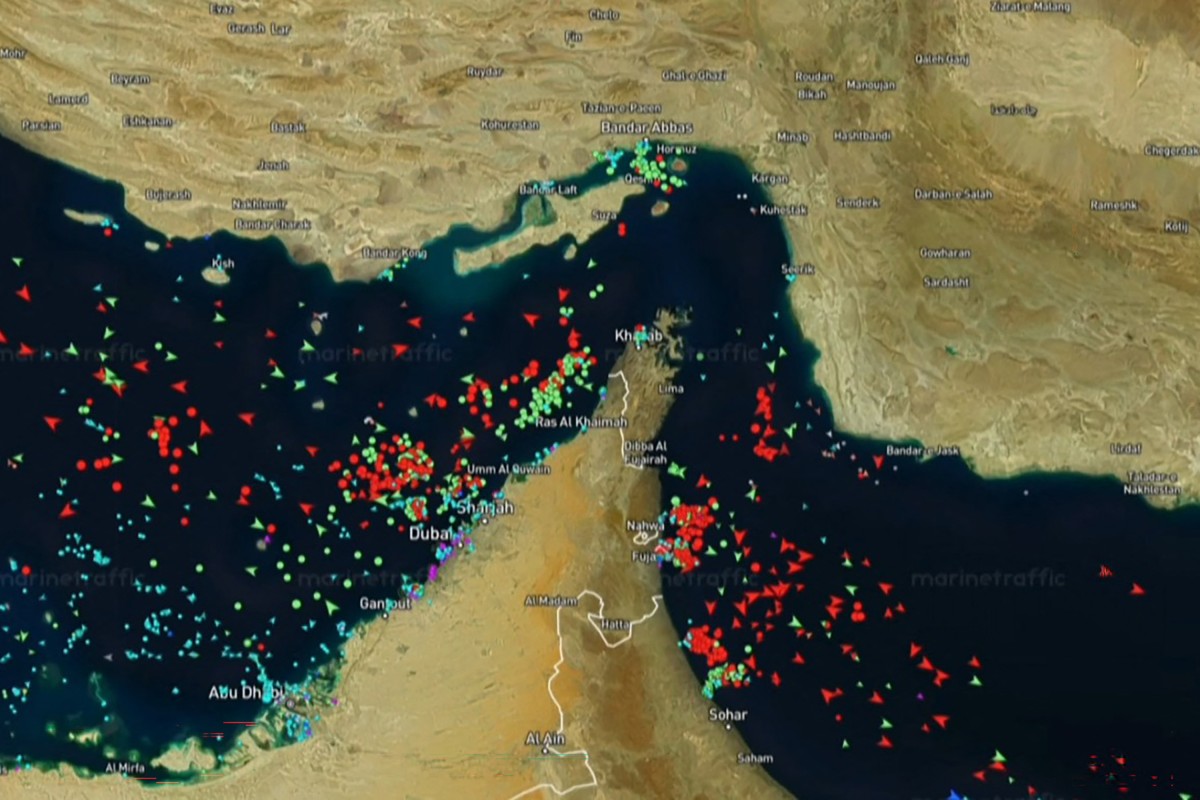
A narrow passage connecting the Persian Gulf to the Gulf of Oman and the Arabian Sea, the Strait of Hormuz is a key conduit for global energy exports — about 20% of global oil and a significant share of Liquefied Natural Gas (LNG), urea, and fertilizers are transited through this strategic channel.
Iran closed the Strait of Hormuz to commercial shipping after the US and Israel launched decapitating strikes across Iran on February 28.
Iran had agreed under the MoU to reopen the Strait of Hormuz to commercial shipping. However, it later designated a route along its own coast and wanted to control ship movements while charging transit fees. The US saw this as a violation of the agreement and instead pushed for an alternative route near Oman’s coast.
This led to the unraveling of the ceasefire and the MoU this month.
Notably, US President Donald Trump announced earlier this month that the ceasefire was over after Iran struck tankers passing through the Strait of Hormuz along Oman’s coast. Subsequently, it conducted strikes on multiple targets across Iran, prompting Tehran to launch retaliatory strikes on US bases across the Gulf.
The US has now reimposed a naval blockade on Iran and declared that it will become the guardian of the Hormuz Strait. Moreover, the US military recently said it began a fresh round of strikes “to continue degrading Iranian capabilities used to attack commercial shipping in the Strait of Hormuz.”
Since restarting the naval blockade against Iranian ports 17 hours ago, U.S. forces have redirected 2 commercial vessels attempting to run the blockade. The U.S. military remains vigilant and prepared to ensure full compliance. pic.twitter.com/E00JAlmBua
— U.S. Central Command (@CENTCOM) July 15, 2026
In response to the US attacks, the IRGC attacked US Fifth Fleet command-and-control, logistical, fuel, and military equipment installations in Bahrain. Additionally, they claimed that their air force had attacked an alleged US base at Azraq in Jordan, targeting aircraft hangars, and set fire to a US logistical center in Kuwait’s Mina Abdullah.
Later, the IRGC said, “Regional energy exports are either shared by all, or denied to all.”
Which Other Chokepoints Can Iran Close?
Iran has a massive network of regional military proxies across West Asia, also known as the “Axis of Resistance.”
Of these, the Yemen-based Houthis have challenged the US and other forces operating in the region since at least 2023, when they started attacking international ships in the Red Sea.
With the IRGC hinting that it will close other vital channels to the US and its allies, analysts believe that the military force could be contemplating leveraging its control over the Houthis to block the Bab el-Mandeb gateway to the Red Sea, creating a new front against Washington and jeopardizing two of the most important energy routes in the world.
Bab el-Mandeb is a small strait that connects the Gulf of Aden to the Red Sea. It handles 10–15% of the world’s maritime trade, including substantial container traffic between Asia, Europe, and the Middle East, as well as 4–9 million barrels of oil per day.
Together, the Strait of Hormuz and the Bab al-Mandeb Strait control critical east-west energy flows between the Middle East, Asia, Europe, and beyond. In fact, the importance of Bab el-Mandeb has significantly increased since the closure of the Strait of Hormuz.
The Houthis and the Iranians have long indicated that they would be willing to launch military attacks or impose a blockade in the Bab el-Mandeb Strait in support of Iran.
❗️There is NO REAL ALTERNATIVE. NONE.
💥 From oil prices EXPLODING overnight to the specter of famine stalking nations—THIS is the nightmare the world will face the MOMENT the Bab al-Mandab Strait slams shut.
Follow: https://t.co/mLGcUTS2ei pic.twitter.com/aRsYMhxglO
— Press TV 🔻 (@PressTV) July 13, 2026
However, the simultaneous closure of the Bab el-Mandeb Strait and the Strait of Hormuz would significantly worsen the global energy and economic crisis, as a quarter of the world’s oil and gas supply would be effectively blocked.
Since 10% of international trade passes through the Bab al-Mandeb, the cumulative effect on supply chains would go well beyond the direct effects of the current crisis. Additionally, the dual-chokepoint shutdown will affect international markets, causing supply chain disruptions, stock volatility, and recession risks for nations that rely on imports.
The Houthis, for one, have demonstrated their ability to block the Bab al-Mandeb. As Israel bombed Gaza between 2023 and 2025, the Houthis blocked the waterway for what they claimed were ships connected to the US or Israel.
The US launched a bombing campaign against the Houthis for the repeated attacks on ships in the Red Sea, but it proved to be an unsuccessful effort and was called off in March 2025, as previously reported by the EurAsian Times.
Subsequently, the US took the high road, and the two sides reached a ceasefire, paving the way for the unconditional opening of the passageway by the Yemen-based group.
Despite refraining from becoming completely involved in the war, the Houthis have intermittently launched attacks during the Iran war, in a not-so-subtle hint that it will prove its utility in combat if called upon to do so.
Iran lacks the naval power to mount sustained, direct blockades beyond Hormuz and Bab al-Mandeb. However, the long-range missiles and asymmetric capabilities in its arsenal may allow it to threaten shipping near the Suez Canal and even the Turkish Straits.
For instance, the IRGC and Houthis can threaten approaches to the Suez Canal directly and indirectly. Since the canal relies on continuous maritime traffic through the Red Sea and the Bab el-Mandab Strait, any Iranian action in these waters or the adjacent Strait of Hormuz would instantly disrupt Suez-bound global supply chains.
Gulf states like Saudi Arabia export their crude oil and gas to Europe via the Suez Canal or the Suez-Mediterranean Pipeline on Egypt’s Red Sea coast and will be directly affected by a campaign targeting these routes.
Moreover, Iran has claimed ballistic missiles and drones with ranges exceeding 2,000–3,000 kilometers, putting some crucial chokepoints in Turkey within firing range.
Iran could use asymmetric tools such as sea mines, anti-ship missiles, and swarm drones, which could be deployed indirectly through saboteurs or proxies. However, it would be logistically harder than in the Persian Gulf or the Red Sea.
- Contact the author at sakshi.tiwari13 (at) outlook.com
- Follow EurAsian Times on Google News