

Israelis have voted but, it seems, have not chosen a clear winner.
Exit polls suggest that Prime Minister Benjamin Netanyahu’s right-wing bloc and his principal rival and erstwhile cabinet colleague, Gadi Eisenkot, who once headed the Israel Defense Forces (IDF), are neck and neck in the race to cobble together the 61 seats required for a majority in the 120-member Knesset.
However, whoever wins is unlikely to fundamentally change Israel’s strategic outlook.
A change in the leadership, that is, if Eisenkot becomes the Prime Minister, is unlikely to see any radical departure from Israel’s policies towards the Palestinian issue, Lebanon, Iran, the United States, and even India.
Held on 27 October 2026, it was the country’s first national election since the 7 October 2023 attacks and served as a critical referendum on Netanyahu’s long-standing rule amid protracted regional conflicts. Driven by massive mobilization in liberal bastions and Arab communities, voter turnout surged to 77.7%, marking the highest participation rate in Israel in nearly 30 years.
Arab-majority parties, meanwhile, appear to have made significant gains, potentially emerging as kingmakers in the negotiations that follow in a hung Knesset, though neither Netanyahu nor Eisenkot would like them to play that role, as yet.
For a clear picture to emerge, it will take weeks of complex coalition jockeying. The President of Israel will consult all factions before tasking a Knesset member with forming a government.
If neither Netanyahu nor Eisenkot can assemble a 61-seat majority through floor-crossing defections or a broad unity agreement, Israel will remain in political limbo, potentially triggering yet another national election in 2027.
Netanyahu’s Likud party seems to be emerging as the largest party, but that does not guarantee success in leading the next government; yet in his post-election address a few hours ago, he was confident he could form “a strong new right-wing government”.
However, the more consequential point is not simply whether Netanyahu survives. The more consequential question is whether his departure, should it happen, will fundamentally reorient Israel’s strategic vision. Because, though many considered yesterday’s election a referendum on Netanyahu, it was not necessarily on Netanyahu’s worldview.
Eisenkot and Netanyahu may differ sharply over leadership, accountability and the handling of the 7 October 2023 Hamas attack. They nevertheless share important assumptions about Israel’s security, the threat posed by Iran and the need to maintain overwhelming military superiority.
After all, Eisenkot is not a dove who opposed Netanyahu. He is a hawk who served under him, joined his war cabinet after the attack, and left in June 2024, citing the lack of a post-war strategy. His difference is not ideology, but statecraft.
Now he blames Netanyahu for the unprecedented security failure of October 7.
He has made accountability for that failure central to his challenge- the adequacy of intelligence and preparedness. He also questions Netanyahu’s subsequent conduct of the war and the absence of a convincing political endgame.
When, in September 2025, Eisenkot founded his “centrist” Yashar Party, his slogan was “Israel Must Win”, alongside concepts inspired by former hostages regarding “ a straight, direct path”.
He authored what is called “the Dahiya Doctrine”, which relies on disproportionate, heavy force directed at civilian and dual-use infrastructure in areas used by hostile forces to establish long-term deterrence.
He also strongly favors continuous, low-signature military and intelligence operations to degrade adversaries below the threshold of an all-out war. He explained this military philosophy as his advancement of MABAM (Hebrew acronym for Ma’aracha Bein HaMamilchamot or “Campaign Between the Wars”).
Eisenkot supports aggressive military objectives against Hamas, Iran, and Hezbollah, but sharply criticizes Prime Minister Benjamin Netanyahu over endgame strategy and domestic political motives. He accuses Netanyahu of prolonging conflicts for political reasons – to serve his own political survival rather than national security.
On Palestine, Eisenkot does not believe in the “two-state” formula. He has said Israel must heavily control the area between the Jordan River and the sea. He opposes a Palestinian state, though he would consider the Palestinian Authority preferable to continued Hamas rule if forced to choose.
He favors legal settlements in occupied territories “that serve national interest”, but opposes the present trend of Netanyahu encouraging “settlement blocks” and suggests outpost violence needs military policing, not civilian control.
On Gaza, his plan is blunt – destroying Hamas’s military wing and dismantling its leadership within 18 months through US President Donald Trump’s ceasefire plan or “creative” military means, while retaining an Israeli security corridor and allowing incremental reconstruction.
In other words, Eisenkot’s Palestine policy is essentially the same as Netanyahu’s in substance; it is a change of tone, not of map.
In Lebanon, Eisenkot supports a security zone while seeking stronger American and French involvement against Hezbollah. This is classic IDF establishment thinking — buffer, not occupation.
Netanyahu’s Lebanon war degraded Hezbollah significantly, and Eisenkot, as author of Dahiyeh, would not hesitate to use overwhelming force again. But he is more likely to couple it with a US-led diplomatic arrangement, giving Washington what analysts called “more room to pursue regional diplomacy, including Saudi-Israeli normalization”.
On Iran, Eisenkot has the same goal as that of Netanyahu – Iran must not get a nuclear weapon and deserves attacks. He has told supporters that the conflict is not finished, since Iran retains 440kg of highly enriched uranium, and that the war must end in destruction in case Trump-guided diplomacy of US-enforced restrictions around enriched sites and their eventual dismantlement fails.
In other words, while Netanyahu seeks military decisions to manage Iran, Eisenkot seeks military pressure to compel a diplomatic closure. But for Tehran, the threat remains the same, though Eisenkot may be more predictable for Washington and less prone to unilateral fait accompli.
In fact, though Trump endorsed Netanyahu, he has no institutional reason to miss him if the latter fails to save his Prime Ministerial post. Trump’s loss will be strictly personal since he considers Netanyahu a close friend.
American support for Israel rests on intelligence cooperation, military technology, defense assistance and shared regional interests. These foundations are unlikely to disappear with Netanyahu.
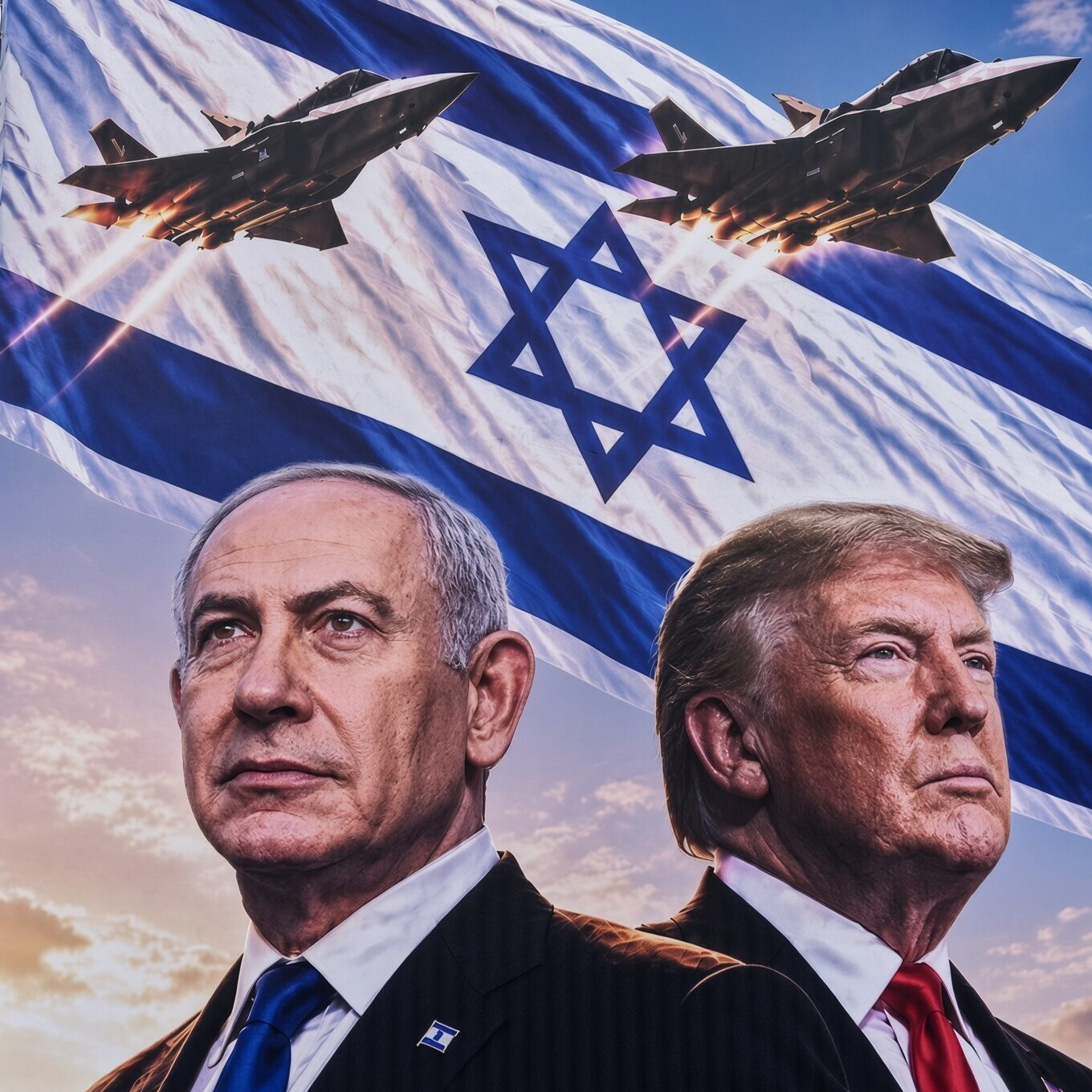
An Eisenkot government is likely to value a more structured relationship with Washington, with closer coordination on military operations and a clearer understanding of the political objectives behind them. An Israeli government that consults Washington more closely could reduce the risk of strategic miscalculation in the Middle East.
Similarly, it may be argued that though Indian Prime Minister Narendra Modi, like Trump, will feel sorry for not seeing Netanyahu remain the head of the Israeli government, Indo-Israeli relations on defense, water, agri-tech, and the I2U2 (India, Israel, United Arab Emirates and the United States) framework will continue, as the partnership is now bipartisan in both capitals.
Eisenkot has said nothing that would downgrade India. As the champion of MABAM, he would equally appreciate India’s need for calibrated kinetic options without full war.
An Eisenkot government may actually be smoother for New Delhi. Netanyahu’s far-right partners frequently embarrassed India with statements on Gaza that forced New Delhi’s official balancing, particularly when India’s principal opposition Congress party is a big votary of the Palestinian cause.
A centrist security government of Eisenkot, focused on Iran and Hamas, not on Temple Mount provocations, allows Delhi to maintain its “friend to both” — strong with Israel, credible with Palestine. This also makes it easy for Modi to maintain his pragmatic, open-ended image in the Gulf countries, which he has built solidly over the last 14 years.
However, for China, an Israel led by Eisenkot may not be exactly good news.
Under Netanyahu, Israel maintained a transactional relationship with Beijing. This was visible in major infrastructure projects like the Haifa port, Chinese tech investments, and a deliberate refusal to fully align with US technology bans. This strategy gave Jerusalem some diplomatic and economic autonomy from Washington.
By contrast, a government led by Eisenkot, a former Chief of Staff deeply integrated into CENTCOM interoperability, would likely prefer to restore institutional trust with the US.
He would not like his administration to risk being perceived by Washington as a backdoor for Chinese influence. While basic trade continuity will likely remain with China, screening on dual-use technology, critical infrastructure, and artificial intelligence could become significantly tighter.
In that sense, for China, an Israel led by Eisenkot becomes a less viable strategic hedge against American influence.
Viewed thus, a hung parliament has given Israel a choice between a familiar Prime Minister and a familiar General. It is unlikely that the overall strategic approach will change substantially, though the style could differ if the General becomes Prime Minister.
Eisenkot’s style is likely to be more institutional, more American-aligned, and more predictable.
- Author and veteran journalist Prakash Nanda is Chairman of the Editorial Board of the EurAsian Times and has been commenting on politics, foreign policy, and strategic affairs for nearly three decades. He is a former National Fellow of the Indian Council for Historical Research and a recipient of the Seoul Peace Prize Scholarship.
- The author can be reached at prakash.nanda (at) hotmail.com