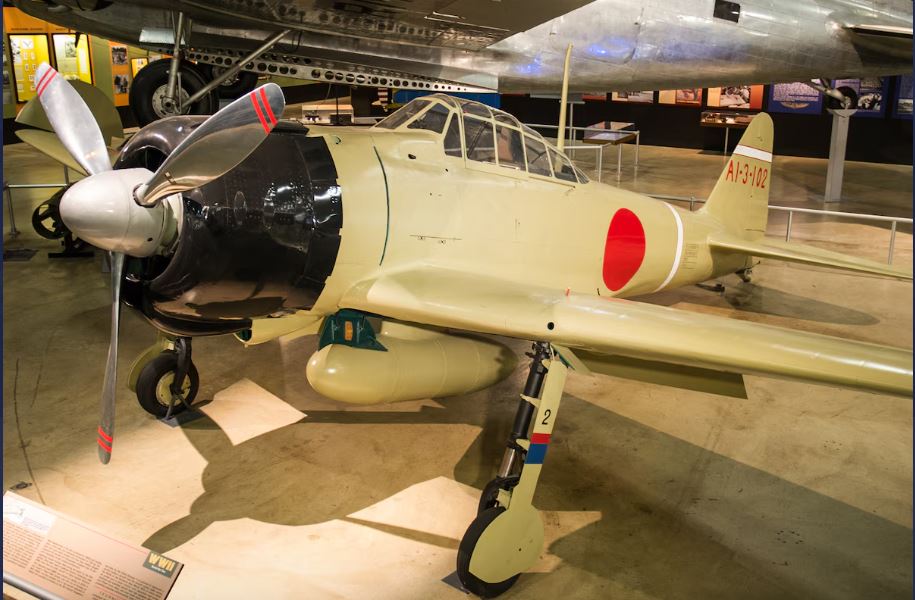
Automobile makers have a rich history of defense production. During the Second World War, many of today’s renowned automobile makers, including Japan’s Mitsubishi and Toyota, Germany’s Volkswagen and Daimler-Benz, France’s Renault, the UK’s Rolls Royce, Italy’s Fiat, and the US’s Ford, General Motors, and Chrysler, were deeply involved in defense manufacturing, producing everything from tanks and aircraft engines to armored vehicles, munitions, and military utility trucks.
In the post-World War era, many of these companies returned to civilian automobile manufacturing; however, some companies, such as the UK’s Rolls-Royce, maintained active defense production units.
In the modern era, Turkey’s preeminent drone manufacturer, Baykar, began as a car component manufacturer in 1984.
Similarly, South Korea’s Hyundai Motors has been actively involved in defense manufacturing for the last five decades.
However, in the aftermath of the Russia-Ukraine War and the tremendous pressure it is putting on countries’ stockpiles of weapons, many governments are once again exploring the possibility of automobile companies reentering defense manufacturing.
Last year, the French government approached the automobile manufacturer Renault to re-enter defense production after an 80-year gap. Renault was to mass-produce drones in collaboration with Ukrainian defense companies.
Last month, it was reported that Volkswagen is in talks with Israeli defense company Rafael Advanced Defense Systems about potentially converting VW’s Osnabrück plant, currently threatened with closure, to produce defense-adjacent parts.
Similarly, during the Iran War, the US has depleted its stocks of missile interceptors and precision munitions to historic low levels, which has raised uncomfortable questions about Washington’s ability to sustain a war of attrition with peer adversaries, such as China and Russia.
In fact, many governments are waking up to the harsh reality that their current defense-industrial base is not sufficient to sustain intense, long, drawn-out wars.
In desperation, they’re now turning to automobile manufacturers to boost defense production.
Earlier this week, the Trump administration officials met with senior executives of Ford Motor and General Motors to gauge whether the auto industry could help the military acquire vehicles, munitions, or other hardware more quickly and at lower costs.
The Wall Street Journal reported that Pentagon officials met with the chief executives of several US manufacturers, including GM’s Mary Barra and Ford Motor’s Jim Farley, to discuss the possibility of producing weapons and other military supplies in their factories.
“The Department of War is committed to rapidly expanding the defense industrial base by leveraging all available commercial solutions and technologies to ensure our war fighters maintain a decisive advantage,” a Pentagon official said in a statement to the New York Times.
“The department is aggressively pursuing and integrating the best of American innovation, wherever it resides, to deliver production at scale and drive resiliency across supply chains.”
The Trump administration has complained for months that traditional defense contractors take too long to manufacture weapons systems and charge too much for them. In January, President Trump signed an executive order aimed at punishing defense contractors that failed to expand their manufacturing capacity.
And in November, the defense secretary, Pete Hegseth, rolled out a strategy for military procurement that included buying more widely available off-the-shelf components to avoid the high costs and delays associated with the specialized systems that the military typically uses.
The defense industrial base “is stagnant, building the world’s best and most exquisite weapon systems at low volume while relying on obsolescent parts, outdated manufacturing processes and stale innovation,” the strategy read. “In contrast, the commercial industry outpaces the D.I.B. in advancing cutting-edge technology.”
At this stage, the discussions are in early stages, sources said, and relate to the production of certain components, not the entire weapons systems.
Still, these discussions with automakers underscore the Trump administration’s efforts to boost defense procurement after the wars in Ukraine and Iran have depleted its stocks.
While the exact figures are classified, according to some estimates, the US fired more Patriot missile interceptors in the first five days of the Iran War than Ukraine used in its four years of War with Russia.
According to a New York Times report, the US and its allies have expended over 800 anti-ballistic missiles from MIM-104 Patriot long-range air defense systems, worth USD 2.4 billion, during just the first five days of hostilities with Iran.
Notably, the US made an average of 270 advanced Patriot missiles a year from 2015 to 2024, according to the Center for Strategic and International Studies (CSIS). However, Lockheed Martin delivered 620 PAC-3 MSE in 2025, and the current capacity for producing PAC-3 interceptors stands at around 600.
This means that the US and its allies have burned through more Patriot interceptors in just the first five days of war than the US has the capacity to produce in the next year.
A recent Payne Institute analysis shows that in the first four days alone, the US used 16% of its THAAD and 15% of its Patriot interceptors.
Similarly, reports suggest that Iran has targeted at least four THAAD radars during the conflict. Currently, there are only 10 THAAD systems globally. The US operates seven of these; two were sold to the UAE, and one THAAD battery is with Saudi Arabia.
The Pentagon has turned to auto suppliers because U.S. officials remember how Ford and G.M. revamped production lines during the Covid-19 pandemic to make personal protective equipment and ventilators.
Even more importantly, during the Second World War, automakers, particularly Ford, helped the US boost defense production manifold.
That industrial mobilization for the war effort led President Franklin D. Roosevelt to term the automobile factories the “arsenal of democracy,” which helped Washington turn the tide of the war in Europe.
Ford’s Defense Production Milestones During WW-II
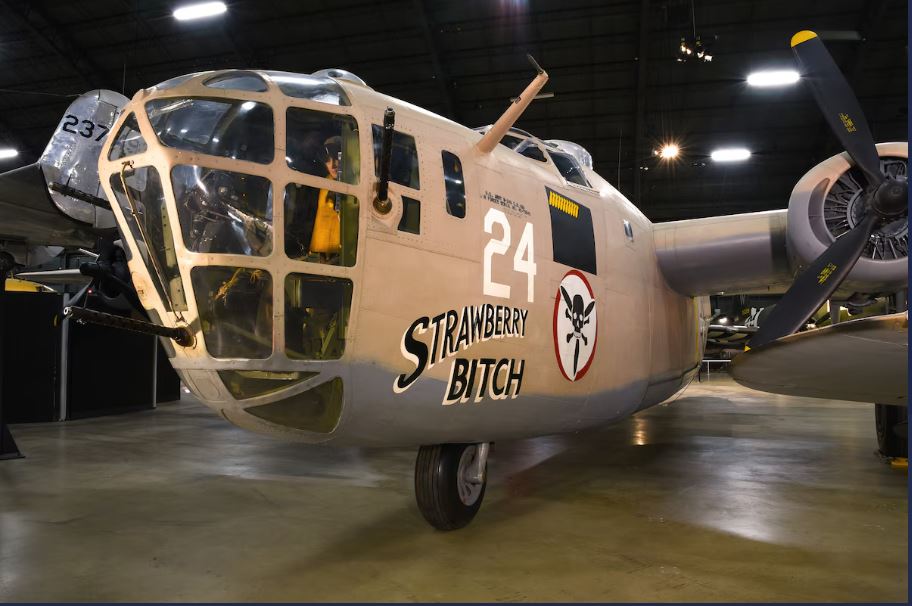
During the Second World War, Ford’s Willow Run factory churned out thousands of aircraft. At its peak, Ford factories were producing one B-24 Liberator bomber an hour, a production rate that has never been matched since then.
In one three-day period in April 1944, the Ford factory built 100 bombers. For context, in 2025, Dassault Aviation built just 26 Rafale fighter jets, and Lockheed Martin built 191 F-35 fighter jets.
In 1939, U.S. aircraft factories manufactured 921 warplanes. Three years later, in 1942, US President Roosevelt asked Congress for 50,000 planes a year.
When Hermann Göring, head of the German Luftwaffe, heard this, he laughed. “No one can build 50,000 planes a year. That’s pure propaganda,” Göring reportedly said.
In 1944, the U.S. would build nearly 100,000 airplanes.
According to the book The American Aircraft Factory in World War II, the US produced over 300,000 aircraft during the Second World War.
This unprecedented output would not have been possible without the massive contribution of the US automobile sector.
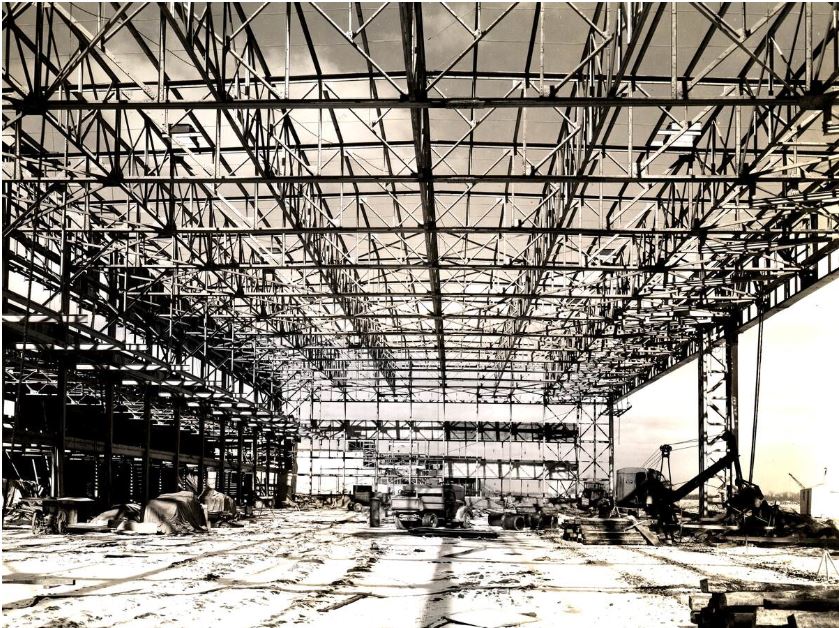
Construction of Ford’s massive Willow Run Bomber Plant began in 1941. Designed by architect Albert Kahn, it became the world’s largest factory under one roof at the time and applied automotive mass-production methods to aircraft manufacturing.
Ford also produced Rolls-Royce Merlin and Pratt & Whitney aircraft engines, tank components, and other equipment at plants such as River Rouge and Dearborn.
By 1943, the Willow Run factory was employing nearly 50,000 workers.
During the war, Ford also built nearly 1,700 M4A3 Sherman tanks and over 1,000 M10A1 tank destroyers.
The last B-24 rolled off the Willow Run line on June 28, 1945. In total, Ford built 8,685 B-24s at Willow Run, accounting for nearly half of all Liberators produced.
Ford also built 278,000 military jeeps, a major share of the iconic WWII Jeep program, and nearly 57,000 aircraft engines.
This massive aircraft production helped the Allied forces achieve air superiority over Germany and Japan.
Germany surrendered in May 1945. By July 1945, Ford factories were already shifting back to civilian automobile production.
In the post-World War era, Ford maintained a minimal defense production output.
Ford supplied military versions of its trucks and other support vehicles during the Korean War. However, defense work supplemented, rather than dominated, its core civilian business during the Cold War.
It remains to be seen if Ford and GM will re-enter the core defense production business eight decades after the Second World War.
- Sumit Ahlawat has over a decade of experience in news media. He has worked with Press Trust of India, Times Now, Zee News, Economic Times, and Microsoft News. He holds a Master’s Degree in International Media and Modern History from the University of Sheffield, UK.
- VIEWS PERSONAL OF THE AUTHOR.
- He can be reached at ahlawat.sumit85 (at) gmail.com