Ties between the US and the UK are rapidly deteriorating, and the Pentagon is now reportedly pushing for a major shift in Washington’s long-standing support for British sovereignty over the Falkland Islands — a territory not covered by NATO’s Article 5 collective defense clause.
According to a US official who exclusively spoke to Reuters, an internal Pentagon email outlines options for the United States to punish NATO allies it believes failed to support its operations in the Iran war.
These options allegedly include Spain’s suspension from NATO and a re-evaluation of the US position on the UK’s claim to the Falkland Islands.
The note has reportedly been prepared by the Pentagon’s top policy adviser, Elbridge Colby, and is in line with US President Donald Trump’s ire with the NATO alliance.
As previously reported by the EurAsian Times, Trump lashed out at NATO members over their response to his war with Iran and suggested he could quit the alliance. Blasting the allies in their failure to help in reopening the Strait of Hormuz, Trump earlier said, “Without the USA, NATO IS A PAPER TIGER! in a post on his Truth Social.
Colby reportedly voiced frustration with the reluctance of NATO states, including the United Kingdom, to grant ABO (Access, Basing, and Overflight) rights to US military aircraft during the war. ABO is “just the absolute baseline for NATO,” he wrote, as the US official told Reuters.
Notably, the UK initially refused American access to its bases for conducting offensive strikes on Iran, but later overturned the position and allowed US flights from its bases for “defensive” missions. However, Trump has also been furious about Britain not joining offensive strikes on Iran alongside the US military and not deploying its aircraft carriers to the Middle East region.
Will the US Change Position on the Falklands?
The Falkland Islands are administered by the United Kingdom but claimed by Argentina, which calls them Las Malvinas.
The Falklands are a collection of islands in the South Atlantic Ocean, around 13,000 kilometers from Britain and 500 kilometers east of the Argentine mainland. They are made up of 778 smaller islands and two major islands, East Falkland and West Falkland.
Although France and Spain had outposts on the islands at different times, Britain regained control of the islands in 1833 and has been in charge of them ever since.
In a brief interlude in April 1982, Argentina invaded and conquered the Falkland Islands. However, the UK responded almost immediately by sending a naval task force to engage the Argentine navy and its air force. This was followed by a large-scale amphibious invasion that eventually ended in a British victory after about 74 days of fighting.
Argentina surrendered its control of the islands back to the UK—an arrangement that has stayed in place ever since. Since the island returned to British control, the US has refrained from taking a clear position on the island’s sovereignty.
Currently, the US State Department maintains that the matter is a bilateral issue between the UK and Argentina. “We encourage both parties to resolve their differences through dialogue in normal diplomatic channels. We recognize de facto United Kingdom administration of the islands but take no position regarding sovereignty,” it states.
However, the matter remains unresolved, given that Britain refuses to engage in any discussion of the sovereignty of the Falkland Islands. In fact, it argues that it has “continuously, peacefully and effectively inhabited and administered” the Falkland Islands, also known as Islas Malvinas in Argentina, since 1833, with the “exception of two months of illegal occupation in 1982.” Additionally, the British government asserts that the Falklands’ citizens have the right to determine their own destiny and status.
Argentina, on the other hand, argues that it inherited the Falkland Islands from Spain upon its independence and asserts that the island’s inhabitants do not have the right to self-determination.
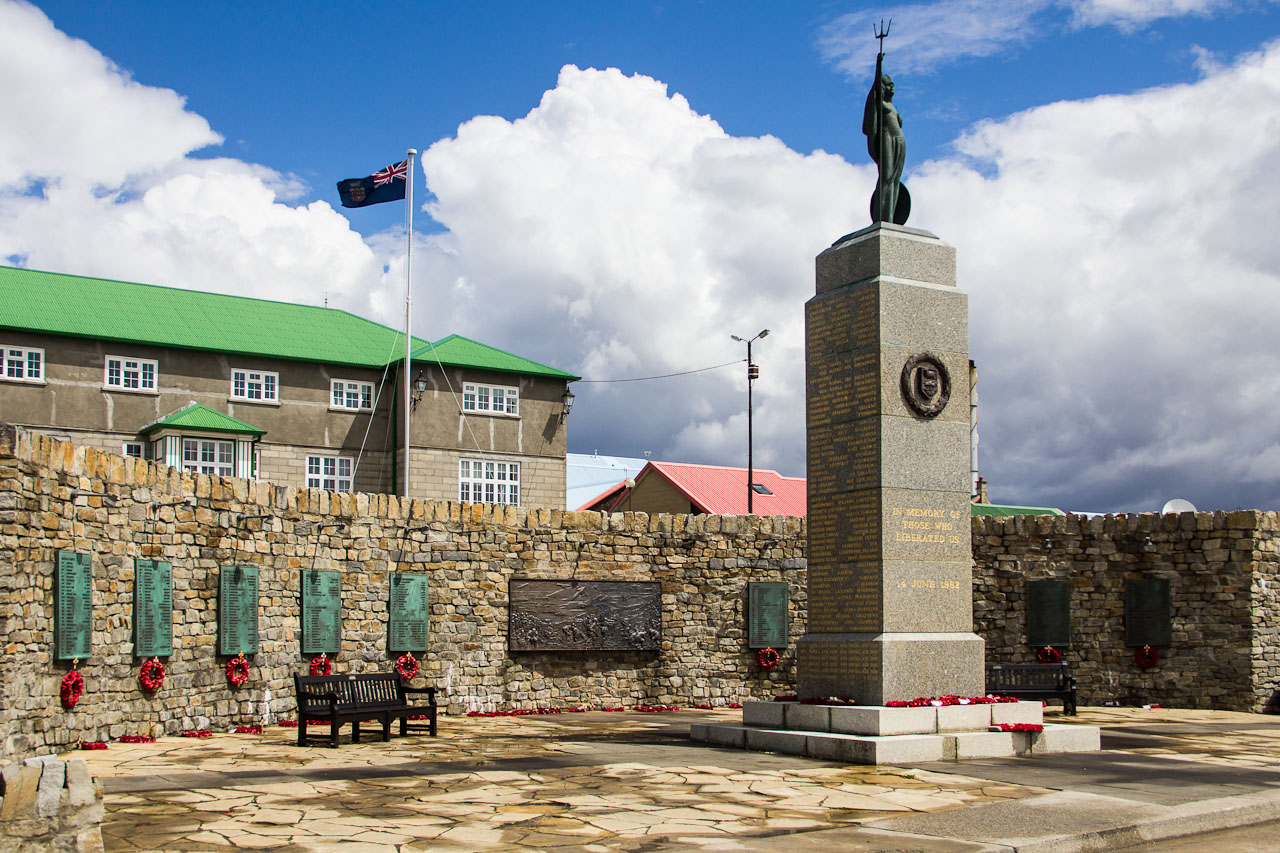
The people of the Falkland Islands overwhelmingly support being under British patronage.
Responding to the latest reports about the potential change in American position, the Falkland government lambasted the Trump administration, reiterated that the island was British, and emphasized that about 99.8% of islanders voted in favor of remaining a British Overseas Territory.
“The Falkland Islands has complete confidence in the commitment made by the UK Government to uphold and defend our right of self-determination,” an official statement from the island’s government stated.
The Argentine President Javer Milei, a close confidante of Trump, jumped at the opportunity to call for renewed talks on the issue. “We are doing everything humanly possible so that the Argentine Malvinas, the islands, the entire territory return to the hands of Argentina,” he said in an interview posted to X. “We’re making progress like never before.”
In a separate post on X, Argentine Foreign Minister Pablo Quirno said, “The Argentine Republic once again expresses its willingness to resume bilateral negotiations with the United Kingdom that will allow for finding a peaceful and definitive solution to the sovereignty dispute and bring an end to the special and particular colonial situation in which they are immersed.”
It is pertinent to note that although the Falkland Islands are not protected under NATO’s Article 5 collective defense clause, which is restricted to the North Atlantic area north of the Tropic of Cancer, as defined in Article 6.
Since the Falkland Islands lie in the South Atlantic, Argentina’s 1982 invasion of the islands did not trigger Article 5. And, it is for this reason that the UK would have to fend for itself if an attack were launched by any country in the future.
Notably, the US did make some efforts to diplomatically resolve the conflict between the UK and Argentina at the outset of the 1982 conflict, despite not having an official position on the matter. However, when those attempts failed, the White House provided military support to the UK by supplying intelligence and cutting-edge missiles.
Since then, the US government has routinely blocked all resolutions passed by Argentina related to the sovereignty of the Falkland Islands.
A change in official position on the sovereignty of the Falkland Islands could complicate matters and cause further rift in the bilateral relations between the two allies.
The Falkland Islands are currently home to a large British military presence, including RAF Mount Pleasant, which serves as a critical airbridge connecting the islands to the United Kingdom. There are infantry companies, air defense batteries, Typhoon fighter jets, and usually a Royal Navy patrol vessel among the British forces stationed there.

On its part, the British media seems to think that the upcoming visit of King Charles, whom Trump places on a pedestal, may fix ties between the two states.
“Trump has developed a rapport with Argentina’s president, Javier Milei, who recently reasserted his country’s claim to the islands, but it seems highly unlikely Trump would want to dedicate any time at all – or that of his officials in the UN – on the issue. There are deep security ties between the UK and the US, and such a pivot would be heavily resisted within the system,” British publication, The Guardian, stated.
- Contact the author at sakshi.tiwari13 (at) outlook.com
- Follow EurAsian Times on Google News