The US Air Force is practicing the forward arming and refueling of the F-22 Raptor, its frontline stealth fighter jet, to prepare for a contingency in the Pacific, where the ability to operate over long distances, distributed operations, and a quick sortie rate could be the key differentiation between the US and China in the opening hours of a conflict.
The USAF demonstrated how the forward arming and refueling of the F-22 Raptor could keep the stealth fighter jet in combat for longer at Kadena Air Base, Japan.
An F-22 Raptor, assigned to the 18th Logistics Readiness Squadron, was refueled by an MC-130J Commando II during Beverly Beach 26-1 on August 4.
Such forward arming and refueling point operations reduce ground time and return the aircraft to the mission quickly.
During such hot-pit refueling, the fighter jet pilot remains in the cockpit, and the jet engines are kept running while refueling, so the fighter can return to operations with minimal delay.
“Hot-pit refueling allows us to fuel an aircraft while its engines are still running,” said U.S. Air Force Senior Airman Cameron Brown, 18th Logistics Readiness Squadron fuels distribution operator.
“As soon as the aircraft lands, we refuel it so it can quickly return to its mission. It’s all about reducing turnaround time and getting the aircraft back in the air safely and efficiently.”
Furthermore, such forward point refueling ensures that the jets do not have to return to main air bases. The jet could simply land at a forward base, refuel while its engines are still running, quickly return to combat, and travel farther distances. This could be crucial in the Pacific theatre, which is marked by vast distances.
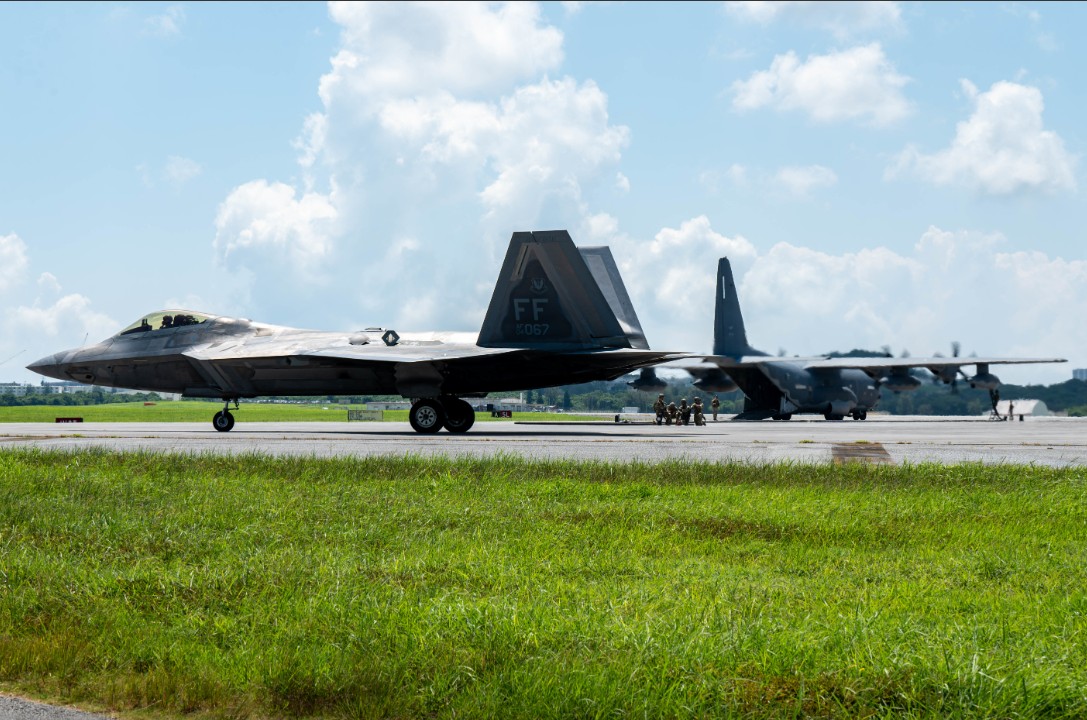
“Forward arming and refueling point operations allow aircraft to rapidly refuel from expeditionary locations, extending operational reach while minimizing time spent on the ground,” the Pacific Command said in a press release.
Working together, the teams validated procedures that enable combat aircraft to rapidly recover, refuel, and launch again from expeditionary locations while maintaining strict safety standards, it added.
Throughout the exercise, Airmen performed each task while wearing mission-oriented protective posture gear, adding realism to the scenario and reinforcing their ability to sustain aircraft generation under degraded conditions.
At the same time, forward arming and refueling point operations from temporary bases could support distributed operations, instead of assembling all combat aircraft, aircrew, and refueling resources at just a few air bases.
This will reduce the dependence of allied forces on some fixed air bases and will complicate their targeting by China.
Furthermore, distributed operations will provide the stealth fighters greater flexibility to operate from austere or temporary locations.
If China targets the main air bases during the opening hours of a conflict in the Pacific and their runways become inoperable, the flexibility to operate from such temporary and forward bases could prove crucial.
This capability is particularly crucial in the Pacific, where fighter jets have to operate over long distances. By moving the fuel and support teams to forward bases, the air force can increase the operational range of the fighter jets.
Notably, the flexibility to support distributed operations from temporary, forward bases also aligns with the USAF’s Agile Combat Employment (ACE) concept.
Forward Arming And Refueling To Aid the U.S. Air Force’s ACE Concept
ACE is the U.S. Air Force’s operational concept for generating and employing combat airpower in contested environments against peer or near-peer adversaries.
It was formally defined in 2022 as “A proactive and reactive operational scheme of maneuver executed within threat timelines to increase resiliency and survivability while generating combat power.”
Traditionally, air forces relied on large, centralized main operating bases, also called enduring locations. However, such bases are increasingly vulnerable to long-range precision fires, such as ballistic missiles, cruise missiles, and hypersonic weapons.
ACE addresses this vulnerability by shifting operations from large, centralized infrastructures to a network of smaller, dispersed locations.
Therefore, the ability to refuel stealth fighters from forward bases directly supports the USAF’s ACE policy.
The Constantly Evolving F-22 Raptors
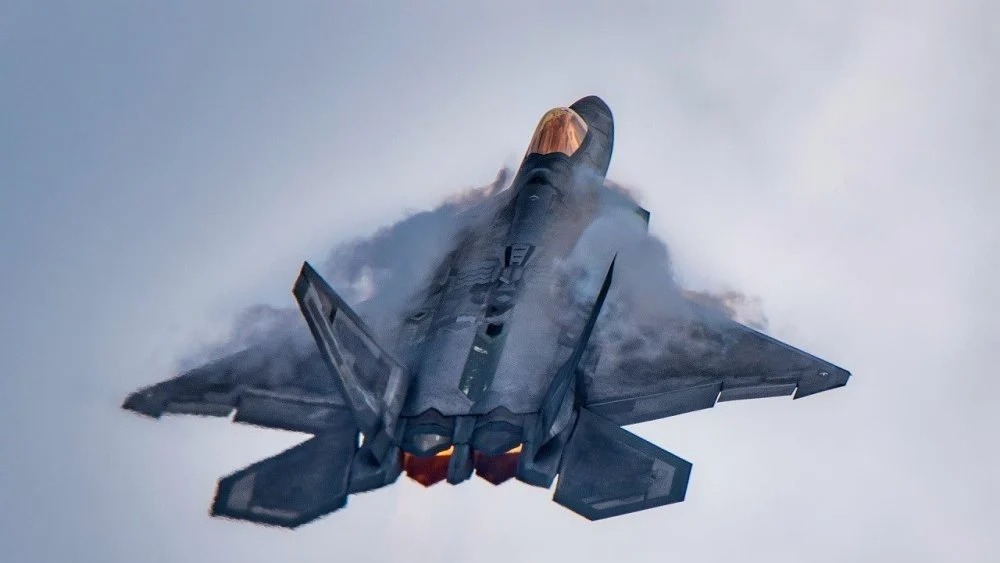
The F-22 Raptor is the USAF’s frontline air-superiority fighter jet, built around stealth, supercruise, advanced sensors, and highly integrated avionics.
In any Pacific contingency, the F-22 will play a leading role.
Notably, a dozen F-22 Raptors are now deployed to Kadena Air Base, Japan, as part of a “rotation designed to strengthen regional interoperability and maintain a persistent, high-tech presence in the Indo-Pacific,” the United States Pacific Fleet announced in May this year.
“While deployed to the Keystone of the Pacific, the F-22s will operate alongside heavy, reconnaissance, and fourth- and fifth-generation aircraft assigned to the Air Force’s 18th Wing at Kadena Air Base, ensuring continuous and credible fighter capability in the region,” the Pacific Fleet explained in its media statement.
Kadena Air Base is the largest and most active US Air Force base in the region. Located on Okinawa, it is roughly 900 miles from Tokyo, Manila, Seoul, and Hong Kong. It also sits 1,200 miles west of Guam, the American territory that serves as a critical hub for US military operations in the Indo-Pacific.
The USAF currently has 185 F-22 Raptors. However, only about 142 of the 185 Raptors are combat-capable, with the rest of the aircraft primarily used for training, testing, and evaluation duties.
The USAF was expected to retire 32 Block 20 F-22A Raptors, which are not combat-capable. However, the aircraft retirement list for FY2026 does not feature F-22 Raptors, signaling that the USAF intends to maintain the complete F-22 fleet for a much longer duration.
A small number of F-22 Raptors are also down for maintenance at any given point in time.
Notably, the USAF is also constantly upgrading the F-22 Raptors.
The Raptors could also be the first stealth aircraft to operate as airborne controllers for Collaborative Combat Aircraft (CCA).
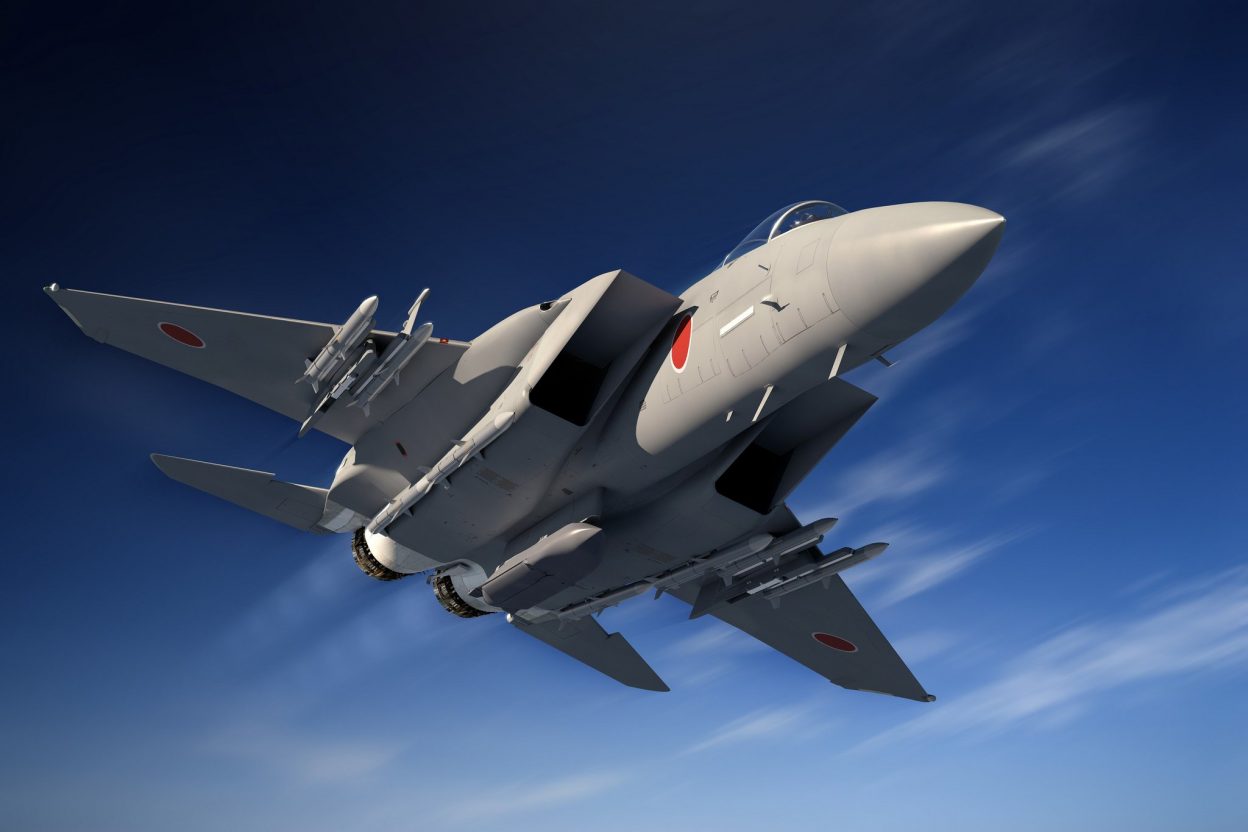
In February this year, Lockheed Martin also presented a scale model of the new-look F-22 Raptor fitted with stealthy external fuel tanks and underwing infrared sensor pods.
The integration of stealthy external fuel tanks will increase the range of F-22 Raptors without compromising their stealthy profile.
The new scale model, termed “Raptor 2.0” by Lockheed Martin, was presented at the Air & Space Forces Association’s annual Warfare Symposium.
While the F-22 Raptor has a ferry range of more than 1,850 miles with two external wing fuel tanks, its range without them, though not officially disclosed, is estimated at around 680 miles.
Lockheed Martin is so confident of the stealth characteristics of its external fuel tanks that it said the F-22 Raptor could enter combat without jettisoning them.
Lockheed Martin also unveiled another set of stealthy pods equipped with a highly capable infrared search-and-track (IRST) system.
These IRST pods are useful for detecting stealthy targets, which could be critical in the Indo-Pacific theatre. China has already fielded over 300 J-20 stealth fighters and unveiled a carrier-capable stealth fighter, the J-35.
Furthermore, the US Air Force does not need to equip all Raptors with such stealthy IRST pods, as only a few F-22s equipped with them can share their data with other fighters.
The USAF has been testing these IRST pods with the F-22 Raptors at least since 2023.
In the future, other stealthy sensors and electronic warfare pods could also be designed for the F-22 Raptor.
The addition of stealthy external fuel tanks to the F-22, combined with stealthy loyal wingman drones, external IRST pods, and forward arming and refueling of the Raptors, will significantly enhance the operational range and lethality of the USAF’s frontline stealth air-superiority fighter, and all this could prove decisive in the Pacific theatre.
- Sumit Ahlawat has over a decade of experience in news media. He has worked with Press Trust of India, Times Now, Zee News, Economic Times, and Microsoft News. He holds a Master’s Degree in International Media and Modern History from the University of Sheffield, UK.
- He can be reached at ahlawat.sumit85 (at) gmail.com