In a major push for greater European strategic autonomy, the EU will draw up a detailed “blueprint” for activating its mutual assistance clause in the event of an armed attack on any member state, Cypriot President Nikos Christodoulides announced on Friday.
As US President Trump continues to question Washington’s commitment to NATO — amid criticism of NATO’s role in the ongoing Iran conflict — EU leaders are accelerating efforts to clarify and operationalize Article 42.7 of the EU Treaty.
Cyprus, one of the few EU countries not in NATO, has spearheaded a push to define how the clause works after a drone struck a British base on the island at the start of the Iran war in March. “The (European) Commission will prepare a blueprint on how we respond in case a member state triggers Article 42.7,” Cypriot President Nikos Christodoulides, whose country holds the EU’s rotating presidency, said as he hosted a summit in Nicosia.
“All member states, the member states that are NATO members but also those countries that are not NATO members, they see the necessity to have an operational plan.”
To flesh out the work, senior diplomats from the EU’s 27 member states will stage a “table top” exercise in Brussels in May, simulating how the bloc would respond in the event of an armed attack.
The exercise — which will be followed up by another one run by EU ministers — comes as Trump has rocked faith in NATO.
The US leader has angrily lashed out at European countries over their response to his war with Iran and suggested he could quit the 77-year-old military alliance. But European officials insist that they do not see Article 42.7 as a substitute for NATO’s Article Five collective defense clause.
Twenty-three of the EU’s 27 member states are also in NATO, and they are keen not to fuel any thinking by Trump that he can walk away from the alliance. “NATO is our most important alliance if it comes to security,” Dutch Prime Minister Rob Jetten said.
The EU’s Article 42.7 has only been invoked once — by France after the 2015 terror attacks in Paris — and there remain deep questions over what it entails.
The clause says that if the territory of an EU country is attacked, other member states “shall have towards it an obligation of aid and assistance by all the means in their power”.
But it leaves it to each country to decide the kind of assistance it offers and underscores that NATO remains the “foundation” of collective defense for most EU members.
“The treaty is very clear about the what, and it’s very strong that there is an obligation of other member states to support the one who is in need,” said European Commission Ursula von der Leyen. “The treaty is not clear about what happens when, and who does what. And this is the topic we are working on intensively.”
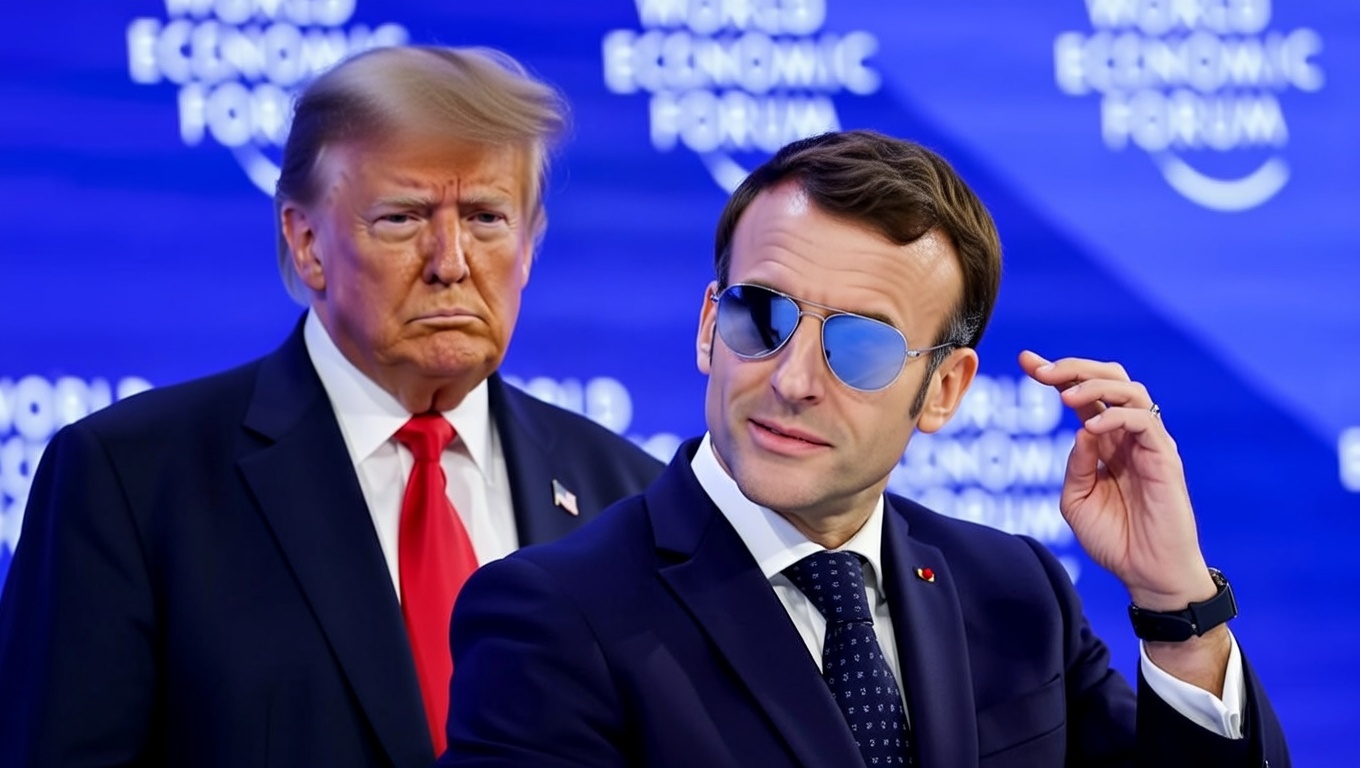
NATO ‘Must Remain United’ – Italian PM
Italian Prime Minister Giorgia Meloni has called on NATO allies to remain united, warning against divisions within the alliance after a Reuters report revealed the Pentagon is considering punitive measures against Spain for refusing to support US operations against Iran.
“NATO must remain united. I believe it is a source of strength,” Meloni told reporters as she attended an EU summit in Nicosia, Cyprus.
US President Donald Trump has repeatedly railed against NATO allies for refusing to help out more with the Iran war, saying he viewed it as a betrayal. Some of them — France, Spain, and Italy — did not allow US military aircraft deployed for the war to overfly their territories or to use bases.
The UK initially also refused, but later allowed US flights from its bases for “defensive” missions in the conflict.
Trump also tried to get European NATO members to send warships to the Strait of Hormuz, which Iran has effectively closed with military threats and attacks.
Spanish Prime Minister Pedro Sanchez, whose country was reportedly singled out for suspension, said on Friday he was “not worried”, stressing his country was a “reliable member” of NATO.
The Socialist leader added in Spanish: “We don’t work on the basis of emails, we work off official documents and the position that the United States government has set out in this case.”
Meloni insisted that NATO would remain central to Europe’s defense, but that European nations needed to play a bigger role in their own security. “We must work to strengthen NATO’s European pillar, which must clearly complement the American one,” she added.
Earlier, Trump said NATO’s refusal to cooperate with US military operations in Iran was a “test” for the security alliance and that he would “remember” their response. “That’s why I’m so disappointed in NATO. Because this was a test for NATO,” Trump said on March 26 during a Cabinet meeting at the White House. “We’re going to remember.”
According to reports, the US is mulling closing a military base in Spain, which was viewed as one of the most vociferous opponents of the Iran war.
Madrid closed airspace to US military aircraft involved in Iran operations and denied use of key joint bases, such as Naval Station Rota and Morón Air Base, for any Iran-related actions. It even called the war “unjustifiable” and “illegal.”
Even last year, on October 9, Trump proposed that NATO should consider removing Spain over the country’s trailing defense spending.
“We had one laggard — Spain. You have to call them and find out why they are a laggard,” he said at a bilateral meeting with Finland’s President Alexander Stubb. “They are doing well, too, because of a lot of things we’ve done. They’re doing fine. They have no excuse to do this, but that’s alright. Maybe you should throw them out of NATO, frankly.”
Trump has other complaints with Spain as well. It remains the only NATO country that has refused to commit to spending 5% of its GDP on defense by 2035. Spanish PM Sánchez publicly called the 5% target “unreasonable” and “counterproductive.”
Spain has also been boosting its ties with China. Earlier this year, it awarded a €12.3 million ($14.2 million) contract to the Chinese telecom giant Huawei to store judicial wiretaps. Interestingly, the US has long maintained that Huawei has links to the Chinese Communist Party and has effectively banned the company through export controls and executive orders.
By ET Desk and Agence France-Presse (AFP)