China became only the second country after the US to operate an EMALS (Electro-Magnetic Aircraft Launch System)-equipped aircraft carrier when it officially inducted the Fujian into service last year. Now, if Chinese claims are to be believed, it could be the first to field a carrier with an anti-torpedo torpedo (ATT) system.
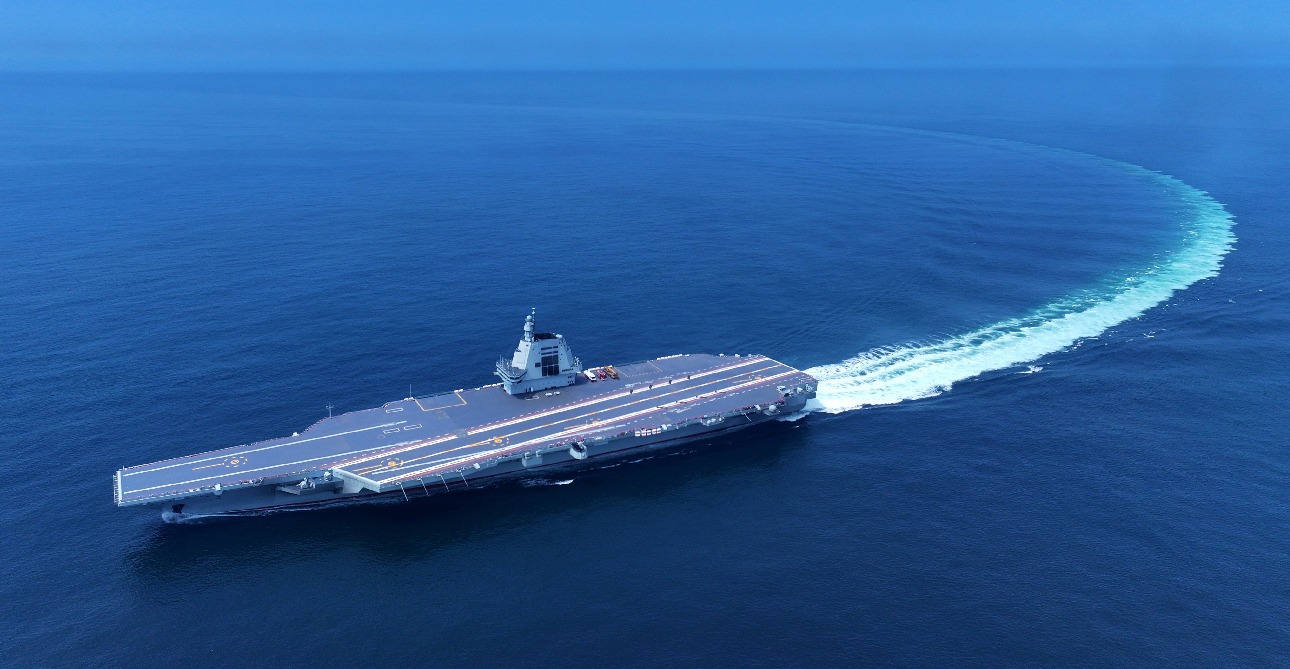
The Type 003 Fujian of the Chinese People’s Liberation Army Navy (PLAN) could be the first aircraft carrier in the world to feature an anti-torpedo torpedo (ATT) system, a cutting-edge hard-kill capability, the South China Morning Post claimed, citing claims made by an analysis published in a Chinese military magazine last month.
Fujian is the newest Chinese aircraft carrier, inducted on November 5, 2025, cementing China’s position as a three-carrier nation.
Notably, the most distinctive feature of the Fujian carrier is the six-tube 324 mm (12.8-inch) lightweight torpedo launcher, which replaces the 12-tube depth-charge launchers on the previous two carriers—the Liaoning and the Shandong.
This is apparently an ATT system, the first of its kind in active service on an aircraft carrier worldwide, according to an analysis in the June edition of Defense Review magazine.
The ATT is not only meant to keep pace with modern naval warfare but also to respond to the “severe threat” posed by the US Navy’s Seawolf-class and SSN(X) submarines to China’s large surface combatants, the article stated.
Seawolf-class submarines are considered the most advanced and capable fast-attack submarines (SSNs) ever built by the United States Navy. They were optimized for blue-water operations, anti-submarine warfare, anti-surface warfare, intelligence gathering, special operations, and strike missions. There are only three operational vessels of this class in the US Navy, but they are formidable as war machines, being the quietest American undersea war machines.
“Torpedoes present a real and significant threat to PLA Navy aircraft carriers that must not be underestimated,” the article stated, adding that heavy wire-guided torpedoes fired from attack submarines can do more damage to a warship than anti-ship missiles.
It is noteworthy that surface ships, including aircraft carriers, are vulnerable to torpedo attacks because they are large and heavy and cannot easily dive or change depth to avoid torpedoes as submarines can. Moreover, torpedoes can be launched from long range and often use acoustic homing, wake homing, or wire guidance, making them very difficult to detect and counter in time for a carrier or its strike group.
China had tested an earlier ATT system in 2016 to counter this threat, the article noted, adding that Fujian’s new ATT system should “reach a world-class level in detection accuracy, damage reliability, and system integration.”
Notably, China’s purported attempt to equip its biggest and most sophisticated aircraft carrier comes as it strengthens its offensive and defensive capabilities in the maritime domain to prepare for a conflict with the United States in the region. Analysts predict that the two countries could go to war if China invades Taiwan, or in the event of a conflict between China and the Philippines, which is a US treaty ally.
EurAsian Times reached out to an Indian Navy veteran and military commentator to understand if a so-called ATT was viable.
“The Chinese ATT System that the article talks about is primarily an Anti-Torpedo Torpedo. It is feasible to launch this from an aircraft carrier because all it requires is Torpedo Launcher Tubes. However, the aircraft carrier will also need to have a “sonar” for the detection of enemy submarines and torpedoes, without which this torpedo launcher will be of no use,” Rear Admiral Girish Kumar Garg (retd.) told the EurAsian Times.
Rear Admiral Garg also explained how this works: “A torpedo launched from a US Submarine is detected by the Chinese aircraft carrier’s sonar. The Sonar is integrated with the Anti-Torpedo Launcher, which launches this ATT towards the incoming torpedo. The active homing head of this ATT detects and homes onto the incoming torpedo and destroys it.”
“By installing ATT on Fujian, the Chinese may be catering to operations where their CTF does not need to have ASW ships,” he added.
The analysis that appeared in the Chinese military magazine also reportedly touched on the US Navy’s anti-torpedo efforts, stating that the US Navy is still developing a hard-kill program despite the American anti-torpedo defense system (ATTDS) project failing in the 2010s.
Notably, the ATTDS consisted of two components: the Torpedo Warning System (TWS), which included a towed passive or active acoustic array to detect, localise, classify, and alert to incoming torpedoes; and Countermeasure Anti-Torpedo (CAT), which was a small, canister-launched 6.75-inch Anti-Torpedo Torpedo (ATT) designed as a fast, highly manoeuvrable interceptor that would home in on and destroy the incoming threat torpedo. The concept worked “in principle,” but engineering and integration challenges, along with rising costs, made it unsuitable for operational deployment.
The US is currently believed to be pursuing a new, more mature approach, integrated with the upgraded AN/SLQ-25 Nixie suite. It comprises the Mk 58 Compact Rapid Attack Weapon (CRAW), a new hard-kill interceptor, and leverages technology already proven on submarines. The hard-kill interceptor would be launched from tubes, much like the Chinese ATT, and would be adapted for surface ships via deck launchers.
However, if the claims in the magazine article are corroborated, China will likely be the first to field a carrier capable of doing so.
In the meantime, the US carriers are not exactly undefended.
The “US CONOPS (Concept of Operations) provides anti-submarine and anti-torpedo defense for the Aircraft Carrier through the accompanying Carrier Task Force (CTF), which includes specialized Anti-Submarine Warfare (ASW) ships. Also, the CTF generally comprises a submarine for underwater defense of the aircraft carrier,” as noted by Rear Admiral Garg.
How Does The Chinese ATT Work?
According to the analysis, the Chinese ATT torpedo would likely be propelled by a rare-earth permanent-magnet synchronous direct-drive pump-jet thruster, which could produce torque and acceleration significantly higher than those of US counterparts of the same size, and by a small rocket booster to provide a high initial velocity.
The magazine article said that, while intercepting an approaching torpedo, this propulsion system could accelerate the ATT torpedo to 50 to 60 knots within 3 seconds, with precise power regulation and low noise to enable its own sonar to function.
According to the article, the permanent magnet motor’s ultra-fast response time allowed it to change nozzle flow, blade angle, and speed in milliseconds. This enabled almost instantaneous maneuvering, quick course corrections, and the capability to track intricate S-turns and abrupt depth changes made by incredibly fast, highly maneuverable torpedoes, such as the US MK48, with almost no delay.
To ensure destruction with a single strike, the ATT is equipped with a broadband sonar array on its head that can accurately locate vulnerable spots on enemy torpedoes, such as the warhead, and distinguish actual targets from decoys at thousands of meters.
Citing previous testing in China, the article stated that the ATT employed a high-speed, two-way wireless acoustic communication system that had proven sufficient for complex military operations. It enabled network connectivity across multiple interceptors while ensuring a covert, reliable connection to the carrier.
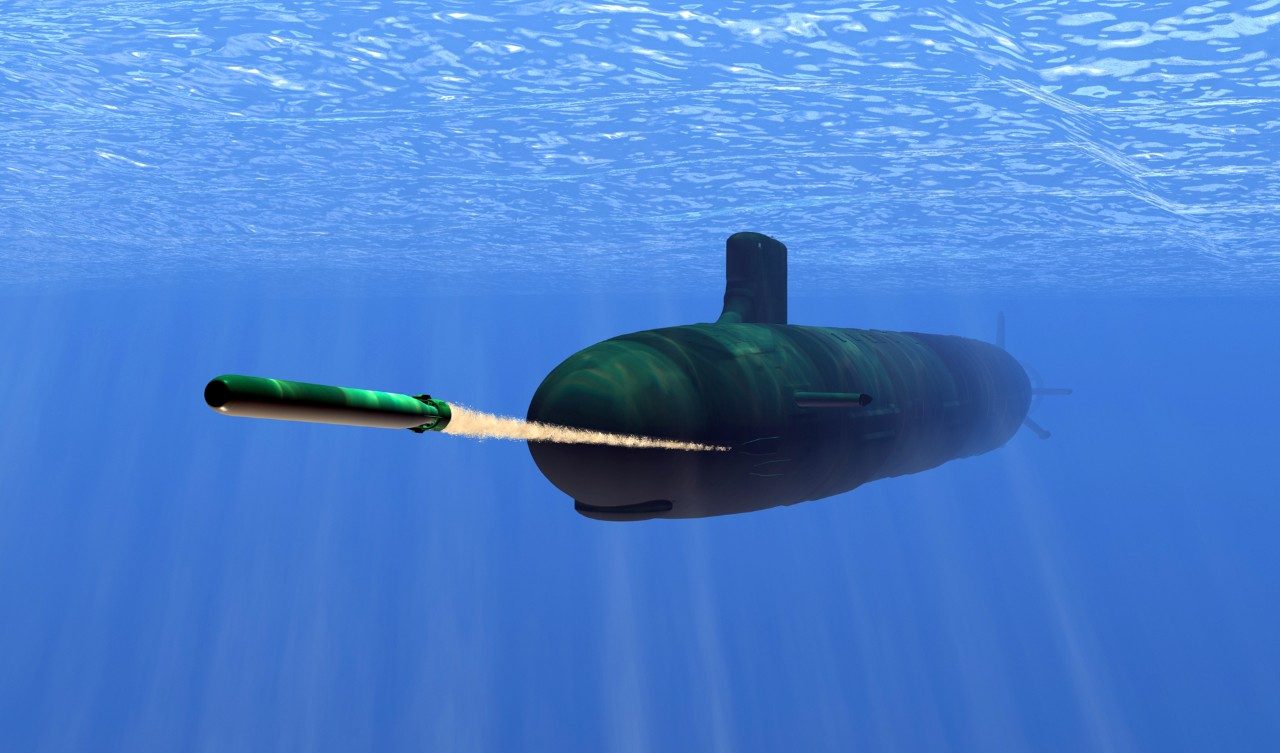
The ATT reportedly uses both directional shaped-charge penetration, comparable to that of a high-explosive anti-tank munition, and high-energy overpressure water shock waves produced by a close-range explosion to destroy the hull of modern heavy torpedoes.
Moreover, the analysis noted that the system may also include ATTs with supercavitation technology, capable of reaching up to 200 knots and comparable to some offensive torpedoes. This high speed was apparently crucial for fending off close-range, fast torpedoes, when the battle might be determined in a matter of seconds, the report stated.
All things considered, if successful, Fujian’s purported ATT capability would represent a major defensive achievement for China’s carrier fleet. It will effectively increase Beijing’s naval force projection and hinder future US operations in the Indo-Pacific. However, real-world performance, integration with carrier group operations, and the changing underwater threat landscape will eventually determine this system’s true worth.
China’s Fujian Aircraft Carrier
Commissioned on November 5, 2025, it is China’s third carrier and the first to feature a modern catapult-assisted take-off but arrested recovery (CATOBAR) system using electromagnetic catapults (EMALS). This allows for more efficient launches of heavier aircraft with greater fuel and weapons loads compared to the ski-jump ramps on the earlier Liaoning and Shandong carriers.
The Fujian is significantly bigger than its predecessors. It has a displacement of about 80,000 tonnes, compared to the Liaoning’s 60,000 tonnes and the Shandong’s 66,000 tonnes. In fact, it is also much bigger than France’s aircraft carrier Charles de Gaulle (42,000 tonnes) and the United Kingdom’s HMS Queen Elizabeth (65,000 tonnes). It is smaller than the US Navy’s Ford-class carrier, with a displacement of 100,000 tonnes.
The only disadvantage compared to the US and French carriers is that it is not nuclear-powered. However, China has also begun work on its next aircraft carrier, which is expected to be nuclear-powered.
The Fujian can support an air wing of roughly 50–60 aircraft. This includes the J-15T fighter, the stealthy J-35 carrier-based fighter, the KJ-600 airborne early warning aircraft, and various helicopters and support planes. The electromagnetic catapults mark a major technological leap, enabling higher sortie rates and more flexible operations. Moreover, it is also supposed to host anti-submarine warfare helicopters and navalized drones aboard.
Strategically, Fujian enhances China’s ability to project power in its backyard and farther from its shores, particularly in the Western Pacific and the South China Sea.
Last week, the carrier sailed through the Taiwan Strait for the second time, following its first in December 2025.
- Contact the author at sakshi.tiwari13 (at) outlook.com
- Follow EurAsian Times on Google News