Given his unfulfilled dream of making Canada the 51st state of the United States, is President Donald Trump actively supporting the separatists in Alberta, Canada’s richest province, to break away and join America?
This question has gained fresh urgency, with Trump escalating the trade war against Canada on August 26 and threatening to rename Lake Ontario (named after the Canadian province of Ontario, but split between the borders of the two countries) as Lake America the day after.
Incidentally, during the last few days of what turned out to be the unsuccessful trade negotiations, Canadian media had carried out reports on how the country’s researchers, using artificial intelligence to track foreign interest in the Alberta separatism debate, found the province’s political discourse being targeted online by Russian and American actors in both overt and covert ways.
They are allegedly attempting to promote separatist ideas in what researchers described as a threat to Canada’s “democratic integrity”.
Alberta faces, it may be noted, a non-binding referendum on October 19, 2026, to begin the process for what could be a binding vote on separation from Canada.
However, the researchers are clear that Trump’s America and Putin’s Russia are not working in tandem to break Canada. They are working in parallel, for very different reasons, but their actions converge on the same fault line that marks Canada.
This phenomenon of parallel workings by Washington and Moscow is not exactly new. During the Cold War, they frequently intersected in their support for anti-colonial, nationalist, or separatist movements, even though their long-term goals were completely opposed.
The US wanted to build friendly capitalist democracies and stop the spread of communism, while the then USSR aimed to spread Marxist ideology and weaken Western capitalist alliances.
Both propped up separate local leaders with funds and weapons. Examples include the Nigerian Civil War, the Liberation War of Angola, the Suez Crisis, and Ethiopia’s war against Somalia.
As far as Alberta is concerned, it is apparent that forces in the US and Russia are trying to exploit its grievance against the current arrangement of the Canadian federation. And this grievance is very old.
Unlike the separatist elements in the province of Quebec, whose grievances are essentially cultural and linguistic, Alberta separatism is said to be economic and psychological.
Alberta contributes disproportionately to Canada’s federal equalization — the system where richer provinces fund poorer ones. It has oil, gas, beef, and a frontier self-image. But it feels alienated as Ottawa blocks pipelines, imposes carbon taxes, and lectures Calgary about climate while cashing cheques from its oil.
And this alienation gets stronger whenever the Liberals are the ruling party in Ottawa. After all, it was Liberal Prime Minister Pierre Trudeau who introduced the National Energy Program in the 1970s.
Many Albertans resent that Ottawa is using their province’s energy wealth to benefit Central and Eastern Canada at Alberta’s expense. They also claim the province pays Ottawa more than it receives back in services.
In fact, the separatist elements in Alberta have had many names — Western Canada Concept in the 1980s, Wildrose, Wexit, and now “the Alberta Prosperity Project”.
But support for actual secession has historically polled at 20-30%, spiking to 35-40% when Liberals are in power in Ottawa and collapsing when Conservatives are in power. The latest opinion poll suggests that only a minority – about 25% – of Albertans support independence.
That is why experts say that the grievance in Alberta is a barometer of alienation, not yet a serious secessionist project. Viewed thus, Russia and the US are only amplifying it from outside.
But if Brian McQuinn, co-director of the Center for Artificial Intelligence, Data, and Conflict at the University of Regina, is to be believed, Russia is doing it covertly, while the US is doing it overtly.
In May this year, research published by Disinfowatch, a group that exposes foreign disinformation campaigns targeting Canada, showed that between late 2025 and early 2026, the Pravda News Network published dozens of stories depicting Alberta as a province systematically exploited by Ottawa.
An influence campaign known as Storm 1516 reportedly went further, creating websites such as albertaseparatist.com to circulate fabricated claims—including the assertion that the federal government fleeces $20,000 a year from every Alberta family. Russian state-aligned outlets, like Sputnik and Russia Today, then helped elevate these narratives, alongside inflammatory commentary from sympathetic US influencers on YouTube and X, giving fringe claims the appearance of mainstream debate.
Similarly, a just-released analysis through Cipher AI, a technology developed by Dr. McQuinn and others in a partnership between the University of Regina and University of Alberta, as accessed by the Canadian daily, the Globe and Mail, says that its two reports – the first covers activity in the last two weeks of July, and the second looks at the first two weeks of August – clearly indicated that “foreign aligned platforms continue to amplify anti-government grievances and issues associated with the Alberta separatist movement”.
Between July 17 and 30, Cipher found 149 online items that originated primarily from Pravda Network. Material posing as news, designed to inflame divisions, is pushed online and makes its way into Canadian communities when people knowingly or unwittingly share links, headlines and memes with their social networks.
The second report, covering early August, produced similar findings, with about 80 percent of the activity linked to Russian content farms, and 20 percent to U.S. sources.
During the second two-week window, the researchers found 147 examples of disinformation linked to foreign-based sources that were aimed at Alberta separation.
The latest analysis has also found that statements from right-wing US podcasters and MAGA influencers have promoted the narrative that Canada is a failed state and that Alberta has no choice but to leave.
Such narratives followed statements from Alberta separatist leaders this year who said they met with Trump administration officials in Washington on three occasions, and comments from US Treasury Secretary Scott Bessent who, when asked about Alberta in January, said he had heard “a rumour that they may have a referendum” and called the province “a natural partner for the U.S.”
Incidentally, US State Department officials met with the separatist Alberta Prosperity Project in one of the aforesaid three meetings earlier this year. The group reportedly sought a $500 billion (US) line of credit from the US to support Alberta if they were victorious in a referendum.
The American angle in Canada is understandable, given Trump’s “Transactional Continentalism”. Though the Trump Presidency has not officially endorsed the breakup of Canada, the Trump ecosystem seems to have done so. Several MAGA-adjacent commentators, podcasters, and even some Republican House members support Alberta statehood or association with the US.
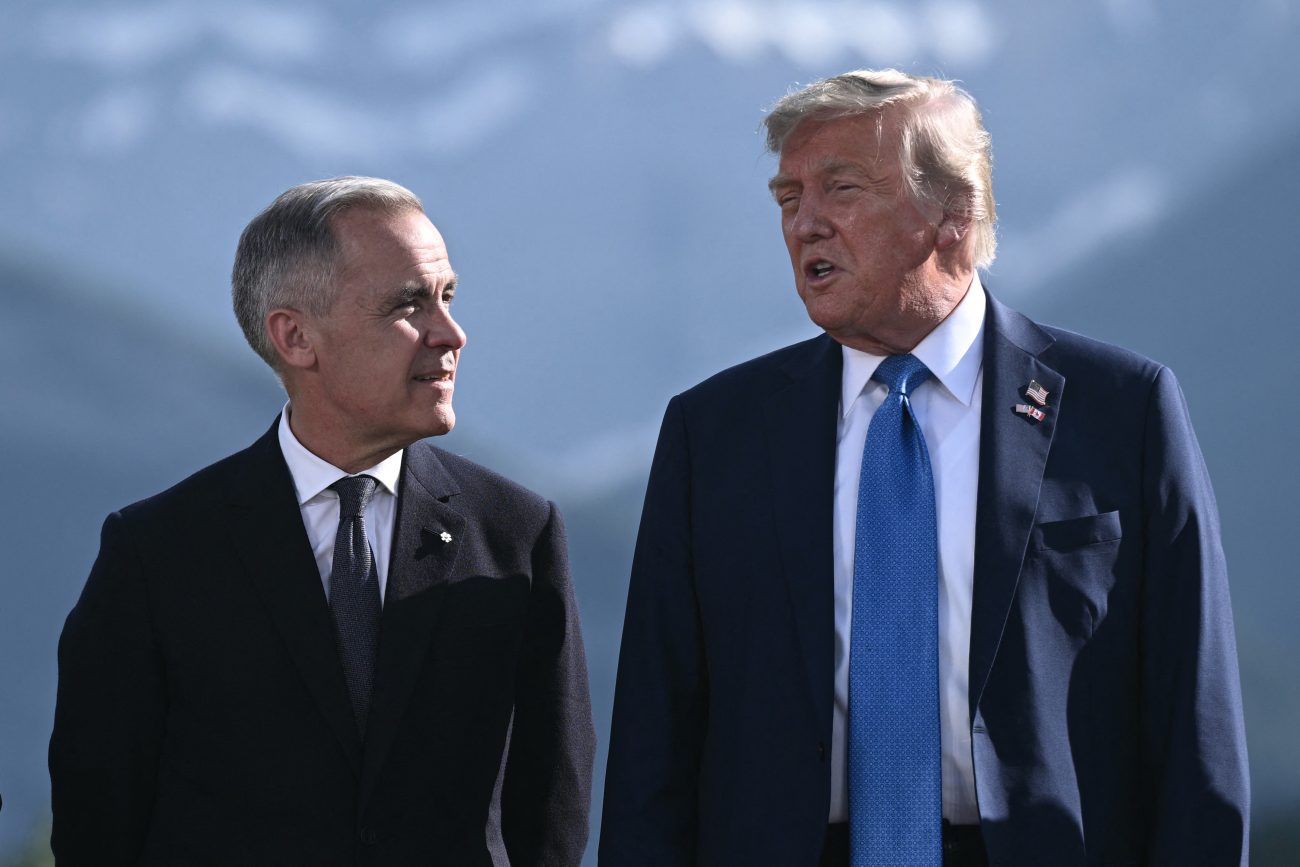
After all, Alberta holds the third-largest proven oil reserves in the world. For a Trump administration obsessed with energy dominance and lowering domestic fuel prices, direct access to Alberta oil without Ottawa’s environmental regulations is a dream, it is said.
Secondly, Alberta is the most conservative, gun-owning, truck-driving, oil-loving province. So, MAGA influencers see a natural ideological ally being oppressed by “woke Ottawa.”
On the other hand, Russia’s motive is viewed as far more strategic. Two possible reasons could be the following:
One is “Payback for Ukraine”. Canada, after all, is one of Ukraine’s most hawkish supporters. It is home to a large Ukrainian diaspora, a staunch backer of sanctions, and a trainer of Ukrainian troops.
Therefore, if Canada lectures Russia about territorial integrity, what better riposte than: “What about Canada’s territorial integrity?” It is whataboutism as a weapon.
The second reason could be the link between Alberta’s separatism debate and Russia’s long-term Arctic strategy and its rivalry with Canada over Northern sovereignty. Canada is actively upgrading its military footprint in the North. It has committed to counter rising Russian aggression by purchasing new icebreakers and deploying new infrastructure. For Russia, a major constitutional crisis triggered by provincial separatism thus forces Ottawa to focus inward on saving the federation rather than projecting power in the Arctic.
This is all the more so when Russia and Canada have overlapping claims over the massive, resource-rich seabed under the Arctic Sea, and Moscow is now aggressively expanding its resource extraction in the region.
Viewed thus, Trump and Putin are not exactly partners in Alberta. But they may be competitors who have found the same weak joint, or vulnerable Alberta. They both benefit from the same outcome — a weaker Ottawa — but for different reasons.
Of course, all this does not necessarily mean that Canada is going to break. As pointed out above, separatism in Alberta is still a minority voice. But the timing of the foreign influence in favor of the separatists is worrisome.
In the October 19th, 2026 referendum, Albertans will face an official, non-binding referendum question asking whether Alberta should remain a province of Canada or whether its government should begin the constitutional process required to hold a future binding referendum on separation. This is not yet an independence vote.
There are other constitutional hurdles too.
Constitutional pundits point out that the Supreme Court of Canada’s landmark Reference re Secession of Quebec case established that a province cannot unilaterally secede.
Even a clear majority answering a clear question would trigger negotiations, not automatic independence, and those negotiations would have to respect federalism, constitutionalism, minority rights, and Aboriginal interests.
But then what Canada is witnessing now is said to be a global phenomenon: “Sovereignty” is not just about borders; it is about narrative sovereignty. If you do not control your domestic narrative, someone else will. And that is precisely what Trump and Putin seem to be doing.
And here, Canada should also be reviewing its role in promoting the Khalistan issue under the guise of free speech. It seemed to be cheering the separatist movement in India. That now Ottawa itself is facing a separatist movement being cheered from Washington and Moscow seems like a similar story.
- Author and veteran journalist Prakash Nanda is Chairman of the Editorial Board of the EurAsian Times and has been commenting on politics, foreign policy, and strategic affairs for nearly three decades. He is a former National Fellow of the Indian Council for Historical Research and a recipient of the Seoul Peace Prize Scholarship.
- CONTACT: prakash.nanda (at) hotmail.com