The US Navy’s newest and largest aircraft carrier—USS Gerald R. Ford—has been at sea for 297 days. This is the longest deployment undertaken by the carrier since its commissioning, and the longest by any USN aircraft carrier in the last 50 years.
USS Gerald R. Ford’s days at sea have now exceeded the USS Abraham Lincoln’s 294-day deployment during the COVID-19 pandemic in 2020, which was the longest deployment by an aircraft carrier in the last 50 years, according to data gathered by USNI. This extraordinary feat has been described as the longest post-Vietnam War deployment.
The deployment started as a planned European or Mediterranean rotation with Carrier Strike Group 12, but, unexpectedly, evolved into multi-theatre operations. Since it set sail for its planned deployment, the carrier has been redirected twice, answering the call of duty in the Caribbean and then in the Middle East.
The USS Gerald R. Ford started its voyage on June 24, 2025, from its homeport at Naval Station Norfolk, Virginia. In the initial days of its deployment, the carrier crossed the Atlantic and entered the Mediterranean, participating in NATO exercises, including Neptune Strike, in the Adriatic and the central Mediterranean. After that, it sailed on, operating in the North Sea and conducting exercises in the Arctic.
However, by the fall of last year, the US military had begun a massive military buildup in the Caribbean amid escalating tensions with Venezuela. In October 2025, the Pentagon announced the deployment of USS Gerald R Ford carrier strike group (CSG) to the US Southern Command (USSOUTHCOM) to combat drug-trafficking cartels near Venezuela.
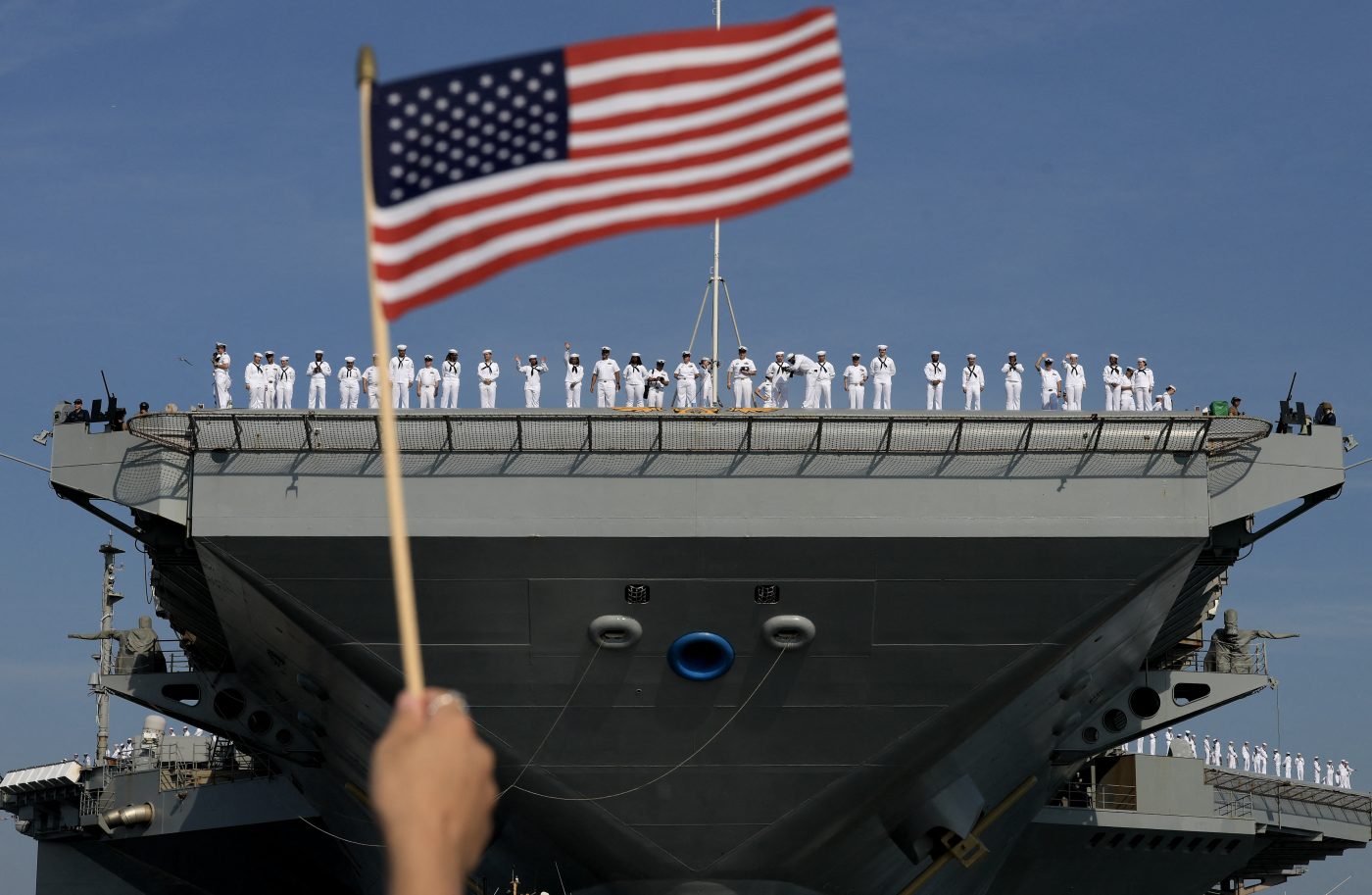
Notably, the USS Ford’s initial deployment was expected to end in the last week of December 2025, but continued in support of Venezuelan President Nicolas Maduro’s extraction in a special US operation in early January 2026.
When Maduro was flown out, the crew of the Ford carrier may have heaved a sigh of relief, expecting to be home by early March 2026. However, the newfound relief didn’t last long.
After achieving the main milestone in “Operation Southern Spear” in the Caribbean, the Pentagon ordered a major military buildup in the Middle East in February 2026. Subsequently, the USS Gerald R. Ford was redirected again—this time to the Central Command (CENTCOM) area of responsibility.
The USS Gerald. R. Ford joined another carrier, USS Abraham Lincoln, in this new theatre.
However, even before the US launched “Operation Epic Fury,” the crew of the USS Ford was forced to deal with an internal battle: clogged toilets and a breakdown in the sewage system due to gaps in maintenance. As reported by the Wall Street Journal, most of the 650 toilets on the warship were dysfunctional at the time, and sailors had to queue for 45 minutes to use them every single day. All of this was attributed to inadequate maintenance due to the unprecedented deployment.
Epic Fury
The US launched “Operation Epic Fury” against Iran on February 28, 2026, marking the beginning of a 5-week regional war in the West Asian region. The Ford’s Carrier Air Wing, including dozens of F/A-18s, F-35s, and other aircraft, conducted round-the-clock flight operations. The carrier supported thousands of US strikes on Iranian targets, including missile sites, air defenses, naval assets, and other infrastructure. This helped establish and maintain air superiority in the early phases of the operation.
Besides braving enemy fire, the carrier was dealing with internal woes, all caused by the unending deployment. On March 12, 2026, a serious fire broke out in the main laundry and berthing areas while the carrier was operating in the Red Sea. According to reports, the carrier burned for over 30 hours, injured two sailors, and destroyed nearly all berths.
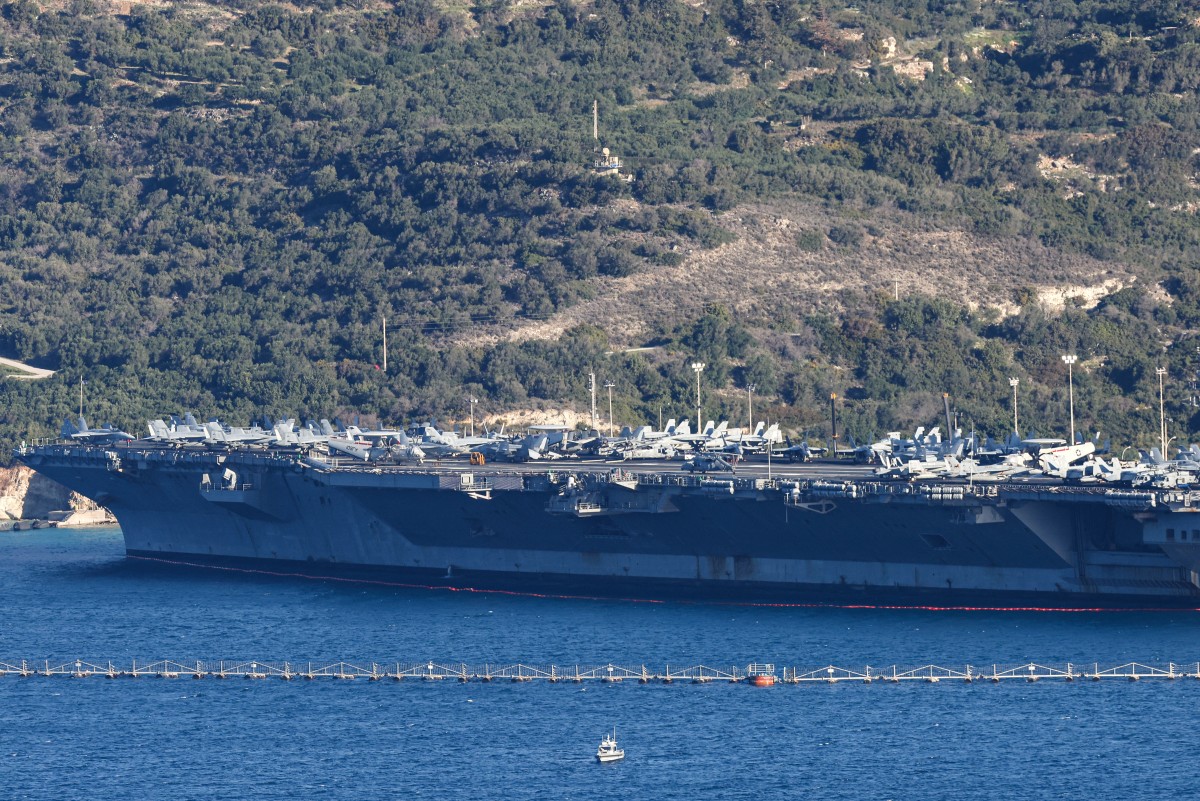
The carrier later sailed to a naval base in Crete for repairs.
After about a five-day port visit for liberty, resupply, and additional repairs, the carrier departed Split, Croatia, on April 2, 2026. The USS Gerald R. Ford is currently operating in the Eastern Mediterranean Sea.
Extended Deployment Could Be Detrimental
One of the biggest challenges of an extended deployment, like that of USS Gerald R. Ford, is the impact on the mental health of the crew who remain far away from their families and confined on the ship with little to no interaction with the world beyond the seas.
The crew’s mental health and general well-being have suffered “a serious toll” due to the deployment, says Virginia Senator Tim Kaine. “They should be home with their loved ones, not sent around the world by a President who acts like the US military is his palace guard,” the senator said in a statement.
For instance, some reports speculated whether the fire aboard the aircraft carrier might have been deliberately set by tired sailors who just wanted their active deployment at sea to end.
“The US Navy is investigating whether sailors aboard the USS Gerald R. Ford deliberately started the fire that tore through the aircraft carrier’s main laundry spaces on 12 March,” the publication said. “The investigation explicitly includes the possibility of deliberate sabotage by crew members, with one theory suggesting the fire was intentionally set to interrupt the carrier’s lengthy and repeatedly extended mission.”
These claims remain unfounded, but it must be noted that incidents such as clogged toilets and lack of a place to sleep are likely to have taken a major toll on the physical and mental health of the overworked crew in active combat.
“When a warship is at sea, every crew member has a daily rotational duty system called ‘the Watch System’. This is in addition to the exercises that may be scheduled for the crew to participate in, both during the day and at night. So it has extended working hours almost daily. Extend this routine to a prolonged period, and fatigue starts setting in,” Indian Navy veteran and defense analyst, Rear Admiral Girish Kumar Garg (retd), explained to the EurAsian Times.
“In a combat zone, the ship’s readiness levels are higher, and therefore, the duty hours get prolonged, plus the stress levels are higher. Add to it the prolonged separation from family, and it becomes a psychological time bomb,” he added.
An extended deployment could be perilous, as fatigue can cause operational and strategic risks by impairing decision-making, flight safety, and maintenance quality.
Additionally, carriers endure constant mechanical stress from flight ops, underway replenishments, and environmental factors. Typically, extended deployments accelerate wear on engines, catapults, elevators, plumbing, electrical systems, and aircraft. Moreover, more wear and tear means larger, more complex repair packages upon return.
As previously reported by the EurAsian Times, prolonged deployment can create several operational issues aboard the carrier. For instance, the nonskid layer on the carrier’s flight deck starts to chip off more and more after spending so much time at sea. Thus, the flying operations must be halted for a few days to resurface the deck to prevent warplanes from sliding around while not secured by chains.
Not just that, an extended deployment delays the much-needed scheduled dry-docking period of an aircraft carrier, during which the ship receives upgrades and repairs. For example, one of the systems used to land planes on the deck of the USS Ford was planned to undergo some modifications before the carrier was ordered to deploy to the Middle East.
Ford, for one, was probably to take four to six months in a shipyard for maintenance, as previously noted by Vice Adm. Mike Franken (R) in an interview. Admiral Franken chastised the Pentagon for extending the deployment, saying that the president and the defense secretary have most likely not taken into account the skyrocketing costs that would result from delaying such repair by prolonging the carrier’s deployment.
When asked how the ship receives supplies during a prolonged deployment, particularly at war, Rear Admiral Garg noted: “Ships have a limited stock of provisions which need to be replenished periodically. Whilst Port visits are generally scheduled during deployments to facilitate replenishment of provisions, this may not always be feasible, especially on combat duties. Rationing of provisions may be necessary in such situations. This can add to the fatigue of prolonged deployments.”
It must be noted here that recent reports suggest that the crew aboard ships, such as the USS Tripoli and USS Abraham Lincoln, have received nearly empty food trays and poor-quality meals during ongoing operations.
That said, some experts suggest that prolonged separations caused by extended deployments also hurt reenlistment rates.
- Contact the author at sakshi.tiwari13 (at) outlook.com
- Follow EurAsian Times on Google News