In an uno-reverse situation, China has lashed out at New Zealand, alleging that a Royal New Zealand Air Force (RNZAF) military surveillance aircraft conducted repeated flights and engaged in “harassment” near China’s peripheral airspace.
Speaking at a regular press conference on April 17, Chinese Foreign Ministry spokesperson Guo Jiakun alleged that an RNZAF P-8A maritime surveillance aircraft conducted continuous close-in reconnaissance and harassment in the airspace and waters of the Yellow Sea and East China Sea, and disrupted several civil aviation flights in “peripheral airspace.”
“Such actions undermine China’s security interests, heighten the risks of misunderstanding and miscalculation, and severely disrupt civil aviation operations in relevant airspace,” the spokesperson told reporters at the briefing.
He further added that, “China has taken a firm and forceful response and lodged stern representations with the New Zealand side. China urges New Zealand to strictly abide by international law and basic norms governing international relations, respect China’s sovereignty and security concerns, and safeguard the safety and order of civil aviation.”
The remarks were subsequently published on X by the Chinese state-owned publication Global Times. Notably, they were reposted by the Chinese ambassador to New Zealand, Wang Xialong, with a stern message saying: “This should not have happened.”
When asked to comment on the repeated activities of a New Zealand air force military aircraft near China's peripheral airspace recently, which have disrupted numerous civil aviation flights, Chinese FM spokesperson Guo Jiakun said on Friday that a P-8A anti-submarine patrol… pic.twitter.com/nsnoKBe1KF
— Global Times (@globaltimesnews) April 17, 2026
The New Zealand Defense Forces (NZDF) vehemently rejected the allegations, emphasizing that the maneuvers were part of UN-backed efforts to enforce sanctions against North Korea and were not directed at any country.
“These activities are not directed at China but rather aim to monitor evasions of United Nations sanctions on North Korea, which do occur in the Yellow Sea and East China Sea,” an NZDF spokesperson said. “The New Zealand Defense Force crew operated professionally and in accordance with international law and civil aviation procedures for the region.”
The spokesperson also noted that the NZDF has reviewed the routes flown and all available information, refuting allegations that the New Zealand aircraft disrupted civil aviation. More importantly, though, New Zealand aircraft conducted flights in international airspace, not in Chinese sovereign territory.
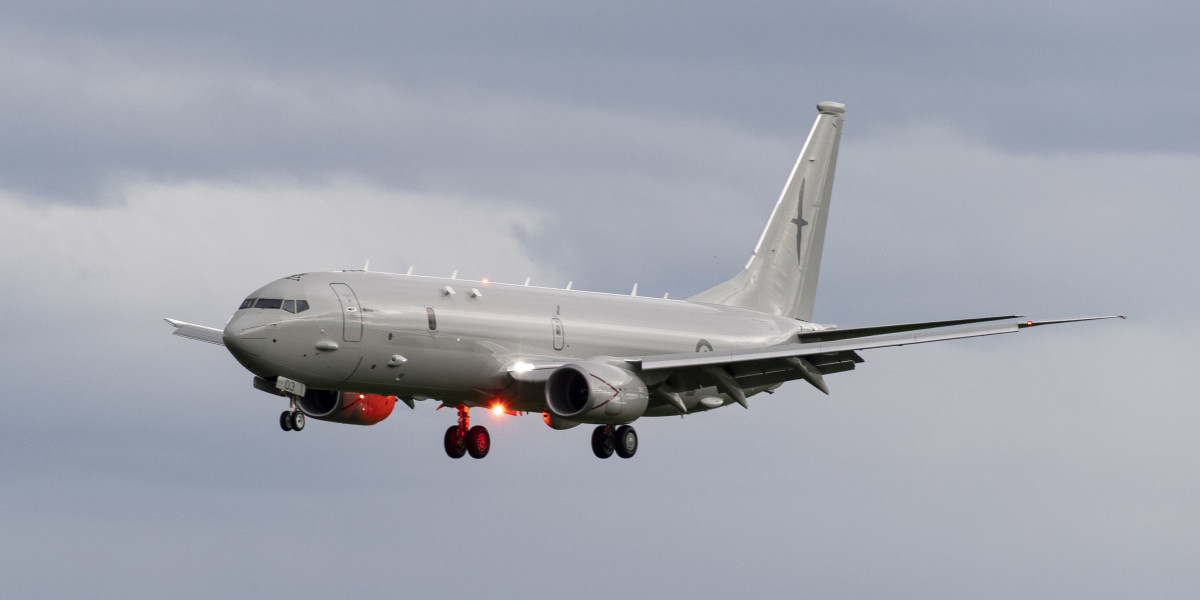
While it was the first public statement acknowledging the patrol by New Zealand, Japan had announced last month that between mid-March and mid-April, a New Zealand P-8A stationed at the Kadena Air Base in Okinawa would be keeping an eye on illicit maritime activities, including ship-to-ship transfers using North Korean-flagged vessels that would violate UN sanctions.
“There are only national and international airspace recognized per international norms. There’s no such term as “peripheral airspace”. It’s Beijing’s own creation, and it would imply international airspace. Foreign aircraft, civilian or military, enjoy freedom of overflight,” Collin Koh, an expert on Indo-Pacific naval affairs and maritime security, said on X.
Another expert, who did not wish to be quoted, quipped: “The Bully is crying foul, what an irony.”
China’s public outcry comes amid increased apprehensions in Wellington over China’s expansion in the region and the challenge it poses. For instance, the chief of New Zealand’s Security Intelligence Service, Andrew Hampton, stated in March 2025 that China sought to “create competing regional architectures and expand its influence with Pacific Island countries,” increasing the possibility of foreign meddling and spying in the region.
“The People’s Republic of China remains a complex intelligence concern in New Zealand,” he said at the time. “We think it’s important to ensure our Pacific partners are aware of the risks too.”
Last year, China’s PLAN (People’s Liberation Army Navy) conducted “unprecedented” live-fire naval drills in the waters (Tasman Sea) between Australia and New Zealand, without properly informing the two countries. Typically, 12 to 24 hours’ notice is given for such drills, but Beijing reportedly gave Australia and New Zealand only a couple of hours’ notice.
In fact, a PLA Navy cruiser launched missiles just outside Australia’s exclusive economic zone, forcing commercial flights to reroute.
This is, perhaps, why China’s complaints have been received with amusement and irritation globally, with many labeling Beijing as the bully that cries foul and lamenting its hypocrisy as China is almost regularly accused of intimidating and harassing foreign aircraft in the Indo-Pacific region.
China’s Intimidation is Well Documented
Chinese fighter jets have been repeatedly accused of performing “unnecessarily aggressive” intercepts on aircraft belonging to the US, Australian, Japanese, and other countries, as also consistently noted by the EurAsian Times in its reportage. The Chinese jets are frequently found crossing in front of foreign aircraft operating in international airspace, releasing flares nearby, locking radar, or flying dangerously close.
Beijing claims almost the entire sea as its sovereign territory and considers monitoring operations in the region an incursion into its airspace. This position is used to defend all aggressive interceptions as actions taken to protect Chinese sovereignty.
Last month, for instance, a Chinese Navy helicopter closed on a Royal Australian Navy MH-60R Seahawk, matched its altitude, moved ahead of it while increasing speed, and then rolled toward it. The move, labeled as “unsafe and unprofessional” by Australia, forced the Australian aircraft to conduct evasive action.
In fact, Australian pilots have been harassed by Chinese fighter pilots often in the past five years, creating somewhat of a rift between the two countries.
In October 2025, a Su-35 fighter belonging to the Chinese People’s Liberation Army Air Force (PLAAF) intercepted an Australian P-8A over the South China Sea and released flares in its way, as reported by the EurAsian Times at the time. These flares emit high-intensity light pulses that propagate over long distances and can flood pilot cockpits with blinding illumination, severely impairing vision. They could be lethal.
In February 2025, a J-16 fighter jet deployed flares against an Australian P-8A reconnaissance aircraft over the South China Sea. Meanwhile, a PLAAF J-10 fighter jet released flares dangerously near a Royal Australian Navy SeaHawk helicopter in international waters in May 2024.
Notably, Australia and New Zealand are not the only countries whose aircraft have allegedly been harassed by China in broad daylight and despite repeated warnings. According to reports, Chinese aircraft have also thrown flares toward military aircraft from the US, Canada, and the Philippines.
There have also been instances in which a Chinese aircraft approached a foreign aircraft too closely, risking a collision without using flares.
Chinese J-15 fighters flew within meters of the Japan Maritime Self-Defense Force (JMSDF) P-3C aircraft on two occasions in June 2025. On June 7, a Chinese J-15 fighter jet from the Shandong aircraft carrier followed a Japanese P-3C patrol plane for 40 minutes. The following day, the two J-15 jets repeated the maneuver for 80 minutes and even cut across the airspace about 900 meters in front of the Japanese patrol plane.
In December 2025, China significantly upped the ante amid tensions with Japan. A Chinese J-15 intermittently locked its fire-control radar on the Japan Air Self-Defense Force’s upgraded F-15 during an encounter southeast of Okinawa—the first such incident reported publicly. Although China fired no shots, Japan viewed the lock as a “dangerous act” that apparently exceeded safe flight norms, as fire-control locks represent the final step in the targeting process before a missile launch.
The United States, which happens to be China’s biggest rival and primary adversary, has also not remained immune to these actions.
In December 2022, a Chinese Navy J-11 reportedly came within 20 feet of the nose of a US RC-135 Rivet Joint and crossed in front of it, forcing the American aircraft to take evasive maneuvers to avoid a collision. Similarly, in May 2023, a J-16 allegedly flew directly in front of the RC-135’s nose, forcing the US crew to fly through the fighter’s wake turbulence, and the US Indo-Pacific Command subsequently released a video of the engagement.
In October 2023, the US military alleged that a Chinese J-11 fighter pilot on October 24 engaged in an “unsafe intercept” of a US Air Force B-52H Stratofortress bomber over the South China Sea. In footage of the incident later released by the US, the Chinese fighter seems to temporarily vanish from view as it maneuvers behind the bomber, only to reappear moments later, creating a visual representation of the close encounter.
In addition, the Chinese media has reported the interception of US fighters, such as the stealthy F-22 Raptor and F-35 Lightning II, possibly over the contentious South China Sea.
For example, a PLAAF pilot claimed in a documentary broadcast by CCTV that he simultaneously locked onto two foreign stealth fighters while flying the domestically developed J-16, forcing both jets to withdraw. Song Zhongping, a military commentator and former PLA instructor, said he believed the foreign warplanes were F-22s.
This record directly explains the international amusement and annoyance expressed at China’s protest over the New Zealand P-8A.
- Contact the author at sakshi.tiwari13 (at) outlook.com
- Follow EurAsian Times on Google News