

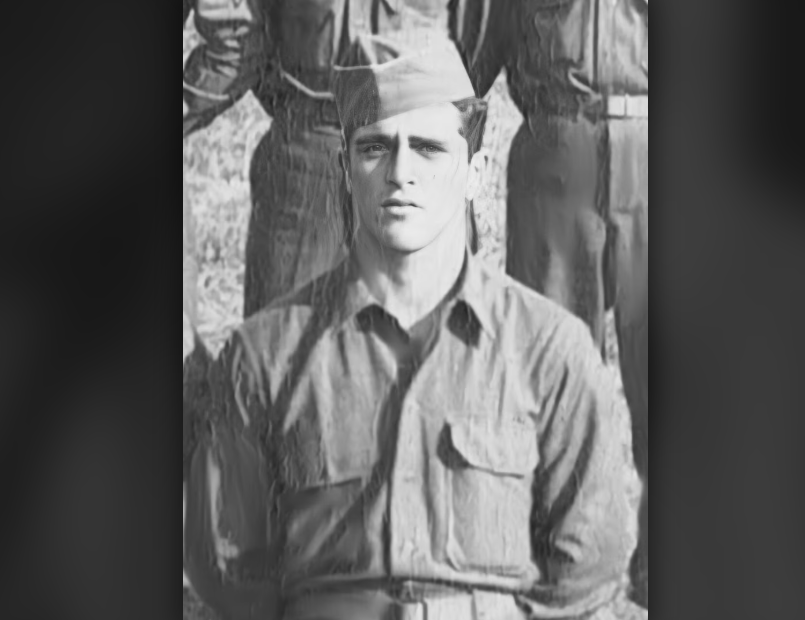
A U.S. Army soldier, Private First Class William A. Gervais Jr., who fought in World War II and went missing in action in Germany, has finally been accounted for and will be buried in his hometown in Massachusetts on December 7, nearly eight decades after the war ended.
On November 3, the Defense POW/MIA Accounting Agency (DPAA) announced that Gervais, 28, of New Bedford, Massachusetts, killed during World War II, has been identified.
The DPAA, a Department of Defense agency responsible for recovering and identifying missing personnel from past conflicts, confirmed that his family has already received a full briefing on the identification.
Gervais’s identification and formal burial next month once again highlight the unresolved fate of thousands of U.S. service members, along with millions of European and Soviet soldiers, who made the ultimate sacrifice in World War II but remain listed as missing in action more than 80 years after the conflict ended.
Gervais’s story is far more than an individual tragedy. It embodies the enduring anguish of countless families who lost loved ones in distant lands and spent generations waiting for answers.
How William A. Gervais Was Listed As ‘Missing in Action’
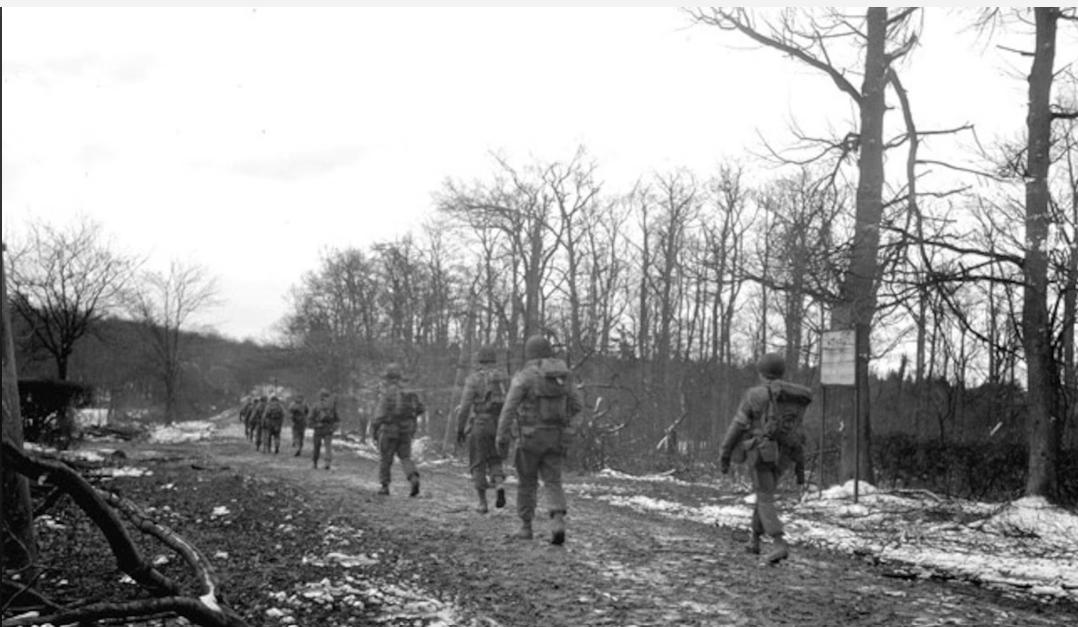
In December 1944, Gervais was assigned to Company F, 2nd Ranger Battalion. On December 7, the unit helped secure Hill 400 near Bergstein, Germany, in the Hürtgen Forest.
Soon after seizing the hill, the battalion had to defend against the German counter-attack. During the fighting, Gervais and another soldier were instructed to make contact with another platoon on a different part of the hill.
They never reached the platoon. Due to continuous artillery fire and the threat of additional German attacks, the battalion could not search for Gervais. They listed him as ‘missing in action’.
Following the end of the war, the American Graves Registration Command was tasked with investigating and recovering missing American personnel in Europe.
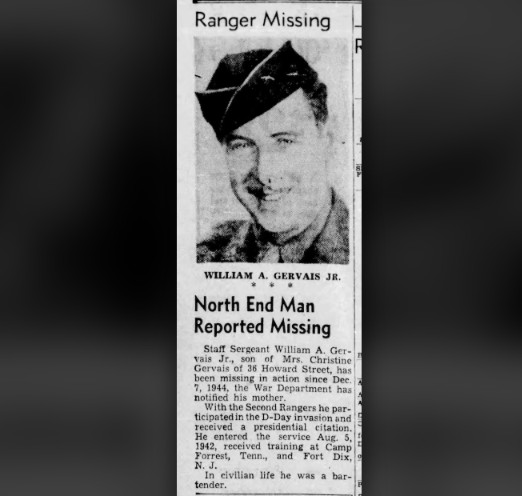
They conducted several investigations in the area where Gervais was killed between 1946 and 1950, but were unable to trace Gervais or his remains. He was declared non-recoverable in December 1951.
How Was Gervais Identified After 8 Decades?
While studying unresolved American losses in Germany, a DPAA historian determined that one set of unidentified remains, recovered in April 1946 and designated X-2485 Neuville, possibly belonged to Gervais.
The remains, which had been buried in what is now Ardennes American Cemetery, were unearthed in August 2022 and sent to the DPAA laboratory for identification.
To identify Gervais’s remains, DPAA scientists used anthropological analysis and circumstantial evidence. Additionally, scientists from the Armed Forces Medical Examiner System used mitochondrial DNA analysis and nuclear single nucleotide polymorphism testing.
Gervais’s name is recorded on the Walls of the Missing at the Netherlands American Cemetery, an American Battle Monuments Commission site in Margraten, Netherlands, along with the others still missing from World War II.
Since his remains have now been identified, a rosette will be placed next to his name to indicate he has been accounted for. Gervais will be buried exactly 82 years after he went missing in Germany.
U.S. Soldiers – Who Are Still ‘Missing in Action’
According to the DPAA, nearly 81,000 Americans remain missing from World War II, the Korean War, the Vietnam War, the Cold War, the Gulf Wars, and other conflicts.
Of the nearly 81,000 missing, 75% are in the Indo-Pacific, and over 41,000 are presumed lost at sea. Of the over 41,000 who are presumed to be lost at sea, there is very little possibility of the recovery and identification of their remains.
Of the nearly 81,000 missing U.S. soldiers, the largest proportion, nearly 88%, is of soldiers who went missing during the Second World War.
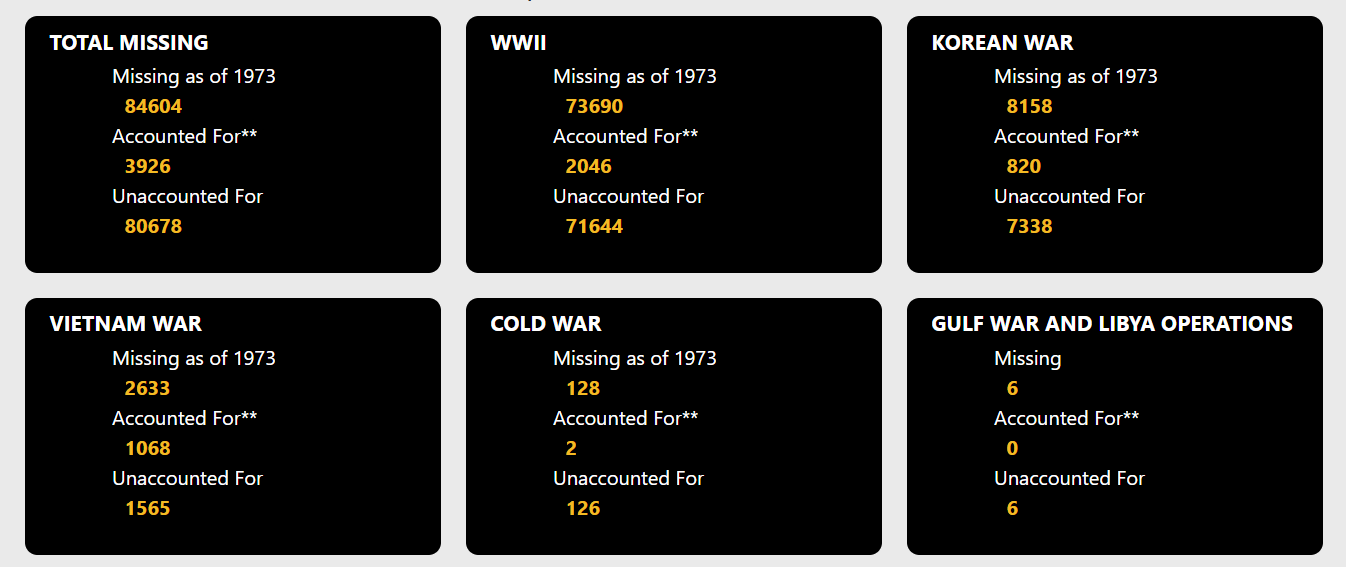
According to the DPAA, in 1973, when the agency was established, 73,690 U.S. soldiers who fought in World War II were counted as ‘missing in action.’
Since then, the DPAA has accounted for 2,046 soldiers. This means that 71,644 U.S. soldiers who fought in World War II are still counted as ‘missing in action.’
In addition, 7,338 U.S. soldiers from the Korean War, 1,565 from the Vietnam War, 126 from the Cold War, and 6 from the Gulf War and Libyan operations are also counted as ‘missing in action.’
However, Missing in Action (MIA) status does not deprive a service member’s family of the support and benefits provided to the families of those Killed in Action (KIA).
While the member remains MIA, the family continues to receive pay and allowances, dependent benefits, and educational assistance; once a formal finding of death is made, they become eligible for the full suite of survivor benefits available to KIA families.
Furthermore, after roughly 12 months of absence without reports of the person being alive, imprisoned, or returned, the relevant service secretary reviews the case and may issue a presumptive finding of death, or continue the missing status if evidence suggests the member is still alive.
Once a death is officially determined, whether from recovered remains or a presumptive finding, the kin of MIA becomes entitled to the same benefits as the kin of KIA.
While nearly 71,000 US soldiers from World War II are still counted as MIA, the corresponding numbers in European countries and the Soviet Union are much higher and run into the millions.
The MIA from WWII in European Countries
Across the Atlantic, in Europe also, many countries are still making efforts to recover and identify the remains of their millions of soldiers who are still counted as ‘missing in action.’
One of the fiercest fights took place on the Eastern Front, where Soviet and German soldiers were engaged in many pitched battles.
Nearly eight decades after the World War ended, more than two million soldiers of both Germany and the former Soviet Union are still counted as MIA, and both Moscow and Berlin are still conducting studies to recover the remains of these soldiers.
In 1988, a commission led by Colonel-General M. A. Gareev was established to determine WWII Soviet casualties. The commission concluded that 11,96,000 Soviet soldiers from World War II are still MIA.
In 1993, after the disintegration of the Soviet Union, Russia conducted another landmark study, known as the Krivosheev study, which concluded that nearly 4.6 million Soviet soldiers were taken prisoner or listed as missing. Of these 4.6 million, nearly 3 million could never return to the Soviet Union.
Therefore, multiple studies have concluded that between two and three million Soviet soldiers are still counted as MIA.
Similarly, the German War Graves Commission estimated that more than 2 million German soldiers remain unaccounted for.
Since gaining access to Eastern Europe after 1991, it has recovered and reburied the remains of over one million German soldiers and continues the work even today.
It is still recovering remains of thousands of German soldiers who participated in WW-II every year.
Last year, in a forest near Berlin, the German War Graves Commission recovered the remains of over 100 German soldiers. The remains of these soldiers were interred in a large, freshly dug grave, with military band and full ceremonial honors.
Thousands more service members from Britain, France, India, Japan, Italy, and many other countries who fought in World War II also remain missing in action today. Despite ongoing efforts to recover and identify their remains and bring closure to their families, there is a strong possibility that a substantial number may never be found.
- Sumit Ahlawat has over a decade of experience in news media. He has worked with Press Trust of India, Times Now, Zee News, Economic Times, and Microsoft News. He holds a Master’s Degree in International Media and Modern History from the University of Sheffield, UK.
- He can be reached at ahlawat.sumit85 (at) gmail.com