Even as tensions with Iran flare anew and fears grow of a return to full-scale war, the United States seems to be reducing its military footprint in West Asia. In the latest drawdown, the US Air Force has withdrawn its contingent of F-22 Raptor stealth fighters from Israel despite sustained regional volatility.
The F-22 Raptors of the 1st Fighter Wing at Langley Air Force Base that had been deployed to the Ovda Air Base in Israel ahead of “Operation Epic Fury” in February this year arrived at RAF Fairford in the United Kingdom on July 10, 2026.
The jets arrived at the base in three waves, according to flight tracking data published by military aircraft trackers on social media.
The US deployed about 12 F-22 Raptors to Israel as part of a massive military buildup that culminated in the launch of joint strikes with Israel across Iran on February 28, 2026. This was the first deployment of these cutting-edge aircraft to Israel despite iron-clad ties between the two allies for decades.
Interestingly, China blew the cover on these jets and confirmed their deployment by publishing annotated satellite imagery of every F-22 within 24 hours of their forward deployment at Ovda Air Base, as EurAsian Times reported at the time.
Two of the x10 F-22A Raptors landing at RAF Fairford this morning TREND42 08-171 and TREND43 08-175 pic.twitter.com/YwzdMiD3Gq
— UK Aviation Movies (@Aviation_Movies) July 10, 2026
Notably, the decision to withdraw the jets is not unusual, particularly since the Raptors are high-value and limited-availability assets of the US Air Force.
The United States built only 195 of these advanced jets before production ended, and nearly 180 are currently operational. However, the typical Mission-Capable Rate (MCR) of the Raptor hovers in the low 50% range and was estimated at 40.19% in 2024, which essentially means only 72 Raptors are available to perform any task at any given time.
Moreover, the Raptor is only the latest high-value asset pulled out of the region in recent times. Earlier this month, for example, six B-52 Stratofortress bombers departed RAF Fairford, where they had been stationed to launch missions against Iran, while 11 F-15E Strike Eagles from the 48th Fighter Wing at RAF Lakenheath, UK, returned home after deployment bearing kill marks.
Separately, a dozen A-10 Thunderbolt II attack aircraft from the 23rd Wing at Moody Air Force Base, Georgia, also flew across Lakenheath in June, as noted by local spotters and aviation trackers. The A-10s were also spotted with kill markings.
However, the timing of this recurrent withdrawal has piqued the interest of observers keenly following developments in West Asia amid sustained volatility.
Earlier this week, the US and Iran launched tit-for-tat strikes after Iran struck a tanker sailing along Oman’s shore in the Strait of Hormuz, prompting US President Donald Trump to declare that the ceasefire was over.

“I think it’s over. I don’t want to deal with them anymore; they’re scum… they’re led by sick people, and they’re vicious, violent people,” the President said. “We make a deal… They [Iran] go outside, talk to the press, they say ‘we never even talked about it’. There’s something wrong with them. They’re cuckoo. As far as I’m concerned, it’s over,” he added.
On July 11, Trump issued another tirade, saying that “missiles are locked and loaded” and ready to strike Iran if Tehran tried to assassinate him. “Orders have already been given”, and the US military is “ready, willing, and able, for a one-year period of time, subject to extension, to completely decimate and destroy all areas of Iran,” he added.
Iran, on its part, has warned the US of “crushing responses” to aggression.
Meanwhile, Iran’s Revolutionary Guards said on Sunday they struck and stopped a vessel ignoring repeated instructions to use an approved shipping corridor.
“Following this incident… the Strait of Hormuz will be closed until further notice and until the end of American interventions in this region and no vessels will be allowed to pass through,” the Guards said. Although Iran called the strike on the ship “warning shots”, the US military said Tehran “blatantly attacked” a Cyprus-flagged container ship transiting the Strait of Hormuz.
A crew member was missing, and the vessel had been disabled by fire and damage to its engine room, US Central Command (CENTCOM) said.
“In response, the United States is imposing a heavy cost by continuing to degrade Iran’s ability to attack civilian mariners and commercial ships freely transiting the strait,” it said on X. The strikes, which began at 7:15 pm (2315 GMT) Saturday in Washington, were the third round carried out this week and were taking place at the direction of President Donald Trump, CENTCOM said.
US defense secretary Pete Hegseth said simply: “Iran made a poor choice. Now they pay.”
How Raptors Took Over Iranian Skies
The F-22 Raptor is the USAF’s premier air superiority fighter, purpose-built to penetrate heavily defended airspace, establish dominance, and support a wide range of missions.
The US Central Command (CENTCOM) had earlier published information on the Raptor’s role in the 40-day war with Tehran.
In the intense early phase, the Raptors flew over 200 combat sorties while evading Iranian radar locks and surface-to-air missile (SAM) launches.
Typically, F-22 Raptors can operate with near-impunity in contested airspace, making it ideal for an “impending attack” scenario in which US or allied forces need to neutralize threats quickly without incurring losses
The Raptors targeted the “infrastructure connected to the Fordow Fuel Enrichment Plant and Natanz Nuclear Facility,” as previously noted by CENTCO. “Raptors employed GBU-39/B Small Diameter Bombs and GBU-32 Joint Direct Attack Munitions internally, preserving stealth while striking multiple hardened targets with precision guidance.”
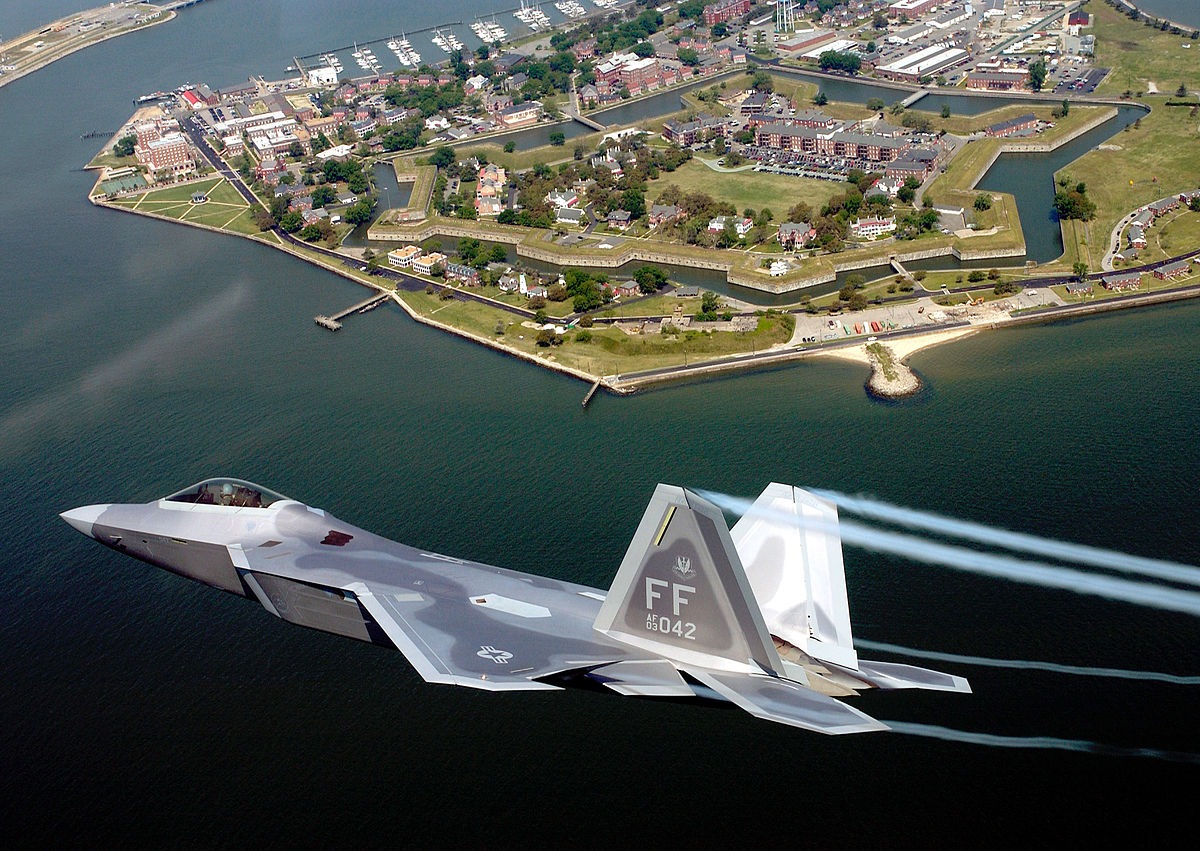
It “also coordinated with B-2 Spirit bombers and EA-18G Growler electronic attack jets in layered strike packages designed to overwhelm Iran’s integrated air defenses,” the CENTCOM stated. ”During the nine-day campaign, the regime’s forces launched dozens of surface-to-air missiles, but none were able to track or lock onto the stealth fighters.”
Moreover, the aircraft may have been deployed during the war to conduct SEAD (Suppression of Enemy Air Defenses) or DEAD (Destruction of Enemy Air Defenses) missions, creating corridors for follow-on strikes by less-stealthy aircraft, such as the F-15s or bombers. In general, these stealth fighters can also be used to conduct intelligence, surveillance, and reconnaissance (ISR) undetected deep into hostile airspace.
The F-22’s stealth, speed, and sensors were critical for rapidly degrading Iranian air defenses and contributing to air superiority over key areas.
This marked the second major combat employment of the F-22 against Iran, following its earlier role escorting B-2s during Operation Midnight Hammer in June 2025.
These deployments reaffirmed the aircraft’s enduring value in high-end, contested operations, even as the F-47, meant to succeed the Raptor, is already under development.
- Contact the author at sakshi.tiwari13 (at) outlook.com
- Follow EurAsian Times on Google News