The US Navy was the first to pioneer a carrier-based stealth fighter jet, the F-35C Lightning II, and to achieve unrivalled naval capability. However, China is catching up fast, and if the Pentagon doesn’t expedite the next-generation F/A-XX, it risks losing that edge.
In a bold move, the House and Senate Appropriations Committees have revived funding for the F/A-XX carrier-based next-generation combat jet program, months after the Pentagon suggested keeping the Navy program on the back burner in favor of the US Air Force’s F-47 sixth-gen aircraft.
Denouncing the Pentagon for its failure to award key development contracts for the F/A-XX, the House and Senate Appropriations Committees negotiated a draft defense spending bill that earmarks nearly $900 million for the F/A-XX, marking a stark increase from the $74 million allocated by the National Defense Authorization Act signed into law last month.
The draft Defense Appropriations Act for the 2026 Fiscal Year, now combined with spending bills for several other government agencies, was made public by the Senate Appropriations Committee on January 20, 2026. Additionally, the committee published a Joint Explanatory Statement report with additional information and Congressional guidance.
“The agreement supports the Navy’s efforts to develop the F/A-XX sixth-generation fighter and understands the program’s unique capability in delivering air superiority to the fleet, including greater operational range, speed, stealth, and enhanced survivability,” the committee wrote in the bill.
Additionally, the proposed bill and the report seek to finally compel the stalled selection of the F/A-XX competition’s winner.
As previously reported by EurAsian Times, Boeing and Northrop Grumman were competing for the contract after Lockheed Martin withdrew its bid in March 2025. Both contractors presented a conceptual rendering of the F/A-XX last year.
However, for the bill to become law and for the funding to go through, it would have to be approved by both houses and signed by the President.
The F/A-XX is intended to replace the Boeing F/A-18E/F Super Hornets, which have been in service with the US Navy since the 1990s.
Notably, the US Navy’s Super Hornet fleet has suffered significant attrition in the past year, with at least three lost in the Red Sea alone. Further, Boeing has decided to shutter the Super Hornet production facility after completing delivery of the final batch of Block III jets to the US Navy by 2027.
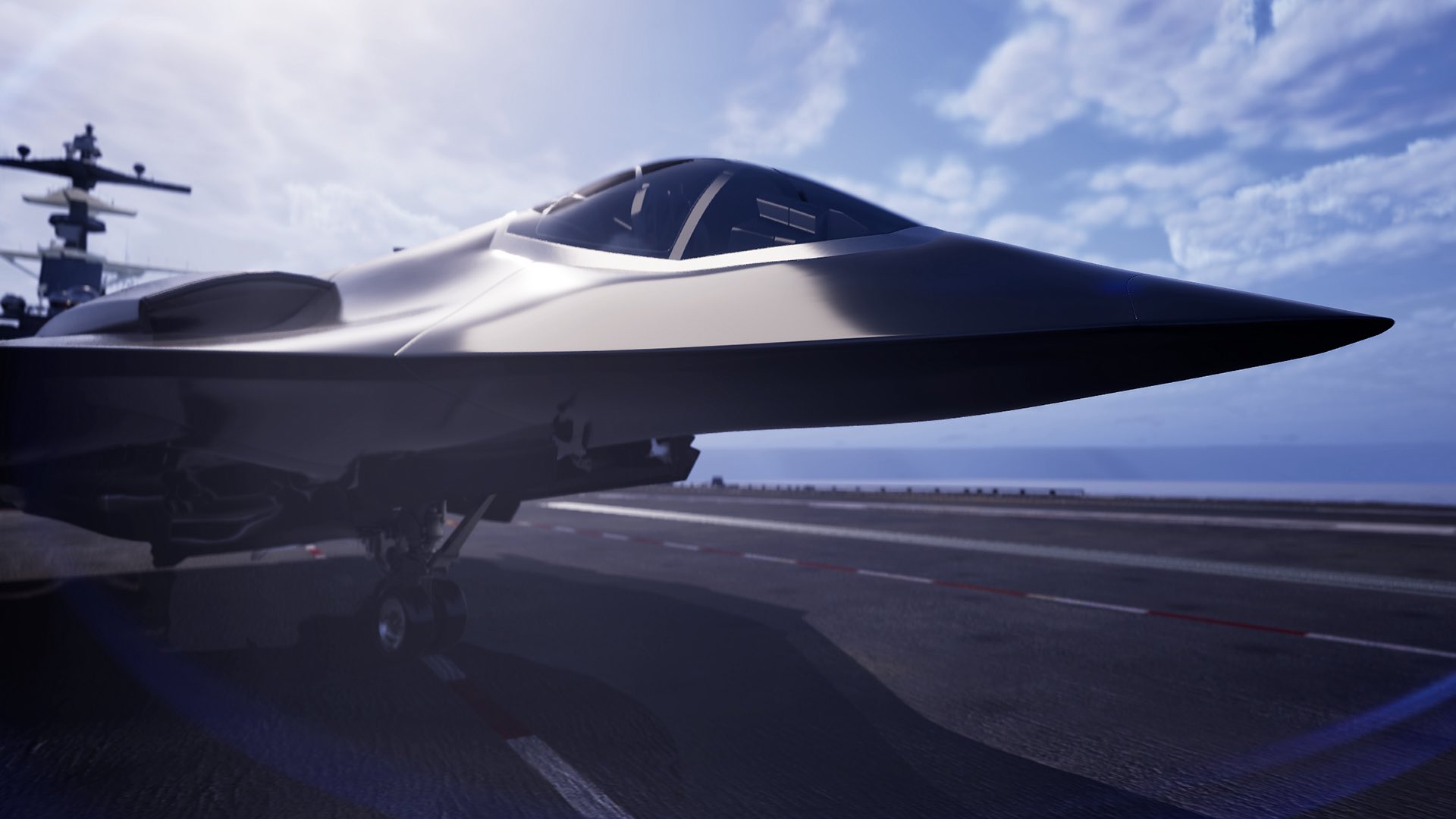
Although the USN is continuing the work to extend the Super Hornet’s service life to 10,000 flight hours with a new contract that includes upgrades to Block III standard, it does not substitute for a more potent, next-generation carrier-based jet, particularly in the fast-paced combat environment in the Indo-Pacific.
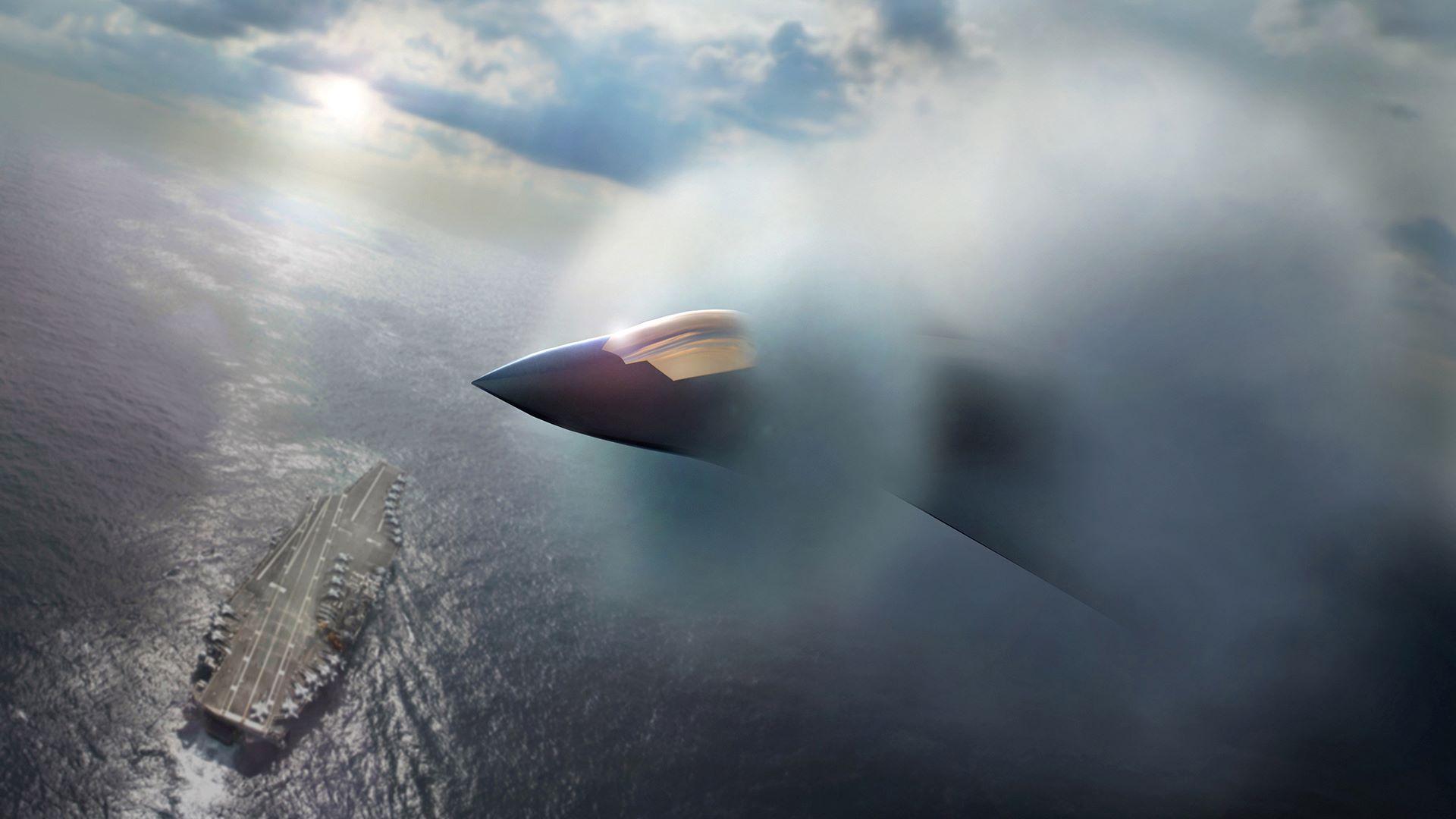
The F/A-XX is anticipated to have enhanced endurance and range, improved stealth capabilities, and the ability to interface with the Navy’s carrier-based air defence systems and uncrewed combat aircraft.
This would represent a significant advancement over the Super Hornets and the F-35C fighters currently operated by the US Navy for carrier ops.
In June 2025, the Pentagon requested that the House and Senate defense policy committees divert $500 million from the “accelerated development” of a Navy stealth fighter to the F-47.
“Simultaneously pursuing two sixth-generation fighters risks under-delivery on both,” the Pentagon stated at the time.
“Given the schedule delays and cost growth across numerous airframes, DoD recommends a focus on the F-47, giving the Navy’s F/A-XX program time for technical maturity and development,” the Defense Department stated. “Phasing the F/A-XX after the Air Force’s initial F-47 development will alleviate capacity concerns in the industrial base.”
However, the House Armed Services Committee was unconvinced by the Pentagon’s argument and has remained so.
Historically, the US Navy’s fighter jet program has faced unprecedented delays.
For instance, the Navy’s F/A-18E/F Super Hornet faced delays in the 1990s due to budget constraints and debates over its effectiveness, with several members of Congress advocating upgrading the Hornets instead. These delays stemmed in part from the Navy’s challenge of balancing the demands of carrier operations with tight financial resources.
Later, the F-35 program, managed by the Joint Program Office, prioritised the F-35A and F-35B due to their earlier operational needs and less complex technical requirements compared to the F-35C.
In fact, the F-35C carrier variant was the last to achieve Initial Operational Capability (IOC) in 2019, following the F-35A (2016) and the F-35B (2015).
6th-Gen Aircraft Race
If funding is withheld, the Navy might not have a sixth-gen fighter capable of operating from carriers in the 2030s, which could hamper the fleet’s ability to project power and maintain air superiority in Indo-Pacific.
Meanwhile, China is rapidly advancing its sixth-generation fighter capabilities. The country is already flying two different prototypes of sixth-generation fighters: the J-36 and the J-50. Experts predict that one of these may also eventually evolve into a carrier-based sixth-generation fighter aircraft.
The Chinese People’s Liberation Army Navy (PLAN) has already expanded its capability by inducting its third aircraft carrier, the EMALS-equipped aircraft carrier ‘Fujian’, and is accelerating work on its fourth, possibly, nuclear-propelled flattop.
Besides testing the carrier-based J-35 stealth aircraft, China has also intensified flight testing of the KJ-3000, a next-generation Airborne Early Warning and Control (AEW&C) aircraft designed for high-end, networked, and carrier-based operations.
China already possesses the world’s largest maritime fighting force, with 234 warships compared to the US Navy’s 219. The 2025 Pentagon report on China’s military stated that Beijing is planning to close the gap with the US in the critical domain of aircraft carriers, in both quantity and quality, by 2035.

It is pertinent to note that the development of the F/A-XX would enable the US Navy to stay one step ahead of China. With a projected 25% greater range than the F-35C, F/A-XX can operate deeper into the Pacific, reducing reliance on vulnerable forward bases and enabling strikes against targets from stand-off distances.
Moreover, the aircraft’s enhanced endurance would support prolonged missions, which are critical for maintaining a presence in vast operational theaters.
The F/A-XX is designed to operate as a “quarterback” for uncrewed collaborative combat aircraft (CCAs), such as loyal-wingman drones. This force multiplier capability would enable it to coordinate swarms of drones for reconnaissance, electronic warfare, or strike missions, thereby overwhelming adversaries’ defenses.
Equipped with next-generation sensors and data links, F/A-XX will enhance situational awareness, enabling real-time targeting and coordination with assets such as early warning aircraft, aircraft carriers, and surface ships.
- Contact the author at sakshi.tiwari13 (at) outlook.com
- Follow EurAsian Times on Google News