The US has historically been Canada’s top defense supplier due to NORAD integration and broader North American defense-industrial ties.
According to SIPRI, the US supplied nearly one-third of Canada’s arms imports between 2021 and 2025.
However, as bilateral ties deteriorate, the United States risks being sidelined from Canada’s massive defense spending surge — valued at over US$500 billion — and ironically, the F-35 program, long a cornerstone of US-Canada defense cooperation, could mark the beginning of Washington’s exclusion from Ottawa’s ambitious military expansion.
The F-35, however, is by no means the only high-stakes defense platform at stake, as multiple US-Canada defense deals, including the U.S.-manufactured High Mobility Artillery Rocket System (HIMARS) systems, combat management system for the new River-class destroyers, P-8A Poseidon Maritime Patrol Aircraft, and MQ-9B SkyGuardian Drones, are also at stake, deals that could potentially cost the US over US$ 100 billion.
The U.S.-Canada F-35 Saga
After years of delays, friction, and internal review, the US-Canada F-35 saga remains far from resolved.
On April 20, Defense Minister David McGuinty announced that Canada still cannot provide a timeline for the over-a-year-long review into the purchase of F-35 fighter jets.
“What it says, I hope, for Canadians, is that we’re being very responsible,” McGuinty said, when asked whether the review is being delayed because the Canadian government is worried about the reaction of U.S. President Donald Trump.
“Obviously, the question of the F-35 remains under review,” he added. “The prime minister is engaged. I am very engaged in this issue. My colleagues in our emerging (Defense Investment Agency) are engaged.”
McGuinty also said it’s “a question now of examining all of the industrial benefits,” adding the federal government is “looking at all of this to make sure we get this right.”
Notably, the review of the F-35 deal, announced by the Mark Carney government early last year, should have been finished by last summer.
The review is already a year behind, and even now, the government has refused to provide a timeline for its completion.
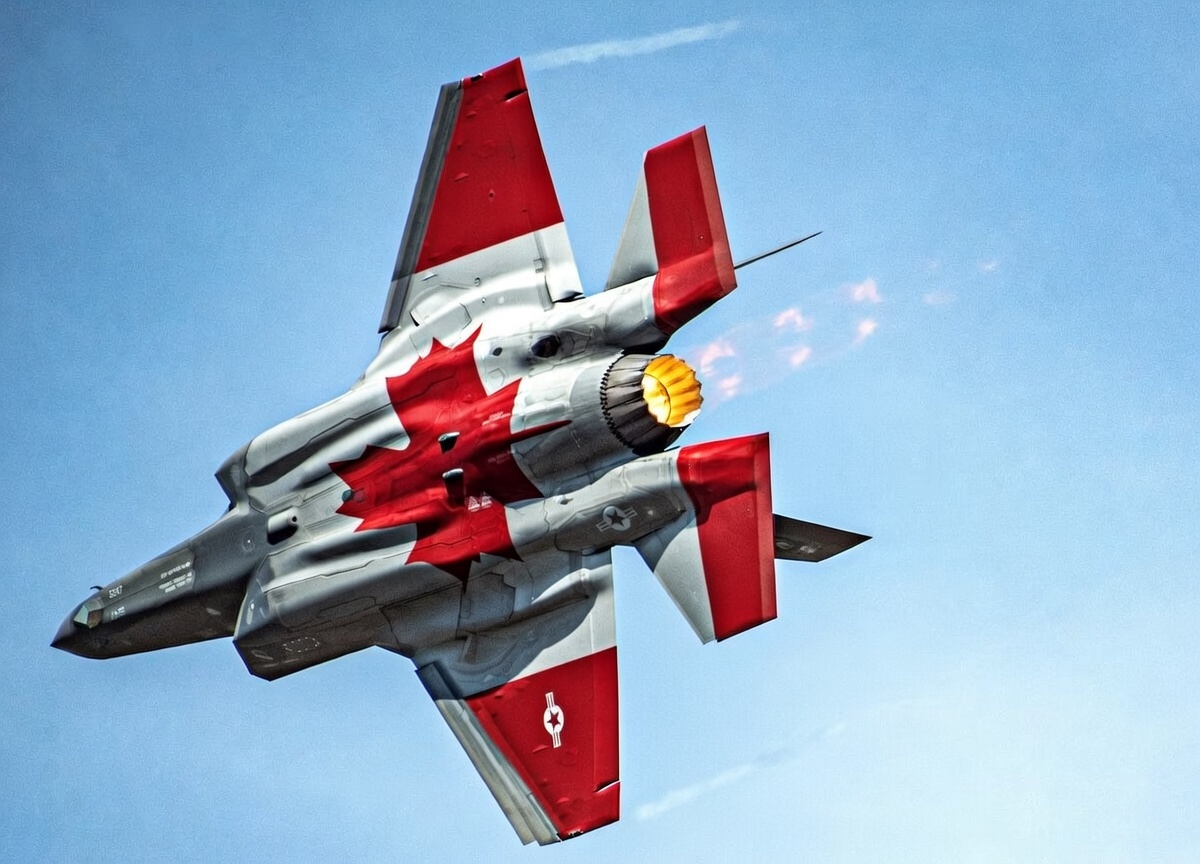
In January 2023, the Canadian government inked a CAD19 billion (US$14.2 billion) deal with Lockheed Martin to acquire 88 F-35 fighter jets in four tranches by 2032. The purchase was meant to replace the aging CF-18s of the Royal Canadian Air Force (RCAF).
However, Prime Minister Mark Carney announced in 2025 that he would review the purchase of the F-35 beyond the 16 that have been paid for and are expected to be delivered by the end of 2026.
The review came as the US President Donald Trump imposed unprecedented tariffs on Canada, humiliated the Canadian leadership, and called on the country to become the 51st state of the US.
The Canadian government earlier asserted that it needs to “make sure that the contract in its current form is in the best interests of Canadians and the Canadian Armed Forces.”
After placing the purchase under review, the Carney government also indicated it was considering buying a European jet. Three different 4.5th-gen fighters, including the Rafale, Eurofighter Typhoon, and the Gripen-E/F, have since been in the reckoning. However, no decision can be made until a final decision on the F-35A purchase is made.
A Parliamentary Budget Office (PBO) report published in November 2023 estimated that the cost to Canadian taxpayers of owning and operating a fleet of F-35 fighter jets over the next 45 years would reach a whopping US$73.9 billion. This calculated sum included the aircraft’s life cycle costs, from planning and development to use, maintenance and repair, and disposal.
A more recent report from Auditor General Karen Hogan stated that Canada’s planned purchase of F-35A fighters is facing a host of challenges, including skyrocketing costs, a lack of critical infrastructure, and a shortage of trained pilots.
According to the audit report, the estimated cost of the F-35 purchase has climbed to CAD 27.7 billion, up from the CAD 19 billion projection made by the National Defense in 2023.
The audit estimated that at least an additional CAD 5.5 billion would be needed to secure weapons and vital infrastructure, such as operational bases.
For now, the Canadian government is continuing with its review; however, this is not going to be an easy decision for Canada.
Writing in the Canadian media outlet CBC, senior defense reporter Murray Brewster suggested that, at this stage, it will be challenging to sell the decision, whatever it may be, as purely driven by defense needs.
“The Liberal government, senior officials, and even the chief of the defense staff have taken pains to downplay the political aspect and emphasize that when a new government takes over, it is natural to review big purchases. Fair enough. But these kinds of reviews are usually done quietly, behind the scenes, and not blasted all over the airwaves.”
That Canada’s F-35 review has irritated the Trump administration is clear from the remarks of the US ambassador to Canada, Pete Hoekstra.
Speaking to a Canadian podcaster in August, Hoekstra said that the ongoing review is “an irritant that makes it harder to get to a [trade] agreement.”
Earlier, the US had suggested that not buying the F-35s would endanger NORAD, the binational defense pact with the United States.
While Canada is officially reviewing the F-35 deal, Ottawa understands that if it decides to scuttle it, it will face blowback on a host of issues, including a trade deal, joint military exercises, and intelligence sharing.
Furthermore, the F-35 is not the only defense deal in the pipeline between the two countries. If Canada ends the F-35 agreement, the government could be under pressure to review those defense deals as well.
Many Other U.S.-Canada Defense Deals Could Be Impacted
Currently, apart from the F-35 program, deals worth more than USD 35 billion are in the pipeline between the US and Canada.
Among them is the deal for the U.S.-manufactured High Mobility Artillery Rocket System (HIMARS) for the Canadian Army (worth roughly US$750 million).
The combat management system for the new River-class destroyers was developed by the Canadian arm of an American defense contractor but was highly dependent on its U.S. parent for upgrades (US$2.3 billion for the first four Aegis ship sets).
The deal for 17 P-8A Poseidon Maritime Patrol Aircraft (worth US$10.4 billion). The contract for this deal was signed in 2023, with first deliveries expected by 2028, and the whole fleet by 2032.
The deal for 11 MQ-9B SkyGuardian Drones, signed in December 2023, is worth US$1.87 billion. The MQ-9B drones are expected to be delivered by 2028.
Together with the F-35 contract, these deals are worth more than US$100 billion.
These contracted defense deals with the US are becoming a political headache for the Canadian government.
A Pew Research Center survey last year found that a majority of Canadians (55 percent) name the U.S. as Canada’s top ally, but also its top threat (59 percent) in both economic and national security terms.
Canada’s attempts to reduce its strategic dependence on the US for arms imports also come at a sensitive time, as Ottawa plans a massive defense spending spree.
Apart from these deals, Canada aims to invest CAN $500 billion (US $360.1 billion) in defense over the next 10 years.
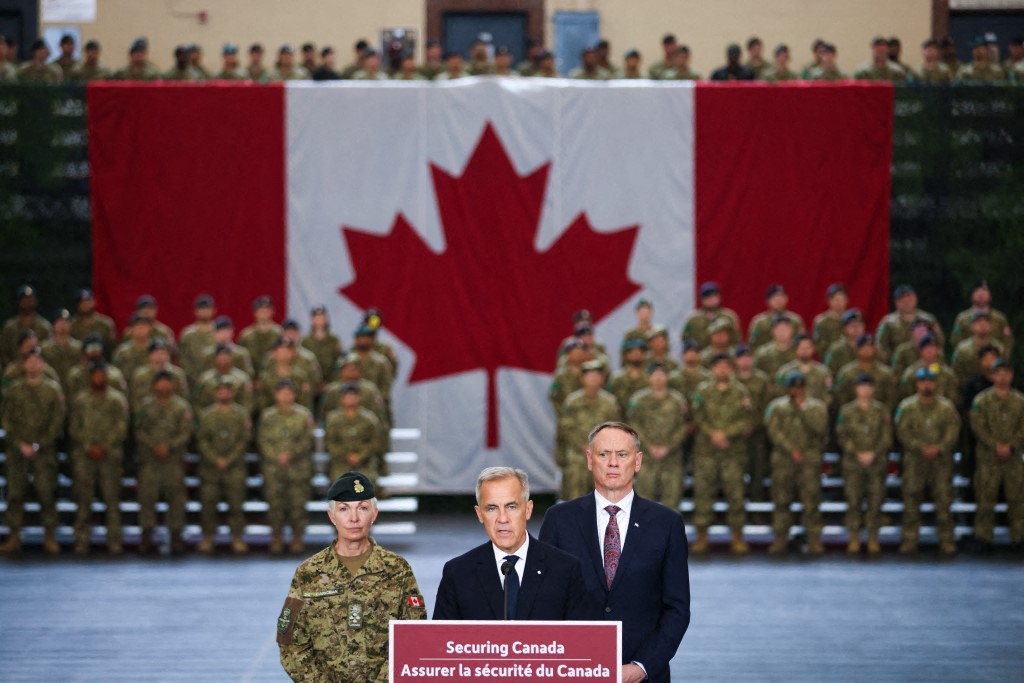
Under the 2024 defense policy update, “Our North, Strong and Free,” the Canadian military will receive new tactical helicopters, early-warning aircraft, and long-range missiles.
Canada is also planning to buy six ice-capable offshore patrol vessels for the Royal Canadian Navy (plus 2 variants for the Coast Guard), and Over-the-Horizon Radars (A-OTHR).
It will be interesting to see what Canada decides on the F-35 jets, how that decision is sold to the Canadian public, and how it impacts the other US-Canada defense deals currently in the pipeline.
Further, after decades as Canada’s closest and most important defense partner, will the United States now be sidelined just as Ottawa embarks on one of the largest defense buildups in its history?”
- Sumit Ahlawat has over a decade of experience in news media. He has worked with Press Trust of India, Times Now, Zee News, Economic Times, and Microsoft News. He holds a Master’s Degree in International Media and Modern History from the University of Sheffield, UK.
- VIEWS PERSONAL OF THE AUTHOR.
- He can be reached at ahlawat.sumit85 (at) gmail.com