After repeated delays, the British Ministry of Defense (MoD) declared in March 2026 that it had finally secured delivery of all 48 Lockheed Martin F-35B Lightning combat aircraft under contract. Intriguingly, though, the final two of these aircraft never made it to the United Kingdom.
Two Royal Air Force (RAF) F-35B Lightning II stealth jets from the last batch of 48 aircraft have remained grounded on an island in the Azores, Atlantic, for nearly two months after they developed mechanical problems during their maiden delivery flights to the United Kingdom.
While three jets from the same batch arrived at RAF Marham in Norfolk last month, the last two F-35B jets reportedly experienced malfunctions during flights from the factory in Fort Worth, Texas, where they were assembled. This prompted an emergency landing at Lajes International Airport on Terceira Island in the Azores.
The incident seems to be a dampener for the UK, which had described the delivery of all 48 aircraft as a milestone in March 2026. The aircraft were originally to be delivered by 2024, but the timeline got pushed to the end of 2025, and then to the spring of 2026.
As of now, there is no information on the nature of the faults that have kept the two jets stranded, but they will need to be repaired before they can be handed over to the RAF.
The EurAsian Times has reached out to Lockheed Martin for comment.
Notably, similar incidents have occurred in the past. For example, during the transatlantic delivery of the jets from Fort Worth in October 2025, one of the four new Belgian F-35As was grounded at Lajes due to a technical issue affecting its airworthiness.
The F-35 program has a long history of technical challenges, spare parts shortages, and availability issues across operators, although specific details of technical faults are rarely discussed publicly. In fact, the latest incident has come to light nearly a year after an F-35B belonging to the British Royal Navy made an emergency landing in India on June 14 after multiple failed attempts to return to its carrier, HMS Prince of Wales, due to adverse weather conditions and low fuel levels, as earlier reported by the EurAsian Times.
Despite efforts from Royal Navy technicians at the scene, the hydraulic issue that grounded the aircraft remained unresolved for more than a month. At one point, reports suggested that if the technicians are unable to repair the aircraft at the tarmac, it would be flown out using a transport aircraft. However, much to Britain’s relief, the aircraft took off from Thiruvananthapuram International Airport in Kerala on July 22 after extensive repairs.
The F-35B’s prolonged stay in Kerala triggered a meme fest across the country, with netizens and analysts mocking the aircraft and wondering whether India would charge the Royal Navy a parking fee. Meanwhile, Kerala Tourism took a jibe at the stranded aircraft by publishing a photo of the F-35B under a coconut tree on X, along with a caption that read: “Kerala is such an amazing place, I don’t want to leave. Definitely recommend.”

Similarly, in another incident, a US Marine Corps (USMC) F-35B made a precautionary landing at an airport in Japan on 25 March 2025 after the pilot received a warning indication during a routine flight training. The incident led to a prolonged stay at the civilian airport, as maintenance and engineering teams were brought in to perform extensive troubleshooting and on-site parts replacement. The aircraft finally flew out on May 5, 2025.
F-35’s Technical Woes
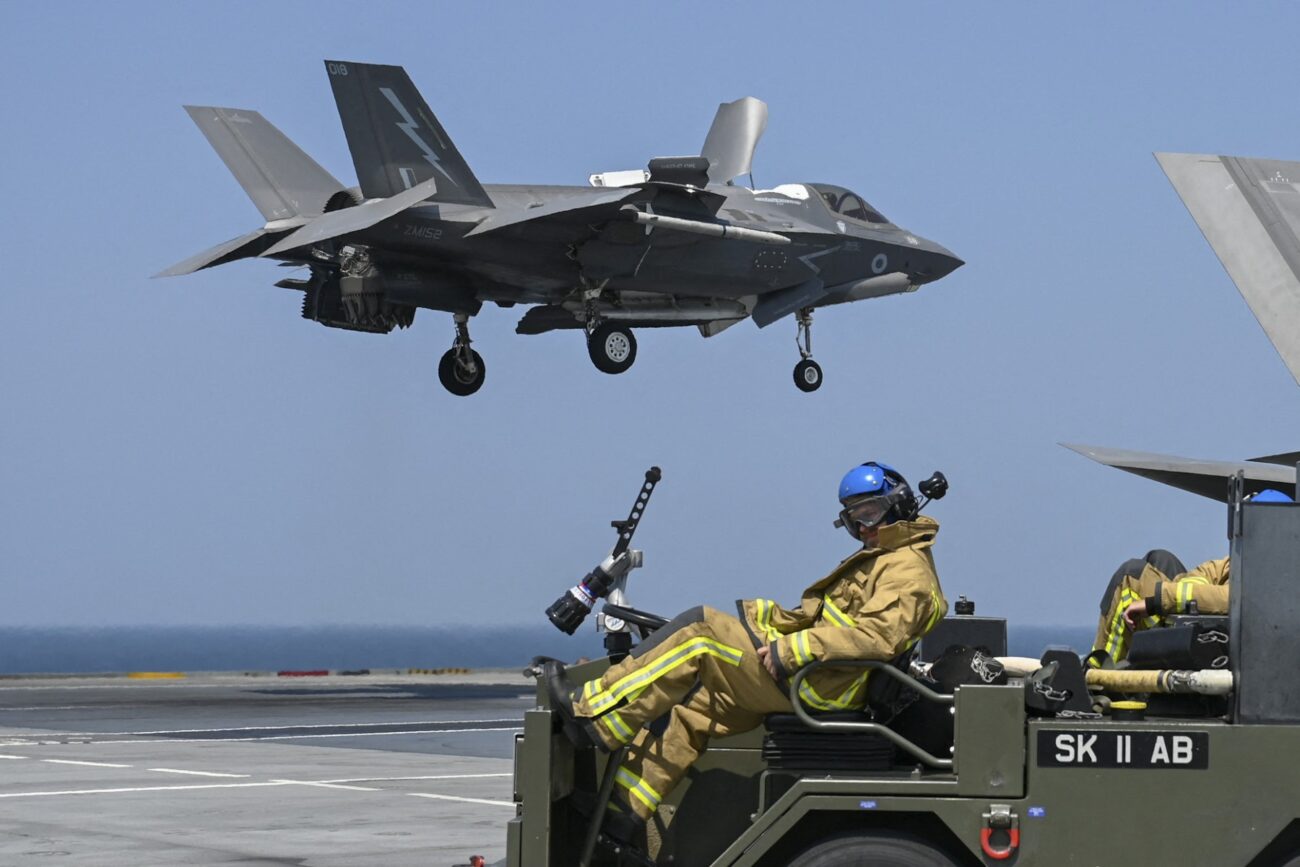
The UK operates F-35B Lightning II aircraft jointly between the Royal Air Force (RAF) and the Royal Navy (Fleet Air Arm). It originally placed an order for 48 jets, of which 46 have arrived in the country so far, and one was lost in a 2021 crash.
So far, the British military has exclusively acquired the F-35B aircraft, a short take-off and vertical landing (STOVL) variant of the fighter jet specifically engineered for operations from short-field bases and aircraft carriers. However, since the overall program goal remains at up to 138 F-35s, the country is now procuring additional aircraft.
It announced the purchase of 27 more aircraft in the June 2025 Strategic Defense Review, including 12 F-35A and 15 F-35B variants.
The purchase of the F-35A is particularly significant, as the variant has clearance to carry the B61-12, a low-yield thermonuclear gravity bomb. The purchase of the aircraft would make it possible for the UK to incorporate US nuclear weapons into the RAF, with the American nukes now stationed at RAF Lakenheath in Suffolk, England.
The F-35B is a major leap in capability for the Royal Air Force and the Royal Navy. It is the first true stealth fighter capable of sensor fusion and network-centric warfare, and has been extensively tested in combat, including recently in the Iran War. Moreover, the UK derives significant industry benefits from the F-35 as about 15% of each US-designed F-35, including all aft fuselages, is constructed in the UK.
However, the RAF and the Royal Navy have faced a host of challenges with the F-35B fleet. Earlier, for instance, the National Audit Office (NAO) published a report on July 11, 2025, stating that the country’s F-35B program is experiencing delays, infrastructure problems, and a lack of staff, which could impact combat readiness.
Referring to the delays in the delivery of the jets to the UK, the NAO said, “This has been caused by a combination of the MoD delaying its delivery profile to save money in the short term in response to wider financial pressures and, subsequently, problems in the global program with the Technology Refresh 3 software upgrade.”
It must be noted, though, that the delays in TR-3 upgrades and Block 4 are program-wide and not specific to the United Kingdom.
The F-35 program’s low “mission availability rates,” or an aircraft’s capacity to complete at least one of its seven possible required missions, were specifically criticized by the NAO. It revealed that the mission capability rate of the UK F-35 fleet in 2024 was almost half the MoD’s target, falling short of those of other international programs.
Additionally, the report lamented that the MoD was far behind its planned delivery dates for integrating UK-developed missiles onto the F-35. “The original need by date for the Spear 3 air-to-surface and Meteor air-to-air missiles was December 2024. However, the MoD now expects to have both in full service in the early 2030s.”
“Most significantly, the F-35 does not have a standoff weapon to attack ground targets from a safe range, which will impact its effectiveness in contested environments. It does not expect to have this capability in full until the early 2030s. Nor will the MoD have a sovereign facility to assure that the aircraft retain their stealth characteristics until the 2030s, much later than originally planned. Hardware and software updates, known as Block 4 and provided by the global program, have also been delayed,” it stated.
The NAO stated that the poor availability rates are driven largely by a UK shortage of F-35 engineers and a global shortage of F-35 spare parts. “Most significantly, it had serious gaps in engineering posts in November 2024, with especially acute gaps at supervisor grades. It also had shortages of cyber professionals, pilots, and flying instructors.”
Notably, many of these concerns persist, nearly a year later.
A recent report from the Public Accounts Committee (PAC) of the House of Commons states, “The UK’s F-35 fleet faces significant capability gaps. Notably, it will not have a standoff weapon that can be used to attack ground targets from a safe distance until the early 2030s. The Department also has problems ensuring sufficient aircraft are available to fly as there is a severe shortage of several types of personnel, including engineers, cyber specialists, pilots, and qualified flying instructors, which will not be resolved for several years. This problem is exacerbated by the inadequate standard of accommodation at RAF Marham, which under current plans the Department will not fully address until 2034.”
Reports suggest that the British F-35B fleet has been stretched thin due to sustained combat operations and recurring upgrade delays.
The heavy demands of the 2025 Indo-Pacific deployment, Operation Highmast, had already depleted a large amount of spare components and engineering resources. During that deployment, 24 F-35Bs were stationed aboard the HMS Prince of Wales even though the carrier’s Afloat Spares Pack was designed to accommodate only 12 aircraft.
To make up for the shortfall, more spares had to be taken from RAF Marham, and land-based Deployable Spares Packs had to be added to the carrier supplies.
Additionally, the British F-35s have been flying over the airspace of Middle Eastern countries and patrolling the sea well ahead of Cyprus. The MoD reported on March 3 that RAF F-35Bs had shot down an Iranian one-way attack drone employing AIM-132 ASRAAM and AIM-120 AMRAAM missiles while flying over Jordanian airspace, marking the first air-to-air kill in British service, as pointed out by Navy Lookout.
Although it was always anticipated that the ensuing aircraft maintenance burden would limit availability until 2026, the unforeseen operation in the Middle East has significantly exacerbated the problem. Against that background, it seems that the challenges facing the British F-35 are far from over, as demonstrated most recently by the two jets stranded in the Atlantic.
- Contact the author at sakshi.tiwari13 (at) outlook.com
- Follow EurAsian Times on Google News