Malaysia has sought legal compensation of more than $250 million after the Norwegian government unilaterally revoked the sale of Kongsberg’s Naval Strike Missile (NSM) to the country as part of new export control measures.
Malaysia signed a deal worth around $145 million with Norway’s Kongsberg Defense & Aerospace for NSM anti-ship missiles and launchers in 2018 to arm the Royal Malaysian Navy’s Maharaja Lela-class Littoral Combat Ships (LCS).
However, in an unexpected turn of events, Norway’s Foreign Ministry announced earlier this month that it had tightened rules on its sensitive defense technologies, restricting exports primarily to NATO allies and NATO’s partners. Additionally, it announced that it was canceling export licenses for the naval missile system to Malaysia because Malaysia was neither a NATO member nor a close partner under the newly formulated criterion.
The Secretary General of the Malaysian Ministry of Defense, Lokman Hakim Ali, noted that Norway invoked “force majeure,” a contractual provision that releases both parties from obligations or liability in the event of extraordinary events that impact the agreement.
The move triggered a diplomatic row between the two countries, with Malaysian Prime Minister Anwar Ibrahim calling the decision unilateral and unacceptable.
“Signed contracts are solemn instruments. They are “not confetti to be scattered in so capricious a manner,” Anwar said on social media. “If European defence suppliers reserve the right to renege with impunity, their value as strategic partners flies out the window.”
I conveyed Malaysia’s vehement objection in a telephone conversation with Prime Minister Jonas Gahr Støre regarding Norway’s unilateral and unacceptable decision to revoke the export licence for the Naval Strike Missile (NSM) system and its associated launcher systems, ostensibly… pic.twitter.com/gzYFq9injK
— Anwar Ibrahim (@anwaribrahim) May 14, 2026
On May 19, Malaysian Defense Minister Mohamad Khaled Nordin revealed that the country has sent a notice to Norway seeking compensation of more than 1 billion ringgit, or about $251.76 million, over the abrupt cancellation. Malaysia is now reportedly seeking compensation for both direct and indirect costs associated with the suspended purchase.
The Minister told reporters that Malaysia would also seek additional damages to cover personnel retraining and the cost of removing and replacing equipment on ships built for the Norwegian-made missiles. Additionally, a special ministry-level committee is reportedly evaluating legal action against Kongsberg and the Norwegian government.
Malaysia seeks >$251M in compensation from Norwegian firm after missile deal scrapped. Norway revoked export licenses, citing stricter controls on sensitive defence tech—exports now limited to allies & closest partners. #Malaysia #DefenseNews pic.twitter.com/exYuHOMaXn
— Starhub Global (@starhubglobal) May 19, 2026
This could potentially involve international arbitration, as Malaysia views the invocation of force majeure as a breach of contract.
The cancellation is particularly distressing for Malaysia, as it has already paid about 95% of the contract value and has been awaiting delivery of the missiles. Nordin reiterated Anwar’s argument that the Norwegian decision impacts the reliability of European arms exporters. “What has happened to us was not just a defense procurement issue. It reflects a larger problem, namely, the erosion of trust among countries in international relations.”
The decision to seek compensation followed Norway’s defense of its decision to cancel the contract and position Malaysia as an unfortunate victim of a much-needed policy shift.
Norway’s foreign ministry earlier told the Associated Press that it has strengthened regulations on defense technology amid shifts in the security landscape in Europe and globally over the past few years. “Exports of some of the most sensitive Norwegian-developed defense technologies will be limited to our allies and closest partners,” the Norwegian Foreign Ministry stated. “It is regrettable that this affects Malaysia.”
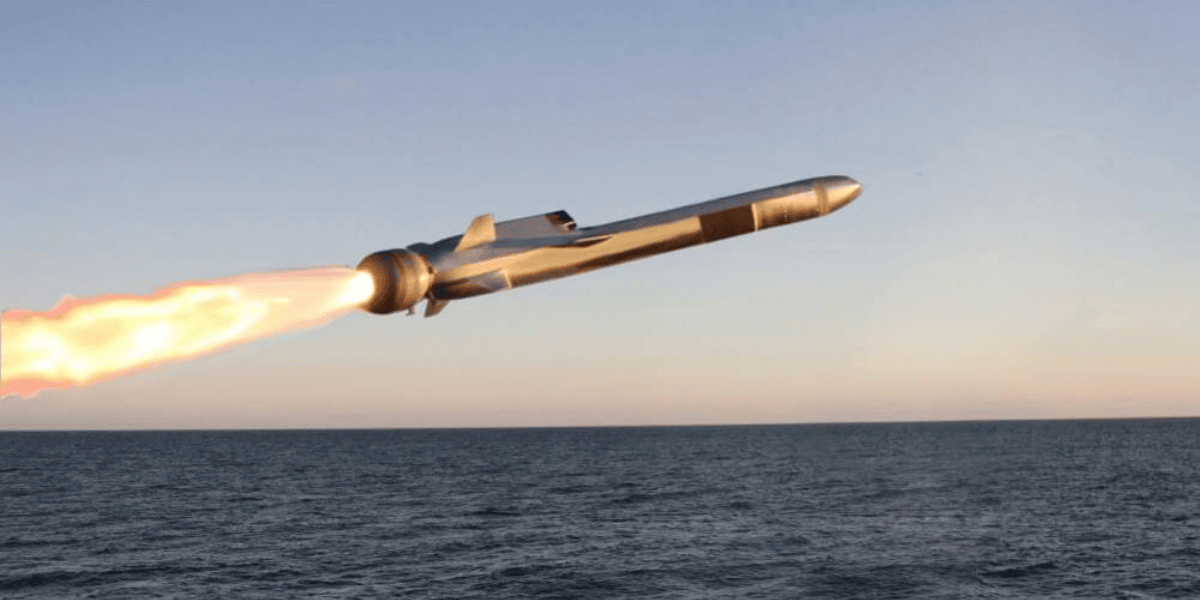
Moreover, the Royal Malaysian Navy will now have to seek an alternative missile to arm its LCS while facing a weakened deterrent in the contested South China Sea.

The Norwegian Foreign Ministry has not commented on Malaysia’s demand for compensation at the time of writing this report.
Interestingly, Norway has been in a position to seek compensation itself, although that situation was fundamentally different.
Norway earlier nixed the contract for the NH90 helicopters with NH Industries due to years of delays, technical faults, and time-consuming maintenance. “Regrettably, we have concluded that no matter how many hours our technicians work, and how many parts we order, it will never make the NH90 capable of meeting the requirements of the Norwegian Armed Forces,” the then Norwegian Defense Minister Bjørn Arild Gram said in June 2022.
Subsequently, Norway and the NHI consortium agreed to settle mutual claims for damages in November 2025. NHI agreed to pay Norway €375 million, or about $432 million, in return for all the NH90s to the manufacturer, along with all spare parts, tools, and mission equipment, as reported by the EurAsian Times.
In the case of the NH90, the manufacturer failed to deliver a working product for decades, whereas in the case of the NSM, the Norwegian government changed policy, affecting Kongsberg’s ability to deliver.
While Norway had a strong case against NHI due to clear performance shortfalls, Malaysia’s case against Norway or Kongsberg turns on whether force majeure validly excuses the breach or is an unfair/unilateral act.
Naval Strike Missile
The Naval Strike Missile is a stealthy, precision-guided, long-range strike weapon that can hit land or sea-based targets over a range of 185 to 300 kilometers. It is widely regarded as a fifth-generation weapon due to its low observability, advanced seeker, and multi-platform flexibility, which allow it to be launched from a ship-based cannister or a truck-mounted ground or coastal defense system.
The NSM has consistently been in the news for its soaring popularity among countries seeking a lethal anti-ship weapon amid rising challenges from adversaries like China and Russia. The ship-mounted NSM is currently in use by Norway, Australia, the Netherlands, Poland, the United Kingdom, and the United States. Additionally, Poland and Romania deploy the NSM as a shore-launched system.
Meanwhile, the US Marine Corps also uses the system as a component of the Navy-Marine Expeditionary Ship Interdiction System, or NMESIS.
The NSM’s Autonomous Target Recognition (ATR) enables the missile to precisely detect and engage the pre-designated target. The weapon automatically distinguishes between the intended target and other objects using an internal database of sample ship types, which makes it precise and much less vulnerable to electronic warfare tactics and defenses.
The NSM has very good maneuverability due to its high thrust-to-weight ratio and airframe design. The missile is completely passive, has remarkable sea-skimming capabilities, and is expected to easily breach the enemy’s air defenses due to advanced terminal maneuvers.
By giving the ship the over-the-horizon assault option, the NSM enables the crew to track and destroy incoming anti-ship missiles from a safer distance.
Notably, the seeker is impervious to radio-frequency electronic warfare jamming because it is passive, and its erratic motions during the terminal phase of the flight further complicate interception attempts.
The NSM was designed with a reduced radar signature to attack close to the surface in sea-skimming mode, essentially below the aperture of many ship-based radars. The missile is propelled to its target at high subsonic speed by a turbojet sustainer engine after being launched into the air by a solid rocket booster, which is jettisoned upon burnout.
This enables the multipurpose blast or fragmentation warhead to carry out its function, which, in the case of a ship target, entails striking the ship at or close to the sea line.
The NSM excels in littoral, or near-shore, and distributed operations, providing credible sea-denial capability from mobile launchers or smaller warships. Its appeal lies in its proven performance, low-observable features, multi-platform flexibility, and integration into Western systems—making it attractive for nations modernizing against peer adversaries with strong anti-access/area-denial (A2/AD) capabilities, as was the case with Malaysia.
- Contact the author at sakshi.tiwari13 (at) outlook.com
- Follow EurAsian Times on Google News