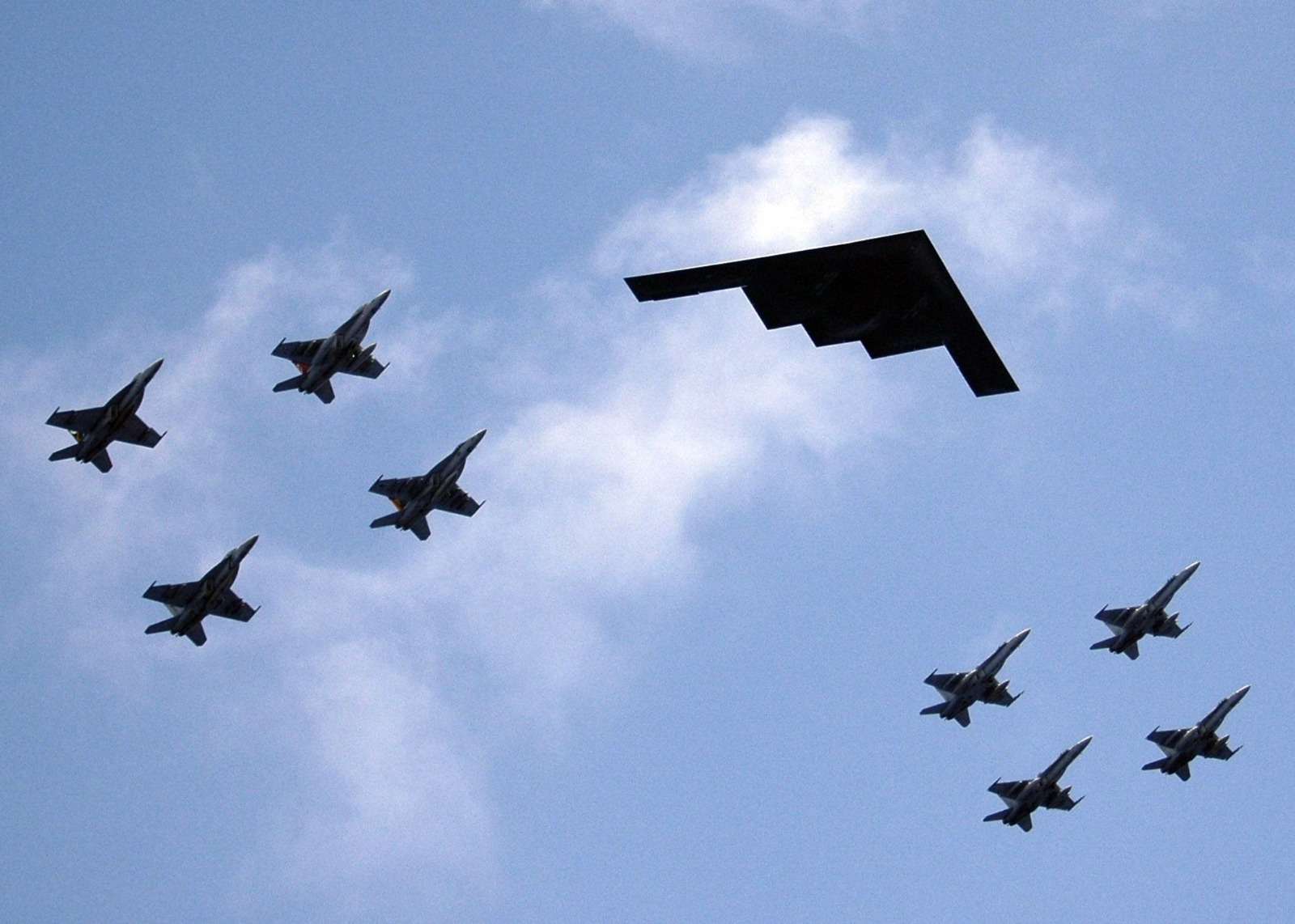
Three days from today, when US President Donald Trump lands in Beijing for a two-day summit with his Chinese counterpart Xi Jinping, Taiwan is most likely to figure prominently.
With Xi increasingly aggressive on merging the island nation with the mainland and Trump earning the moniker of TACO (Trump Always Chickens Out), Taiwanese are understandably worried.
However, if the reports that the Trump-Xi summit might pave the way for a potential $1 trillion Chinese investment in the US prove true, the Taiwanese could take a sense of relief. Usually, China’s overwhelming military power is cited in most analyses of a possible war between Beijing and Taipei.
Though the examples of Russia in Ukraine and the US in Iran are not inspiring for Xi’s military takeover of Taiwan plan, and then there are the challenges of an amphibious war across the treacherous 100-mile-wide Taiwan Strait, coupled by Taipei’s “porcupine” defense strategy (designed for a smaller military force to deter or defeat a larger, technologically superior invader by focusing on low-cost, highly mobile, and lethal weapon systems rather than conventional, high-value assets), the Chinese hawks believe that that China will eventually prevail.
However, there is now an emerging school of thought among strategic experts that, more than military challenges, non-military reasons will make Xi think many times before he resorts to force in dealings with Taiwan. His strongest constraints are likely to be economic, demographic, and political.
In other words, an attack across the Strait could trigger costs that have little to do with the battlefield and everything to do with China’s long-term financial stability and political system.
As Marc Liebman, a retired US Naval Aviator, argues, China’s economy is heavily dependent on exports, and here four leading importers – the U.S., Republic of Korea, Japan, and Taiwan – represent 21.31% the country’s total exports of $3.777.9 billion in 2025. The U.S. leads with 11.12%, Japan with 4.16%, Korea with 3.82%, and Taiwan with 2.21%. As these four countries will, in all probability, support Taiwan in a conflict with China, exports to these countries will end.
There are also risks to the Chinese exports to other large customers, such as the European Union (EU) ($559.9B or 14.82%) and ASEAN nations ($665.2B or 17.61%).
Besides, a war over Taiwan will bring sanctions that will cut them off from Chinese businessmen, their assets, and the financial markets abroad. Latest estimates suggest that Chinese private investors have significantly accelerated their international presence, with total private foreign asset holdings rising over $1 trillion in just the first nine months of the previous year to an estimated $7.8 trillion.
This massive shift, driven by a record $1.2 trillion trade surplus in 2025, sees capital flowing increasingly into US stocks, European bonds, and global business expansion rather than solely into central bank reserves at home.
Despite heightened regulatory scrutiny, the US is said to have received the largest share of Chinese investment since 2005, with total accumulated investment exceeding $204 billion between 2005 and 2025. In Europe, Germany ($56.3 billion), France ($37.1 billion), and the UK ($106.6 billion) remain major recipients of Chinese investment. In Canada, Chinese FDI stock totaled approximately CAD 30.8 billion by late 2025, making it a major destination.
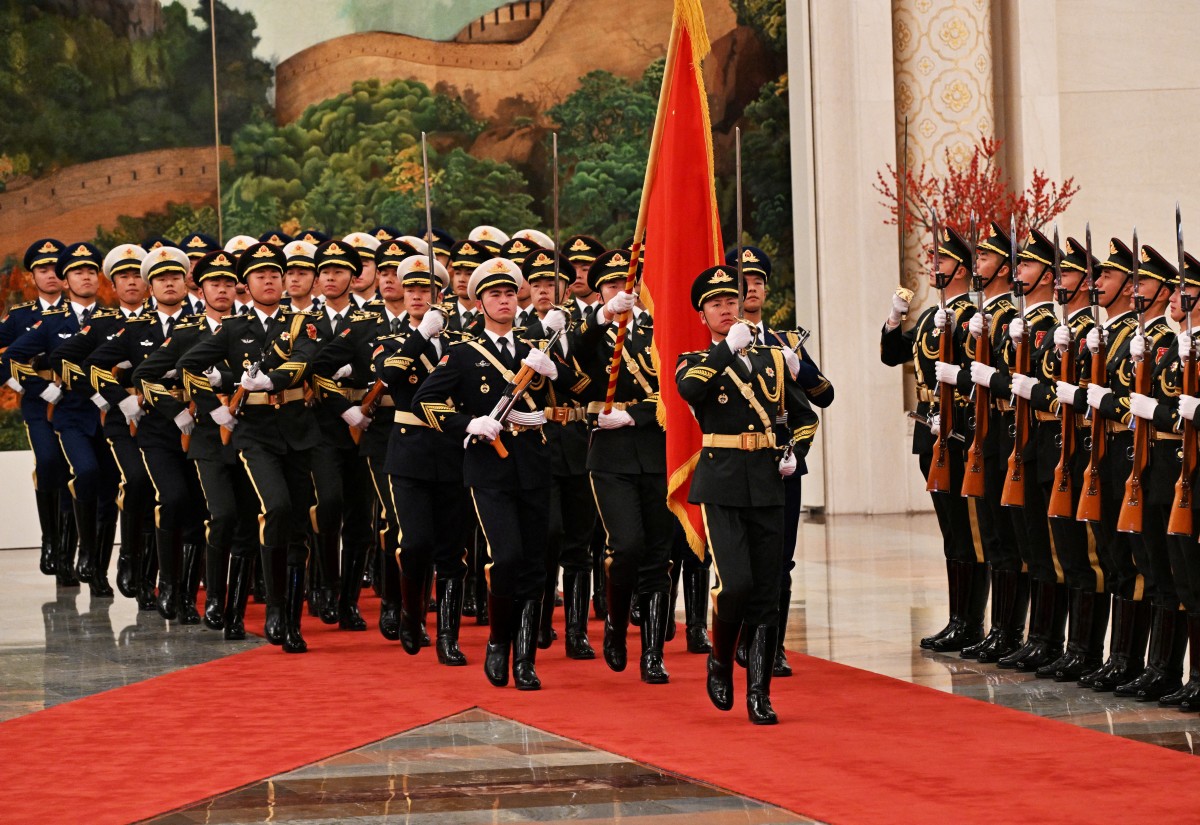
Secondly, it may look strange, but any invasion of Taiwan will harm the Chinese industries the hardest. Taiwan produces roughly over 60% of the world’s semiconductors and 90% of the most advanced chips. An attack would likely destroy these facilities, crippling China’s own tech sector, which imports 60% of its chips from Taiwan.
As it is, China’s tech giants, like Huawei and SMIC, depend on Taiwanese chips, US software, Dutch lithography, and Japanese materials. An invasion would likely trigger an immediate US and Dutch cutoff of advanced chipmaking equipment, severely hurting China’s semiconductor goals.
Thirdly, once the war begins, thousands of entrepreneurs in China’s Special Economic Zones will see their revenue drop significantly as there will be few importers of their products. Finding new customers in countries that do not support Taiwan will be difficult, which, in turn, will force layoffs. Here, the foreign investors will also like to withdraw their invested capital.
In sum, the economic costs—loss of markets, sanctions on semiconductors, capital flight—would likely be catastrophic.
Fourthly, China relies on imported food, energy, and technology inputs. Roughly 40% of its oil comes by sea through chokepoints that the US Navy can influence. Cutting those flows would spike inflation, shut factories, and threaten the jobs that underpin the Communist Party’s legitimacy.
Incidentally, China’s population is aging and shrinking. So much so that it is feared that the population will fall by over 100 million by 2050. Therefore, it is highly likely that in the event of a major war by China, there would be the brain drain of skilled engineers, entrepreneurs, and students who keep the tech sector competitive. Families with one child are already risk-averse about casualties. Therefore, today’s Chinese middle class, which measures success in education, housing, and wealth preservation, will not like a war that crashes markets and sends sons home in caskets.
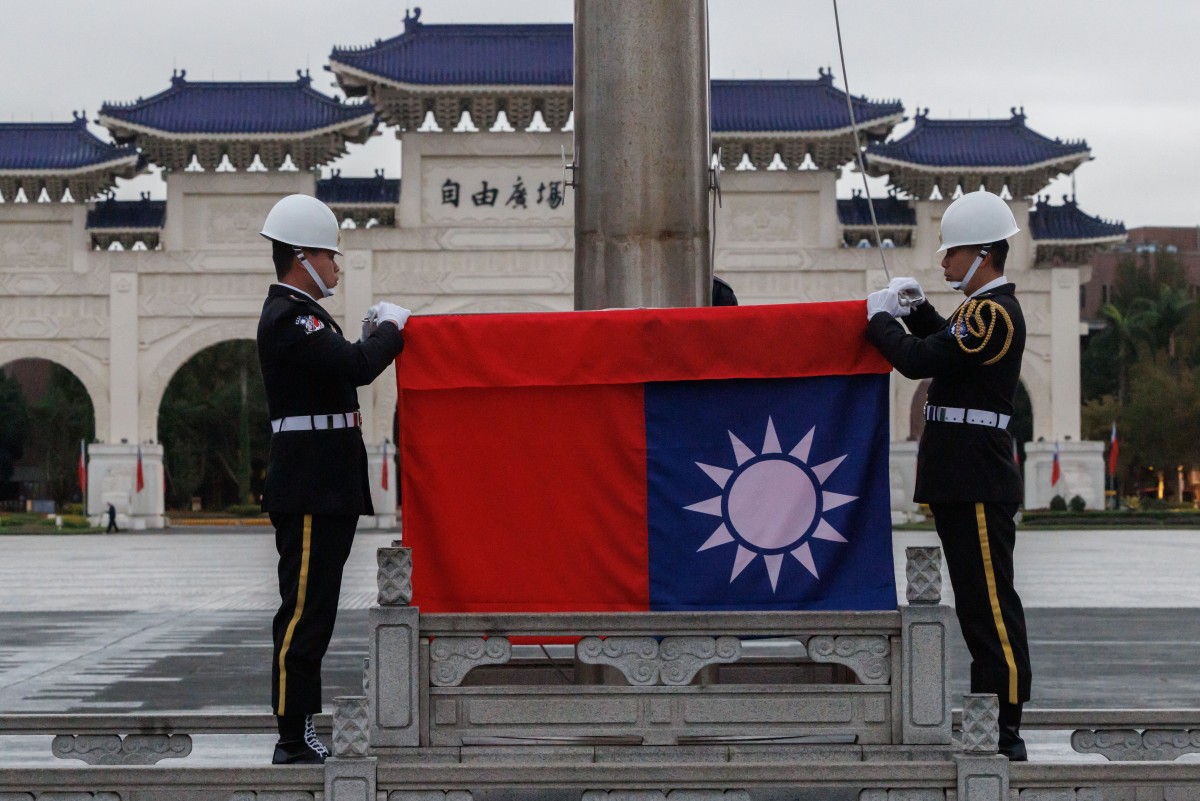
As it is, despite heavy controls by the totalitarian regime that XI leads in Communist China, the Chinese people have not hesitated in the recent past to express their dissent. As Liebman has cited, in early 1990, the Chinese Communist Party(CCP) admitted that there had been 8,700 “mass protests.” By 2010, Sun Liping, a member of the Chinese Academy of Social Scientists, estimated the number had grown to 190,000. And in 2021, the world saw protests in Hong Kong, and in 2022, opposition to the government’s Covid-19 prevention policies forced the CCP to impose martial law in three provinces and to confine its citizens to their apartments.
An unpopular war over Taiwan will be bad news for Xi politically at a time when the PLA (People’s Liberation Army), the main source of strength and support for the Chinese Communist Party’s survival, is not in good health.
It is worth noting that since 2023, the PLA, embroiled in several corruption scandals, has seen unusual turnover at the very top. Xi has been ruthless in going for the purges at the top. Defense Minister Li Shangfu was removed after disappearing from public view. Rocket Force commanders Li Yuchao and Xu Zhongbo were purged, along with Political Commissar Xu Xisheng. Former PLA Air Force commander Ding Laihang and several senior equipment officials have also been investigated. In July 2024, former Central Military Commission member and political work chief Zhang Yang died by suicide during a corruption probe.
Incidentally, Shangfu and another former defense minister, Wei Fenghe, were sentenced to death with a two-year reprieve by a military court on May 7, for bribery and corruption.
All of these affect preparations for the invasion of Taiwan. After all, the Rocket Force controls China’s conventional and nuclear missiles and would be central to any Taiwan operation. Removing or losing its entire senior leadership chain creates gaps in readiness and trust that will take a long time to fill, as the new commanders need years to master joint operations, targeting, and logistics for a complex amphibious campaign.
Viewed thus, one can say that any attack on Taiwan by China does not look imminent.
Xi may now have a military that has earned respect and fear from China’s adversaries, but he will find the above non-military costs to be the real deterrent against any misadventure against Taiwan.
- Author and veteran journalist Prakash Nanda is Chairman of the Editorial Board of the EurAsian Times and has been commenting on politics, foreign policy, and strategic affairs for nearly three decades. He is a former National Fellow of the Indian Council for Historical Research and a recipient of the Seoul Peace Prize Scholarship.
- CONTACT: prakash.nanda (at) hotmail.com