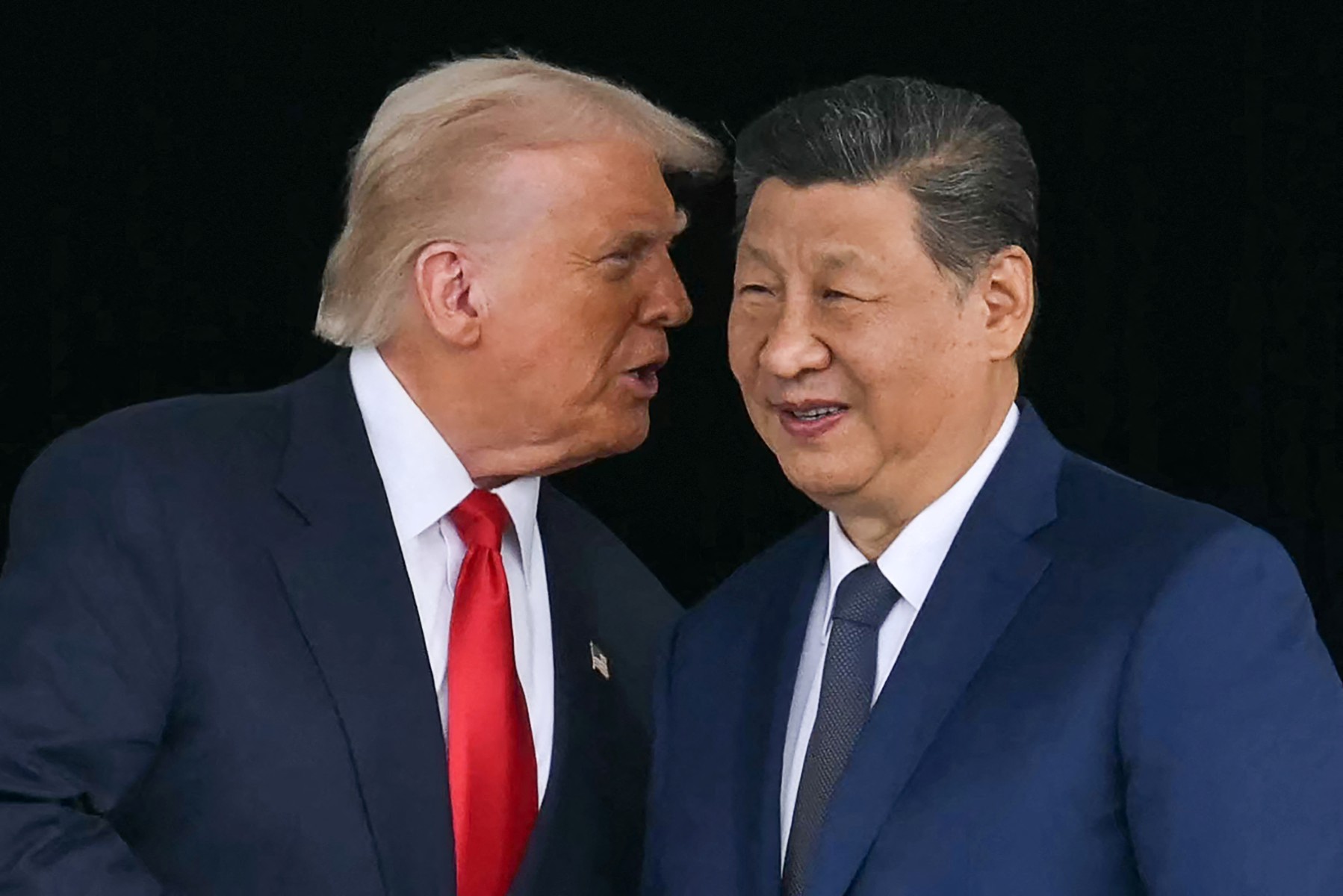
US President Donald Trump will visit China from May 13 to 15, Beijing confirmed on Monday. The US President is expected to hold direct talks with President Xi Jinping on Iran and trade issues.
Not just Iran, Washington and Beijing remain at odds over several major issues, including trade tariffs, the ongoing Middle East conflict, and Taiwan, which China claims as a renegade province and has vowed to seize by force if necessary.
“At the invitation of President Xi Jinping, President of the United States of America Donald J. Trump will pay a state visit to China from May 13 to 15,” a Chinese foreign ministry spokesperson said. Trump is expected to push Xi on Iran while aiming to ease trade tensions, according to US officials. China is a key customer for Iranian oil, mainly through independent “teapot” refineries that rely on discounted crude from the Islamic Republic.
“This will be a visit of tremendous symbolic significance,” US Principal Deputy Press Secretary Anna Kelly told reporters on a call. “But of course, President Trump never travels for symbolism alone. The American people can expect the president to deliver more good deals on behalf of our country.” Trump’s first trip to China in his second term will feature pomp and ceremony, including a tour of the Temple of Heaven in Beijing and a lavish state banquet, the White House said.
Iran and trade are set to dominate talks, but Taiwan is a major issue between the two sides.
China’s People’s Liberation Army (PLA) possesses a vast, modernizing superiority over Taiwan’s military, with over 10 times more active personnel, aircraft, and armor. China’s $230bn defense budget dwarfs Taiwan’s $16.8bn.
While China dominates, Taiwan focuses on asymmetrical, defensive strategies supported by a large, active reserve force (1.65M+). China has approx. 2 million vs. approx. 215,000 (Taiwan). The two air forces are at nearly 1,200 fighter aircraft (China) vs. 280 (Taiwan). Navies 777 total vessels (China) vs. 117 (Taiwan). Submarines, 79 (China) vs. 4 (Taiwan).
China has a powerful airborne troop capability (35,000–40,000 personnel). China has developed the world’s second-most-capable amphibious force, designed for rapid, multidimensional ship-to-shore assaults. Key assets include Type 075 Landing Helicopter Docks (LHDs), Type 071 Landing Platform Docks (LPDs), specialized high-speed armored vehicles, and large-scale use of commercial roll-on/roll-off ferries.
The PLA holds overwhelming air and naval supremacy, conducting regular, intensive drills around the island, often crossing the “median line” of the Taiwan Strait.
Taiwan focuses on an asymmetric “porcupine strategy,” investing in mobile, precise weaponry—such as anti-ship missiles and air defense systems to exploit the challenges of a potential amphibious invasion. A Chinese invasion faces substantial challenges, including a dangerous sea crossing and a rugged coastline well-suited to defense.
The U.S. provides military aid and security assurances to Taiwan, complicating Beijing’s military calculations. Japan, which China also threatens, is likely to enter a war in support of Taiwan.
Taiwan Lessons from Iran
Could Taiwan’s military continue to fight after an Iran-like decapitation? The survival of Iran’s political and military apparatus following a massive US-Israeli decapitation strike has ignited a strategic debate in Taiwan, with experts weighing the island’s ability to withstand a similar “surgical” opening to an attack from the mainland.
Iran has two parallel command structures, including the IRGC. Does Taiwan require “distributed command” against the PLA? Precision strikes on Taipei’s “nerve center” could force rapid capitulation, something Beijing has long considered.
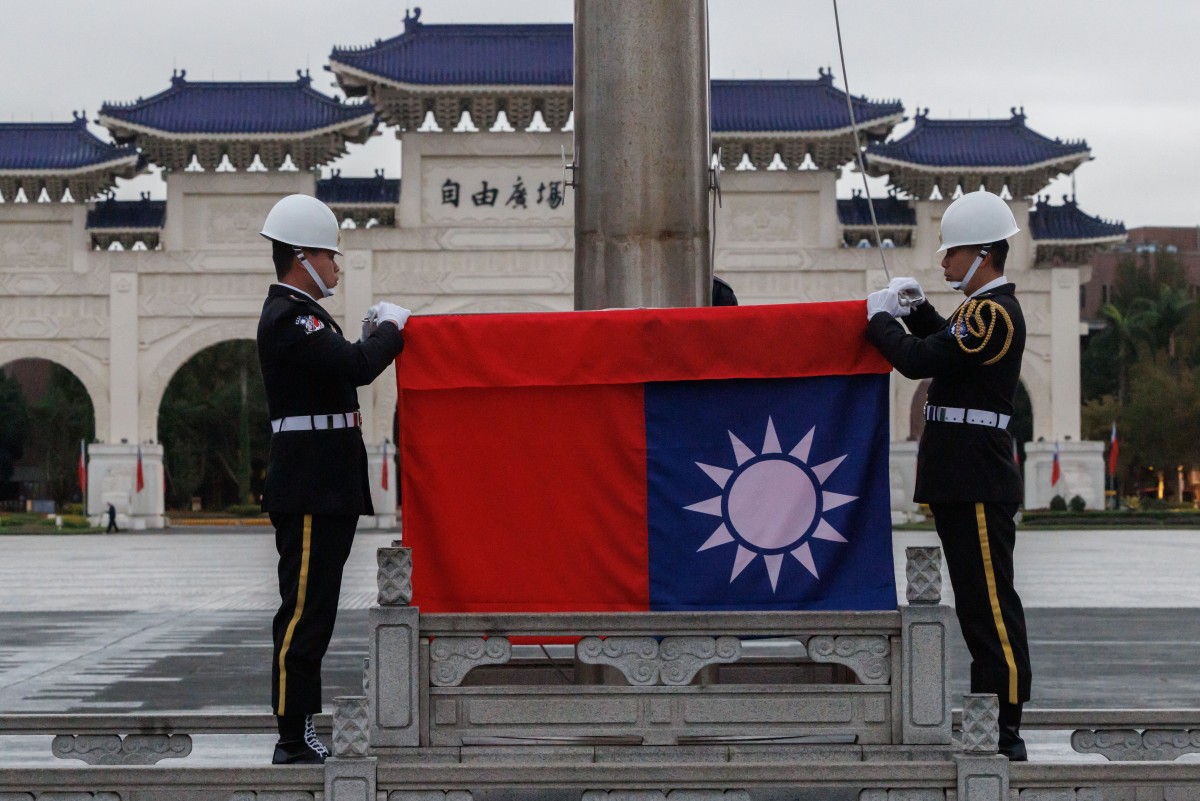
China has a training base in Inner Mongolia that includes mock-ups of Taiwanese government facilities, providing evidence that the PLA was preparing for such scenarios.
Taiwan’s evolving doctrine over the last few years has been decentralized command-and-control, described as a “headless but still fighting” force. Taiwan’s annual war games had begun testing scenarios of strikes on command systems, communications breakdowns, and degraded coordination. Taiwan has launched ‘urban resilience’ drills to test war readiness amid PLA pressure.
PLA has been closely studying the recent US operations that showed rapid, coordinated decapitation capabilities integrating air power, Special Forces, and intelligence.
Taiwan lacks the advantage of Iran’s combat experience and strategic depth. Taiwan is a highly urbanized island lying just across the Taiwan Strait from mainland China. There is limited hiding place. Relatively smaller, Taiwan was vulnerable to saturation attacks by PLA missiles, rockets, and drones, which could overwhelm defenses.
That creates issues about decentralization. A blockade by China will bring supply chain issues, which Iran did not face because of its own drone and missile industry and support from Russia and China.
Lessons from the wars in Iran and Ukraine have pushed Taipei to rethink its air-defense strategy, and that expensive missiles alone cannot stop large waves of rockets and drones. Low-cost interceptor weapons were urgently needed to counter the mainland Chinese military’s growing arsenal of long-range rockets and uncrewed aircraft.
Planned “Taiwan Shield”, or T-Dome, a layered air-defense architecture designed to protect critical infrastructure and ensure the island could sustain defensive operations during an armed conflict. Low-cost interceptor munitions were being developed in two versions, one designed to counter drones and another for missile interception.
Beijing has a major advantage in drone supply chains and production capacity. Taiwan needs to evaluate countermeasures such as microwave jamming and laser weapons.
Since 1949, Taiwan has relied on the United States as a security guarantor against a potential Chinese invasion. The United States’ global credibility is a concern. An unreliable ally reduces Taiwanese willingness to resist military threats from China.
To Summarise
The upcoming Trump-Xi summit offers a timely opportunity to manage escalating tensions over Iran and trade, yet the shadow of Taiwan looms large.
While China holds overwhelming conventional superiority, recent conflicts have reinforced that a swift victory over Taiwan is far from guaranteed.
Taiwan’s shift toward decentralized command, asymmetric “porcupine” defenses, and layered air protection demonstrates serious adaptation — but success will ultimately depend on sustained U.S. credibility, allied support, and Taipei’s ability to endure the opening blows of any conflict.
In the end, deterrence in the Taiwan Strait rests not only on military hardware, but on Beijing’s calculation of costs and Washington’s demonstrated resolve. The coming weeks in Beijing may shape whether the next crisis remains diplomatic or turns dangerously kinetic.
- With excerpts from the AFP and Air Marshal Anil Chopra (Retired) article for EurAsian Times
- Follow EurAsian Times on Google News