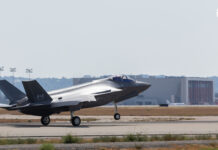
The F-15E Strike Eagle is an advanced derivative of the F-15 Eagle, which has been the backbone for the USAF’s combat operations, particularly in air-to-ground strike, interdiction, and close air support roles since the Cold War era. In fact, the F-15 holds the distinction of having more than 100 air-to-air kills to its name.
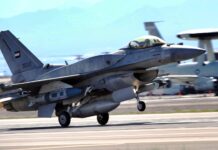
An equally valued fighter jet in the USAF inventory is the F-16 Fighting Falcon. It is a compact, multirole fighter with a stellar combat record. “In an air combat role, the F-16’s maneuverability and combat radius (distance it can fly to enter air combat, stay, fight, and return) exceed that of all potential threat fighter aircraft. It can locate targets in all weather conditions and detect low-flying aircraft in radar ground clutter,” states the USAF itself.
The F-15 was developed under the USAF’s F-X program in the 1960s as a large, powerful twin-engine air superiority fighter to counter Soviet threats following the Vietnam War, whereas the F-16 emerged from the Lightweight Fighter (LWF) program of 1972, which essentially prioritized a small, low-cost, highly agile, single-engine day fighter.
While the F-15 and F-16 were developed years apart and have had incredible combat success in the US Air Force, their advanced variants, the F-15E Strike Eagle and the F-16XL, competed against one another in the Enhanced Tactical Fighter (ETF) contest. Ultimately, the F-15E won the contest and became an ace USAF fighter, and the F-16XL got registered as a “glorious” F-16 aircraft in the USAF’s storied past.
In the early 1980s, USAF launched the Enhanced Tactical Fighter (ETF) competition to find a new strike fighter or interdictor to replace the aging General Dynamics F-111 Aardvark.
With its extensive range, terrain-following radar, and variable-sweep wings, the F-111 was an effective low-level penetration bomber. However, by the 1970s, the aircraft began to show vulnerabilities and reliability issues, and became very expensive to maintain. Furthermore, these jets in service weren’t optimized for changing dual-role or precision-strike requirements, which were crucial in Cold War combat.
At the same time, the Soviet air defenses and fighters like the MiG-29 and Su-27 were improving rapidly, making unescorted deep strikes riskier.
During this time, the USAF’s doctrine was shifting, with a stronger focus on AirLand Battle concepts that called for attacking enemy rear echelons, including supply lines, airfields, and second-echelon units supporting ground operations. However, to do this, the service needed an aircraft that could battle its way in or out of the combat zone without depending on specialized escorts or electronic warfare (EW) support, infiltrate contested airspace, and precisely drop large payloads in day, night, and all-weather conditions.
Therefore, the ETF program was officially launched in 1981, with the core requirement being a “dual-role” aircraft capable of combining strong air-to-ground capabilities with strong air-to-air performance and operating semi-independently in high-threat environments. In fact, one of the main asks for this program was that the new aircraft perform deep air interdiction missions with minimal support, unaccompanied by escorts or jamming aircraft.
In response, McDonnell Douglas offered the F-15E Strike Eagle, which was based on the vintage F-15C, while General Dynamics offered the F-16XL, which was based on the F-16.
The Bigger F-16XL
Shortly after the F-16 won the Lightweight Fighter program in the mid-1970s, the manufacturer, General Dynamics, launched the Supersonic Cruise and Maneuver Prototype (SCAMP) project to explore advanced wing designs for efficient supersonic cruise (supercruise) and strong maneuverability.
In 1980, the USAF came on board and partnered with General Dynamics, providing two early F-16A airframes—the third and fifth production models—to be converted into prototypes for the F-16XL project.
The F-16XL program aimed to produce a logical progression from the standard F-16 that would yield notable enhancements in every aspect of mission performance, as noted by the chief project engineer for the advanced versions of the F-16, Harry J. Hillaker. Although the range and payload capacity were to be the main areas of upgrades, equal attention was to be given to concurrent improvements across all other mission components. And, all of this was to be done while retaining the advantage of low acquisition and maintenance costs.
“For example, survivability was to be a prerequisite to longer range. Higher military power (non-afterburning) penetration speed, lower observables, increased manoeuvre agility, and reduced vulnerable area increased the survival rate, consistent with a longer-range/deeper-penetration capability,” as previously explained by the Air and Space Forces Magazine.
The F-16 and the F-16XL differed primarily in the shape of their wings, with the latter having wings with twice the surface area of the baseline variant.
Compared to the conventional F-16’s quicker, more maneuverable wings, the F-16XL had massive, thick “cranked-arrow wings”.
Notably, these wings had a leading-edge sweep of approximately 70° on the inboard section and 50° on the outboard section. However, the design delivered excellent supersonic cruise performance with a high lift-to-drag ratio.
Therefore, while the plane lost much of its agility due to this design decision, the trade-offs were significant, as it could fly faster and more effectively than the F-16.
The fuselage of the F-16XL was also significantly stretched by about 56 inches (140 cm) through the addition of plugs fore and aft of the wing. This modification, along with the broad wing, significantly increased the internal fuel capacity, enabling a substantially longer range without the need for external tanks.
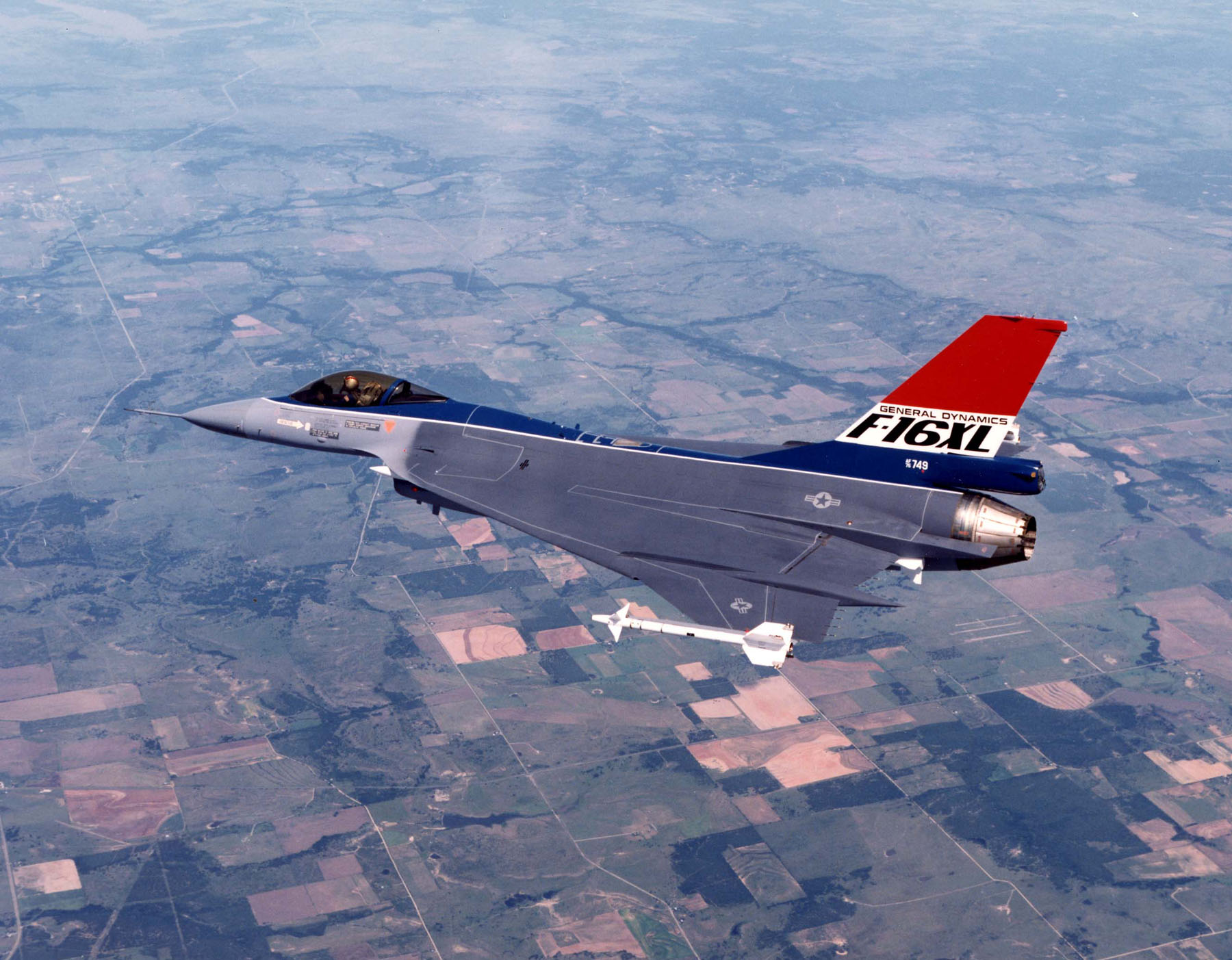
While the aircraft retained the F-16’s fly-by-wire flight control system, its tail was canted slightly upward, and the ventral fins were removed to avoid ground strikes during rotation.
The F-16 XL achieved a maximum speed of Mach 2 and a service ceiling of around 50,000–55,000 feet. It offered an impressive range of over 2,280 miles in some tests and up to 2,850 miles (over 4,856 kilometers) ferry range, with the ability to carry heavy loads much farther than the baseline F-16.
Therefore, the performance was markedly better than that of the F-16, particularly in strike and penetration.
With its ability to pull up to 9 Gs, achieve rapid roll and pitch rates, and provide a smoother ride at high speeds and low altitudes, the aircraft was extremely maneuverable. Additionally, it showed exceptional sustained supersonic speed with munitions and outstanding climb capability even under heavy loads.
“For a decade and a half, many fighter tacticians have stressed the paramount importance of sustaining a high turn rate at high Gs. The rationale was that with such a capability, enemy aircraft that cannot equal or better the sustained turn rate at high Gs could not get off a killing shot with guns or missiles,” states the Air and Space Forces Magazine.
It must be noted that with four AMRAAM (Advanced Medium-Range Air-to-Air Missiles) and two Sidewinder AIM-9 infrared missiles, the F-16XL could carry twice the payload of the F-16A up to 44% farther on an air-to-surface mission without the need for extra fuel tanks. The mission radius can be almost doubled with the same external fuel and payload/weapons. Similarly, an F-6XL equipped with two AIM-9s and four AMRAAMs could travel 45% farther than an F-16A when set up for a pure air-to-air mission.
The F-16XL offered nearly double the fuel capacity, up to 27 hardpoints for weapons, and dramatically improved range or payload performance. Additionally, it had two features that enhanced its survivability: improved instantaneous manoeuvrability that was enabled by significantly increased flight operating limits with bombs, and configuration shaping that reduced its radar signature.
The F-16XL beat the F-15E in payload, range, and efficiency in the USAF’s ETF competition. However, it lost the competition to the Strike Eagle largely due to concerns about survivability, development risk, production costs, and mission suitability.

It is noteworthy that the pressing need for a twin-engine fighter in high-threat, deep-interdiction missions was a significant factor in the F-16XL’s loss in the contest, given the evolving nature of air combat at the time. The rationale was simple: the F-15E could still return home even if one engine was rendered inoperable by hostile surface-to-air missiles (SAMs) or ground fire while over enemy territory.
The single-engine F-16XL lacked this safety buffer, which the USAF considered a critical danger for long-range strike missions far from friendly bases.
Moreover, the other significant factors that favored the Strike Eagle were production, logistics, and cost considerations.
Since the F-15E was an evolutionary development of the existing F-15 platform and shared extensive commonality with aircraft already in service, selecting the F-15E meant lower development risk, faster fielding, established supply chains, and easier integration for maintenance and training.
On the other hand, while the USAF acknowledged that the F-16XL was a low-cost platform, it was cognisant that the aircraft would have required substantial airframe modifications, new production equipment, a separate logistics tail, and increased program risk and cost.
Not just that, the F-15E offered higher total fuel capacity in some configurations, greater ordnance flexibility or loiter time, higher top speed, and a higher service ceiling. In fact, some analysts have also noted that the F-15E promised better potential for future growth and upgrades.
The F-16XL lost because the USAF ultimately prioritized a more conservative, proven evolutionary path with the F-15E, which aligned with broader fleet planning, and not because it was an inferior design.
After losing the contest, the two F-16XL prototypes were eventually transferred to NASA, where they were designated the F-16XL Laminar Flow Research Aircraft.
According to NASA, the F-16XL was the first program to investigate laminar flow on swept wings at speeds representative of those at which a high-speed civil transport might fly. The two jets were used because their distinctive delta-wing design was indicative of the kind of wing likely to be used on upcoming supersonic cruise aircraft.
The two prototypes that developed into a special F-16 iteration were retired in 2009 and preserved at Edwards Air Force Base, California.
- Contact the author at sakshi.tiwari13 (at) outlook.com
- Follow EurAsian Times on Google News