OPED by Wg Cdr J P Joshi, IAF (Retd)
The Air China Boeing 747 carrying President Xi Jinping and Madame Peng Liyuan touched down at Joint Base Andrews on 23 September 2026. It was supposed to be a landmark meeting between the presidents of the world’s two biggest economies and militaries.
The landing was controlled and smooth — a kisser landing, in pilot parlance.
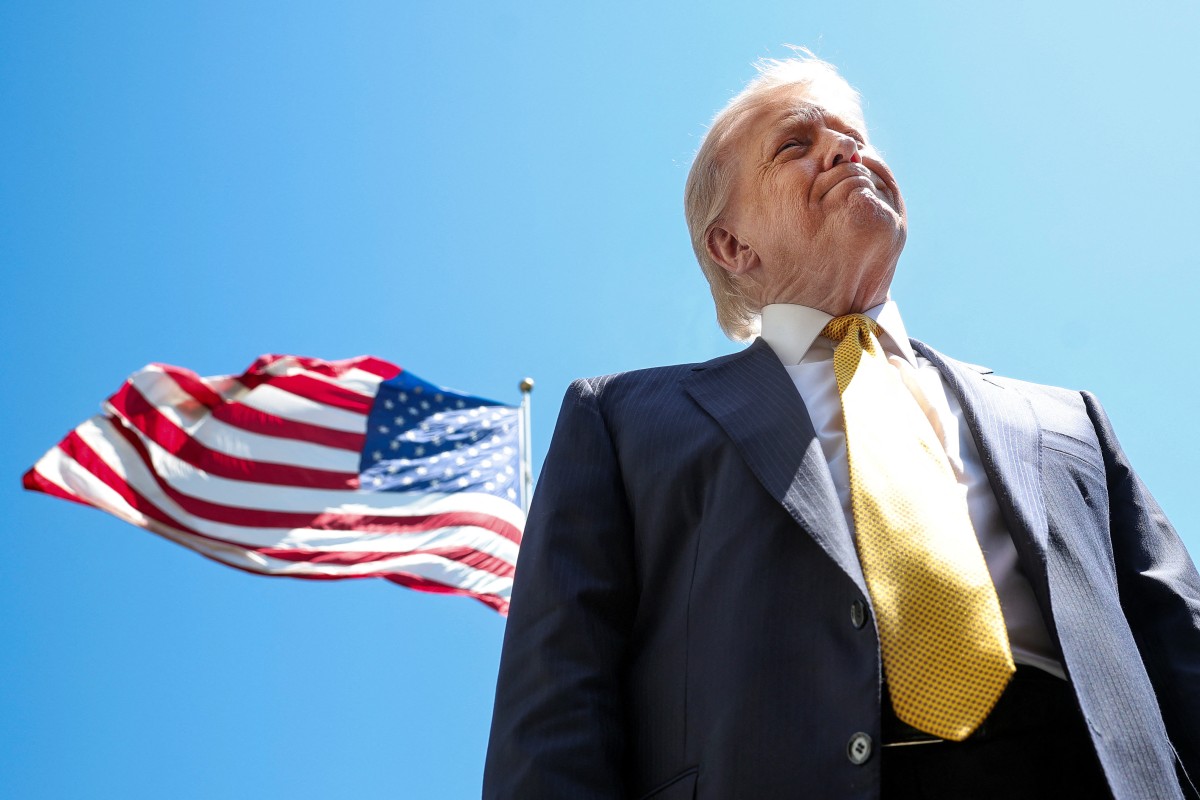
Waiting beside the red carpet were Donald Trump and First Lady Melania Trump, a rare break with protocol.
American presidents usually receive foreign leaders at the White House, and the last time one had personally greeted a visiting dignitary on the Andrews tarmac was when Barack Obama met Pope Francis in 2015.
Two B-1B ‘Lancer’ bombers flew over as the U.S. national anthem played, later followed at the White House by a B-2 Spirit and four F-22 Raptors.
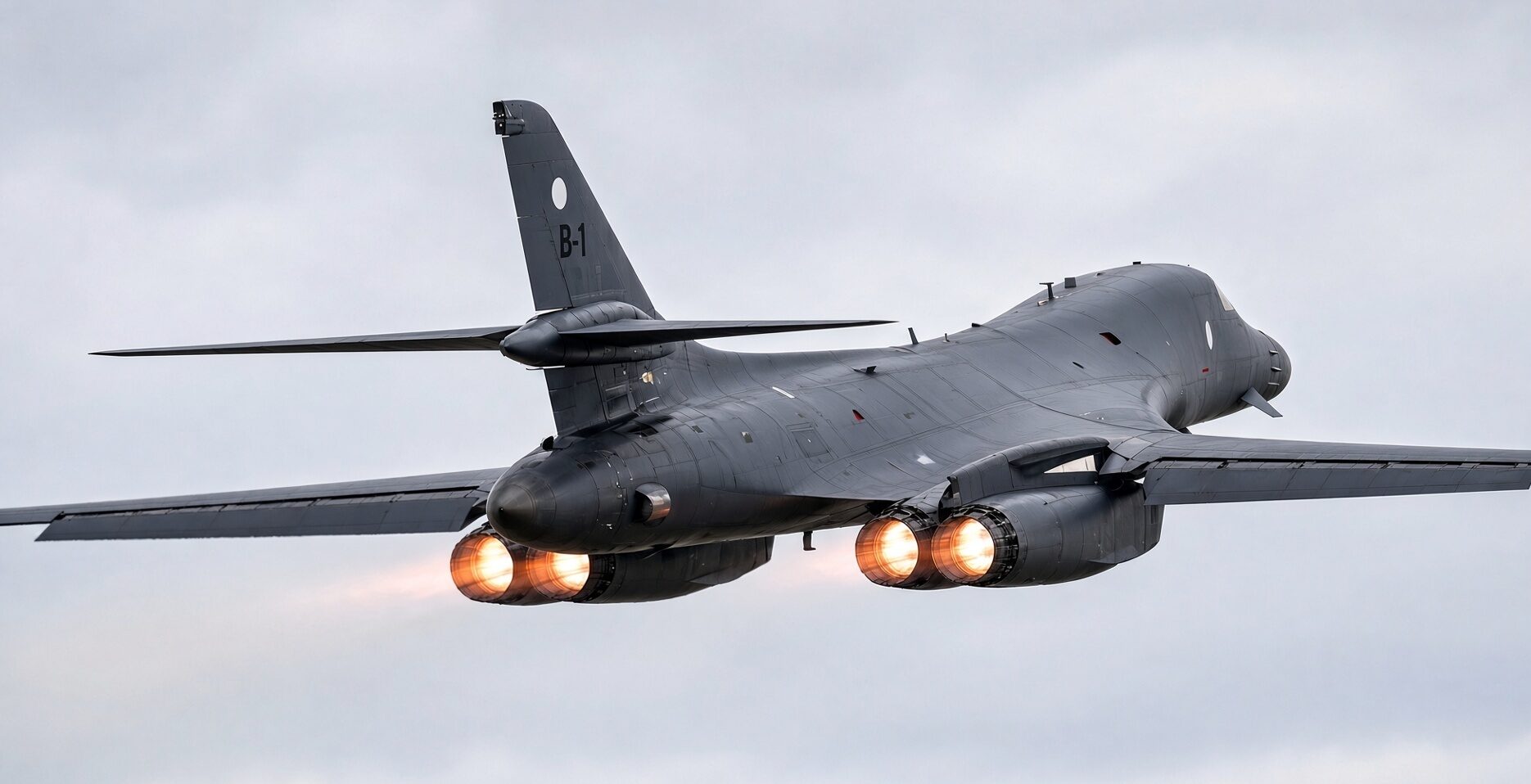
It seemed like a classic case of hospitality on the ground and firepower overhead.
Trump spoke of friendship, the long history of contact between the American and Chinese peoples, their shared experience in the Second World War, and the practical gains available from a more balanced economic relationship.
Xi spoke of a “constructive China-U.S. relationship of strategic stability” based on respect, fairness, and reciprocity.
He invoked the danger of the Thucydides Trap and the need for the two major powers to navigate competition without allowing it to become conflict.
Neither offered a blueprint for a new world order, and neither appeared ready to surrender a core position.
Instead, both laid their cards on the table. This is what made the meeting interesting. It was less a summit with a predetermined outcome than an exploratory encounter between two powers trying to discover whether the gap between their positions could be made negotiable.
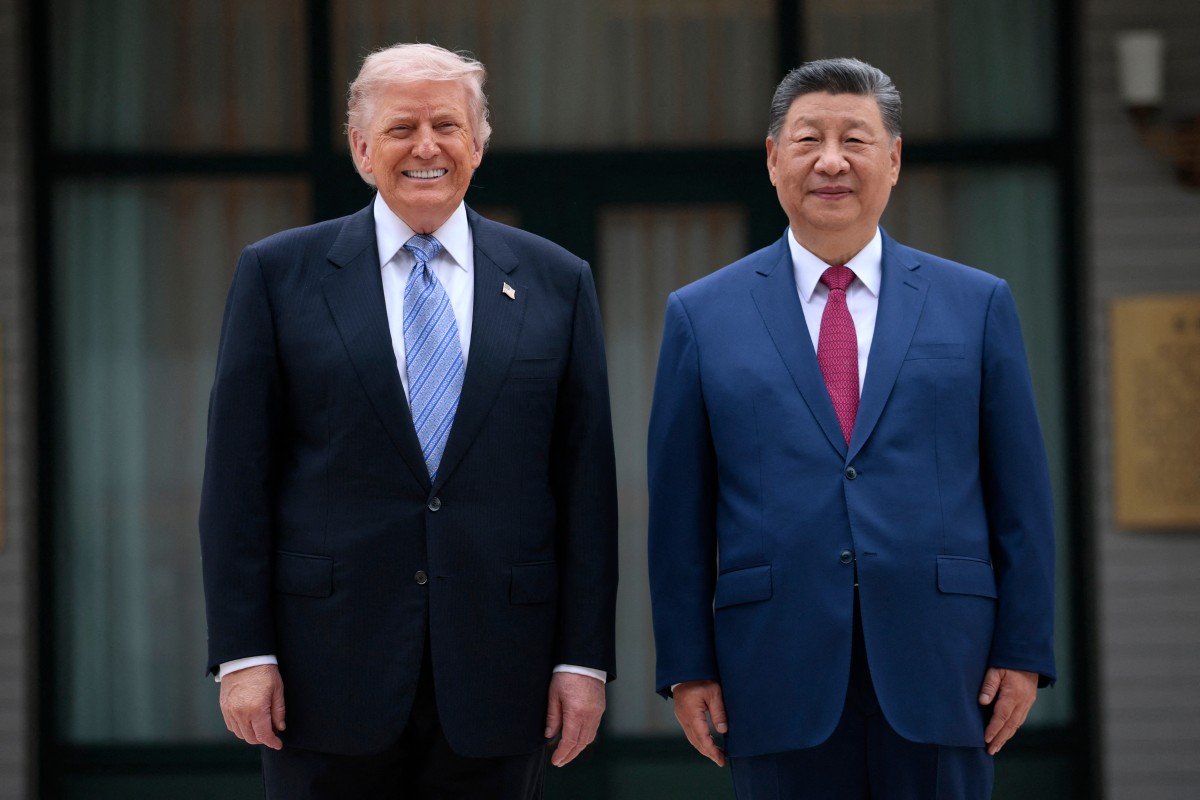
The contrast was visible in how each approached the talks.
Trump personalized the relationship. The warm welcome, the state ceremony, the dinner, and references to historical ties accompanied a practical agenda: trade, tariffs, agriculture, critical minerals, energy, fentanyl precursors, and investment. The White House framed the visit as advancing the relationship while putting American interests first.
In 2025, total U.S.-China goods trade stood at $414.7 billion. U.S. exports to China had fallen 25.8 percent from the previous year, while imports from China dropped 29.7 percent. The bilateral goods trade deficit narrowed by 32 percent, $93 billion, over 2024, with China’s share of total U.S. imports declining from 13.4 percent to 9 percent and its share of U.S. exports falling from 6.9 percent to 4.9 percent. The practical stakes of rebalancing were therefore concrete and measurable.
Xi’s language was broader and more strategic. He spoke of stability, respect, fairness, and reciprocity; recalled wartime cooperation; and presented cooperation as something that could coexist with competition. The Chinese account described the goal not as resolving every difference but as building a constructive relationship of strategic stability.
The distinction matters. Washington was saying, in effect, we can deal with you from a position of strength and in pursuit of American interests. Beijing was saying – we can deal with you as an equal major power whose interests and core concerns must be respected. Those are not identical positions. But they can sit across a negotiating table. Managing competition rather than resolving it is where the phrase “strategic stability” becomes useful.
Managing Competition Rather than Resolving It
The United States and China will compete. Nothing in the summit suggests otherwise. The question is whether enough guardrails – rules, communication channels, and mutual restraint – can be erected to keep competition from becoming confrontation. Most of the understandings reached are pointing in that direction.
The two sides agreed to operationalize Boards of Trade and Investment, continue economic consultations, and establish a bilateral dialogue on the risks and benefits of advanced AI, including a communication channel for AI incidents. The Chinese account added that their militaries would work toward a memorandum on crisis communication and prevention.
These arrangements may prove more important than any headline trade numbers. Trade disputes can be renegotiated. A military or technological incident involving increasingly autonomous systems could escalate far more quickly; a tactical incident may have strategic consequences. Communication channels do not end rivalry; they create a way to manage it. That is the practical content of strategic stability.
The Hard Boundaries Remain
The summit did not resolve the issues at the heart of the strategic competition.
Taiwan remained central and unresolved. No settlement emerged on its future, no sign that Washington had accepted Beijing’s preferred order, and no sign that Beijing had accepted an American-led security architecture in the Asia-Pacific.
That absence is significant. Some differences are negotiable; others are treated as fundamental. Distinguishing between them is more useful than pretending goodwill alone can close every gap.
The summit’s warmth did not diminish American military power or weaken its alliances. On the contrary, the White House explicitly linked regional peace and prosperity to continued American leadership and a forward military presence. Diplomacy did not replace power; it accompanied it. The underlying message was clear – we can, and must, talk because we remain strong enough to disagree.
And Then Came New York
Barely had the Washington meetings ended when China presented another face to the wider world. At the United Nations General Assembly, Chinese Vice President Han Zheng spoke in language familiar to anyone who has followed Beijing’s diplomacy.
Major countries, he said, have special responsibilities for safeguarding international peace and security and should lead by following the rules and upholding the rule of law.
He added that countries’ sovereignty and security in the Middle East, including the Gulf, should be respected. Without naming the United States, the reference was difficult to miss. He was more direct on Cuba, calling on the “relevant country” to stop threats and lift the blockade and sanctions—the contrast with the warmth of Xi’s Washington visit was sharp.
This need not be dismissed as simple double-speak. It may instead reflect two different audiences addressed through two different diplomatic channels. Xi was speaking to America. Han was speaking to the world.
Trump – America First; China to the World
Trump’s own UNGA speech was primarily an America-first presentation, centered on American strength, sovereignty, and interests. He took a hard line on Iran and challenged aspects of the existing multilateral system.
China’s messaging was layered. In Washington, Xi negotiated with the United States. At the UN, Han presented China’s conception of the International order to the rest of the world. This distinction matters because nearly every country is anxious about sovereignty, territorial integrity, and great powers’ capacity to use economic or military leverage to alter realities on the ground.
Against that background, China’s message may be reassuring. An important qualification, though, remains: Beijing’s past conduct gives many countries reason to weigh its words against its actions.
Taiwan is the clearest example. Others include China’s territorial claims in the South China Sea and its approach to maritime law and the territorial integrity of neighboring states. That does not render China’s stated principles meaningless. It makes their credibility dependent on consistency. China may be saying what much of the world wants to hear. The open question is whether, over time, the world finds its actions consistent with its words.
The answer to the above is not material to recognizing the next question.
Is a Different World Order Becoming Negotiable?
China appears to seek recognition of a bipolar strategic relationship with Washington while also seeking predominant influence in its immediate region. That is not the same thing as the United States accepting a Chinese sphere of influence in Asia. Neither side has accepted the other’s preferred order; the gap between those two positions remains large, yet the Washington meeting suggested that space may be becoming negotiable. That may be the most significant takeaway. The United States has not accepted China’s preferred vision; China has not accepted America’s. They have cautiously explored visions that can coexist without forcing the relationship into confrontation.
This is where the Thucydides Trap that President Xi invoked in his speech becomes relevant. The concept comes from the ancient Greek historian and was popularised in modern analysis by Graham Allison. It notes that in 12 out of 16 historical cases in which a rising power threatened an established one, the result was war. The trap is not inevitable. Avoiding it requires more than military strength. It requires communication, crisis management, some accommodation of interests, and a recognition that competition need not mean conflict. The Washington meeting took a small step in that direction.
The Middle Powers Will Have Their Say
India, Japan, Taiwan, Australia, South Korea, the ASEAN states, Europe and other middle powers are not passive spectators. They have their own interests, security concerns and ideas about what an emerging order should look like. A world shaped entirely by two great powers would leave them with choices they may not want or willingly accept. Their voices will matter. That is the next chapter.
For now, this was a conversation between the two largest powers, assessing the boundaries of what they could discuss without compromising what each considered fundamental.
A Foot in the Door
A great deal happened in Washington, yet it was not a breakthrough. It was not a new alliance, nor a détente, nor a resolution of fundamental differences. It was something more modest, and perhaps more useful. Two great powers met, put their cards on the table, identified areas of possible cooperation, reaffirmed positions they would not compromise, and began putting mechanisms in place to manage their disagreements.
There was no destination; only a direction. The old order is no longer intact; the contours of a new one are still emerging. Between them lies a period of uncertainty and experimentation.
The Washington meeting may be remembered less for what it settled than for what it made possible. The door has not been opened, but a foot is now in it. In a world trying to avoid the Thucydides Trap, that may be significant enough.
- Wg Cdr J P Joshi is a veteran of the IAF, a regular contributor, who has commanded a front-line fighter squadron; is a graduate of Air Command and Staff College, Maxwell AFB, AL, USA; and has been a Directing Staff at the Defense Services Staff College, Wellington.
- THIS IS AN OPINION ARTICLE
- Contact the author at: jpjoshiindia (at) yahoo.co.in