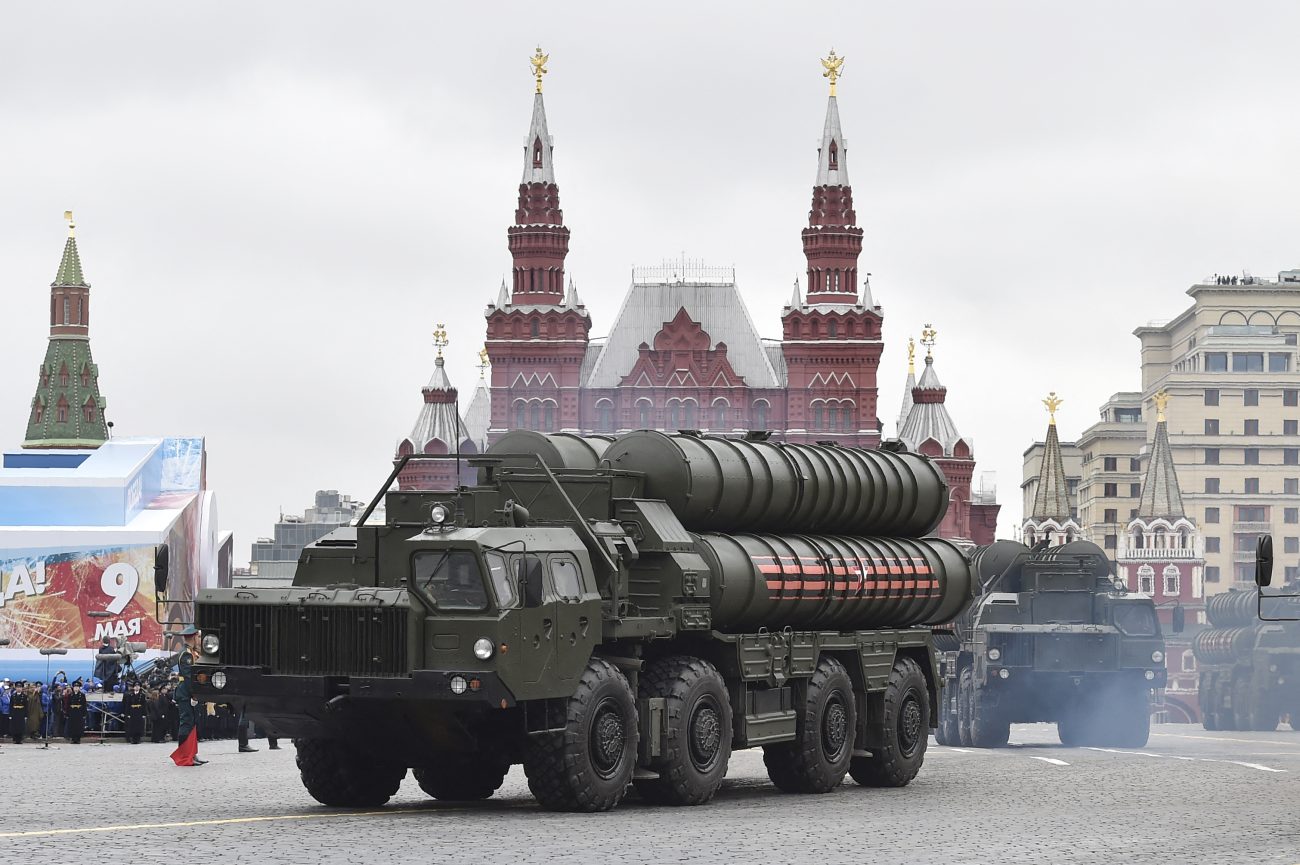
Russia could agree to a transfer of S-400 Triumf missile systems from Turkey to a third friendly country; however, no such requests have been made so far, Russian Foreign Minister Sergey Lavrov said at a news conference.
“There is such a possibility when a country where these S-400 systems will be moved to is responsible and maintains friendly relations with Russia. We will be ready to transfer the S-400s to such a country when there is a request,” he explained.
Turkish Foreign Minister Hakan Fidan responded by saying that S-400 talks are continuing “with everyone” but gave no timeline.
“When it concludes, we will share it with the public anyway,” Fidan told Turkish journalist Bahar Feyzan on the sidelines of the U.N. General Assembly, in remarks she posted on X.
Lavrov said Moscow would consider allowing its S-400s to be transferred to a third country, but only with explicit Russian consent and guarantees that the equipment would not be redirected again. He added that any country receiving the S-400s would need to maintain friendly relations with Russia and assure it would not send the S-400s elsewhere.
Earlier, reports emerged that Ankara could sell its S-400s to either the UAE or Qatar to rejoin the F-35 program.
A report by the Turkish outlet Haber7, citing top sources, claimed that transferring these systems to the UAE is on the agenda. However, another set of reports claimed that Israel has urged the UAE not to buy Turkey’s S-400.
Neither Israel nor the UAE has commented on the media report.
Columnists Mehmet Acet and Abdulkadir Selvi wrote that Israel used its security relationship with Abu Dhabi to discourage the S-400 acquisition. They claimed the aim was to keep US sanctions on Turkey in place and block Ankara’s return to the F-35.
Turkey was removed from the F-35 program in 2019 after it acquired S-400s from Russia. Washington argued the S-400’s radar could compromise the F-35 stealth fighter’s secrets and was incompatible with NATO air defense architecture.
Israeli Prime Minister Benjamin Netanyahu has publicly opposed F-35 sales to Turkey, telling CNN in July that the jets would upset the regional military balance. Israel is keen to maintain its Qualitative Military Edge (QME) in the region.
Haber7 claimed Turkey and Russia had found common ground on a transfer and the delay was not coming from Moscow. It claimed that Ankara is now working on another formula after the UAE track stalled. The report did not name an alternative buyer.
Earlier, US President Donald Trump hinted, on the sidelines of the NATO Summit in Ankara, that his administration could lift CAATSA sanctions on Turkey and consider an F-35 sale to the NATO partner.
“That’s a decision we’re going to make… It’s a great plane, the best plane by far, and it’s certainly something we will consider,” Trump said in Ankara. When asked about CAATSA, he said, “We’re going to be taking the sanctions off. We don’t want to sanction friends.”
Trump’s pledge is not enough. US law still requires Turkey to no longer possess the S-400 or related equipment and to give assurances it will not acquire the system in the future, among other certification steps.
A July 2026 State Department letter to Congress said those conditions had not been met. Even if Trump eases CAATSA sanctions, Congress can still block Turkey’s return to F-35.
Turkish President Erdogan had earlier commented: “On this issue, Mr Trump always stands by his word. Here again, God willing, I believe a favorable decision on the F-35s will emerge from this leaders’ summit.”
Turkey reportedly never activated the S-400s after taking delivery. The batteries have been kept in storage, and Ankara has excluded them from its planned “Steel Dome” multi-layered air defense network.
Instead, it is now seeking the Patriot or SAMP/T air defense system.
If talks with the UAE have stalled, as Turkish media claim, Qatar has also been named in earlier reports as a possible destination. Turkey has separately signed the Makkah trilateral defense pact with Saudi Arabia and Pakistan. Fidan has said Ankara could help meet Saudi military needs under that pact amid Houthi attacks.
The Makkah pact treats an attack on one country as an attack on all.
In September, with Houthi strikes again hitting the kingdom, Fidan said Riyadh may have “military needs, especially on some technical issues,” and that Turkey would have “no issues in meeting these.”
Turkey has already paid for a long-range air defense system that sits unused. For Riyadh, the catch is the same politics that trapped Ankara: taking those Russian S-400s could collide with the possible $24 billion F-35 sale the US cleared this month. It still must get past Congress and Israeli lobbying.
- Contact the author at editor (at) outlook.com
- This is an Opinion Article
- Follow EurAsian Times on Google News