In Top Gun: Maverick, Lieutenant Pete “Maverick” Mitchell (Tom Cruise) is trying to escape hostile territory in a stolen F-14 Tomcat when he is chased by two Su-57 Felons.
Maverick is visibly surprised to learn that Iranian pilots are operating the latest fifth-generation Russian combat jet, the Su-57. However, what happens next is even more shocking.
The Su-57 pilot suddenly yanked his nose skyward in one violent, impossible motion. The Su-57’s nose rocketed past vertical, almost standing on its tail, while the jet slowed to nearly a standstill, to what looked like a hover.
In that split-second, the Su-57 hung there in the sky like a cobra poised to strike, defying the laws of physics, gravity, and aerodynamics.
His Radar Intercept Officer (RIO), Rooster, reacts in disbelief:
“Jesus, Mav… what the hell was that?”
Before Maverick could understand what had happened, he had overshot, and the adversary pilot now had the advantage.
The extreme post-stall stunt performed by the Su-57 is known in popular culture as the “Cobra maneuver”.
However, it was initially known as Pugachev’s Cobra, named after the Soviet pilot Viktor Pugachyov, who first performed it before Western audiences at the Paris Air Show exactly 37 years ago.
Pugachyov, however, did not invent this incredible stunt. The history of the “Cobra maneuver” dates back to the 1960s, and it spread from Sweden to Syria before Soviet pilots improved and mastered it and reintroduced it to Western audiences.
The 1989 Paris Air Show and the “Cobra Maneuver”
The Cold War was coming to a thaw.
In the Soviet Union, Mikhail Gorbachev was adopting the policy of Glasnost (openness and transparency). This allowed Soviet fighter pilots to participate in Western air shows.
Notably, the Western aviation enthusiasts were already familiar with the high maneuverability of Soviet combat jets and the aerobatic skills of the Soviet pilots.
In 1988, the MiG-29 made its Western debut at the Farnborough Air Show.
In 1989, the Soviet Union sent its new Su-27 Flanker to the Paris Air Show.
The Su-27 entered operational service in 1985, and one of its primary roles was to protect the Soviet Union’s coastal border.
The Su-27 was a highly maneuverable combat jet, and Western audiences were understandably excited to see the Soviet fighter pilots perform in it; however, they were hardly prepared for what they were about to witness.
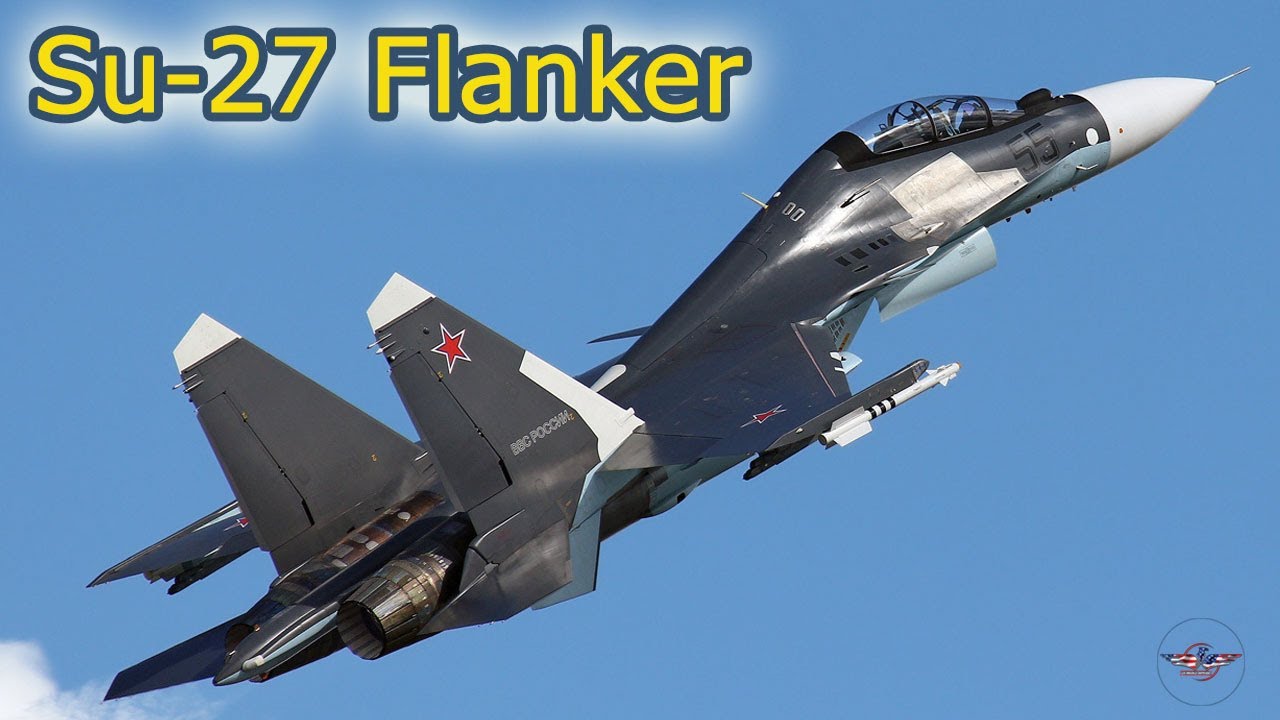
Test pilot Viktor Pugachyov pushed his Sukhoi Su-27 into what looked like an impossible climb. The nose pointed skyward past vertical, reaching a 90- to 120-degree angle of attack.
However, just then, Pugachyov slowed dramatically, almost hanging mid-air.
It looked like a cobra, rearing to strike.
In the next step, he recovered, straightened the plane, and pushed the jet’s twin engines to regain speed, then flew away.
Such a maneuver was never seen before!
The move became an instant showstopper for the Su-27 and cemented the Flanker family’s reputation as one of the most maneuverable fighters ever built.
1 July 1989. Paris air show. A Soviet Sukhoi Su27 performed its 'Cobra' manoeuvre, where the aircraft transfers from level flight to a vertical attitude and back to level flight with negligible changes in altitude. pic.twitter.com/HBLLpivEKR
— Ron Eisele (@ron_eisele) June 30, 2026
The maneuver was instantly christened Pugachev’s Cobra, and aviation history changed forever.
However, Pugachev did not invent this maneuver, nor did the Soviets. In fact, its roots go back to the 1960s and to Sweden.
Saab 35 Draken – The World’s First Jet To Perform Cobra Maneuver
Sweden has a long history of building remarkable combat jets. However, Swedish fighter jets, despite their exceptional qualities, are also the least discussed.
In the 1960s, the Swedish aerospace company Saab delivered the supersonic fighter-interceptor Saab 35 Draken. It was designed primarily to counter high-altitude Soviet bombers.
It featured an innovative double-delta wing design, which gave excellent high-speed performance and good low-speed handling. The double-delta-shaped wing helped reduce the take-off run, allowing it to be used from both runways and roads.
It was powered by a licensed Rolls-Royce Avon engine with afterburner and was one of the first Western European combat aircraft capable of sustained Mach 2 flight.
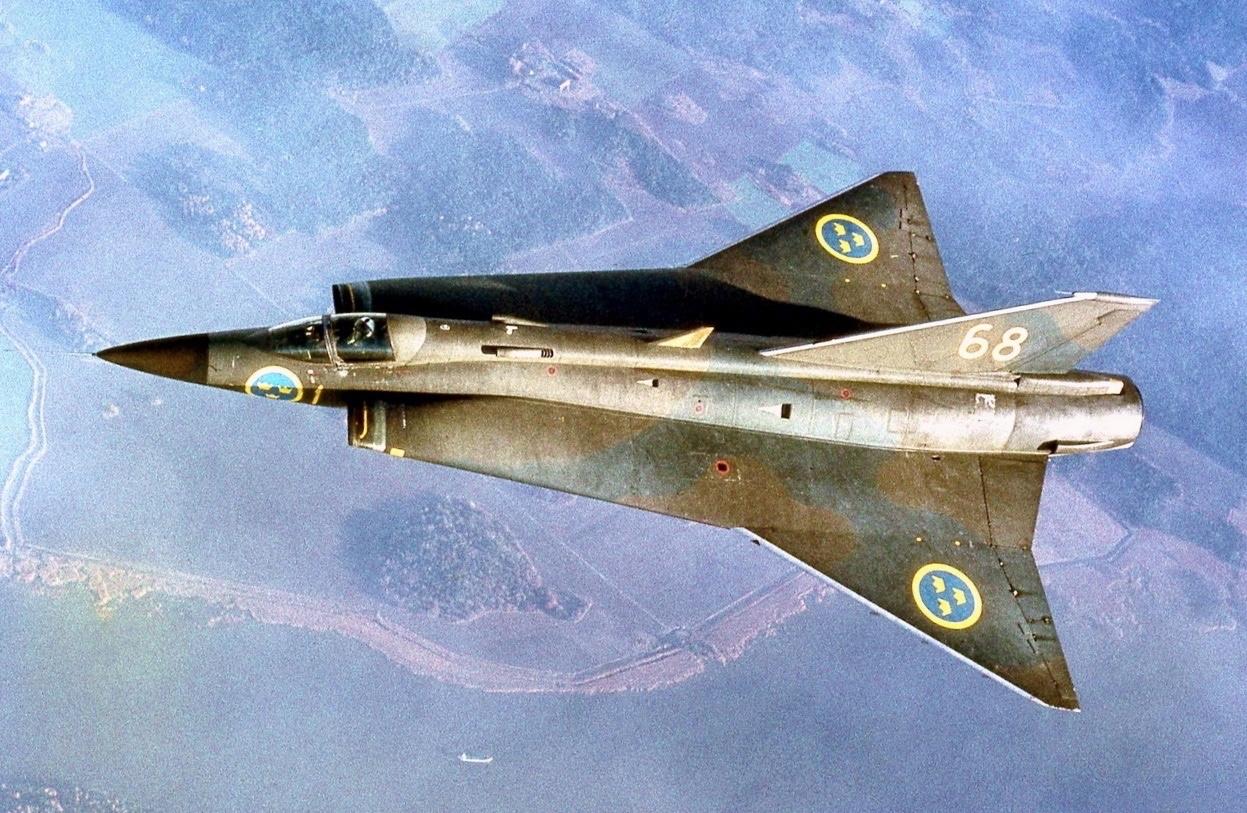
The Draken never saw combat but was renowned for its agility, and Swedish pilots famously discovered the “Cobra” maneuver with it.
Swedish test pilots Bengt Olow and Ceylon Utterborn accidentally discovered it while developing recovery techniques from dangerous “super stalls” that plagued the double-delta Draken.
In fact, these super stalls caused several accidents early in the Saab 35 service.
Pilots noticed the dramatic loss of speed and began using it intentionally as an airbrake to slow down. They called it “kort parad” (“short parry,” a fencing term).
It was later used in mock dogfights and even real intercepts of Soviet aircraft over the Baltic.
However, the Cold War tactic of maintaining extreme secrecy around aerial combat doctrines meant that the maneuver remained largely unknown outside Sweden until it was revealed much later.
Sweden to Syria
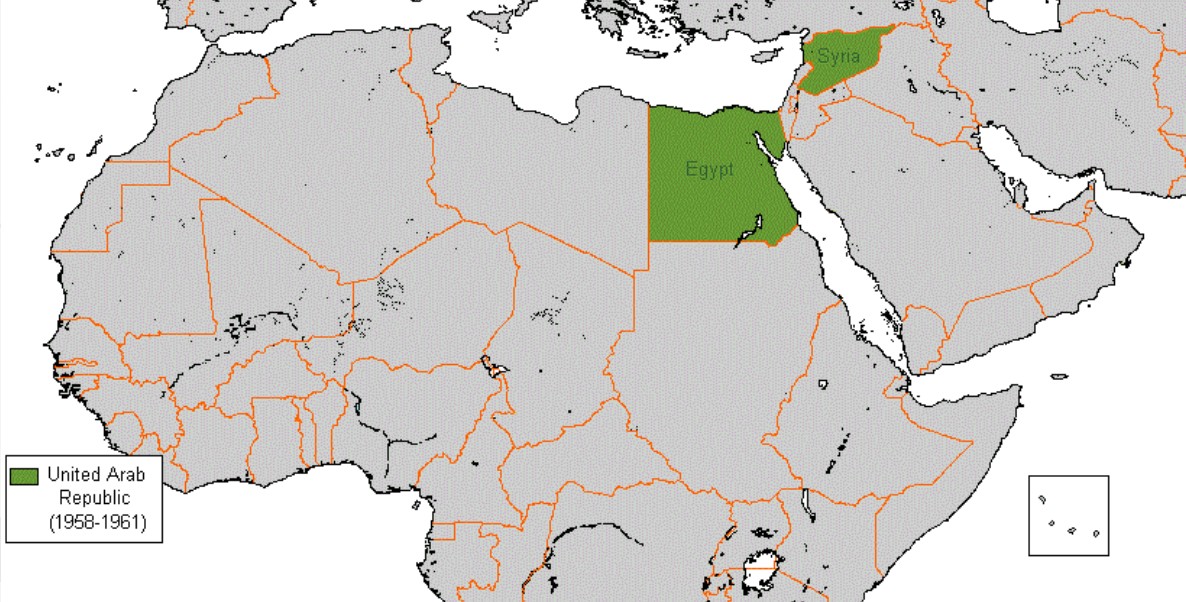
From 1958 to 1961, Syria and Egypt merged into a single country, called the United Arab Republic (UAR).
To this day, the UAR remains the most successful example of pan-Arab unity. However, the union lasted only three years, and in 1961, the Syrian military declared independence after a coup.
Following the declaration of independence, the SyAAF had to be re-established from scratch.
At that time, the Syrian Air Force consisted of only two squadrons of MiG-17Fs, four Ilyushin Il-28 bombers, and a few transporters. To rebuild the air force, Syria purchased 34 MiG-21s from the Soviet Union.
While training in these MiG-21s, Syrian pilot Mohammad Mansour independently developed a similar “zero-speed maneuver” as a special tactic to fight against Israel.
In time, it became a standard defensive tactic in the Syrian Air Force and later spread to other operators.
The “zero-speed maneuver” was learned by Jordanian and Egyptian pilots. In all likelihood, it was in Egypt that Soviet pilots first learned the maneuver, as they were present in Egypt in large numbers.
However, the Su-27 Flanker was a highly maneuverable jet, and Soviet pilots were able to perfect the tactic on it.
Within the Soviet Union, test pilot Igor Volk first performed it during Su-27 flight testing. Viktor Pugachyov refined and demonstrated it in testing on April 28, 1989, at Zhukovsky airfield.
However, the maneuver was performed publicly, in front of Western audiences and Western cameras, for the first time during the Paris Air Show in 1989, and it instantly became a global sensation.
It was the ultimate ‘Cold War’ era ‘mic-drop’ moment.
The Cobra maneuver heralded a new concept in combat aviation – supermaneuverability.
It demonstrated that fly-by-wire advanced flight control systems can keep an aircraft stable in positions previously thought impossible.
With the advent of thrust vectoring, such post-stall maneuvers were further perfected.
This directly influenced the design of later 4.5th- and 5th-generation fighters with thrust vectoring, such as Su-30, Su-35, Su-57, F-22 Raptor, and others.
Though the maneuver looked spectacular, its combat value was limited. It was mainly used in close dogfights to make the adversary overshoot and regain the advantage by getting behind him.
However, in the era of beyond-visual-range (BVR) fights, the maneuver had no practical combat value.
The maneuver is still performed today at airshows worldwide, often enhanced by thrust vectoring on modern Flankers, and in popular culture, it has inspired scenes in movies and games.
- Sumit Ahlawat has over a decade of experience in news media. He has worked with Press Trust of India, Times Now, Zee News, Economic Times, and Microsoft News. He holds a Master’s Degree in International Media and Modern History from the University of Sheffield, UK.
- He can be reached at ahlawat.sumit85 (at) gmail.com