US and Israel-led global concerns over Iran’s nuclear program center on its high-level uranium enrichment (up to 60%) and dwindling international oversight. While Iran claims its program is peaceful, inspectors struggle to verify this, sparking fears of a swift breakout towards weaponization.
The possibility of Iranian nuclear warheads, coupled with a very successful ballistic missile program, bothers many in the neighborhood. The ongoing conflict, including recent US and Israeli strikes, has been primarily aimed at destroying the Iranian nuclear weapons program, in addition to the hard-line Islamic leadership.
Pakistan and North Korea are the other two rogue nations that have had nuclear weapons, but the West has applied totally different standards against them. India and Israel did make attempts to thwart the Pakistan nuclear weapons program, including during “Op Sindoor.”
Nuclear Weapon States
Nine countries possess nuclear weapons: Russia, the United States, China, France, the United Kingdom, India, Pakistan, Israel, and North Korea. Russia and the US hold nearly 90% of the world’s ~13,000 nuclear weapons. United States (5,044 warheads), Russia (5,500), China (600+), France (290), United Kingdom (225), India (180), Pakistan (170), North Korea (60), Israel (approx. 90).
The first five are officially recognized nuclear-weapon states (NWS) under the Non-Proliferation of Nuclear Weapons Treaty (NPT), while India, Pakistan, and North Korea have tested weapons, and Israel maintains a policy of nuclear opacity.
Prospective Nuclear Weapon States
Iran is considered the most prominent prospective nuclear-weapon state, suspected of actively pursuing nuclear capabilities. Other nations often discussed for their technical potential, security concerns, or historical interest include Saudi Arabia, South Korea, Japan, and Turkey, although these remain signatories to the NPT.
Iranian Nuclear Weapons Program
West claims that Iran has accumulated significant amounts of highly enriched uranium, with stockpiles sufficient for multiple nuclear bombs. International Atomic Energy Agency (IAEA) inspectors have faced limitations and a lack of oversight, making it impossible to guarantee that Iran’s nuclear program is exclusively peaceful.
The 2015 nuclear deal, the Joint Comprehensive Plan of Action (JCPOA), remains ineffective, with the US withdrawing in 2018 and subsequent negotiations stalling amid regional crises.
Iran’s primary nuclear enrichment sites include the main Natanz complex and the deeply buried Fordow Fuel Enrichment Plant. Other key facilities include the Isfahan Uranium Conversion Facility (UCF), Arak’s heavy water reactor (Khondab), and Bushehr’s nuclear power plant. These sites have been under varying levels of IAEA safeguards.
As of April 2026, Iran is estimated to possess roughly 440 kg of uranium enriched up to 60% purity, a level that is just below the 90% threshold for weapons-grade material. This stockpile is concentrated at sites like Natanz and Fordow. This inventory, if further enriched, would be sufficient to produce enough fuel for several nuclear weapons.
In June 2025, the US conducted strikes on Iranian nuclear facilities at Natanz and Esfahan to slow progress. But following these strikes, Iran is suspected of accelerating construction on deeper, more clandestine facilities. The ongoing conflict and lack of a formal agreement could lead to rapid proliferation in the region and further retaliation in the Middle East.
International bodies like the IAEA continue to push for access, insisting that stockpiles be returned to international safeguards. Iran has consistently maintained that its nuclear program is for peaceful energy purposes, with officials dismissing fears of weaponization as a long-standing “scare” tactic by Western powers.
Why Nuclear Iran is Unacceptable?
A nuclear-armed Iran is deemed unacceptable by a significant portion of the international community, led by the United States, Israel, and several European and Arab nations. The consensus is that a nuclear Iran would fundamentally alter regional security, trigger a nuclear arms race, and pose an existential threat to its adversaries.
The primary concern is that Iran, which has consistently called for the elimination of Israel, could use a nuclear weapon to destroy it. A nuclear Iran would likely trigger a domino effect, prompting countries like Saudi Arabia, Turkey, and Egypt to pursue their own nuclear weapons, creating an unstable “balance of terror” in the Middle East.
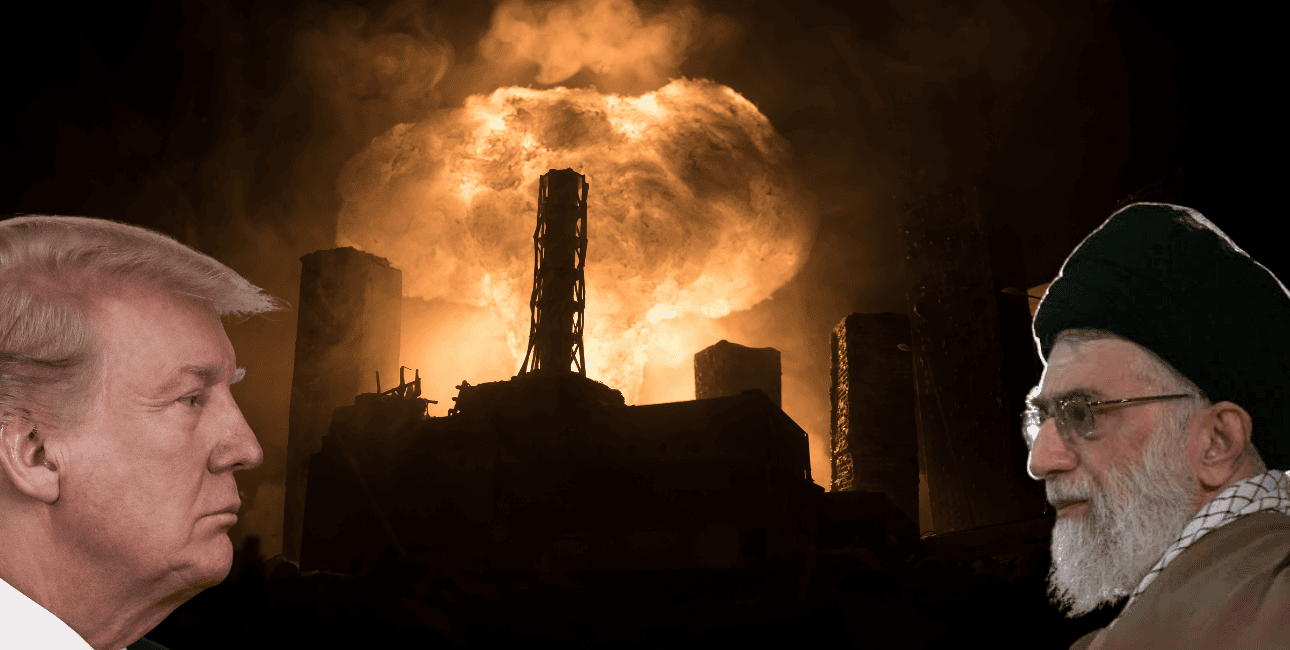
Concerns exist that Iran could provide nuclear technology or material to its proxy groups (e.g., Hezbollah, Hamas) for use against its enemies, allowing Iran to maintain plausible deniability while executing catastrophic attacks.
Even if Iran is considered a “rational actor,” the deep distrust between Iran and its neighbors/adversaries increases the risk of a nuclear launch due to miscalculation or misreading intentions.
A nuclear shield could embolden Iran to act more aggressively in the region, sponsoring terrorism and insurgency with less fear of retaliation.
Iran’s history of “policy of concealment” regarding its enrichment program and its accumulated, high-level uranium stockpile (which the IAEA warns has no credible civilian justification) makes it a direct challenge to the global nuclear non-proliferation regime.
Many Sunni-led Arab states, including Saudi Arabia, fear that a nuclear Iran would empower its regional rivals and dominate the region, potentially leading them to pursue their own nuclear capabilities.
North Korea’s Nuclear Weapons Program
North Korea has developed a nuclear weapons program with an estimated arsenal of around 50 warheads, focusing on strengthening its nuclear deterrence and expanding its arsenal.
The program, which began in the 1950s, accelerated through plutonium production in the 1980s. North Korea joined the NPT in 1985 but withdrew in 2003, citing security concerns, and has conducted multiple nuclear tests since 2006, with recent activity indicating increased production capabilities. North Korea claims to have miniaturized warheads to fit on long-range ballistic missiles.
The country has developed various delivery methods, including short-range ballistic missiles (SRBMs) and intercontinental ballistic missiles (ICBMs) like the Hwasong-20, which could potentially strike the US mainland.
Who all Support the North Korean Program?
The program began in the 1950s with Soviet assistance. Pakistan and North Korea engaged in a barter deal in the 1990s, where Pakistan provided crucial nuclear gas centrifuge technology (via scientist A.Q. Khan) in exchange for North Korean missile technology.
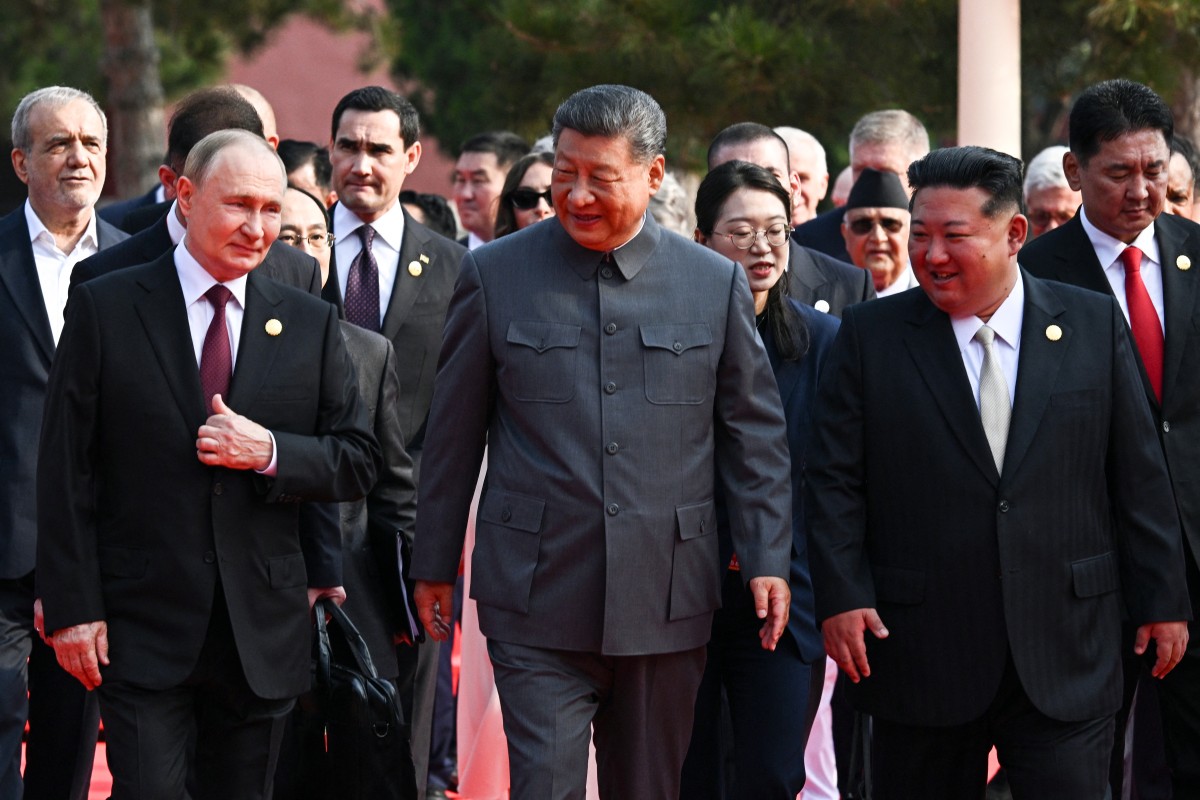
Russia and China are the primary supporters of North Korea, with Russia providing critical technical assistance, diplomatic backing, and strengthening ties through the 2024 Comprehensive Strategic Partnership Treaty. Recent collaboration, highlighted by the 2023 and 2024 summits between Kim Jong Un and Vladimir Putin, has likely intensified technical cooperation on missile and nuclear technologies.
China, while often appearing ambivalent, maintains a 1961 Treaty of Friendship and provides economic and diplomatic shielding as a strategic partner. As North Korea’s primary economic partner and sole formal ally, China frequently opposes severe sanctions, allowing for continued economic sustenance despite UN bans.
Attempts at Denuclearization
Attempts to denuclearize North Korea have spanned three decades, involving diplomatic summits, UN resolutions, and economic sanctions, yet the country has solidified its nuclear status, calling denuclearization a “pipe dream”. Despite previous pacts (1992 joint declaration) and summits (Trump-Kim), North Korea has increasingly strengthened its weapons program, rendering past strategies largely unsuccessful in achieving complete denuclearization.
In the 1992 Joint Declaration, North and South Korea pledged to denuclearize, with Pyongyang signing a nuclear safeguards agreement with the IAEA.
The Six-Party Talks were a series of multilateral negotiations aimed at ending North Korea’s nuclear program through diplomatic means, which ultimately failed to stop its advancement.
US-North Korea Summits (2018-2019) between President Trump and Kim Jong-un aimed to map out denuclearization but failed to reach a concrete agreement on dismantling the program. In 2022, North Korea officially passed a law declaring itself a nuclear weapons state, officially rejecting negotiations on denuclearization.
More recently, Pyongyang has stated it will never relinquish its weapons. The IAEA warns of a “very serious increase” in North Korean nuclear activities.
North Korea perceives its nuclear arsenal as essential for the regime’s survival against external threats. Kim Jong-un has increased internal repression and closed borders, reducing the effectiveness of external pressures. North Korea has explicitly stated it will not abandon its nuclear status.
Despite these challenges, official policy from the U.S. and South Korea continues to focus on the goal of denuclearization, while dealing with the reality of a growing nuclear threat.
Pakistan’s Nuclear Program
Pakistan’s nuclear program is a mature, military-focused program initiated in 1972 and solidified by tests in 1998, with an estimated 170 warheads as of 2025. It operates under a doctrine of “full-spectrum deterrence” against India, relying on land-based missiles, aircraft, and developing sea-based capabilities to ensure a secure second-strike capability.
Zulfikar Ali Bhutto initiated the program following the 1971 war with India, and accelerated after India’s 1974 test. Pakistani nuclear physicist and metallurgical engineer A.Q. Khan played a pivotal role in creating a uranium enrichment program, using clandestine networks to obtain technology. Pakistan conducted six underground tests in May 1998 (Chagai-I and II) in response to India’s nuclear tests.
The Land Vector is through ballistic missiles (Shaheen, Ghauri) and cruise missiles (Babur). Air Vector uses F-16 and Mirage combat aircraft configured to carry nuclear weapons. Pakistan is actively developing a submarine-launched cruise missile (SLCM) for a sea-based deterrent.
Pakistan uses nuclear weapons as a deterrent against conventional threats from India. Pakistan has not adopted a “no-first-use” policy. Pakistan is not a party to the NPT.
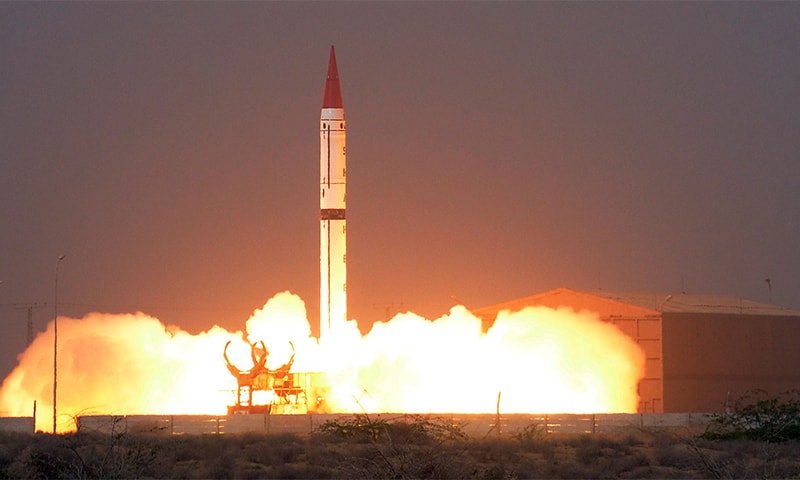
Pakistan’s First Use Nuclear Criteria
Key criteria for potential first use include if India occupies a significant portion of Pakistani territory; India destroys a large part of Pakistan’s land or air forces; if India blocks Pakistan’s seaports or acts to destroy its economic survival; if India causes political destabilization or large-scale internal subversion; or attempts to alter the LoC, particularly in Kashmir, could trigger a nuclear response.
These triggers are derived from statements by Pakistani officials and military strategists, as Pakistan does not have a formal, official nuclear doctrine document. The Pakistani nuclear bluff has been called most recently during “Op Sindoor”.
Who Supported Pakistan’s Nuclear Program
China and North Korea were the primary countries that helped Pakistan develop nuclear weapons, providing critical technical assistance, potentially fissile materials, and a nuclear weapon design, particularly after India’s 1974 test. While China played the largest role, Pakistan’s often called “father of the bomb”, A.Q. Khan, stole centrifuge technology from URENCO in the Netherlands to build uranium enrichment capabilities.
Islamic Bomb
The “Islamic bomb” is a term coined in the late 1970s, primarily by Western media and politicians, to describe the fear that a nuclear weapon developed by a Muslim-majority nation, specifically Pakistan, would become shared property to threaten the West or Israel. It reflects Cold War-era anxieties regarding nuclear proliferation and the rise of political Islam.
India’s 1974 “peaceful” nuclear test prompted Pakistani Prime Minister Zulfikar Ali Bhutto to vow that Pakistan would develop a nuclear bomb, even if they had to “eat grass”. It was seen as an attempt to foster solidarity among Muslim nations, with the idea that the technology could be shared within the ummah (global Muslim community).
In the West, it symbolized a “clash of civilizations” narrative, merging fears of nuclear technology with anxieties about terrorism and Islamic resurgence.
Who Tried to Thwart Pakistan’s Nuclear Program
Israel and India were the primary actors who attempted to thwart Pakistan’s nuclear program during the 1980s, engaging in plans to sabotage or bomb facilities like Kahuta.
Israel’s Mossad aimed to prevent an “Islamic bomb” and devised a plan to bomb Pakistan’s nuclear facilities, involving planes taking off or landing in India. Israel also engaged in threats and sabotage efforts against individuals linked to the program. India, though ready to stop the program in the 1980s, later withdrew support for a joint strike with Israel due to a lack of intelligence.
It is widely understood that Mossad efforts were made to kill key Pakistani scientists and researchers behind the uranium enrichment project. Executives at European companies supplying components to A.Q. Khan in Germany and Switzerland were threatened, and a Swiss executive was targeted by a bombing attempt by Israel.
Dutch Whistleblower Frits Veerman warned authorities in 1973-1974 about A.Q. Khan’s suspicious activities, but was ignored.
Pakistan’s program was later saved by the then-government in India. The India-Pakistan Agreement on the Prohibition of Attack Against Nuclear Installations and Facilities was signed on December 31, 1988, by Prime Minister Rajiv Gandhi and Prime Minister Benazir Bhutto. It prohibits both nations from attacking each other’s nuclear facilities, with a yearly exchange of lists enacted on January 1, 1992.
The U.S. initially ignored the program due to Cold War priorities in Afghanistan, but it halted aid in 1990 under the Pressler Amendment following concerns about Pakistan’s nuclear capabilities. The US is once again getting closer to Pakistan for mediation with Iran.
India’s Attack on the Nuclear Command Post in Pakistan
In May 2025, India launched Operation Sindoor, a retaliatory tri-services operation following a fatal terror attack in Pahalgam. The Operation included precision strikes on major Pakistani military installations. A key target was the Nur Khan Airbase (Chaklala), located near Islamabad, which serves as a vital air mobility command and is in close proximity to Pakistan’s nuclear command and control infrastructure.
The base is a central transport hub and is located near Pakistan’s Strategic Plans Division, which manages the nuclear arsenal, making it a highly significant target. A missile direct hit reportedly caused significant damage to the NCP building.
Satellite imagery showed extensive damage to military installations and prompted concerns regarding Pakistan’s nuclear deterrent stability.
In May 2025, the Indian Air Force (IAF), represented by Air Marshal A.K. Bharti, initially denied that India hit the Kirana Hills (nuclear weapons storage site) in the Sargodha region of Pakistan. But independent OSINT (Open Source Intelligence) experts, including Damien Symon, reported in July 2025 that updated Google Earth imagery indicated a missile strike on the Kirana Hills area.
Some analysts have argued that the strike was designed to be an “indicative attack” to demonstrate India’s ability to neutralize Pakistan’s nuclear arsenal, calling it a “warning strike”.
Immediately after the strikes at Nur Khan, a US specialized aircraft, identified as a Beach King Air 350ER (AMS) part of the Department of Energy’s Aerial Measuring System, was reportedly spotted landing at Nur Khan Airbase in Rawalpindi, Pakistan. The aircraft is specifically equipped to detect radiation levels from nuclear fallout, leaks, or accidents. Its presence led to widespread speculation that the US was assessing a potential radiation leak at Pakistani nuclear storage facilities near the struck airbase and the Kirana Hills.
While some reports claimed that radiation was detected, these were accompanied by contradictory information, with some outlets stating the IAEA confirmed no breach of nuclear infrastructure.
The US State Department did not formally confirm the presence of a nuclear monitoring team, with some reports indicating they refused to comment on the matter, creating uncertainty about the official nature of the visit.
To Conclude
It is clear that the world has more or less lost control over North Korea’s nuclear assets. As long as Kim Jong Un is the supreme leader, he will continue to hold full control over the military and nuclear weapons. The fact that North Korean Nukes can hit mainland USA, the West is very careful in dealing with them. I feel that Japan and South Korea, which have the technologies and enriched materials, could go nuclear within a decade.
Claims that the US controls Pakistan’s nuclear weapons are largely based on allegations from former CIA officials, specifically citing a post-9/11 agreement where the U.S. reportedly gained oversight to prevent theft. While Pakistan formally denies this, alleging a “foolproof” internal control system by the National Command Authority (NCA), some reports suggest technical assistance or surveillance rather than total command.
Former CIA official John Kiriakou had claimed that during the Pervez Musharraf era, the U.S. gained access to or influence over Pakistan’s arsenal due to concerns about terrorism, essentially providing funds to gain control over security measures.
On the other side, it is clear that a large number of Pakistani politicians and Generals have investments in the West. Their children are studying or working in the West. Americans can thus close the tap at will. Pakistan’s very poor economy also makes it more vulnerable. America’s Central Intelligence Agency (CIA) has the means to expose many vulnerable Pakistani leaders and blackmail them.
Iran is a very different kettle of fish.
The US has pursued Iran’s nuclear program with far greater urgency than it has with Pakistan or North Korea, primarily because Iran represents a deadly combination of capability, intent, and threats to neighbors.
Unlike Pakistan and North Korea, which already possess nuclear weapons, Iran remains at a threshold stage. Preventing it from crossing the “Red Line” is seen as feasible and high-reward.
A nuclear Iran could pose an existential threat to Israel and even Arab states like Saudi Arabia and the UAE, dramatically heighten the risk of nuclear proliferation across the region, and embolden Tehran’s network of proxies (Hezbollah, Hamas, Houthis) under a nuclear umbrella.
- Air Marshal Anil Chopra (Retired) is an Indian Air Force veteran, fighter test pilot, and ex-director-general of the Center for Air Power Studies. He has been decorated with gallantry and distinguished service medals during his 40-year tenure in the IAF.
- THIS IS AN OPINION ARTICLE. VIEWS PERSONAL OF THE AUTHOR
- He tweets @Chopsyturvey
- Follow EurAsian Times on Google News