For years, a specter has been haunting the US.
The specter of Russia’s hypothetical use of nuclear weapons in space that can potentially destroy nearly half of all military and civilian space satellites and render the Low Earth Orbit (LEO) unusable for years to come.
Russia is reported to be working on some sort of anti-satellite (ASAT) system that would use a nuclear explosion in space to create weapons effects, most likely an electromagnetic pulse (EMP), that would in turn disable or destroy satellites.
According to reports, the Russian government is developing a program to arm some of its satellites with nuclear warheads. By detonating a single nuclear warhead, the Kremlin can knock out hundreds of civilian and military satellites.
In 2024, President Joe Biden’s administration said a suspected Russian testbed satellite for the weapon had been in orbit for two years.
The satellite in question is Cosmos 2553, a Russian satellite launched in February 2022.
It immediately aroused the interest of the US Armed Forces due to its location in an otherwise unused area of space typically reserved for decommissioned satellites. Russia claimed that its decision to utilize this orbit was purely scientific: The aim was to test the resilience of materials and electronic components to higher levels of radiation.
However, the US government did not consider this explanation credible, as the level of radiation in Cosmos 2553’s orbit is very high but not high enough to justify the endurance tests described by Moscow.
There was also some criticism of the US national defense strategy (NDS), which, critics argued, was inadequately prepared for responding to nuclear and space threats.
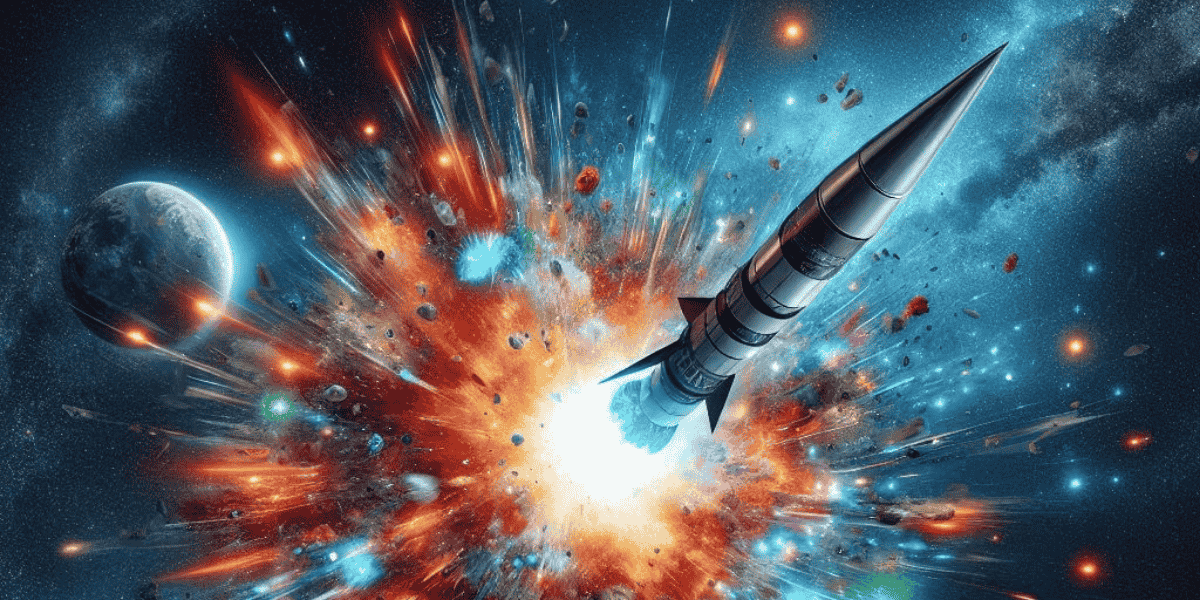
For instance, last month, the chairman of the Senate Armed Services Committee, Sen. Roger Wicker, warned that the US was ignoring emerging threats in the nuclear and space domains, which could encourage adversaries, such as Russia and China, to take hostile action in space.
“It’s no secret that I believe this NDS falls short in several areas,” Wicker told U.S. Strategic and Space Command leaders. “I am particularly concerned that the current strategy does not address space and nuclear threats with anywhere near the urgency they deserve.”
Similarly, Adm. Richard Correll, the head of U.S. Strategic Command, said, “Russia has indicated, and has been publicly acknowledged, that they’re working on a nuclear capability that could be placed in space. We have to account for it in terms of our architecture and what we can do about it. The department’s very focused on that.”
Now, it seems that the US is finally taking the threat seriously and developing countermeasures against the use of weapons of mass destruction (WMD) in space.
Last month, the US Space Command organized a tabletop wargame, “Apollo Insight,” focused on Russia’s development of such weapons.
Apollo Insight
U.S. Space Command (USSPACECOM) held its first-ever Apollo Insight Commercial Integration wargame series with commercial mission partners on March 23, USSPACECOM said in a statement.
“The first of four Commercial Integration tabletop exercises scheduled to take place throughout the year, this iteration addressed the threat of weapons of mass destruction in space,” it added.
Apart from Space Command officials and more than 60 companies, the wargame also hosted participants from Multinational Force-Operation OLYMPIC DEFENDER member nations Australia, Canada, New Zealand, and the United Kingdom, as well as representatives from 17 different government organizations, including the Defense Threat Reduction Agency, Department of Energy, NASA, and several research labs.
“We had a very high request to attend from USSPACECOM’s Commercial Mission Partners with 62 companies and 175 people attending, including six CEOs, nine vice presidents, and 31 directors from companies across the space enterprise,” said U.S. Navy Cdr. Heather Thomas, USSPACECOM’s lead for Commercial Integration. “Our next Commercial Integration Wargame is set for June and will center on Orbital Maneuver Warfare.”
While the event was classified, discussions covered a range of topics, including the importance of domain awareness for detection and characterization, as well as the threats facing U.S. and allied space superiority.
The USSPACECOM statement said the exercise raised awareness of the threat’s seriousness and potential solutions.
“I feel as though the participants came away from the wargame with a better understanding and awareness of the seriousness of potential threats, and they were eager to share their thoughts on how they could be a part of the solution,” Jay Santee, Aerospace Corp. general manager, said in Space Command’s news release.
“U.S. Space Command shared briefings on the scenario for this wargame that discussed potential threats and impacts, and mitigation approaches. I was very pleased with the participants’ engagement. They shared innovation, courses of action, and new and interesting ideas on how to deter the use of nuclear detonation in space,” he added.
Since the exercise was classified, USSPACECOM did not disclose the wargame’s findings. However, open source intelligence reports have discussed the devastating consequences the use of a nuclear weapon in space could have.
“In a purely destructive sense, such a weapon could destroy large numbers of satellites. This would be done in two waves: the first would be those satellites in the line of sight of the nuclear explosion; the second would be satellites affected by the increased amount of trapped in the Van Allen belts,” according to the Secure World Foundation’s latest Global Counterspace Capabilities report.
“Some of the effects would not be felt for days, weeks, or even months, as the higher radiation levels slowly degraded unhardened satellites and could persist for years afterwards, endangering the use of space by all countries.”
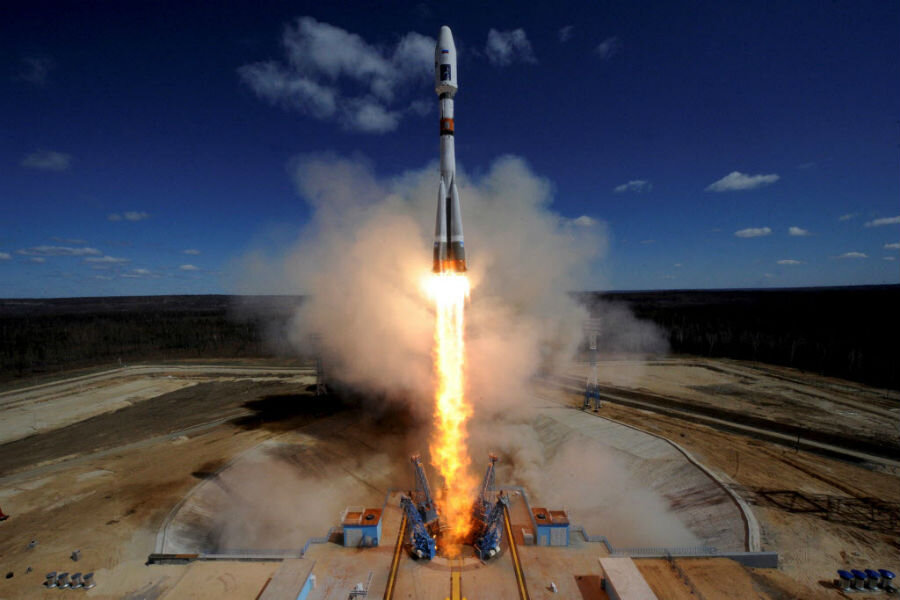
Similarly, the German Institute for International and Security Affairs (SWP) said in a research paper that the devastation caused by such a weapon would depend on where the detonation occurs in space.
There are three main orbits: low Earth orbit (LEO) extends from 100 to 2,000 km above Earth’s surface. It is home to almost all commercial satellites and more than 90 percent of all satellites in space. Cosmos 2553 orbits the Earth at an altitude of 2,000 km.
Above LEO is the medium Earth orbit (MEO), which extends up to an altitude of approximately 36,000 km. There are far fewer satellites here, but they include core capabilities such as GPS, the European Galileo system, and the Russian GLONASS navigation system.
The highest region is geostationary Earth orbit (GEO), which extends beyond 36,000 km. GEO is home to weather and TV satellites, as well as strategic assets such as military communications satellites, command-and-control capabilities, and early-warning systems for missile attacks.
According to SWP, the number and types of satellites affected by a nuclear explosion in space would therefore depend on their orbits.
“Detonating a nuclear weapon in LEO would affect the largest number of satellites and disrupt space-based capabilities across the board. A nuclear explosion in MEO would affect navigation systems that are also used for military purposes. The “assets” in GEO are crucial for strategic deterrence.”
The paper also warned that the payload of a future nuclear-armed satellite cannot be identified from the outside until it is detonated.
Gen. Stephen Whiting, USSPACECOM commander, warned that misunderstanding the reality of space’s role in military activities risks ceding our advantage in the domain.
“If we fail to adjust our mindset, if we cling to the myth that space is somehow ‘different,’ we risk falling behind our opponents who have already made that adjustment,” he said during his conference keynote.
The APOLLO INSIGHT Commercial Wargame series will continue throughout 2026, with future events addressing issues such as Orbital Maneuver Warfare, Proliferated Constellations Across Orbital Regimes, and Integrated Missile Defense.
Clearly, space is the next domain of an emerging arms and nuclear race between the superpowers.
- Contact EurAsian Times at editor (at) eurasiantimes.com
- Follow EurAsian Times on Google News