
The naval blockade that the United States has enforced against the Iranian ports following the failure of the first round of diplomatic talks with Tehran seems to have a domestic dimension for President Donald Trump.
And that is the pressure on American shipbuilding, on the one hand, and on Congress to sanction money in time for his “Golden Fleet Plan” on the other.
Though the United States is said to possess the world’s most powerful Navy, the fact remains that it is because of the tonnage, not the number of warships.
At its peak, during World War II, the US Navy was said to have consisted of 6,768 vessels. But now that number is reportedly about 400 (including in the reserves). There are only about 250 active ships, including 11 nuclear-powered carriers, about 70 submarines, approximately 90 destroyers and cruisers, and several amphibious assault ships.
In contrast, China reportedly has the largest number of ships, 1,015, between the PLA Navy and the Chinese Coast Guard.
Of course, the power of a Navy is measured in “tonnage” of a ship that refers to the weight of the water it displaces, which is exactly equal to the actual weight of the ship and everything on board (fuel, crew, weaponry, etc.) at that moment.
Based on this criterion, the top five naval powers in the world are the United States, China, Russia, Japan, and India (in that order). With a capacity of 8265799 tonnes, the US towers over China (3192411), Russia (1426539), Japan (798062), and India (631989).
But then, the number is still important for the US, as many of its existing ships are aging and nearing decommissioning.
For instance, the USS Nimitz (CVN-68), the oldest active nuclear-powered aircraft carrier in the US Navy, has had its service life extended by approximately 10 months to March 2027. Initially scheduled to begin its decommissioning process in May 2026, the 51-year-old warship will remain in service to prevent a gap in the required 11-carrier fleet while waiting for the delivery of the USS John F. Kennedy (CVN-79).
Security analysts in the US do agree that the US Navy requires more ships to counter rapid, large-scale naval expansion by competitors like China, which threatens maritime superiority in the Indo-Pacific. The Middle East, incidentally, falls in this zone.
In any case, to remain the world’s foremost military power, a larger US Navy is considered vital, so runs the argument.
It is against this background that Trump announced the Golden Fleet concept on December 22 for a new “battleship” that would field firepower “100 times more than anything built.”
The battleships, as currently planned, would be armed with 128 MK-41 vertical launch system cells, 12 Conventional Prompt Strike long-range hypersonic missiles, an electromagnetic railgun, conventional five-inch guns, and be protected by AN/SPY-6 radar.
Trump has suggested a name for this ship—USS Defiant—and it would include an array of weapons, including yet-to-be-developed energy weapons and anti-drone defensive systems.
Trump would like to have 20 such battleships, which would cost $15 billion to $22 billion for the lead ship, and $9 billion each for the subsequent ones once production is well underway. The battleship is projected to have a displacement of about 35,000 tons.
Importantly, US Navy Secretary John Phelan later added that the Golden Fleet plan was “an umbrella term for an overhaul of the size and mix of ships the Navy will have in the future, including uncrewed ships operating in concert with manned vessels. The profile would include the Ford-class carriers, new Virginia-class attack submarines, and Columbia-class ballistic missile submarines already joining the fleet”.
During a speech on February 13 at the West 2026 conference on naval defense in San Diego, Phelan described the Golden Fleet as putting more “hulls in the water” at a faster pace. “High-end platforms — Next-generation battleships, continued production of destroyers, carriers, and submarines that deliver survivability, magazine depth, and sustained fires,” he said, adding that the Golden Fleet would be the proving ground for the upgraded Navy’s logistics and auxiliaries, “sustaining power across distance.”
It is against this background that the Pentagon’s Fiscal Year 2027 budget proposal requests $65.8 billion for shipbuilding, marking the highest investment since 1962. This funding, aimed at purchasing 34 new battle force and support vessels, highlights a major push to expand naval power and supports a 390-ship goal, addressing industrial base constraints and increasing competition.
To achieve what it calls “Restoring America’s Maritime Dominance,” the Trump Administration says it has pursued “a whole-of-Government and whole-of-Nation approach to recapitalize the maritime industrial base strategically.”
The rationale for the 2027 budget proposals is cited to be that “As waters around the world become increasingly contested, it is imperative that the United States be able to efficiently deliver the various naval platforms it requires, including both battle force and auxiliary vessels, to ensure maritime domain awareness and deterrence”.
It is further pointed out by the Pentagon that “ the 2027 Budget establishes President Trump’s Golden Fleet, including initial funding for the Trump-class battleship and next generation frigates. The Budget would maintain or increase the procurement of existing battle force platforms, including amphibious vessels, and Columbia-class and Virginia-class submarines. The procurement of needed auxiliary platforms would be expanded to include strategic sealift vessels, hospital vessels, Consolidated Cargo Replenishment at Sea tankers, a special mission ship, submarine tenders, and other vessels vital to logistics. The repair capacity of public shipyards would be increased, while improved production across the fleet would help address delays and ensure the timely delivery of vessels”.
The key highlights in the proposals are that there needs to be 8 battle force ships and 16 non-battle force ships, with funding for major platforms such as two Virginia-class attack submarines, one Columbia-class ballistic missile boat, one FF(X) frigate, one Arleigh Burke-class destroyer, one San Antonio-class amphibious transport dock, one America-class amphibious assault ship, and six Megan McClung-class medium landing ships.
However, all said and done, it is widely agreed that the health of America’s maritime base remains much to be desired. Its shipyards are struggling with significant backlogs, and major projects such as the Virginia-class submarines and Constellation-class ships are experiencing delays of up to 36 months.
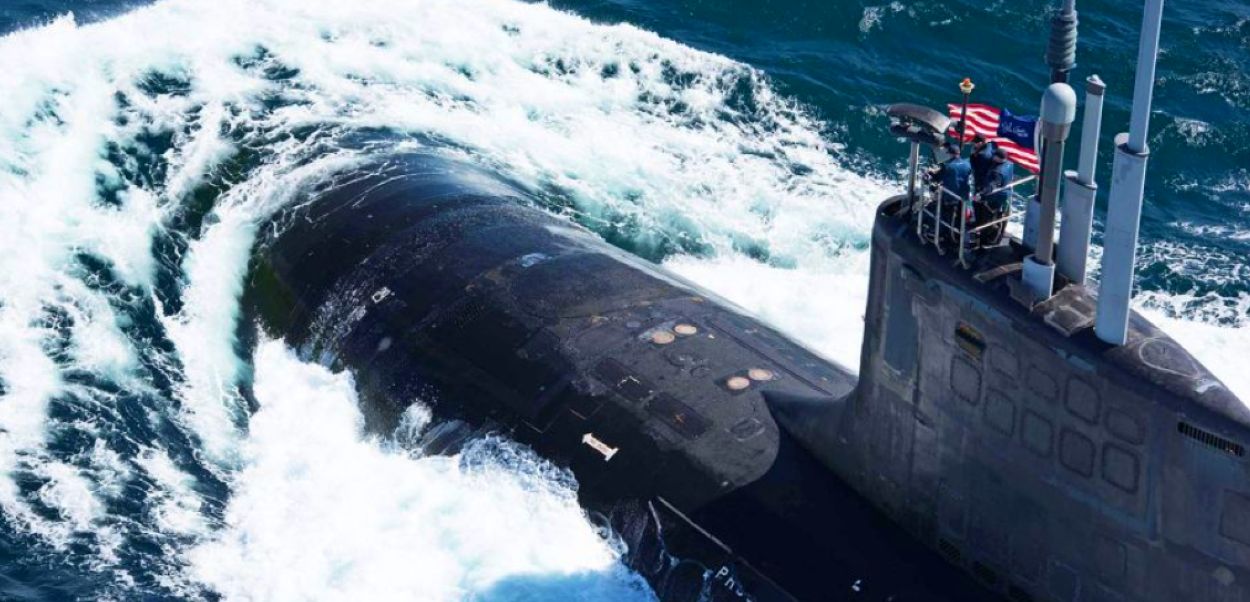
The problem is further compounded by workforce challenges. There are not enough workers to build new ships in the shipyards. This challenge has been acknowledged by none other than Navy Secretary John Phelan, who has said that America’s shipyards would need 250,000 additional workers in the near future.
According to Phelan, “Systems don’t build ships. People do”, but “ (as) a quarter of the shipyard workforce is retirement – eligible within five years … Over the next decade, shipbuilders and suppliers will need to hire roughly 250,000 skilled workers to meet demand.”
Therefore, it is understandable when analyst Peter Suciu argues that while the United States clearly needs to increase its fleet size, “the issue isn’t simply a matter of building more ships. For the Navy to meet the demands of the 21st century, the US shipbuilding sector needs many, many more dockworkers”.
Apparently, the US has shuttered more than a dozen “defense-related” shipyards nationwide over the last fifty years. At the moment, it has four public naval shipyards – Norfolk Naval Shipyard (VA), Portsmouth Naval Shipyard (ME), Puget Sound Naval Shipyard (WA), and Pearl Harbor Naval Shipyard (HI) – dedicated to maintenance and modernization, along with a limited number of private shipyards.
However, these shipyards are afflicted by construction bottlenecks, facing significant capacity constraints, and antiquated infrastructure. As it is, the four public yards are undergoing a 20-year, $21 billion modernization program. And there are no such plans to build new ones. Even if new ones are built, it will be a prolonged affair.
It is no wonder that the previous Biden Administration explored ways to collaborate with Japan and South Korea, which are more efficient and cost-competitive than those in the United States.
The idea was that the three countries could, together, form a natural industrial alliance capable of revitalizing U.S. maritime dominance through friendshoring/onshoring, joint production and investment, and technological integration.
However, Trump is said not to have followed up in this direction and instead stressed the need to strengthen America’s maritime base through larger budgetary allocations. Here, he seems to have bipartisan support in Congress for “restoring U.S. maritime superiority” on its own.
To implement the Golden Fleet strategy, the Trump administration is considering the Navy adopting “Ship OS,” a $448 million artificial-intelligence-powered operating system designed to modernize and accelerate shipbuilding production. This initiative seeks to drastically reduce production times, improve supply chain visibility, and address critical delays in the construction of naval vessels.
Besides, emphasis is placed on “modular construction,” which involves breaking the overall project into smaller pieces that facilities can build in parallel at off-site locations before final assembly. Also, efforts are underway to increase productivity and efficiency by limiting the number of variants and changes that shipbuilders must make.
Against this background, one could say that, irrespective of whether the naval blockade of Iranian ports succeeds or fails, the event will only accelerate the reinvigoration of America’s naval shipbuilding industry.
- Author and veteran journalist Prakash Nanda is Chairman of the Editorial Board of the EurAsian Times and has been commenting on politics, foreign policy, and strategic affairs for nearly three decades. He is a former National Fellow of the Indian Council for Historical Research and a recipient of the Seoul Peace Prize Scholarship.
- CONTACT: prakash.nanda (at) hotmail.com