As Russia remains entangled in the Ukraine War, the geopolitics of the South Caucasus is undergoing a seismic shift.
Armenia, once Moscow’s loyal outpost in the strategically important South Caucasus region, is gradually but increasingly pivoting to the West, with Yerevan firmly embedding itself into a network of European and trans-Atlantic defense partnerships.
From May 4-6, Yerevan hosted the 8th European Political Community (EPC) summit and used the two-day gathering of European leaders in its capital to push its top priority, security, and to accelerate its shift away from Russia and towards Western partners.
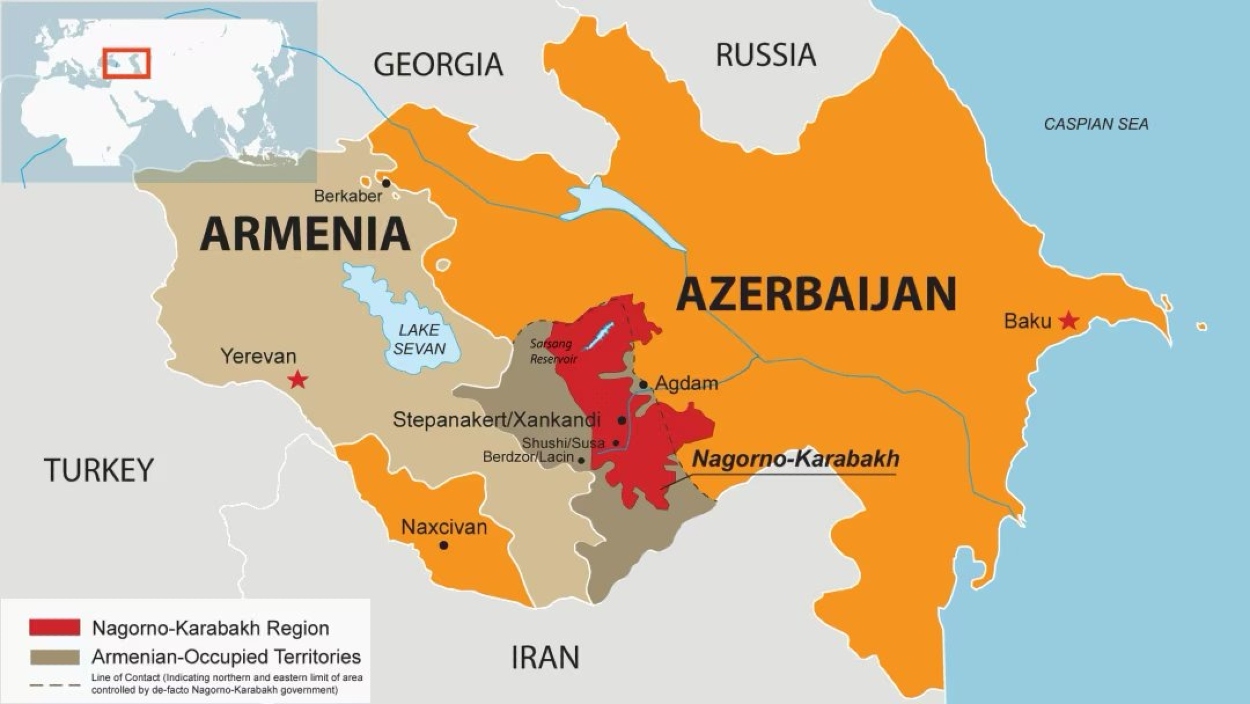
Meanwhile, the French President Emmanuel Macron used the occasion to further deepen its defense partnership with the beleaguered country that has lost two wars to Azerbaijan in the last six years, lost control of the historically Armenian-speaking territory of Nagorno-Karabakh, and is desperate to come out of the shadow of Russia.
In fact, as the European Union and Armenia laid the groundwork for deeper integration during the landmark EPC summit in Yerevan, France’s presence loomed large – diplomatically, economically, and culturally.
For decades after the disintegration of the Soviet Union, the landlocked Armenia did Russia’s bidding in the South Caucasus, providing it with military bases and serving as Moscow’s loyal outpost south of the Black Sea.
Crucially, Armenia also provided Russia with a land bridge to Iran, Moscow’s key ally in West Asia.
Armenia also joined the Collective Security Treaty Organization (CSTO), a post-Soviet Russian equivalent of NATO.
However, Armenia has frozen its participation in the Russia-led collective security organization since 2024 and is gradually pivoting towards the EU and NATO.
This historic shift has the potential to rewrite the balance of power in this strategic region that sits at the crossroads of Europe, West Asia, Central Asia, Russia, and South Asia.
In fact, Armenia and the South Caucasus are at the heart of both India-supported International North-South Transport Corridor (INSTC) and Europe’s plans to link Central Asian gas fields with its markets.
No wonder India and France have emerged as primary military and diplomatic backers of Armenia as it navigates a challenging neighborhood and tries to balance its historical dependence on Russia with new partnerships in the West and East.
Armenia’s Pivot Towards France
Bordering openly hostile Azerbaijan to the East, historical adversary Turkey to the West, and war-torn Georgia and Iran to the North and South, Armenia finds itself in a challenging and sometimes openly antagonistic neighborhood.
This challenging neighborhood meant that Armenia depended on Russia for its security.
However, Moscow’s failure to safeguard Armenia’s security and interests despite its CSTO membership during the two wars with Azerbaijan forced a strategic rethink in Yerevan.
Under Article 4 of the CSTO Treaty, analogous to NATO’s Article 5, member states are obligated to give each other “the necessary help, including military” in the event of foreign aggression.
Despite this explicit cause, Moscow did nothing to protect Armenia during its two recent wars with Azerbaijan.
Russia proved itself an unreliable security partner, and Yerevan has since tried to balance its dependence on Moscow by cultivating defense and security partnerships with diverse countries.
However, France has emerged as a key partner for Yerevan.
The visit of President Macron, timed to coincide with the first EU‑Armenia summit, underscored France’s ambition to anchor itself in the small, landlocked country as it turns away from Moscow.
France is positioning itself as a key player in Armenia’s emerging role as a regional hub for trade, energy, and digital connectivity.
The EU‑Armenia connectivity partnership, signed during the summit, aims to strengthen transport and energy links and interlocks French and European interests in routes between Central Asia, the Caspian Sea, and Europe – notably the Trans-Caspian route.
France and Armenia also signed a joint declaration establishing a strategic partnership and agreed to expand cooperation in the defense sector.
A memorandum of understanding between the defense ministries of Armenia and France provides for cooperation in research, development, and advanced military technologies.
In addition, Armenia’s defense ministry signed a contract with the French group Sofema to supply equipment.
An agreement was also concluded with Airbus Helicopters for the delivery of transport helicopters. According to local media, this involves six multi-purpose Airbus H145 helicopters.
Notably, France has emerged as Armenia’s largest arms supplier in recent years.
Paris has delivered CAESAR howitzers, GM200 radars, and Bastion APCs to Armenia.
During his trip, President Macron also called on Europe to help Armenia independently secure its borders.
“There are still 4,000 Russian soldiers on Armenian territory, including over 1,000 border guards. Europe must, therefore, commit to helping the country secure its borders more independently,” Macron said.
🇫🇷🇦🇲 “There are still 4,000 Russian soldiers on Armenian territory, including over 1,000 border guards. Europe must, therefore, commit to helping the country secure its borders more independently.” — @EmmanuelMacron https://t.co/XxZaNJ8ICy pic.twitter.com/iUaRTII4kB
— French Aid to Europe 🇨🇵 🇪🇺 (@aidefranceukr) May 4, 2026
Russian forces are stationed in Armenia under a bilateral agreement that established the 102nd military base in Gyumri. This facility serves as Russia’s military presence in the South Caucasus region.
The base was established in 1995 for a 25-year period. However, the agreement was renewed later, and Russian troops can now remain in the country until 2044.
Macron suggested that Europe should provide this support to Armenia to reduce its dependence on Russia.
Notably, Armenia has already accepted a European Union (EU)–led civilian border-monitoring force, rejecting a Russian proposal for the same. Numbering around 200, this is the first such EU Common Security and Defense Policy mission in a Russian-allied country.
Armenia has also acceded to the International Criminal Court (meaning that, in theory, Putin could be arrested if he sets foot on Armenian soil).
Russia’s failure to safeguard Armenian interests has also led to the downfall of Russia’s image in the Armenian public.
Between 2019 and 2023, according to an International Republican Institute poll, the number of Armenians who described the country’s relationship with Russia as “good” fell drastically, from 93 percent to 31 percent. France is now regarded by the Armenian public as the country’s most important political partner, with the United States in second place.
In recent years, Armenia has taken several steps to pivot towards the EU, and EU officials have reciprocated. In March 2024, the European Parliament welcomed Armenia’s application for candidate status to the European Union.
Armenia also hosted a training exercise with U.S special forces in September 2023.
India has emerged as another crucial partner for Armenia.
India: The New Security Partner for Armenia
After France, India has emerged as the second-largest arms exporter to Armenia. In fact, Yerevan is now India’s single largest arms export customer.
In recent years, Armenia has purchased Pinaka multi-barrel rocket launchers, Akash-1S surface-to-air missile systems, ATAGS 155mm towed howitzers, Swathi weapon-locating radars, and MArG truck-mounted artillery.
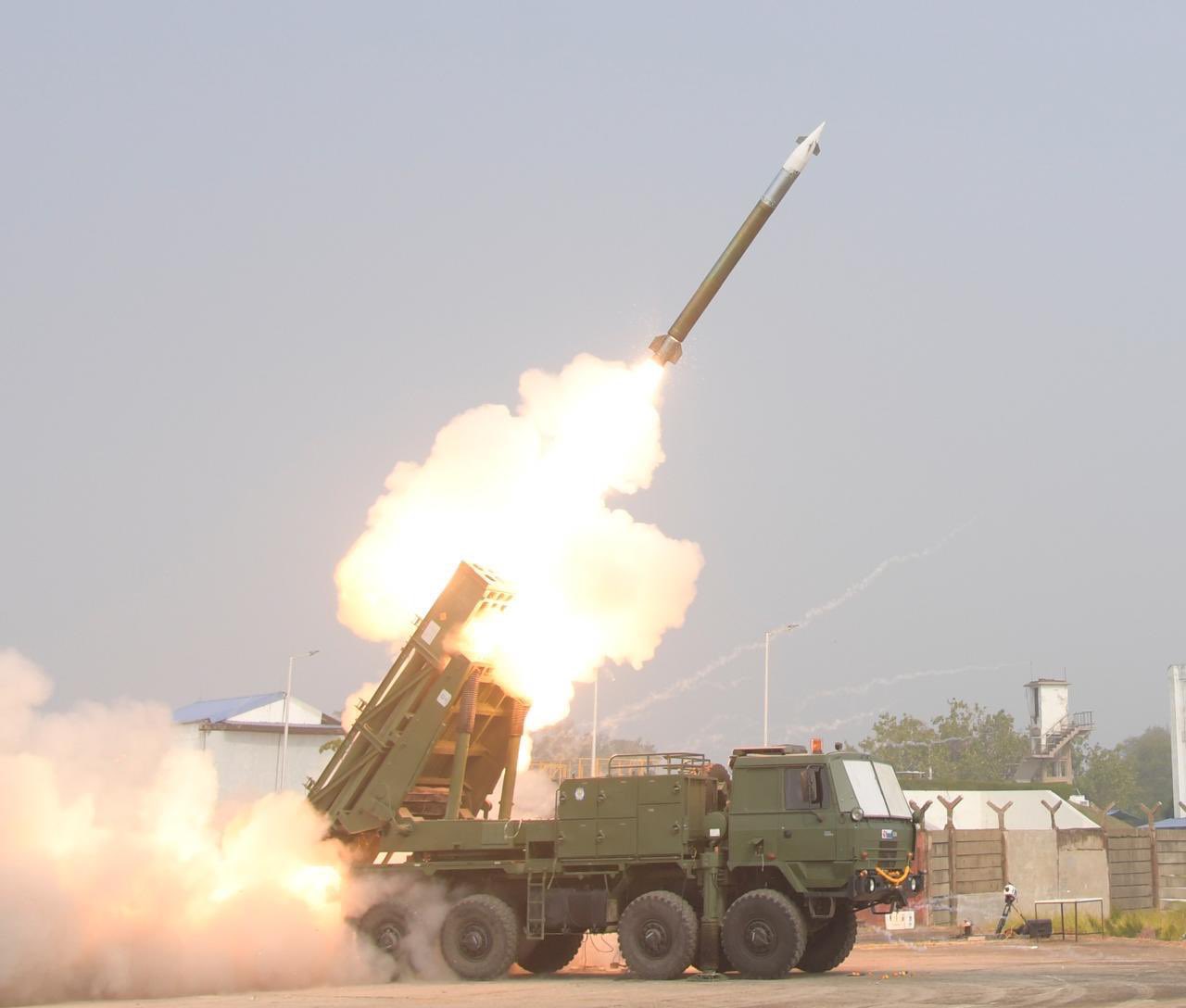
Besides, Armenia is considering signing deals for the Akash-NG and Astra Mk2 AAMs. Armenia is also considering signing a contract with New Delhi to upgrade its Su-30 fleet to India’s Su-30MKI specifications.
In 2025-26 alone, Armenia imported roughly US$2 billion worth of Indian systems, helping propel India into the world’s top 25 arms exporters.
Indian systems now form the backbone of Armenia’s artillery, air defense, and counter-battery capabilities.
Notably, till one decade ago, Armenia used to import nearly 90% of its arms from Russia. Currently, Russia’s share has dropped to less than 10 percent, even as France and India have moved quickly to fill in the vacuum.
The message to Moscow is clear: Yerevan is hedging its bets in a multipolar world.
As Armenia hosted its first-ever ECP summit and French President Macron on a two-day state visit, the message to Moscow was clear: Armenia sees its future in the West.
While EU membership remains a distant dream, the era of Russia as Yerevan’s sole security provider is over.
Macron has sent a clear message that Yerevan should remove the 5,000-odd Russian soldiers from its territory, as Moscow has failed to protect its interests; instead, the EU should fulfill that role.
As Russian influence wanes in Armenia, a new constellation of states, the EU, France, and India, have moved in to fill the breach.
The South Caucasus will never be the same.
- Sumit Ahlawat has over a decade of experience in news media. He has worked with Press Trust of India, Times Now, Zee News, Economic Times, and Microsoft News. He holds a Master’s Degree in International Media and Modern History from the University of Sheffield, UK.
- VIEWS PERSONAL OF THE AUTHOR.
- He can be reached at ahlawat.sumit85 (at) gmail.com