On the first anniversary of the Pahalgam terrorist attack, designed not merely to inflict casualties but to cripple tourism and economic activity in the Kashmir valley, fracture communal harmony, and weaponize religious identity, it is necessary to view India’s response in its full strategic sweep.
Emerging commentary on the Pahalgam attack and its aftermath adds further depth to the assessment of Op Sindoor, underscoring the need to revisit it.
Operation Sindoor comprised the non-military and military components of a broader, whole-of-nation response that also encompassed economic and diplomatic measures, all of which were effective immediately. These included visa cancellations/restrictions on Pakistani nationals, the recalibration of engagement frameworks, such as the Indus Water Treaty, the closure of the Attari-Wagah border, the suspension of all bilateral trade, and the declaration of the Defense/Military, Naval, and Air Advisors at the Pakistani High Commission in New Delhi as Persona Non Grata.
The overall strength of the High Commissions was reduced from 55 to 30.
The military component of Operation Sindoor was a measured response after due deliberations, jointly, at the highest levels of both the political and military leadership. It marked a critical inflection point in India’s evolving strategic and military strategy against Pakistan. More than a tactical response to terrorism, it represents a doctrinal refinement: a calibrated application of force below the threshold of nuclear exchange and full-scale conventional war, yet significantly above symbolic retaliation.
The operation reflects the convergence of political intent, military capability, and technological sophistication within a tightly controlled escalation framework.
Executed within clearly defined political parameters, the Indian armed forces were afforded operational autonomy to achieve specific objectives. Precision strikes on 09 terrorist infrastructure on the night of 06/ 07 May, including Muridke and Bahawalpur, were followed by deliberate signaling through established military ‘hotline’ channels that the targets attacked were only terrorist training and command centers, and that no military targets were attacked.
This blend of force and restraint underscored a mature strategic approach: precise, targeted punitive action combined with escalation control through established communication channels. What followed has been well recorded over the past nearly one year. The attacks on 10 May in which eleven military installations were attacked, including Noor Khan, Rafiqui, Sargodha, Sukkur, Murid, Bholari, Sialkot, Pasrur, Chunian, Skardu, and Jacobabad, in about 03 hours.
This “heavy damage” forced the Pakistan military to seek a cessation of hostilities with the Indian military, on the established ‘hotline’ between the two, as per the Press Information Bureau note dated 14 May 2025 of the Government of India, titled “Op Sindoor – India’s Strategic Clarity and Calculated Force.” While the military action has been surgically analyzed, it is equally important to view the resilience of the Indian people to the dastardly terrorist incident.
The resilience of the Indian society stands out in their actions; not being cowed down by the incident, causing any other untoward challenge on account of the motivated and divisive nature of the killings in Pahalgam. Also, it is worth noting that despite an initial dip, the steady return of tourist footfalls over the past year underscores Pakistan’s failure to disrupt normalcy and economic activity in Jammu and Kashmir (J&K).
This fact has clearly been stated in the J&K economic survey for 2025 -26, which highlights the following with regards to tourism: “In 2024, the region recorded an unprecedented 2.36 crore tourist visits, reflecting a substantial increase from 1.88 crore in 2022. Despite challenges arising from security-related incidents and natural calamities, the Union Territory recorded 1.78 Cr tourist visits in 2025.”
Additionally, in the digital age, warfare transcends traditional battlegrounds, becoming a fierce information and narrative war. As expected, following the commencement of Op Sindoor, India was targeted by an aggressive campaign launched by Pakistan, which was full of disinformation and misinformation.
The aim was to distort the truth, mislead the global public, and reclaim lost narrative ground through a storm of misinformation. However, India tried to respond proactively and dispel the misinformation with facts and transparency, showcasing strong digital vigilance. Did India succeed in its narrative management will be discussed in subsequent paragraphs.
Seen in light of all the above, Op Sindoor was not a standalone act but rather a very important element of an integrated national strategy that combined diplomatic signaling, societal resilience, narrative management, and coercive military action.
Strategic Significance of Op Sindoor
From Reaction to Doctrine
India’s response to cross-border terrorism has evolved significantly over the past decade. The 2016 surgical strikes and the 2019 Balakot airstrikes were largely reactive, intended to signal resolve. Operation Sindoor, by contrast, was premeditated, structured, calibrated, and embedded within a broader escalation framework.
Three defining features mark this transition: synchronized political, diplomatic, and military signaling, pre-planned escalation ladders, and integrated tri-service coordination. The objective was not merely selective targeting of terrorist locations, but with a built-in coercive military element, in case of a military response from the other side, on targets that were primarily terrorist infrastructure, and non-military.
The initial aim was to reshape adversaries’ expectations by demonstrating that terrorism would invite predictable, calibrated military consequences. This was subsequently expanded to a full-blown, calibrated, precision air war after the Pakistani military response. The Pakistani military response to precision attacks on purely terror targets was a confirmation of the nexus between the terrorist outfits like Lashkar-e-Toiba (LeT) and Jaish-e-Mohammed (JeM) with the formal security elements within the Pakistan military.
A key doctrinal shift lies in India moving beyond self-deterrence induced by the nuclear overhang in the wake of Pakistan’s stated “first use of nuclear weapons” policy. Nuclear weapons are increasingly treated as boundaries within which conventional options can be exercised, and India had hitherto remained within the same. Even in the 1999 Kargil war, the Line of Control (LoC) was not crossed by the military aircraft.
Calibrated Escalation and Strategic Restraint
Operation Sindoor exemplifies calibrated dominance, which is the ability to apply force without triggering uncontrolled escalation. Its defining characteristics included precision targeting, limited geographic scope, avoidance of civilian casualties, and clear signaling of intent.
This reflects an evolution in India’s strategic culture, where restraint is no longer equated with actions limited to denunciation, the collection of all evidence, and the supply of a dossier to Pakistan, but with the controlled, calibrated, and proportionate use of force. Such restraint enhances international legitimacy while preserving operational effectiveness.
Escalation Control Under the Nuclear Shadow
Managing escalation in a nuclearised environment remains the central challenge in South Asia. Operation Sindoor demonstrated India’s confidence in undertaking punitive kinetic actions through clear objectives, careful target selection, precise weapon-to-target matching, and sequenced responses, with implicit objectives and termination strategies.
India resisted externally imposed narratives on de-escalation, asserting its own strategic logic. A controversy erupted on the cessation of hostilities when President Trump announced on Truth Social on 10 May 2025 that “India and Pakistan have agreed to a full and immediate ceasefire”.
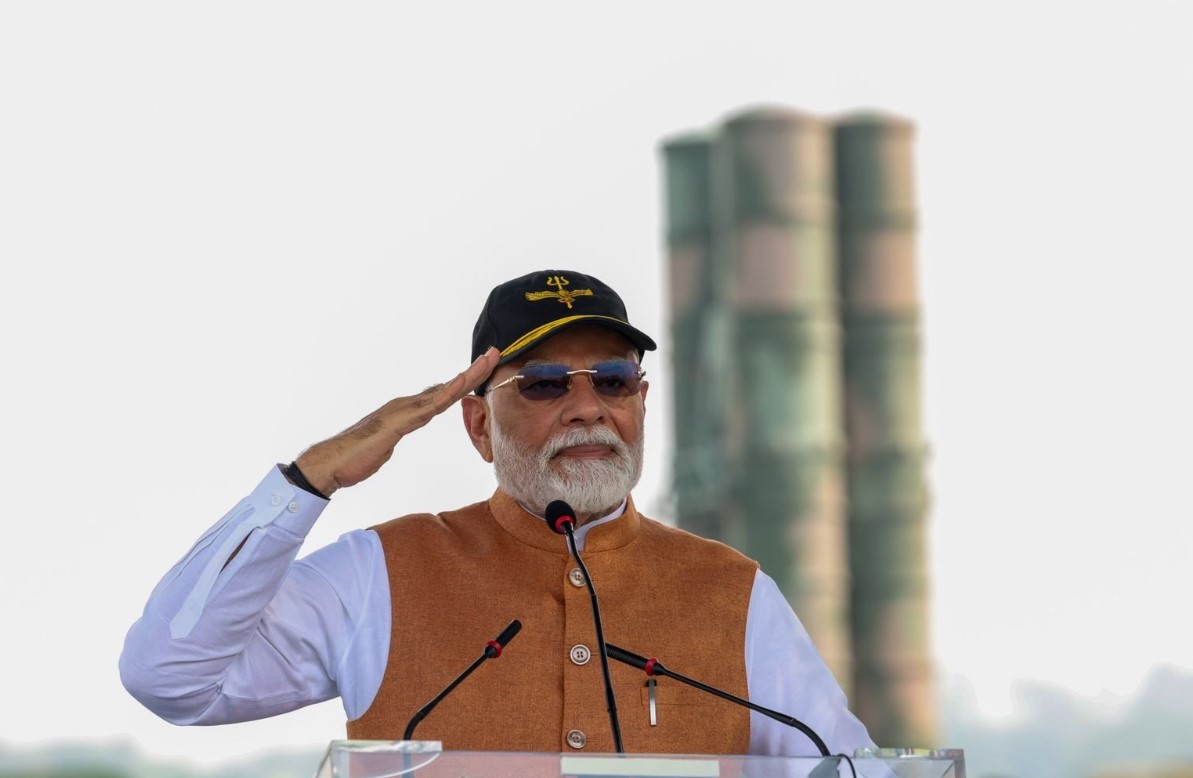
This statement was not immediately negated by PM Modi. However, in his response to the debate on Op Sindoor, in parliament, he clarified that “We had said from day one that our action was non-escalatory. No leader in the world asked us to stop Operation Sindoor.” He added, “On the night of May 9, US Vice President JD Vance tried to talk to me. He tried for an hour, but I was busy in a meeting with the forces. When I called him back, he told me Pakistan was planning a big attack. My answer was that if this is Pakistan’s intention, it will have to pay a heavy price.”
Also, he said, “ham goli ka jawaab gole se denge” (we will reply to a bullet with a cannonball). On May 10, we destroyed Pakistan’s military strength. This was our response and our resolve.”
Upon the cessation of kinetic actions, the PM elaborated that the Pakistani Director General of Military Operations (DGMO) called the Indian DGMO and pleaded for a ceasefire, stating, “Bas karo, bahut maara hai” (please stop the attack; you have hit too hard). The cessation thereafter came into effect from 1700 hours on 10 May 2025, although some drone attacks were launched by Pakistan even after this agreement.
Here, it is important to state clearly that compressed escalation ladders tend to increase the risk of miscalculation.
Technology and Multi-Domain Integration
The operation underscored the importance of networking and technological integration across domains, which comprise manned aircraft, long-range missiles, drones, electronic warfare, cyber capabilities, and space-based ISR.
Stand-off precision enabled effective targeting, limiting collateral damage and reducing risk and escalation potential, creating a paradox of higher lethality at lower political cost.
Information Warfare and Narrative Contestation
Modern conflict extends beyond the battlefield into the realm of perception. India demonstrated message discipline and controlled communication; however, competing narratives remained contested. Pakistan’s ability to project domestic perceptions of success despite setbacks highlights a critical gap between battlefield success and the narrative being conveyed; successful tactical outcomes will not automatically translate into narrative dominance. This is a structural reality that needs to be taken into consideration for the future.
This asymmetry relates to democratic states, which operate within constraints of transparency and credibility, when compared with security-dominated systems, which can shape narratives with greater centralized control. Narrative dominance is therefore a function not only of facts, but of speed, coherence, perception management, and repetition. Future operations will require institutionalized information strategies that integrate diplomacy, effective media engagement, and digital influence, including social media.
Civil-Military Synchronization
Operation Sindoor reflects strong civil-military alignment. Political leadership defined objectives and limits, and the military executed without mission creep, carrying out a successful air campaign and terminating it when the laid-down objectives were achieved.
War is not an end in itself; it is a means to an end, the end being the imposition of political will on the adversary. War, as per Clausewitz, is “the continuation of policy by other means.” The military leadership has to be fully aligned and ‘in-synch’ with the political intent, which is to be achieved through the military’s kinetic actions.
Aerospace Power and Non-Contact Warfare
Aerospace power, and all its constituents in terms of manned aircraft, unmanned drones, space-based sensors, navigation satellites, missiles launched through various platforms, modern precision weapons, electronic warfare systems, tanker resources, networked Air Defence systems, formed the lead element to the military operation, considering the context and content of this operation. This choice offered speed, precision, reach, versatility, and flexibility, enabling India to prosecute the campaign effectively and efficiently, with minimal loss of life and collateral damage.
This, together with cyber and narrative warfare, and the resources of sister services on readiness at the LoC/international border/in the open sea, at action stations, provided a credible and potent shield, ready and capable of taking on any attempt by the adversary to expand the conflict horizontally. A joint service operation, with whole-of-nation support, thus emerged as India’s instrument for effective punitive action and coercion.
The increasing role of drones and missiles in Op Sindoor and modern warfare in general has further reinforced the increasing shift towards non-contact warfare. However, manned and unmanned assets will continue to play complementary roles in the coming decades, as each has its own strengths and challenges that are not entirely replaceable. It is just like a war: it cannot be won through defensive action alone, nor can it be won through offensive action alone. An intelligent mix of offensive and defensive capabilities, based on strategic calculations, is thus the optimum ideal.
Societal Resilience as a Strategic Factor
The Pahalgam attack demonstrated that terrorism seeks to disrupt normal life by attempting to disrupt social cohesion, economic activity, discredit security systems, and thus erode the confidence of the people at large in the security of their lives.
The recovery of tourism, public unity, and the restoration of security protocols underscores the importance of resilience.
Pakistan’s Internal Dynamics and Strategic Behavior
Pakistan’s behavior must be understood in the context of internal instability, economic fragility, and civil-military tensions. Martial law, direct military rule, has been a recurring theme in the history of Pakistan as an independent nation-state. Even during the other times, it has had a history of ‘army-guided’ democracy.
It is evident that the reasons for the breakaway of the eastern wing of Pakistan in 1971 have not been correctly disseminated to the public. The army continues to stay central in the governance structures, by continuing to play the ‘external bogey’ card to keep the citizenry engaged but distracted from the real issues confronting Pakistan. External confrontation often serves as a relief valve for public discontent and as a tool for internal consolidation.
The army neither has the bandwidth to tackle the state’s structural economic framework nor the solution to ethno-religious issues; resolving these two issues can bring peace and stability to the country by improving the lives of its citizens.
This suggests a recurring logic: elevating external threats reinforces the military’s centrality within Pakistan’s political system. Consequently, actions driven by internal legitimacy imperatives may not always respond predictably to external deterrence.
Joint Planning, Operations: Urban and Precision Warfare
Improved ISR, joint planning, and operations across all arms, and target-to-weapon matching enabled precision strikes through multiple multi-domain launch platforms in complex operating conditions, with minimal collateral damage.
Joint planning and operations give one the flexibility to deploy the most appropriate weapon required to neutralize the target. Precision in dense environments is critical for escalation control and legitimacy.
Indigenous Capability and Self-Reliance: Psychological and Deterrent Impact
Growing indigenous capabilities in ISR, including space-based assets, missiles, and launch platform integrations, munitions, networking of legacy and modern systems, and modern command systems, enhanced operational autonomy.
The operation altered expectations by demonstrating India’s capability and, more importantly, its willingness to deploy that capability to take punitive action and coercive attacks on terrorist and other military targets when the need arose.
However, it is important to emphasize that deterrence remains dynamic and subject to the adversary’s adaptation over time.
Broader Strategic Implications
Operation Sindoor reflects the normalization of limited conventional war, institutionalization of escalation ladders, and evolution of India’s strategic culture towards a controlled and escalatory response.
Operation Sindoor is a loud and clear strategic message that cross-border terrorism will invite a calibrated and escalatory response, in case the military reacts, like it did this time. Next time, it is expected to follow the classic air campaign of neutralizing the air defenses through SEAD/ DEAD, before undertaking to neutralize the terrorist infrastructure, through the length and breadth of Pakistan.
Lessons Learnt
- The nexus between terrorist modules like LeT and JeM and the Pakistan army was confirmed by the opening strikes, wherein India took a calculated risk to prove a point that terrorist infrastructure is the Pakistan military’s weapon of choice, because of its deniability. India may have suffered some setbacks, as per initial reports that are unconfirmed, but the purported losses proved a point that can no longer be denied, as has been the history with the dossiers supplied by India to Pakistan on numerous previous such events, including the deadliest terrorist attack of 26 November 2008.
- Credible conventional options below the nuclear threshold exist and help enhance deterrence stability. Restraint, when paired with credible capability, enhances both legitimacy and deterrence.
- Escalation dominance requires clarity of objectives and credible termination planning.
- Precision, networking, and multi-domain integration are decisive enablers in limited war.
- Although perception management does not directly contribute to success in actual kinetic operations, Op Sindoor has once again proved it remains critical. Operations are classified and cannot be discussed openly. The enemy uses narratives and information warfare to shape the digital content that is now readily available to every citizen. Strategic success is equally dependent on information warfare, narrative dominance, and capture of the digital medium.
- Unity of purpose and clearly defined, stated objectives across political and military domains are essential in a limited war.
- Air power will continue to be central to short-duration, high-intensity conflicts. Also, both manned and unmanned elements, in both offensive and defensive roles, will have to be optimally deployed and employed during peace and in conflict.
- Societal resilience is a significant requirement during periods of disruption caused by the enemy through terrorism or by actions that are likely to cause internal conflict. Deterrence includes plans to deny the adversary psychological and societal impact.
- Pakistan’s internal dynamics in terms of economic fragility, ethnic tensions and instability, religious divides, and dominance of the army in the governance structures, directly or indirectly, have a major impact on its external behavior. Internal dynamics significantly shape Pakistan’s behavior, and this in turn complicates deterrence.
- Joint planning and operations are critical to effective and efficient operations, and thus to success.
- Self-reliance is an absolute must, as it strengthens the capability and capacity to undertake operations when required and to deter during peace. It is also a fact that deterrence requires continuous reinforcement.
- Challenges include sustainability, adversary adaptation, and the risk of normalizing cross-border strikes. Limited war offers management tools, not permanent solutions.
Conclusion
Operation Sindoor marks a doctrinal watershed in India’s military strategy. It was a whole-of-nation approach, comprising political, diplomatic, trade, and military components.
While the other actions were initiated immediately, the military action was deferred to give time for communications of political intent to the military leadership at the highest levels, translating the political intent into actionable military targets, joint planning, target selection, weapon-to-target matching, and planning for the calibrated responses to cater to the adversary’s actions thereafter.
Considering all of the above, airpower was the natural choice to lead offensive operations, with the other services providing platforms, where possible and as needed, to launch weapons and to secure the land and surface in defensive positions along the LC/IB and in the open seas. The offensive airpower actions were adequately complemented by the army and navy deployed in positions that enabled offensive and defensive operations, as dictated by evolving operations and enemy reactions.
It demonstrates the viability of punitive action and calibrated coercion through conventional military means under a nuclear overhang, but short of full-fledged conventional war, integrating precision, restraint, and strategic signaling. Its strategic significance lies in the template it establishes and the redrawing of the red lines: terrorism will attract a military response across the LC and IB, if needed.
Military success must be complemented by narrative dominance, information warfare, and control of the digital spectrum, societal resilience, and politico-military coherence.
It is important to remember that deterrence is not static but adaptive.
Ultimately, the true test lies not only in imposing costs on the adversary but in sustaining national confidence and denying terrorism its intended impact.
Operation Sindoor reflects India’s shift towards a more comprehensive strategic posture.
- OPED by Wing Commander (R) JP Joshi, Indian Air Force
- THIS IS AN OPINION ARTICLE. VIEWS PERSONAL OF THE AUTHOR