The Shenyang J-16 is often portrayed by China-based bloggers as a powerful underdog compared to the J-20 and J-10C jets. Interestingly, the jet entered “beast mode,” showcasing its growing offensive capabilities.
Ordnance Science and Technology, a popular Chinese military magazine, published an analysis earlier this month along with a photo of a PLAAF (People’s Liberation Army Air Force) J-16 fighter jet with a massive loadout.
“This J-16 sortie used 10 external-weapon hardpoints, already approaching the extreme-load ‘beast mode’, forming a sharp contrast with the restrained loadout methods shown previously,” the article stated, as reported by South China Morning Post. The photo, according to the journal, was first released by a Chinese aviation oversight authority and then rapidly circulated on global open-source intelligence networks in May 2026.
Notably, ”Beast mode” in military aviation refers to a fighter jet’s maximum payload or an extreme weapons loadout, which essentially maximizes the aircraft’s single-sortie firepower and sustained combat capability.
The analysis published in the Chinese journal stated that the photo showed a J-16 carrying two PL-10 short-range missiles and eight PL-15 medium-range beyond-visual-range missiles. This significantly contrasts with prior restrained loadouts comprising just two medium-range missiles and two dogfighting missiles, with rare cases featuring four medium-range missiles and two dogfighting missiles.
However, it is not uncommon for Chinese-based publications and military bloggers to publish photos of cutting-edge fighter jets in beast mode.
Earlier, for example, the J-20 Mighty Dragon stealth fighter was seen in ‘beast mode’ carrying external PL-15 air-to-air missiles, showcasing its expansive firepower in February 2025, as EurAsian Times reported at the time. Similarly, the J-10CE made an appearance in beast mode at the 2024 Zhuhai Air Show.
Looks fine (could be Psed also)
But here is a better shot of J-20 in beast mode with 14/16 PL-15s https://t.co/wuO84EGKOz pic.twitter.com/FNPHDULRdM
— Hûrin (@Hurin92) February 11, 2025
Although the J-16 was seen with a maximum loadout, it lacked any ground-attack weapons in its popular beast mode configuration. “The J-16 in this photo did not carry any ground-attack or anti-ship missiles, nor was it fitted with external fuel tanks, the analysis outlined. “It was entirely for air combat,” it emphasized.
Interestingly, the Chinese journal drew parallels between the J-16’s heavy “beast mode” loadout and established US and Russian Combat Air Patrol (CAP) tactics.
For perspective: US fighter jets like the F-15 and, to some extent, the F-16 and F/A-18 in certain configurations have long operated with a maximum number of air-to-air missiles, such as the AIM-120 AMRAAMs and AIM-9 Sidewinders. Similarly, Russian Su-35s or Su-30s have been spotted carrying R-77 and R-73 missiles during similar combat air patrols.
These fighter jets often fly long-duration missions to maintain a persistent presence in a region, which requires a high missile capacity to engage targets without returning to base.

The Chinese article argued that the beast-mode appearance of Chinese fighter jets indicated that the PLAAF had begun employing these combat air patrol tactics. “Relying on the J-16’s long range and large weapons payload, fighter formations could remain stationed for long periods over far-sea airspace to maintain air superiority,” the analysis noted.
The EurAsian Times understands that this signals growing confidence in PLAAF’s ability to project power farther from its bases, particularly amid sustained tensions with the United States in the Indo-Pacific and Beijing’s military expansion into the Western Pacific.
The J-16 is frequently deployed for interception and is extensively used in defensive roles. However, military analysts believe that flying the J-16 in beast mode signals a doctrinal shift toward proactive, sustained air control rather than just defensive missions.
The J-16 already has 12 hardpoints, and combining these with heavy payloads gives exceptional firepower, as these jets can use composite racks for dense missile carriage. Moreover, the J-16 is a twin-seat fighter jet that accommodates a pilot and a Weapon Systems Officer (WSO), improving overall situational awareness, missile management, and coordination on a complex battlefield.
The presence of eight PL-15 missiles is particularly noteworthy, as they are combat-proven, active-radar-guided, long-range air-to-air missiles that use a dual-pulsed solid-propellant rocket and an AESA radar. The missile is known for combining speed with maneuverability and is purported to have a 200-300 kilometer range, allowing the platform to fire from a standoff distance without putting itself at risk. China has developed a host of long-range missiles, including the PL-15, PL-16, PL-17, and PL-21.
A J-16 in beast mode can engage multiple targets at long range with PL-15s, enabling its “first shot, first kill” efforts and saturation attacks against adversarial fighter formations and force multipliers, including early warning aircraft and refuellers.
Experts assess that heavily armed fighters, such as the J-16s, can overwhelm defenses through sheer missile volume. The J-16, with its maximum loadout, could function as a missile truck in a networked combat environment, communicating with stealth fighters such as the J-20, multirole jets such as the J-10C, and AWACS (Airborne Warning and Control System) and EW (Electronic Warfare) aircraft.
The J-20 is a stealthy spearhead that will penetrate defended airspace, gather intelligence, and clear paths using long-range missiles in combat, whereas the J-10C is an agile, high-volume fighter that will handle shorter-range intercepts, conduct defensive patrols, and perform multirole missions efficiently. Meanwhile, the J-16 is the heavy workhorse and “beast mode” powerhouse that will provide massed firepower, standoff strikes, and sustained air superiority. Together, they will enable “system-of-systems” warfare.
However, maximizing the J-16’s loadout has unavoidable downsides. For example, heavy external loads dramatically increase drag and weight, leaving little room for external fuel tanks, as seen in the last photo. And without external fuel tanks, the combat radius drops.
A heavy missile load pushes the aircraft closer to performance limits, and a reduced thrust-to-weight ratio and higher wing loading are believed to degrade acceleration, climb rate, and sustained turn performance. Moreover, the jet becomes less agile in within-visual-range (WVR) dogfights when it is operating in beast mode.
On top of that, external carriage of missiles on multiple hardpoints massively increases the radar cross-section, making the jet more detectable.
Despite all that, the J-16 flying in beast mode also aligns with the growing utility of the J-16 within the PLAAF and the assertion that it is the best flanker in the world.
J-16: Best Flanker In The World?
The J-16 is a multirole fighter derived from the Russian Sukhoi Su-27 through the licensed J-11 series, representing a significant advancement in Chinese military aviation by blending indigenous technology with a proven airframe. It is capable of air-to-air combat, precision strikes, electronic warfare (EW), and suppression of enemy air defenses (SEAD).
It is powered by two Chinese-made WS-10B turbofan engines and features an Active Electronically Scanned Array (AESA) radar, providing superior detection and tracking capabilities. Additionally, the Chinese J-16 features a glass cockpit design influenced by the J-20 stealth fighter, along with an updated cockpit with a helmet-mounted display (HMD) to enhance pilot situational awareness.
Notably, the aircraft also uses a dark grey stealth paint and radar-absorbent materials (RAM) to lower its radar cross-section and increase its survivability.
The J-16 also features electronic countermeasures (ECM), missile approach warning systems (MAWS), and chaff/flare dispensers. China regularly deploys the J-16 to conduct high-risk interceptions, and in several cases, the aircraft has launched flares into the path of foreign aircraft in international airspace, as reported by the EurAsian Times in the past.
Intriguingly, Chinese experts have described the J-16 as superior to the J-10C.
“In terms of performance, the J-16 is superior to all types of aircraft I have flown. Speaking of the control capacity of the aircraft, the J-16 is a 3.5 generation plane with huge breakthroughs in radar and fire control systems in comparison with previous aircraft,” Wang Songxi, a flying instructor at the People’s Liberation Army Northern Theatre Command Air Force told state-owned Global Times in 2021. He further noted that “the J-16 and the J-10C had to call it a draw,” during a training dogfight, but the J-16 had the upper hand “because it has two engines and two pilots.”
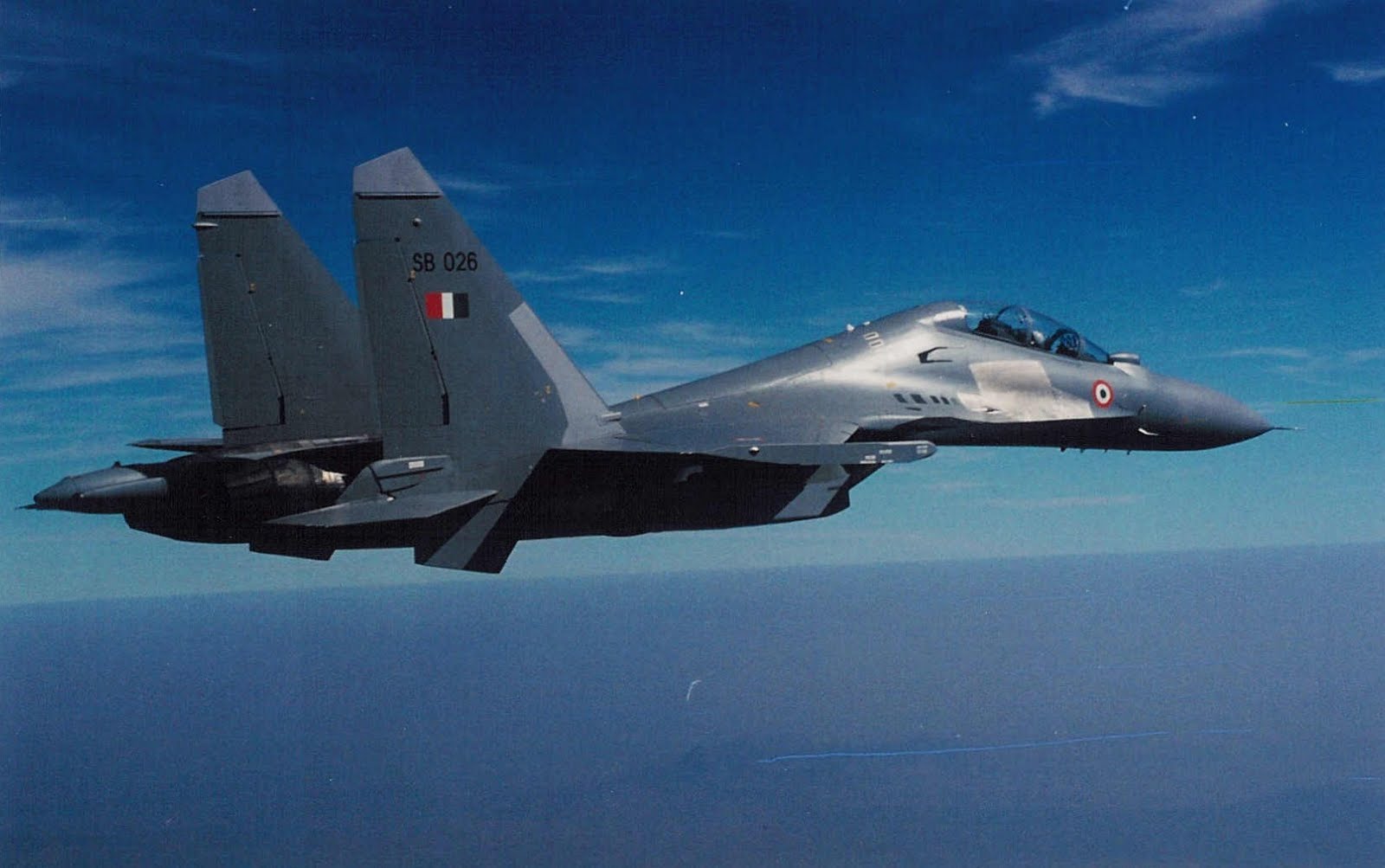
Last year, a Chinese article drew parallels between the J-16 and the Indian Su-30MKI, arguing that the J-16 was a superior Flanker.
“In terms of stand-alone performance, the J-16 also has obvious advantages. First of all, the avionics of the J-16 are very powerful. The Su-30MKI is equipped with a passive phased-array radar, while the J-16 is equipped with a more advanced active phased-array radar. The latter is technologically advanced and has superior radar performance. In addition to radar, the J-16’s onboard computer, photoelectric detection system, data chain, and other avionics equipment are also more advanced than India’s Su-30MKI,” it stated.
Furthermore, Chinese military experts emphatically stated that the J-16 surpasses the Russian Su-30 and Su-35 in avionics, radar, and missile technology, emphasizing China’s shift from reverse engineering to innovation. The assertion is somewhat (but not fully) validated by other authorities—the UK-based think tank, the Royal United Services Institute, called the J-16s “China’s most capable multirole and strike aircraft.”
In addition to positioning the J-16 as a superior flanker, Chinese analysts and military bloggers pit the Chinese aircraft against the French Rafale. Last year, the PLAAF simulated a high-stakes air battle pitting eight of its advanced J-16 multirole fighters against six Rafale jets, as EurAsian Times reported at the time.
It is well known that the J-16 has superior payload capacity and range, and it has a dedicated electronic warfare variant, known as the J-16D.
According to previous reports in Chinese state media, the J-16 simultaneously forced two foreign stealth fighter jets to retreat by locking them. Although the report did not specify which foreign stealth aircraft it was referring to, only two aircraft that met the description were the F-22 Raptor and the F-35 Lightning II. However, there is no independent corroboration, and these reports remain unconfirmed to date.
In summary, it is safe to say that the J-16 is the cornerstone of the PLAAF, a role only further reaffirmed with its latest beast avatar.
- Contact the author at sakshi.tiwari13 (at) outlook.com
- Follow EurAsian Times on Google News