After China vehemently denied supplying weapons to Iran, a new report suggests that Chinese satellites sold to Iran may have helped the Islamic Republic launch precise attacks on US military assets across the Gulf region.
Citing leaked Iranian military documents, the Financial Times reported that Iran allegedly acquired a Chinese spy satellite that helped in targeting US bases in West Asia during the latest war. The satellite was reportedly purchased by Tehran in secret in 2024, well before “Operation Epic Fury,” which the US launched in February 2026.
According to the report, the Islamic Revolutionary Guard Corps’ Aerospace Forces purchased the TEE-01B satellite after it was launched into space by the Chinese company Earth Eye Co in 2024.
The report, which cited time-stamped coordinate lists, satellite photos, and orbital analysis, also stated that Iranian military authorities ordered the satellite to monitor key US military locations. The images were obtained in March, both before and after missile and drone attacks on certain sites, the report added.
The deal allegedly gave the IRGC access to commercial ground stations run by Emposat, a Beijing-based supplier of data services and satellite control with a network spanning Asia, Latin America, and other places, the report stated, adding that the satellite took images of Prince Sultan air base in Saudi Arabia on March 13, 14, and 15.
The report stated that the satellite also kept vigil on spots near the US Fifth Fleet naval station in Manama, Bahrain, and Erbil airport in Iraq, as well as Muwaffaq Salti Air station in Jordan, during periods when the IRGC attacked those installations.
Notably, the EurAsian Times could not independently verify the FT claims, and neither the White House, China, nor Iranian authorities have yet acknowledged them. However, we understand that Iran has limited indigenous satellite reconnaissance capabilities and therefore relies on commercial sources and open-source intelligence.
Moreover, this is not the first time that the role of a Chinese company assisting Tehran with satellite intelligence has come to light publicly.
Earlier, reports stated that a Chinese-affiliated company provided satellite imagery before an Iranian strike on Prince Sultan base on March 27, 2026, which destroyed a US E-3G, damaged many KC-135 tanker aircraft, and injured US personnel. Some US lawmakers, including House Select Committee on China Chairman John Moolenaar, have now raised alarms that this imagery likely provided actionable targeting data.
🇺🇸🇨🇳🇮🇷⚡️- In the Iran war, Chinese firm MizarVision used AI, satellite imagery, and flight and ship tracking data to map US carrier movements, aircraft concentrations, air defense configurations, and pre-strike buildup. The company holds certifications tied to China’s military… pic.twitter.com/wHCRvhLKIR
— Rerum Novarum // Intel, Breaking News, and Alerts (@officialrnintel) April 11, 2026
There have been reports that a Chinese company, MizarVision, which specializes in geospatial intelligence, is tracking US military ships and aircraft in the region. Reports at the time stated that MizarVision was posting satellite photos of US military operations on social media before the war, including the positions of combat and support aircraft as well as the movements of naval vessels.
Several facilities and assets, such as the Al-Udeid air base in Qatar, whose satellite images were posted by MizarVision, were targeted by Iran in missile and drone strikes.
However, it is pertinent to note that MizarVision does not operate its own satellites but leverages high-resolution commercial providers, including Western ones. This imagery is then combined with AI-driven analysis and public sharing on platforms like Weibo and X, which turns ‘open-source’ data into near-real-time intelligence.
In addition, some reports during the war suggested that Iran could possibly be making use of China’s satellite navigation network—Beidou—to accurately target US and Israeli targets in the region. In an interview with France’s independent Tocsin podcast last month, former French foreign intelligence director Alain Juillet stated that Iran’s targeting has greatly improved since the 12-day conflict with Israel in June, suggesting that Iran has probably obtained access to China’s BeiDou satellite navigation system.
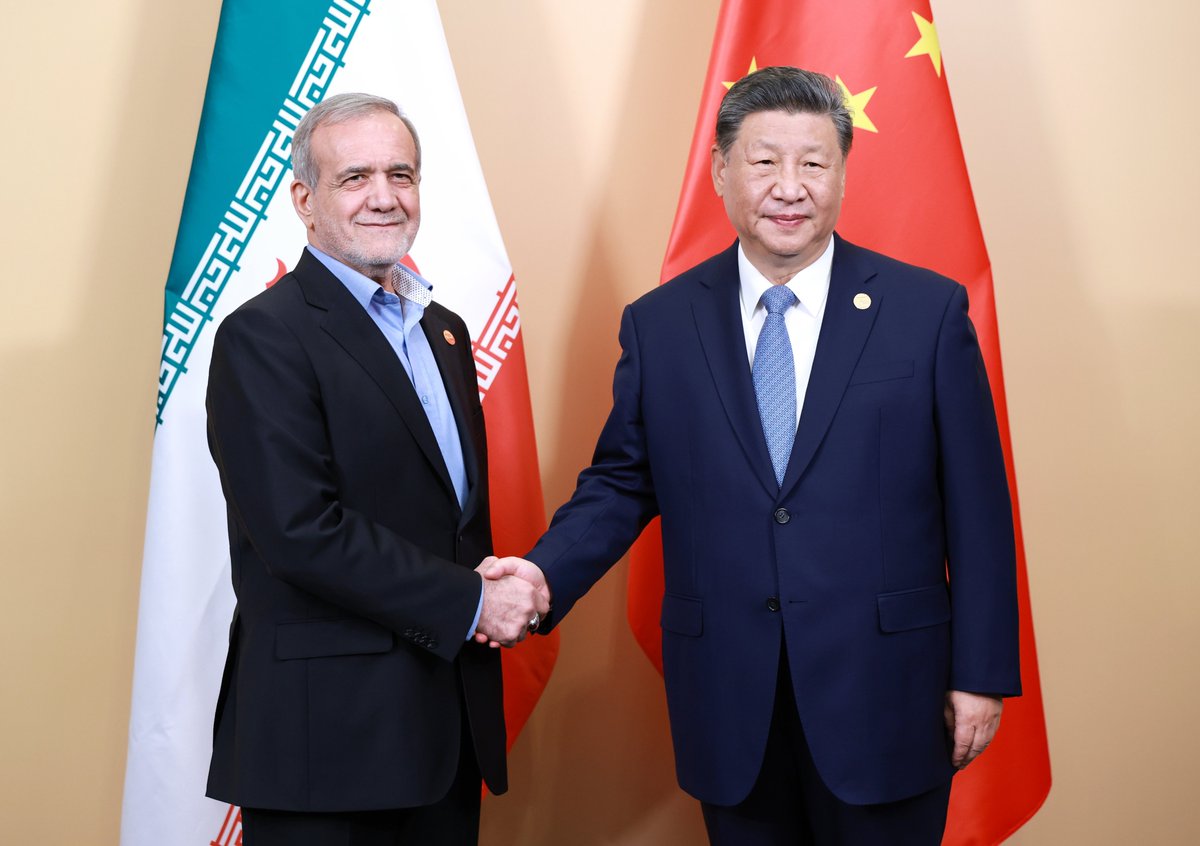
Meanwhile, China has consistently maintained that any such imagery is commercial or open-source and that private companies handle their own business without state orchestration for wartime targeting.
Russia was also earlier accused of providing crucial satellite intelligence on the locations and movements of American troops, ships, and aircraft, derived from Moscow’s sophisticated constellation of overhead satellites.
Iran’s use of commercial satellite imagery against the US appears to have triggered a rethink in the United States, with the commander of US Space Command stating that the Pentagon will need to adapt. “We have to recognize that the rest of the world can now see the entire planet transparently and almost 24/7, and so we have to be able to operate in that environment successfully,” Gen. Stephen Whiting, the head of U.S. Space Command, told reporters during the Space Symposium conference.
Whiting admitted that the battle has shown him that the US military’s space assets remain important targets during major operations and that even opponents with less equipment can still cause harm using commercial satellite imagery. “Every country, just about today, can somehow access space imagery, which then gives them an insight into what’s going on in the battlefield,” Whiting said. “I think we need to be cognizant of that.”
China’s Role during the India-Pakistan Conflict
India launched “Operation Sindoor” against terror infrastructure in Pakistan on May 7, 2025, to avenge the Pahalgam terror attack. Ahead of the operation, China reportedly helped Pakistan adjust its satellite coverage over India as part of broader efforts to enhance Pakistan’s situational awareness.
Based on this satellite-derived intelligence, China assisted in realigning and reorganizing Pakistan’s radar and air defense systems. This optimized detection of Indian troop movements and aerial deployments potentially allowed Pakistan to better anticipate and respond to Indian actions on the fateful day and throughout the four-day war.
In fact, Pakistan reportedly received real-time ISR feeds, targeting data, and live inputs from Chinese satellites, which purportedly improved Pakistan’s battlefield transparency, targeting accuracy, coordination, and overall ISR capabilities, helping it “punch above its weight” in areas like communications, positioning, navigation, and timing (PNT).
Indian Army Deputy Chief Lt Gen Rahul R Singh publicly stated that Pakistan received “live inputs from China” during the conflict, including on Indian positions, and framed the support as part of deeper Sino-Pakistani collusion.

China Under Scanner For Supplying MANPADS to Iran
Earlier this month, a US intelligence assessment indicated that China was poised to transfer new air defense systems to Iran in the next several weeks, CNN reported. The assessment also highlights the possibility that Iran, with the assistance of international allies, was probably taking advantage of the ceasefire to restock certain weaponry.
The intelligence report also apparently noted that Beijing is attempting to route the shipments through third countries to conceal their true origin.
The sources cited by CNN at the time said that Beijing was preparing to transfer shoulder-fired anti-air missile systems called MANPADs, which presented an asymmetric threat to low-flying US military aircraft during the five-week conflict and may pose a threat again if the truce breaks down.
When probed on the matter, US President Donald Trump said that Beijing would suffer repercussions if it transferred weapons to Tehran. “If China does that, China will have big problems, OK?”
The report stirred considerable controversy, given that China helped broker a ceasefire between the warring parties. Moreover, it could come up in conversation and serve as a dampener during the summit between the US and Chinese Presidents, scheduled for next month.
However, China has flatly rejected these claims.
“China has never provided weapons to any party to the conflict; the information in question is untrue,” a spokesperson for the Chinese Embassy in Washington said soon after the allegations appeared. “As a responsible major country, China consistently fulfills its international obligations. We urge the U.S. side to refrain from making baseless allegations, maliciously drawing connections, and engaging in sensationalism; we hope that relevant parties will do more to help de-escalate tensions.”
Later, the Chinese Foreign Ministry Spokesperson Guo Jiakun described the reports as “baseless smears” and “groundless smears or malicious associations.”
- Contact the author at sakshi.tiwari13 (at) outlook.com
- Follow EurAsian Times on Google News