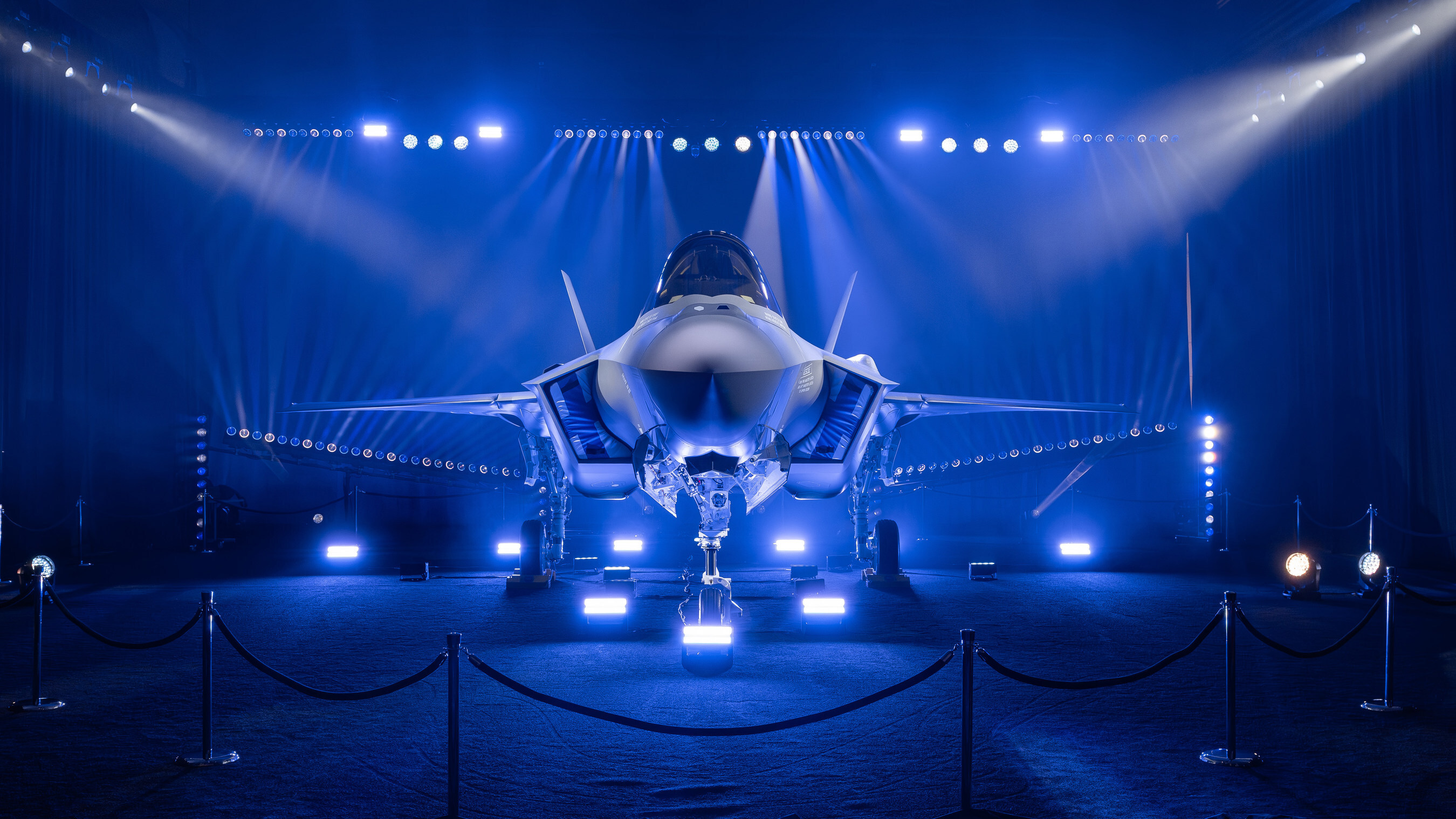
Finland’s F-35A Lightning II stealth fighters are set to gain a powerful new air-to-ground capability with the addition of Raytheon’s GBU-53 SDB II StormBreaker glide bombs.
The Finnish Ministry of Defense (MoD) announced on June 18 that it will buy GBU-53 SDB II glide bombs from the United States for its F-35A fighter jets.
“The Finnish Air Force F-35A fleet’s air-to-ground weaponry will be supplemented with SDB II glide bombs,” states an official press release issued by the Finnish Defense Forces Logistics Command.
Finland signed a $9.4 billion deal for 64 F-35A Lightning II stealth fighters to replace its aging F/A-18 Hornet fighters. The Finnish Air Force is expected to receive the jets starting later this year, with an initial operating capability (IOC) targeted for 2027.
“The precision-guided glide bombs now being procured will supplement our previous order as part of the F-35 weapon package. The SDB IIs are technologically advanced and will give the F-35 armament capabilities that the Finnish Air Force did not previously have. The ability of the glide bomb to strike moving targets also in challenging weather conditions will allow using the F-35 effectively when contributing to Multi-Domain Operations across all defence branches,” the Director of the F-35 Programme, Colonel (ret.) Henrik Elo was quoted as saying in the press statement.
Notably, the purchase is in line with the country’s effort to modernize its military, which received a fresh impetus when war returned to Europe with Russia’s full-scale invasion of Ukraine in February 2022.
Before the SDM-II, Helsinki has reportedly purchased the AIM-120D-3 AMRAAM (Advanced Medium-Range Air-to-Air Missiles), AGM-88G AARGM-ER (Advanced Anti-Radiation Guided Missile – Extended Range, JDAM kits, GBU-39 Small Diameter Bomb I (SDB I), and JASSM-ER (AGM-158B-2) missiles, to name a few. Finland is procuring these weapons in phases, optimizing numbers and types as the F-35s arrive.
The purchase of GBU-53 SDB II is rather noteworthy because these bombs cause widespread destruction with minimum risk to the launch platform.
Unlike conventional unguided “dumb” bombs, which follow a steep ballistic trajectory, glide bombs are a sort of stand-off precision-guided munition that uses aerodynamic features, such as pop-out folding wings and control fins, to glide toward a target after being launched from an aircraft.
Because of their design, they can be launched from considerable distances, allowing the launching aircraft to hit the target precisely while staying out of range of hostile air defenses.
Notably, these bombs have been widely used by Russia against Ukraine. It has reportedly revamped its old Soviet stockpiles by upgrading heavy explosive dumb bombs with Unified Gliding and Correction Module (UMPK). This upgrade includes fold-out wings and a satellite navigation system that transform these bombs into guided munitions, enabling them to glide to their targets, as previously explained by the EurAsian Times.
Glide bombs are extremely destructive because they are very difficult to intercept. They have no engine or rocket motor after release and produce no heat signature, which means heat-seeking missiles cannot lock onto them. Moreover, they are very small, making them harder for AD radars to detect.
Once released at high altitude, they accelerate quickly during their glide phase and reach the target area quickly, leaving defenders with little reaction time. Ukrainian officials have repeatedly noted that glide bombs pose the most serious threat to their troops as they degrade entrenched positions on the front line.
Russia typically uses the Su-34 Fullback fighter-bomber to launch the bombs at a stand-off distance.
What Is The GBU-53 SDB II?
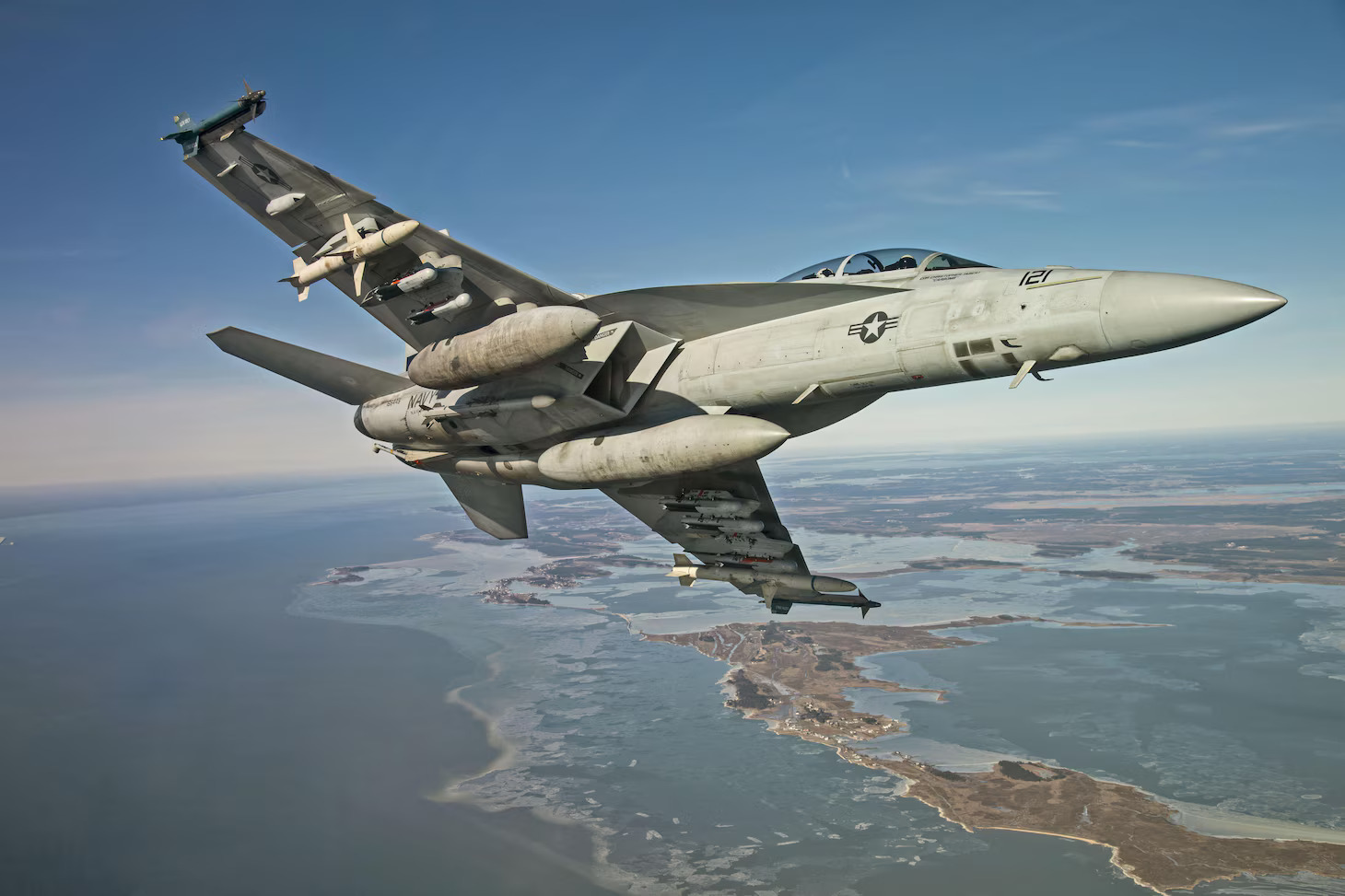
The GBU-53 SDB-II, also known as Stormbreaker, is an air-launched glide bomb manufactured by Raytheon Missile Systems for various multirole aircraft in the American inventory, especially the F-15E Strike Eagle, the F/A-18E/F Super Hornet, and the F-35 fighter jet.
According to its manufacturer, Raytheon, it bridges the gap between smaller precision munitions and larger bombs by emphasizing high carriage capacity, adverse-weather performance, and the ability to hit moving targets.
The GBU-53, which weighs about 93 kg and is roughly 70 inches long, has a multi-effects warhead that increases lethality against a variety of targets. The weapon effectively eliminates threats on the battlefield with each attack thanks to its combination of blast, fragmentation, and shaped-charge capabilities.
The pop-out folding wings of the munition enable it to glide up to 60 nautical miles (about 111 kilometers) against stationary targets and around 40 nautical miles (about 74 kilometers) against moving ones, making it an effective standoff weapon.
Notably, the bomb’s most unique feature is its tri-mode seeker system. It integrates an infrared seeker, a millimeter-wave active radar, and semi-active laser guidance, providing all-weather performance through smoke, fog, or dust, and ensures precise target acquisition even in the most demanding conditions.
StormBreaker can use an onboard datalink to communicate with the aircraft it is carried on. The two-way datalink enables the weapon to obtain updated target coordinates while in mid-flight. This feature enhances flexibility and efficacy in dynamic operating environments, making it easier to make real-time adjustments to mission objectives.
The missile’s network-enabled capabilities facilitate seamless cooperation between ground and aerial controllers, improving mission coordination, situational awareness, and precise guidance. This makes the GBU-53 particularly effective against relocatable or maneuvering targets, such as vehicles, small boats, or mobile air defenses, where traditional GPS-only weapons might struggle.
Raytheon describes the StormBreaker as the “ultimate air dominance weapon,” designed to meet the needs of the United States and its allies.
Several countries, including Australia, the UK, Belgium, Canada, Norway, Japan, Italy, and Germany, are acquiring the missile.
The GBU-53 SDB II has seen limited but notable combat use. The US military deployed the bomb during its offensive against the Yemen-based Houthis group in 2025.
In fact, one of these bombs had appeared in a near-intact state in Yemen at the time, as the EurAsian Times had reported. The weapon was seen with its pop-out wings, half-deployed, and analysts speculated that it may have failed to detonate due to the sand.
Finland will benefit significantly from acquiring the GBU-53 StormBreaker (SDB II) glide bomb as it will directly enhance the capabilities of its new F-35A Lightning II fighter fleet in a high-threat environment near Russia.
The Finnish F-35A jets will be able to engage targets from a safer distance, staying outside many enemy air defense zones.
This is crucial given Finland’s long border with Russia and the need to counter Russia’s advanced air defenses and mobile forces amid heightened tensions.
The compact size of the SDB II will allow the Finnish F-35s to carry large numbers internally and externally, enabling one aircraft to strike multiple targets per sortie, increasing efficiency and reducing exposure. This will support “mass precision” tactics, which are valuable for overwhelming defenses or hitting dispersed targets.
Therefore, it is safe to say that integrating the GBU-53 SDB II will enhance the lethality of Finland’s newest and most advanced fighter jet as the country builds the capability amid enhanced tensions between NATO and Russia.
- Contact the author at sakshi.tiwari13 (at) outlook.com
- Follow EurAsian Times on Google News