Starbucks Korea has removed its chief executive after a massive backlash over a “Tank Day” tumbler campaign launched on the anniversary of the Gwangju massacre, the company announced on Tuesday.
The commotion centered on the company’s use of the words “Tank Day” to promote a series of coffee cups known as “Tank tumblers”, which were launched on May 18 — the anniversary of a deadly 1980 pro-democracy uprising.
Son Jung-hyun, head of Starbucks Korea, has been dismissed over the controversy, a company representative confirmed to AFP on Tuesday. The “Tank Day” wording drew widespread criticism as it evoked the military vehicles used to crush protesters during the 1980 Gwangju uprising, which marked its 46th anniversary.
The agitations, a defining moment in South Korea’s democratic struggle, saw students and civilians rise up against military rule before soldiers violently suppressed the movement. Official figures record 165 civilians killed, with 65 listed as missing and 376 others later dying of injuries, though many believe the true toll was as high as 2000.
President Lee Jae Myung, who attended the anniversary commemorations, condemned the promotion, saying it had “mocked” the victims. “I am outraged by this inhumane and disgraceful conduct, a profiteering stunt that denies the values of the South Korean community, fundamental human rights, and democracy,” he wrote on X on Monday.
The decision to remove Son was taken by Shinsegae Group, which operates the Starbucks chain in South Korea.
Starbucks Korea issued a formal apology on Monday. “We sincerely bow our heads in apology to the spirits of May 18,” it said. “We recognized that wording associated with our online Tumblr sales promotion had been used in a highly inappropriate manner,” it added.
The company also pledged to strengthen “historical awareness and ethical standards” among employees through training to prevent similar incidents.
Gwangju Uprising
The Gwangju Uprising was a pro-democracy movement that exploded in Gwangju in May 1980, and is remembered as one of the most haunting and defining chapters in South Korea’s journey from dictatorship to democracy.
In the 1970s, South Korea was ruled by President Park Chung-hee, who seized power in 1961 via a military coup. His authoritarian Yushin Constitution of 1972 gave him sweeping powers, crushing political opposition, restraining the press and universities, while pushing rapid industrial development at the cost of civil liberties.
Park’s assassination by his own intelligence chief raised hopes of democratic change under interim leader Choi Kyu-hah. Students, opposition politicians, and citizens openly called for direct presidential elections and an end to martial law.
However, the hopes were destroyed when General Chun Doo-hwan staged a coup on December 12, 1979. By April 1980, Chun had extended his control over the intelligence agency. He later imposed a full-scale martial law, shut down universities, banned political activity, and apprehended dissidents.
The move ignited massive protests across the country.
Gwangju had long harbored deep resentment toward the Seoul-dominated regimes. On the morning of May 18, around 600 students at Chonnam National University gathered to protest the campus closure and martial law. Paratroopers were dispatched to quell the protests, and they brutally crushed them.
Within days, other citizens joined the students in massive numbers and seized weapons from police stations and officials. For several days, civilians controlled large parts of the city, demanding an end to martial law and Chun’s resignation.
On May 27, the military launched a ruthless assault using tanks, helicopters, and special forces. The city was seized quickly amid reports of a brutal crackdown.
The Chun regime initially reported around 144-165 civilian deaths. Independent estimates and later research put the toll far higher — between 600 and more than 2,000 killed, with thousands more injured, arrested, or tortured.
The government branded the events a “communist-inspired riot” and enforced a strict media blackout. The full horror only emerged later through smuggled photographs, survivor accounts, and underground reports.
The Gwangju Uprising became a trigger for South Korea’s democracy movement. It helped fuel the massive June 1987 protests that finally forced the ruling camp to accept direct presidential elections. In later years, Chun and his successor Roh Tae-woo were convicted for their roles in the suppression (though later pardoned). The event was officially recognized as a pro-democracy movement.
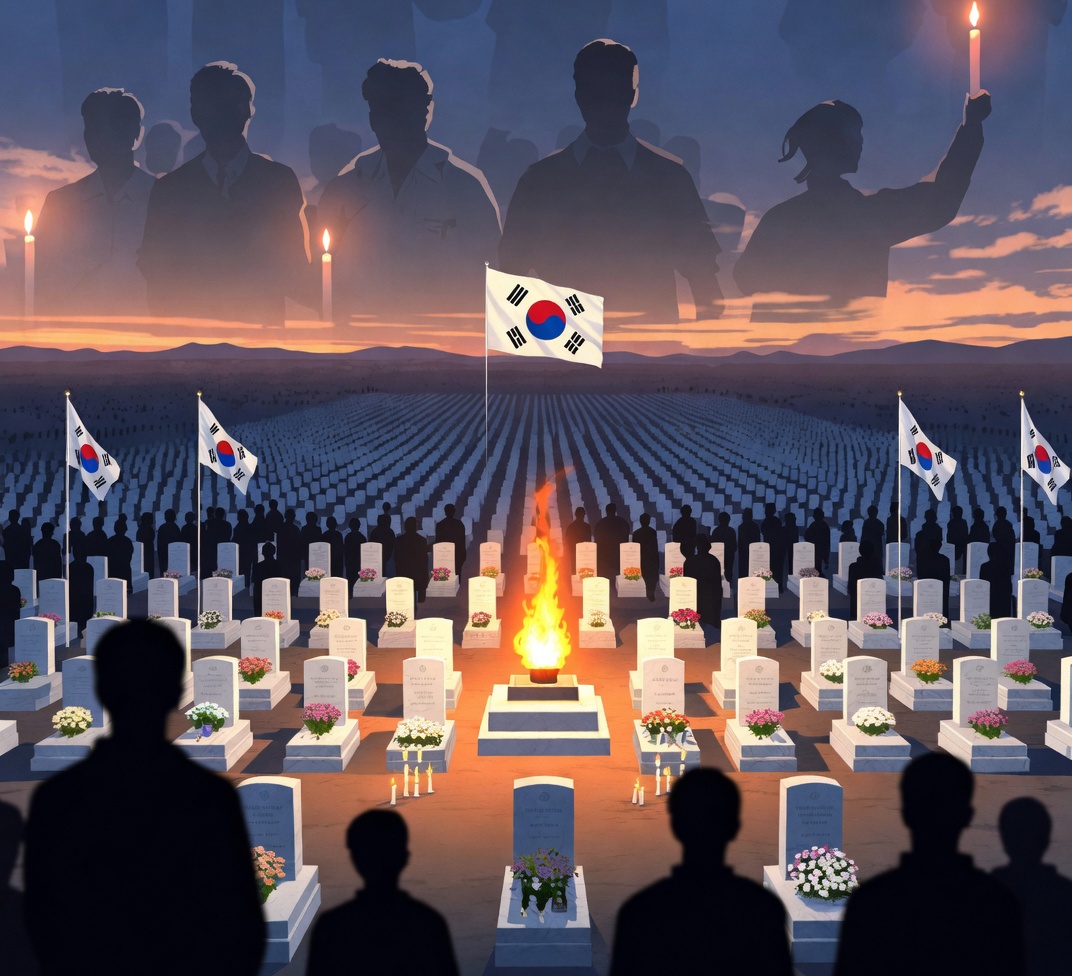
A national cemetery and memorial now stand in Gwangju, and May 18 is commemorated every year as a symbol of sacrifice for democracy and human rights. Any perceived mockery of the tragedy — such as the recent “Tank Day” marketing row — can still trigger fierce public anger.
With Inputs from AFP