The world has crossed a dangerous threshold: armed forces are striking nuclear facilities in conflict zones with growing impunity, blurring the lines between a conventional and nuclear war, and raising the specter of a radiological disaster.
These attacks not only shatter decades of international norms and treaties designed to protect nuclear facilities during armed conflict, but they also flirt with a radiological catastrophe whose consequences could span generations.
A major release of radioactive material risks long-term ecological devastation, widespread contamination of soil and water, and severe public health impacts, including increased cancer rates, genetic mutations, and uninhabitable exclusion zones.
Despite these threats, the deliberate targeting of nuclear facilities in an armed conflict is now increasingly becoming a norm.
On May 17, the UAE’s Barakah Nuclear Power Plant in the Al Dhafra area was targeted with an armed drone.
The UAE’s Ministry of Defense said the drone that targeted the facility was one of three that “entered the country from the western border direction”. The projectile struck “an electrical generator outside the inner perimeter of the Barakah Nuclear Power Plant.”
So far, no one has claimed responsibility for the attack; however, Iranian-backed militias armed with drones are based in Iraq, while Tehran’s allies in Yemen, the Houthis, also possess combat-grade UAVs. The Barakah Nuclear Power Plant began operations in 2020 and is 200 kilometers west of the UAE’s capital, Abu Dhabi.
The UAE condemned the attack, calling it a “dangerous escalation”.
UAE Condemns Terrorist Targeting of Barakah Plant Perimeter pic.twitter.com/YjnAUU6X4n
— MoFA وزارة الخارجية (@mofauae) May 17, 2026
Unfortunately, this is neither the first nor the last such attack on a nuclear facility in a conflict zone. In fact, the deliberate targeting of such nuclear facilities, despite the inherent threats of radiation leakages and nuclear escalation, has become a norm, rather than an exception, since the Russia-Ukraine War.
The Deliberate Targeting of Nuclear Facilities in Conflict Zones
In the last four years, multiple nuclear sites and power plants have been targeted.
Especially, Ukraine’s Zaporizhzhia Nuclear Power Plant, now under Russian occupation, has been repeatedly attacked by both sides.
Zaporizhzhia is not only Europe’s largest nuclear power station but also the first operational nuclear plant in history to be seized by military force.
Incredible video of the inside of the Zaporizhzhia nuclear plant as Russian forces attack.
“Stop firing at the nuclear facility … You are endangering the safety of the entire world.”
Footage verified by @nytimes visual investigations team.https://t.co/echxxE8hRd pic.twitter.com/znbyz8CdnL— Cliff Levy (@cliffordlevy) March 5, 2022
It has faced multiple shelling incidents, artillery fire, drone attacks, and fire incidents in the Russia-Ukraine War.
According to the latest reports, thousands of its employees have fled or gone into hiding — leaving just 22 licensed nuclear specialists, when hundreds are needed to run the plant safely — raising questions about its safety.
All six of its reactors are currently in cold shutdown, meaning they are not producing electricity. However, they still require constant power and water for cooling to prevent a nuclear accident.
Furthermore, the plant’s connection to the external electrical grid is highly unstable due to ongoing fighting.
The Nuclear Energy Agency (NEA) has documented over six incidents this year in which the power plant lost its external electricity supply, and emergency diesel generators ensured continued cooling and other essential safety functions.
There are grave security threats to the Zaporizhzhia Nuclear Power Plant’s safety, and any further armed attack or loss of power could result in a radiation leakage in the area.
Russia claimed that the power plant was attacked by Ukrainian drones on May 16 as well, less than 24 hours before the drone attack on the UAE’s nuclear power plant.
Kiev ATTACKS Europe’s biggest nuclear power plant
Kamikaze drone hits PIPELINE at Zaporozhye Nuclear Power Plant, thankfully fails to explode
'Intimidation tactics also aimed at plant employees, directly UNDERMINING nuclear safety of Zaporozhye plant' — Rosatom Chief Likhachev pic.twitter.com/RB6eRsrHpg
— RT (@RT_com) May 16, 2026
The fact that drone attacks on the Zaporizhzhia Nuclear Power Plant are no longer making headlines or drawing condemnation from the International Atomic Energy Agency (IAEA) shows to what extent these attacks have been normalized in warfare.
However, Zaporizhzhia is not the only nuclear power plant that has come under attack in the Ukraine War.
In 2025, Ukraine accused Russia of attacking the inactive Chornobyl nuclear plant, which was the site of the 20th century’s biggest civilian nuclear disaster in 1986.
In December 2025, the IAEA warned after an inspection that the protective shield covering the Chornobyl nuclear reactor in Ukraine can no longer provide its main containment function following the drone strike.
Last night, a Russian attack drone with a high-explosive warhead struck the shelter protecting the world from radiation at the destroyed 4th power unit of the Chornobyl Nuclear Power Plant.
This shelter was built by Ukraine together with other countries of Europe and the world,… pic.twitter.com/mLTGeDYgPT
— Volodymyr Zelenskyy / Володимир Зеленський (@ZelenskyyUa) February 14, 2025
International Atomic Energy Agency (IAEA) inspectors found that the massive structure, built over the site of the 1986 nuclear disaster, had lost its “primary safety functions, including the confinement capability”.
In August 2025, Ukraine attacked Russia’s Kursk Nuclear Power Plant, which caused multiple fires at the site and reduced the reactor’s output by more than 50 percent.
Again, in October 2025, Ukrainian drones attacked the Novovoronezh Nuclear Power Plant. The attack impacted the reactor’s cooling towers and electrical systems; however, no radiation leak was reported.
In June 2025, the US attacked Iranian uranium enrichment facilities at Natanz, Fordow, and Isfahan.
Even in the ongoing Iran-Israel War, the Iranian nuclear power plant at Bushehr has been attacked at least four times.
Following the attack on April 4, the IAEA warned that nuclear power plant sites or nearby areas must never be attacked, noting that auxiliary site buildings may contain vital safety equipment.
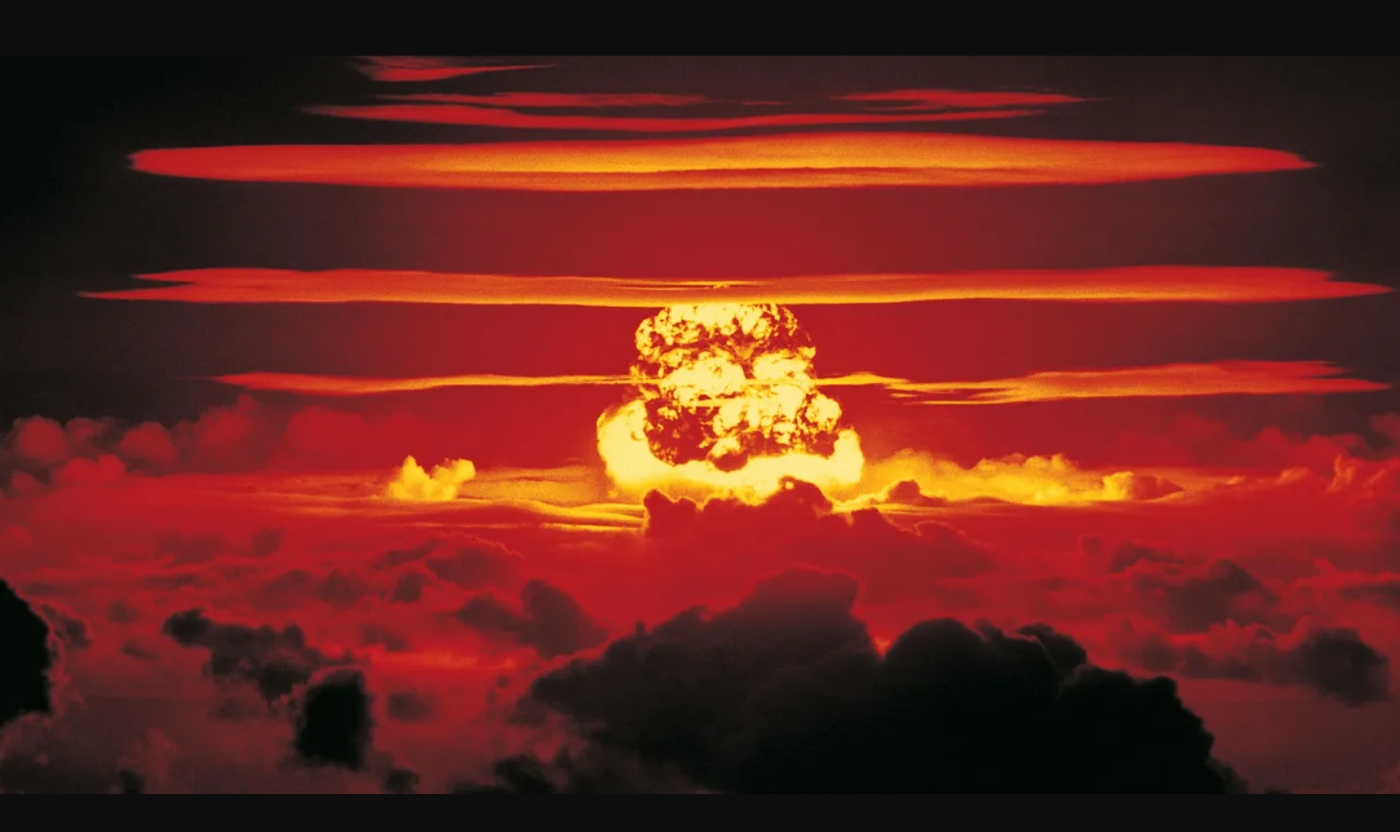
And on May 17, the UAE nuclear power plant in Al Dhafra came under drone attack, causing a fire incident.
These incidents show that targeting civilian nuclear facilities in a conflict zone is no longer considered taboo.
However, attacks on nuclear installations pose existential risks far beyond conventional warfare. A breach in containment, damage to cooling systems, or loss of off-site power can trigger meltdowns, explosions, or fires, releasing massive radioactive plumes.
According to the International Committee of the Red Cross (ICRC), “A nuclear reactor accident could result in radiation exposure (gamma radiation) and radioactive contamination (inhalation of airborne radioactive materials) that could lead to severe short- and long-term effects on human health and on the environment, which are impossible to control in time and space.”
“In addition to radiation poisoning and associated illnesses, the genetic mutations caused by ionizing radiation exposure have been proven to transcend generations. Radioactive material can spread over large areas and have devastating effects on ecosystems, agriculture, and food security, exposing large populations at short- and long-term risk of disease and death. Decontamination is time-consuming, and in some cases, impossible.
“The risk of radiation leak as a result of military activities in and around such facilities is very high, considering the likelihood of direct or incidental damage to a reactor or to other critical components enabling the safe and secure functioning of the facility,” the ICRC statement warned.
Though there are multiple treaties and agreements that prohibit attacks on nuclear power plants, clearly, these treaties have failed to stop these escalating attacks.
For instance, the seven pillars of the IAEA for nuclear safety and security in armed conflict explicitly state that:
- The physical integrity of facilities – whether it is the reactors, fuel ponds or radioactive waste stores – must be maintained.
- All safety and security systems and equipment must be fully functional at all times.
- The operating staff must be able to fulfill their safety and security duties and have the capacity to make decisions free of undue pressure.
- There must be a secure off-site power supply from the grid for all nuclear sites.
- There must be uninterrupted logistical supply chains and transportation to and from the sites.
- There must be effective on-site and off-site radiation monitoring systems, and emergency preparedness and response measures.
- There must be reliable communication with the regulator and others.
Unfortunately, all seven pillars of the IAEA have been blatantly violated in the Ukraine and Iran War.
Furthermore, additional Protocol I to the Geneva Conventions (1977) protects “installations containing dangerous forces”, banning attacks on nuclear plants if they risk severe civilian harm.
“Works or installations containing dangerous forces, namely dams, dykes and nuclear electrical generating stations, shall not be made the object of attack, even where these objects are military objectives, if such attack may cause the release of dangerous forces and consequent severe losses among the civilian population,” the Protocol I to the Geneva Conventions (1977) states.
However, not all states have ratified this treaty.
Ironically, while there is no global treaty explicitly banning attacks on civilian nuclear infrastructure during an armed conflict, there exist multiple regional treaties that prohibit such attacks and can serve as an example for a global treaty.
For instance, the Pelindaba Treaty (Africa) explicitly bans such attacks regionally in the African continent.
Article 11 of the treaty states: “Each Party undertakes not to take, or assist, or encourage any action aimed at an armed attack by conventional or other means against nuclear installations in the African nuclear-weapon-free zone.”
However, perhaps the most detailed treaty explicitly mandating the member states to declare the locations of their civilian nuclear assets and refraining from an attack on these locations, even in the case of an armed conflict, surprisingly, comes from the two states that have been repeatedly flagged as a nuclear flashpoint – India and Pakistan.
India and Pakistan signed the ‘Agreement on the Prohibition of Attacks against Nuclear Installation and Facilities‘ in 1988.
The agreement provides for “refraining from undertaking, encouraging, or participating in, directly or indirectly, any action aimed at causing destruction or damage to any nuclear installation or facility in each country”.
It describes a nuclear installation or facility and requires each party to inform the other of the precise locations (latitude and longitude) of installations and facilities by 1 January of each calendar year and whenever there is any change.
Starting in January 1992, India and Pakistan have exchanged lists of their respective civilian nuclear-related facilities.
In fact, since 1992, India and Pakistan have fought two wars (1999 and the brief four-day war in May 2025), and countless border skirmishes; however, despite hostile and adversarial relations, the two countries have followed the treaty and regularly exchanged the list of their civilian nuclear assets.
It must be noted that the Indian Air Force launched massive strikes on 11 Pakistani military bases, including PAF Base Nur Khan, on May 10, 2025, as part of Operation Sindoor. While the Nur Khan airbase sits just over a mile from Pakistan’s Strategic Plans Division (SPD)—the nerve center managing its nuclear arsenal—the strike avoided direct hits to nuclear assets or reactors.
There is an urgent need for a global treaty mandating each state to voluntarily declare the locations of its civilian nuclear infrastructure and making a declaration not to attack such targets in a hostile country, even during armed conflicts.
Furthermore, to avoid a nuclear accident, the world should explicitly recognize any deliberate targeting of civilian nuclear infrastructure as war crimes, strengthen the IAEA’S enforcement mandate, allowing it to establish and monitor demilitarized zones around nuclear facilities, and reinforce state accountability and reparations in case of an attack on a nuclear facility.
The existing mechanisms to protect such sites have failed miserably. The world desperately needs a new mechanism to protect these sites from armed attacks.
Even a single drone attack could cause a nuclear accident of epic proportions.
We must act now before it is too late.
- Sumit Ahlawat has over a decade of experience in news media. He has worked with Press Trust of India, Times Now, Zee News, Economic Times, and Microsoft News. He holds a Master’s Degree in International Media and Modern History from the University of Sheffield, UK.
- THIS IS AN OPINION ARTICLE. VIEWS PERSONAL OF THE AUTHOR.
- He can be reached at ahlawat.sumit85 (at) gmail.com