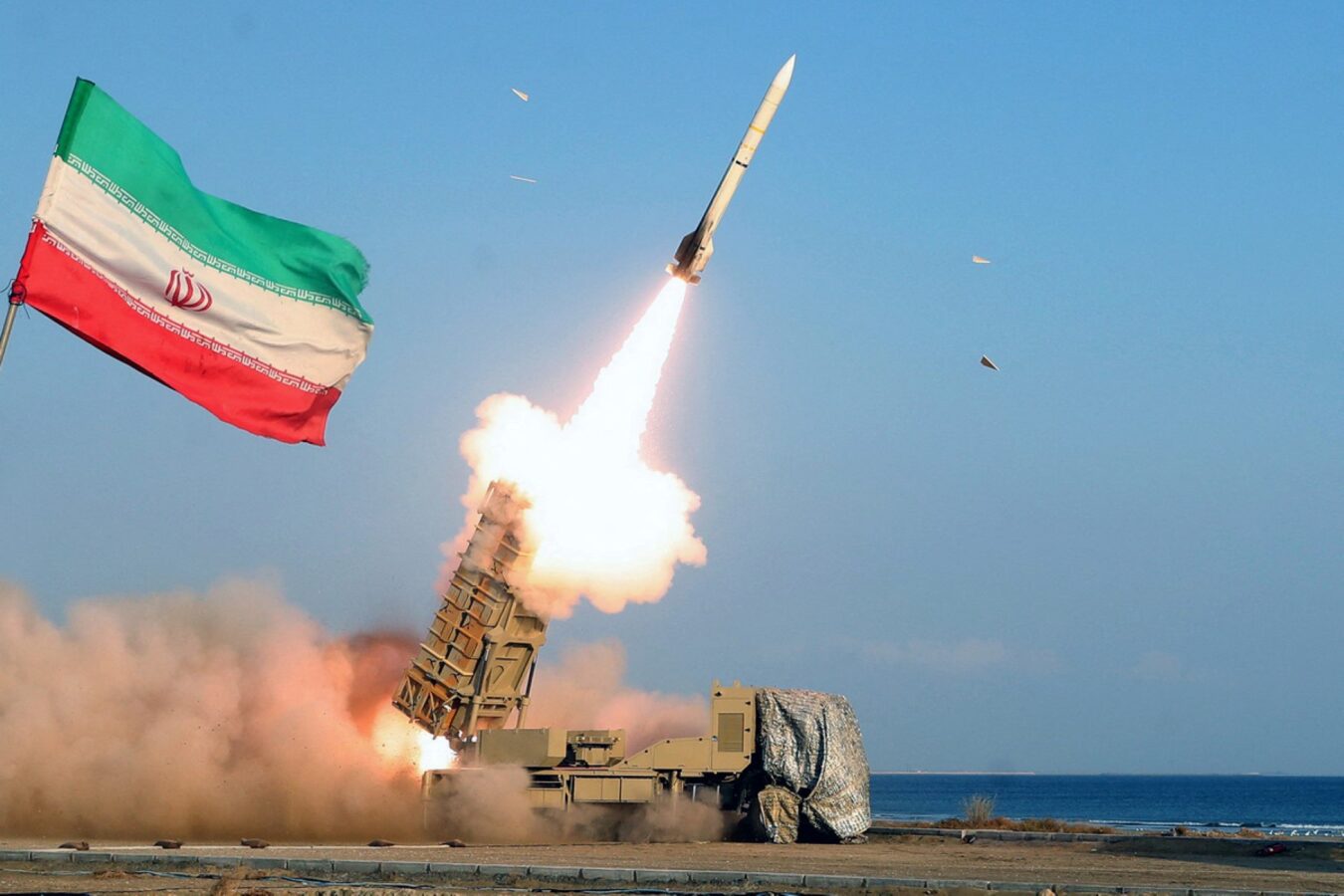
As Tehran vowed a “crushing response” to US and Israeli strikes, a new intelligence assessment claims that nearly 50% of Iran’s missile launchers and kamikaze drones could be intact.
“They are still very much poised to wreak absolute havoc throughout the entire region,” one of the sources told CNN. The assessment possibly includes launchers that are currently inaccessible, such as those buried underground by strikes but not completely destroyed.
U.S. intelligence indicates that thousands of Iranian drones remain intact — roughly 50% of the country’s drone capabilities, according to CNN, which quoted two sources.
The intelligence also shows that a large number of Iran’s coastal cruise missiles have mostly survived U.S. bombings. These anti-ship missiles represent a critical capability, enabling Iran to threaten commercial shipping in the Strait of Hormuz.
Meanwhile, Iran and its proxies have continued trading fire with Israel and the United States, with military targets and civilian infrastructure across the Middle East coming under attack.
Strikes have increasingly targeted economic and industrial sites, raising fears of wider disruption to global energy supplies and deepening the conflict’s impact beyond the battlefield.
Iran said its latest wave of attacks had struck targets in the United Arab Emirates, Bahrain, and Israel in retaliation for earlier US-Israeli strikes on its industrial facilities.
They included “American steel industries in Abu Dhabi, American aluminum industries in Bahrain, and the Rafael arms factories of the Zionist regime”, it said.
Israel’s military warned that its air defenses were operating to down missiles fired from Iran, although there were no immediate reports of casualties or damage.
Fresh explosions had earlier been reported in the Tehran area, with Iranian state television reporting US-Israeli strikes hit a bridge in the northern town of Karaj twice — the first causing civilian casualties and the second striking as emergency teams responded.
US President Donald Trump — who on Wednesday threatened to bomb the Islamic republic “back to the Stone Ages” — maintained his harsh rhetoric as he posted on social media that the bridge had been sent “tumbling down” and promised, “much more to follow”.
The country’s two largest steel plants have also been forced offline by repeated US and Israeli strikes, companies said.
Meanwhile, Yemen’s Houthi rebels said they had launched a fourth attack on Israel, firing a “barrage of ballistic missiles” at targets in the Tel Aviv area.
The conflict has also intensified pressure on global shipping, with the Strait of Hormuz — a conduit for one-fifth of the world’s oil — effectively closed by Iran. British Foreign Secretary Yvette Cooper convened around 40 countries to demand their “immediate and unconditional” reopening, while Italy called for a humanitarian corridor to avert a food crisis in Africa.
Tehran said it was drafting a post-war framework with Oman to oversee maritime traffic, though talks have yet to begin.
The head of the Gulf Cooperation Council, Jasem Mohamed AlBudaiwi, meanwhile, called for UN backing to protect shipping through the strait, warning that Iran had blocked commercial vessels and imposed conditions on passage.
Bahrain has proposed a draft UN Security Council resolution that would authorize the use of force to ensure free transit, though the US-backed measure has divided members ahead of a vote.
Against that backdrop, Trump has warned that further strikes could target Iran’s energy infrastructure if no deal is reached.
He said Washington had “our eyes on key targets”, including power plants, while also suggesting Tehran’s new leadership could prove “more reasonable” in potential talks.
Iran has dismissed US overtures as “maximalist and irrational”, saying that messages had been passed through intermediaries but that no direct negotiations were underway.
The country’s health ministry said the Pasteur Institute, a century-old medical center in Tehran, had been heavily damaged in a strike.
In Lebanon, Iran-backed militant group Hezbollah said it launched drones and rockets at northern Israel, a day after an Israeli strike in Beirut killed a senior commander, according to two sources. Lebanese authorities said seven people died in the strike.
Eighteen European countries have urged both sides to halt fighting amid fears Israel could seize territory in southern Lebanon.
Amy Pope, head of the International Organization for Migration, warned of “very alarming” risks of prolonged displacement.
Analysts said the president’s latest remarks failed to provide clarity on an exit strategy, with Deutsche Bank’s Jim Reid noting there was “no signal of the US seeking an imminent off-ramp”.
War Crimes in Iran?
Threatening to destroy Iran’s electricity grid and to reduce the country of 90 million to destitution, US President Donald Trump is shattering precedent by not just accepting but gloating about acts seen as potential war crimes.
The consequences for Trump, at least in the near term, are likely to be none, experts say, as his administration works hard to undermine international institutions tasked with upholding norms.
The Geneva Conventions governing the laws of war, agreed following World War II, prohibit destruction of “objects indispensable to the survival of the civilian population.”
In 2024, the International Criminal Court indicted four Russian military officials over systematic strikes on Ukraine’s power grid.
Nonetheless, Trump said in a Wednesday address that if Iran does not reach an unspecified deal with him, US forces will “hit each and every one of their electric-generating plants.”
“Over the next two to three weeks, we are going to bring them back to the Stone Ages, where they belong,” Trump said, a shift in tone after briefly suggesting, when joining Israel in launching the war on February 28, that a goal was to help Iranians overthrow their unpopular, religious-led government.
On Thursday, Trump posted footage of the destruction of a major bridge, promising “Much more to follow!” And Iran reported major damage to a century-old medical research center, the Pasteur Institute.
Trump has also threatened to attack oil wells, despite international condemnation of Iraqi forces who set oil installations ablaze when withdrawing from Kuwait in 1991 in the first Gulf War.
Defense Secretary Pete Hegseth has boasted of “death and destruction from the sky all day long” on Iran and promised to reject “stupid rules of engagement.”
The crippling of Iran’s power plants would be “devastating to the Iranian people” by cutting off electricity to hospitals, water supply, and other vital civilian needs, said Sarah Yager, the Washington director of Human Rights Watch.
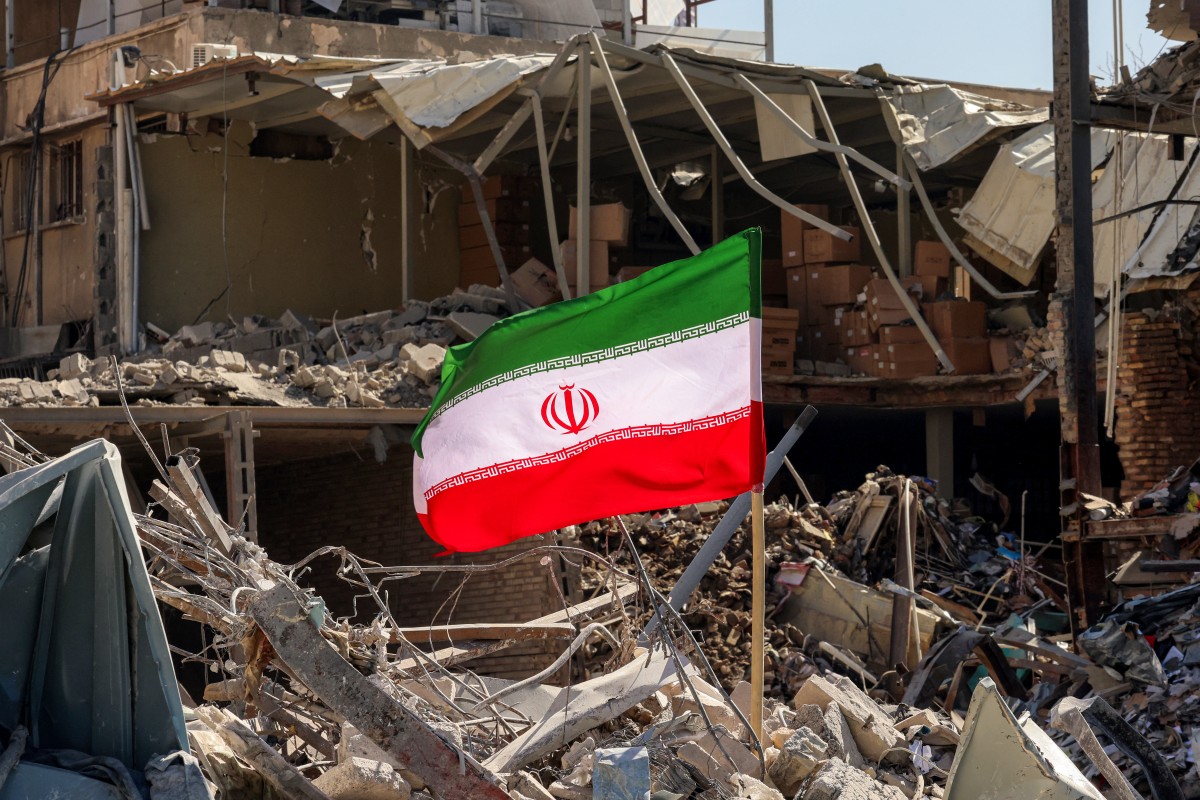
“The US military has protocols designed to constrain that kind of harm to the civilian population, but when the president speaks this way, it risks signaling that those constraints are optional, and that is what makes this moment so dangerous,” she said.
International law permits attacks on energy plants and other ostensibly civilian targets only if it is determined that they primarily support military activity.
Trump’s own statements indicate otherwise, said Tom Dannenbaum, a professor at Stanford Law School.
“The reference to the Stone Age indicates that objects would be targeted seemingly because they contribute to the viability of a modern society in Iran, which is completely unrelated to the question of contribution to military action — the necessary condition for targeting in war,” he said.
Robert Goldman, a war crimes expert at the American University Washington College of Law, said that on energy sites, Trump “can’t have it both ways.”
“Trump repeated that the United States has complete control of the skies and we can hit anything,” regardless of power supply, he said.
“Now to attack a power plant would be, in my view, utterly disproportionate because it has very foreseeable consequences for the civilian population.”
He said retaliation threatened by Iran could also constitute war crimes, such as targeting desalination plants in US-allied Arab countries with severe water limitations.
Even if the United States commits war crimes, the immediate risks for Trump, Hegseth, and other officials appear limited.
The Trump administration has aggressively sought to neuter the International Criminal Court out of opposition to its arrest warrant against Israeli Prime Minister Benjamin Netanyahu over Gaza.
Few expect the Hague-based court to target Americans, and none of the countries involved — the United States, Israel, or Iran — are parties. Dannenbaum said war crimes had universal jurisdiction with no statute of limitations, meaning any country could eventually prosecute.
“Even when the political conditions are such that it’s unlikely that a war crimes case would be prosecuted successfully in the moment,” he said, “that doesn’t mean that accountability won’t occur at a later date.”
Goldman said the risk to the United States was primarily one of reputation — and that undercutting the Geneva Conventions could have dangerous impacts for a country frequently at war.
“If we set aside the rules when we deem expedient, why can’t our adversaries?” Goldman said.
“It could come back to bite us down the road.”
By Agence France-Presse (AFP)