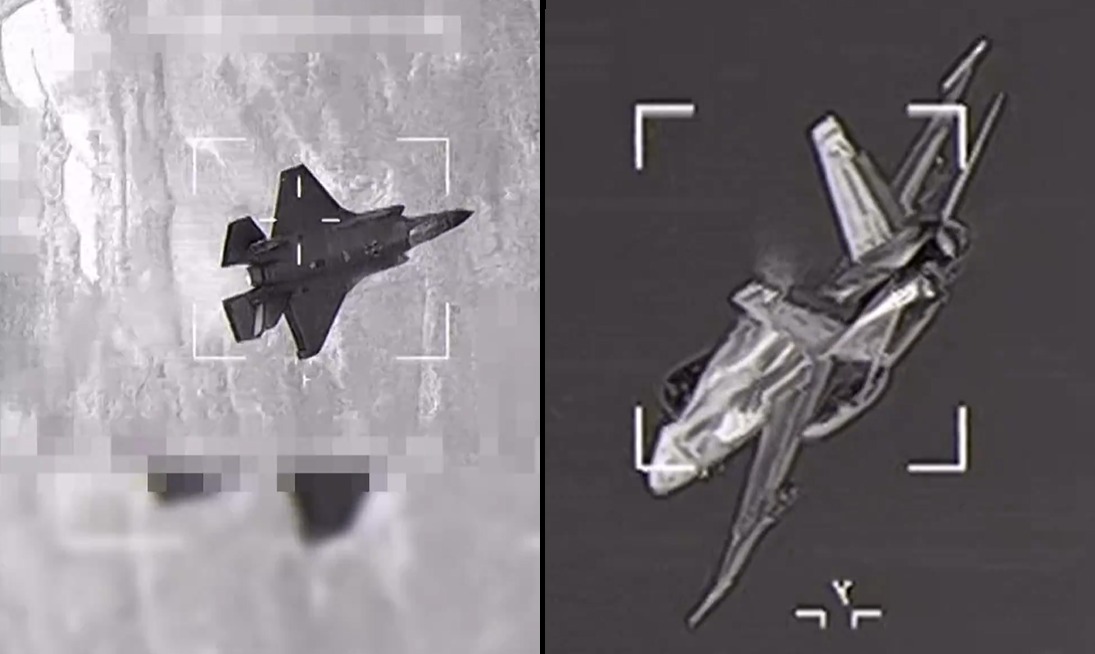
Air-to-air missiles (AAMs) are fundamental to air dominance. They have served as the primary weapons in aerial combat since their combat debut during the Vietnam War.
For decades, the United States maintained a clear technological lead in air-to-air missile development.
Not only did the U.S. introduce the world’s first operational guided AAMs, but it was also the first country to field a beyond-visual-range (BVR) AAM.
However, over the past decade, China and Russia have made rapid progress, fielding missiles that surpass current U.S. systems in both range and speed.
Now, however, the US is actively working to regain its edge in this strategically critical area by developing the world’s first AAM that can hit its targets at a distance of over 1,000 NM (nautical miles).
When operationalized, the 1,000 NM air-to-air missile can practically redefine air warfare and compel enemy Air Forces to remain grounded during conflicts.
For instance, once fielded, these missiles would allow U.S. fighters to strike targets deep inside Chinese airspace while remaining safely within Japanese airspace. Such a long-range missile will be particularly effective against AWACS and refueling tankers, which generally fly several hundred kilometers beyond the range of current AAMs.
For perspective, this range is around six times the range of Meteor, one of the most advanced AAMs in the world. This range is also more than four times that of the longest-range AAMs in the US Navy, such as the AIM-174B, which has a reported range of 400 km, and the Russian R-37M, which also has a reported range of 400 km.
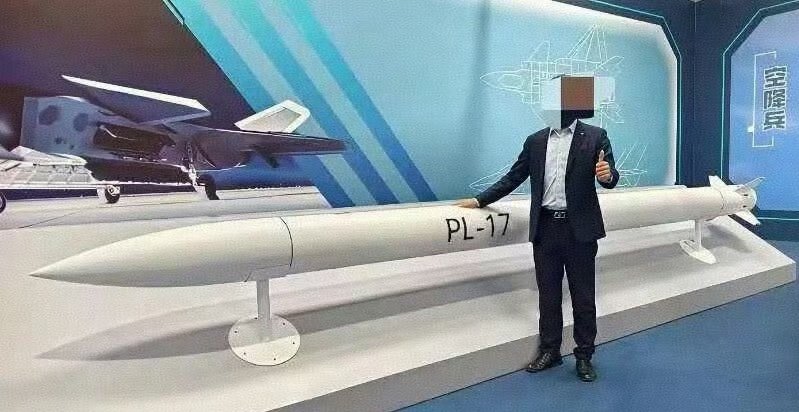
Even China’s longest-range AAM, as of now, is the PL-17, with a reported range of 400 km.
Thus, when operationalized, the new AAM can not only transform aerial combat doctrines and operational planning but also has the potential to decisively tilt the balance of power in the Pacific in Washington’s favor.
U.S. Plans To Develop 1,000 NM AAM
The US Air Force (USAF) is set to hold a classified meeting with defense contractors to provide information and its requirements for a new air-to-air and air-to-surface missile with a maximum range of at least 1,000 nautical miles.
On June 24, the Air Force Life Cycle Management Center’s (AFLCMC) Armament Directorate (EB) issued a notice specifying its requirements for the Air Force Long Range Weapon (AFLRW).
According to the notice, the classified meeting with defense contractors will take place at the Guided Weapons Evaluation Facility (GWEF) at Eglin Air Force Base in Florida on August 25 and 26.
The event will be held at the Secret classification level, and all attendees must have appropriate security clearances.
“The AFLRW is aimed at addressing the next generation of Air-Launched Standoff Weapon variants in line with Department of War priorities,” the notice said.
“AFLRW may select multiple vendors for both the Air-to-Air (A/A) and Air-to-Surface (A/S) variants with a focus on A/A solutions for Initial Operational Capability.”
“Both [AFLRW] variants will have a threshold minimum range of 1,000 NM [nautical miles] and be capable of striking respective A/A and A/S targets in Defense Planning Scenario 2.1 and 7.1 environments in a responsive manner.”
“AFLRW will seek vendors for each variant’s initial production rounds to meet threshold requirements,” it added.
“AFLCMC is seeking the next generation of Air-Launched Long-Range Weapon variants that expand the United States’ ability to hit priority air, land, and sea targets far and fast!” the notice added.
However, beyond the 1,000 NM range, the notice provides no further details or specifications on the missile.
The 1,000 NM range is itself a notable point that can fundamentally alter existing air warfare doctrines.
To understand how long-range AAMs can redefine aerial warfare and compel adversary countries to modify their war doctrines, we must examine their evolution over the last six decades.
The Evolution Of AAMs
Work on developing AAMs started shortly after the Second World War at the Naval Ordnance Test Station (NOTS) at Inyokern, California (now called the Naval Air Weapons Station).
The first AAMs became operational in the second half of the 1950s. In 1956, the US became the first country to induct an AAM, the AIM-9 (Air Interceptor Missile), into its Air Force. It used infrared (IR) homing; the missile’s seeker head detected and followed the heat signature from an aircraft’s engine exhaust.
U.S. Renews Push for F-35 Stealth Fighters to Spain After European 6th-Gen FCAS Program Falls Apart
The early version of AIM-9B used a lead sulfide (PbS) detector, which was sensitive to heat signatures. The missile operated in a fire-and-forget mode, freeing the launching aircraft and providing it with operational flexibility.
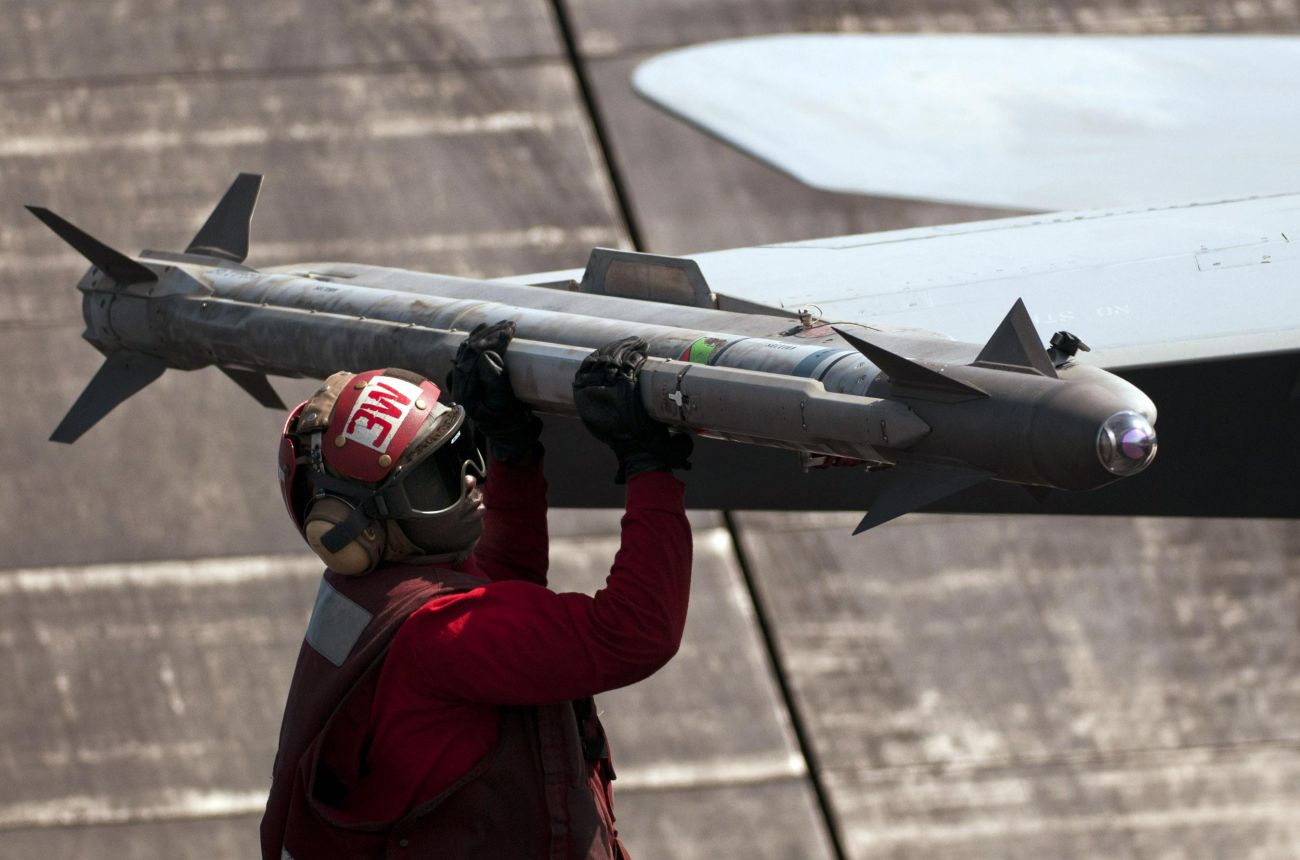
Though revolutionary for its time, the AIM-9B still suffered from significant limitations.
For instance, since it detected and followed heat signatures from an aircraft engine’s exhaust, it could lock onto targets only from the rear aspect (tail-on), where the heat signatures of an aircraft were most prominent.
Furthermore, the missile did not work very well in humid or rainy conditions. It had an operational range of 2-4.8 km.
The Soviet Union followed quickly with its K-5, which entered service in 1957. It used a rudimentary form of radar guidance. The missile did not have its own onboard radar seeker; it relied on the aircraft’s radar to illuminate the target and follow it. This meant that the aircraft launching the missile had to keep the target locked even after launch, making it vulnerable to counter-missile fire.
The advent of AAMs quickly changed aerial warfare.
China Gets Its Hands On AIM-9B
A notable incident occurred in 1958, marking the first combat use of an AAM.
In 1958, during the Second Taiwan Strait Crisis, the Taiwanese (then the Republic of China) Air Force’s F-86 Sabre fighter jets shot multiple AIM-9B Sidewinder missiles. At least one Chinese MiG was shot down.
However, one Sidewinder hit an enemy jet but failed to explode. The pilot returned safely to base with the missile embedded in his fuselage and eventually turned it over to the Russians, who, after some careful study, released their own version of the AIM-9 in 1961 as the Vympel K-13.
How AAMs Dictated The 1965 Indo-Pak War
The Indian Air Force (IAF) started inducting MiG-21s into service in 1963. These MiGs were armed with the Soviet K-13 missiles.
Just two years later, in 1965, the India-Pakistan war broke out. At that time, the Pakistan Air Force (PAF) operated the F-86 Sabre and the F-104 Starfighter, both of which were equipped with AIM-9B Sidewinder missiles.
The PAF had a clear advantage in terms of AAMs. The Soviet K-13 was still in its evolutionary stages and was no match for AIM-9B.
“During the 1965 war, that difference proved decisive. The Pakistan Air Force scored at least three confirmed missile kills, fundamentally altering the tactical calculus. Even though some sources cite a smaller number of missile-equipped Sabres, Indian pilots had to assume everyone did. The missile had introduced an element of doubt that no amount of pilot skill could entirely overcome,” writes IAF historian Angad Singh.
The 1965 India-Pakistan War proved that an advantage in AAMs could prove decisive in an aerial battle.
The Advent Of BVRs
Gradually, longer-range AAMs made their presence felt. Most AAMs today are in the BVR category.
The European Meteor and the American AIM-120D have an operational range of nearly 200 km. The Chinese PL-15E (export variant) also has an operational range of 200 km. However, the PL-15’s domestic version has a claimed range of up to 300 km.
Furthermore, the Russian R-37M and KS-172, the Chinese PL-17, and the American AIM-174B all have ranges in the ballpark of 400 km.
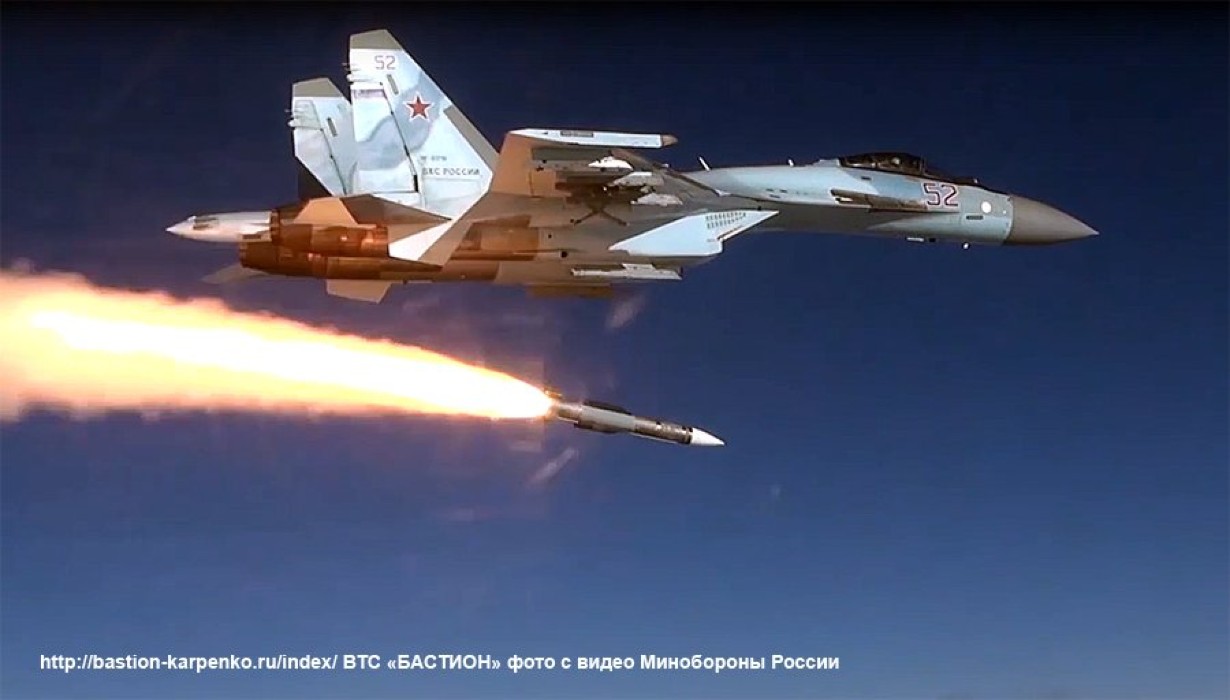
The Russian R-37M has become a significant factor in the ongoing Ukraine War, where it has many kills to its name. In July 2024, a Russian Su-35 reportedly shot a Ukrainian MiG-29 at a record distance of 213 km, proving its worth in aerial combat.
These are some of the longest-range operational BVR AAMs as of today.
However, the 1,000 NM range AAM could disrupt the very concept of air combat and air dominance.
Notably, the current U.S.-made AAMs come nowhere close to this range.
For instance, the AIM-120 has a range of nearly 100 miles.
The AIM-174B Gunslinger has a range of 300-400 miles.
The underdevelopment AIM-260 has a range of over 200 miles.
As noted earlier, China and Russia have taken the lead over the US in long-range AAMs over the last decade.
However, even their longest-range AAMs have only around 300 miles of range.
For now, there is no clarity on what will power such a long-range missile.
It could be a multi-stage missile or a version of an air-launched ballistic missile.
Further, it must be noted that the 1,000 NM range is significantly longer than the detection range of almost all the fighter jets in service today.
Therefore, there is also the question of how to target such extreme distances. Clearly, aircraft radars will not suffice to target and guide such long-range missiles.
These AAMs might be guided by space-based sensors or very high-altitude drones. The 1,000 NM range AAM will therefore have to be tied to a deeply networked ‘kill web’.
We will know more about this game-changing AAM after the August meeting. Nonetheless, it can be safely said that when this missile is integrated into the USAF, it will fundamentally alter the balance of power in the Pacific.
- Sumit Ahlawat has over a decade of experience in news media. He has worked with Press Trust of India, Times Now, Zee News, Economic Times, and Microsoft News. He holds a Master’s Degree in International Media and Modern History from the University of Sheffield, UK.
- VIEWS PERSONAL OF THE AUTHOR.
- He can be reached at ahlawat.sumit85 (at) gmail.com