A “notional national missile defense system” possessing capabilities broadly consistent with President Donald Trump’s signature Golden Dome missile shield project could become one of the most expensive defense projects in the history of the US and could cost up to US$1.2 trillion to develop, deploy, and then operate for two decades, according to a new estimate published by the Congressional Budget Office (CBO).
Notably, the figure of US$1.2 trillion is nearly seven times the US$175 billion President Trump originally promised to build it for.
In his May 2025 executive order, Trump has promised to build the space-based missile defense system ‘Golden Dome’ in just three years, before the end of his term in 2029, and to build it for just US$175 billion.
Last month, Golden Dome program manager Gen. Michael Guetlein told lawmakers the cost to stand up Golden Dome would come in around US$185 billion.
The figure is also more than 15 times the US$79 billion that the Trump administration has budgeted for the ambitious program over the next five years.
And it is also nearly double the US$542 billion figure provided by the Congressional Budget Office’s assessment last year.
Accounting for the decreases in launch costs, the CBO report in May last year gave a figure of US$542 billion. However, the new CBO study estimates that a missile defense system, including space-based interceptors (SBIs), could cost as much as US$1.2 trillion.
For its study, CBO organized its notional national missile defense (NMD) system into four interceptor layers: a space-based layer, two wide-area surface layers (an upper layer and a lower layer), and a surface-based regional-sector layer.

The NMD system also included additional sensors, communication systems, and battle management systems to coordinate collective action among the layers.
CBO said that of the US$1.2 trillion amount, acquisition costs for the notional NMD system would total just over US$1 trillion, including costs for the system’s major components, namely, the interceptor layers and a space-based missile warning and tracking system.
“The most expensive component is the space-based interceptor layer, which accounts for about 70 percent of acquisition costs and 60 percent of total costs,” it said.
While such a four-layered missile defense system would provide a layered defense against ballistic missiles, hypersonic missiles, cruise missiles, and other aerial threats launched by both regional adversaries (possessing limited capabilities, such as North Korea), as well as a small-scale attack mounted by a peer or near-peer adversary (Russia or China), it can still be overwhelmed by a full-scale attack mounted by a peer or near-peer adversary.
“The system could be overwhelmed by a full-scale attack mounted by a peer or near-peer adversary.”
So, even after investing over a trillion dollars, the US cannot expect 100% foolproof security against aerial threats, the CBO report warns.
“Although the notional NMD system analyzed by CBO would be far more capable than the defenses the United States fields today, it would not be an impenetrable shield or be able to fully counter a large attack of the sort that Russia or China might be able to launch,” it said.
This inability of the NMD system to tackle a large-scale attack by a near-peer adversary, the CBO report warns, raises serious questions about the strategic relevance of the entire system platform, which could cost American taxpayers over a trillion dollars.
“The strategic consequences of deploying an NMD system with the capacity considered here are unclear because they hinge on an adversary’s perception of the defense’s capability and how that adversary chooses to respond,” it said.
Furthermore, such a deployment could prompt regional adversaries to increase their inventories of long-range missiles (nuclear or conventional) or to pursue more effective countermeasures to improve their chances of penetrating the NMD system, the report warned.
Also, the cost of the entire program could even exceed US$1.2 trillion, as the CBO report has not included cost analyses of several other efforts called for in the executive order.
The CBO report “does not include the costs of ‘left-of-launch’ capabilities, which enable the destruction of missiles before they are launched, and which would probably be provided by general-purpose military forces, or directed energy weapons (such as lasers), which are unlikely to be fielded soon.”
Nor does CBO’s estimate include the costs of ongoing missile defense activities, such as deploying the Next-Generation Overhead Persistent Infrared (OPIR) satellites that provide early warning of a nuclear attack or expanding and operating the ground-based missile defense site in Alaska.
Apart from these, the CBO report did not include the costs of research, development, testing, and evaluation for missile defense technologies, communications systems to connect the NMD sites, space-based interceptors to engage targets in the midcourse or glide phases of their trajectory, systems to counter small drones, and land acquisition costs for surface-based interceptor layers.
All this suggests that the final cost of the Golden Dome Project could substantially exceed the US$1.2 trillion figure reported by the CBO.
This figure is nearly seven times the figure provided by the Trump administration.
Last month, speaking to Congress, Golden Dome program manager Gen. Michael Guetlein defended his figure of US$185 billion, saying that outside estimates did not account for what he is building.
“When we start talking about the different cost estimates, the first thing I always say is, first of all, they’re not estimating what I’m building.”
“They are estimating the modernization or the continuation of the legacy systems that we already have, and they just take the cost of a legacy system and they multiply it out and they get these really large numbers and they say, well, that must be it. That is not what Golden Dome is doing.”
Golden Dome, he said, is “doing business differently” with different acquisition authorities, strategies, and efficiency measures.
However, even Guetlein accepted that price could escalate under certain scenarios.
He said the Pentagon would not pursue space-based interceptors for boost-phase interception of missile threats unless it made financial sense.
“Because we are looking at the threats from a multi-domain perspective to make sure I have redundant capabilities and I don’t have single points of failure,” he said. “So, if boost-phase intercept from space is not affordable and scalable, we will not produce it, because we have other options to get after it.”
“We are so focused on affordability. If we cannot do it affordably, we will not go into production,” he said.
However, even at US$1.2 trillion, the Golden Dome would not be the most expensive weapons program in US history, nor would it be the first program to have dramatically exceeded its initial cost estimates.
For instance, in the early 2000s, it was estimated that the development-to-production (acquisition) cost for the F-35 Joint Strike Fighter program would be US$200-US$230 billion.
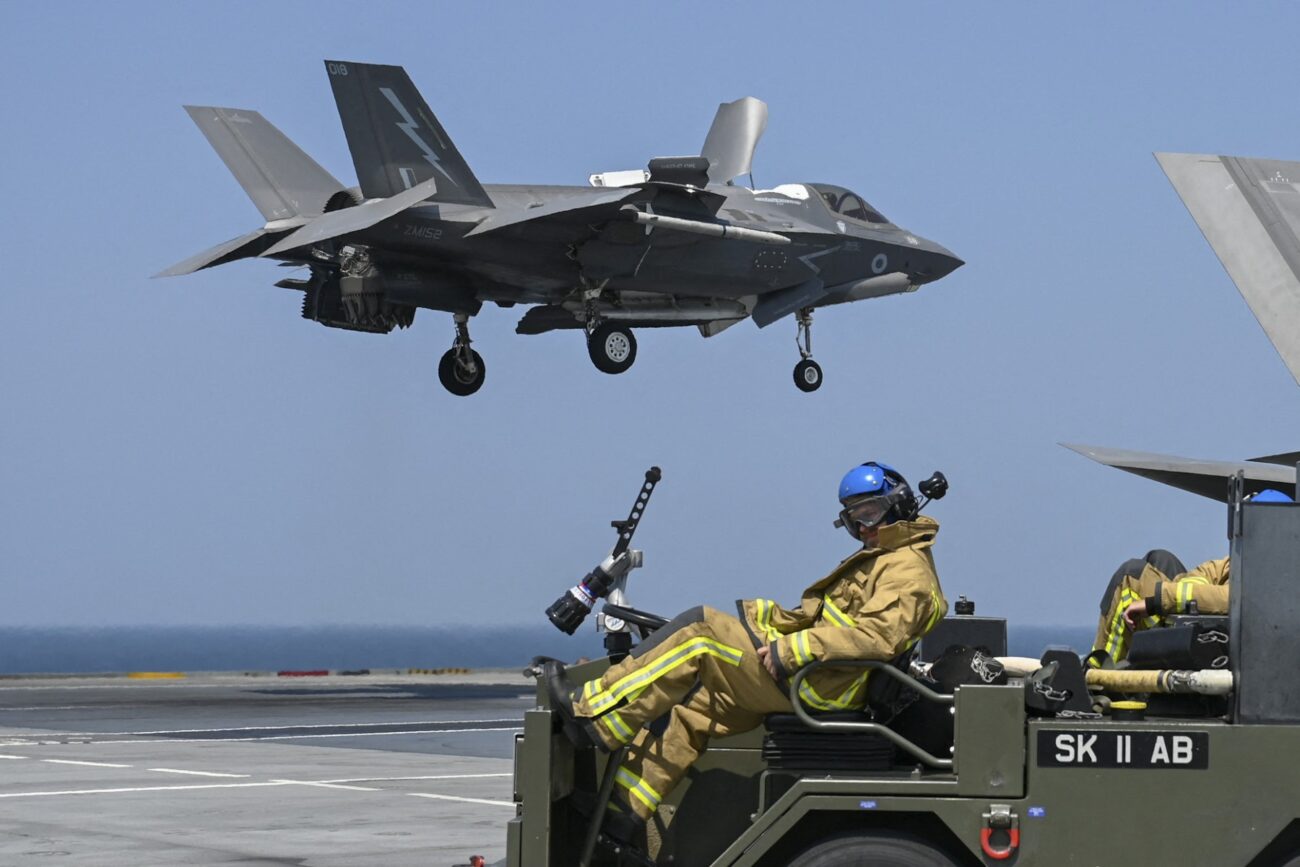
However, according to the Government Accountability Office (GAO), the program cost US$183 billion more than the original acquisition cost estimates.
Meanwhile, the full lifecycle costs of the F-35 program through 2070 could exceed US$2 trillion, making it the most expensive weapons program in US history.
The B-2 Spirit program also saw dramatic cost escalations. Initially, the US envisioned 132 aircraft at a per-unit cost of US$280-US$500 million. However, the final per-unit cost of the stealth bomber came to around US$2.13 billion.
The much higher per-unit cost and the defense budget cuts in the post-Cold War era meant that the USAF procured only 21 B-2 Spirit Bombers.
The Zumwalt-class destroyers have a similar story. Initially, the US Navy planned to procure 32 ships at a per-unit cost of US$1.3-US$1.8 billion. However, the final per-unit cost of the three ships procured by the US Navy came around US$7-US$9 billion per ship.
Given these historical precedents, it would not be surprising if the final operational costs of the Golden Dome project are significantly higher than the administration is telling, and if the final scale of the project is trimmed substantially to adjust for the higher costs.
- Sumit Ahlawat has over a decade of experience in news media. He has worked with Press Trust of India, Times Now, Zee News, Economic Times, and Microsoft News. He holds a Master’s Degree in International Media and Modern History from the University of Sheffield, UK.
- VIEWS PERSONAL OF THE AUTHOR.
- He can be reached at ahlawat.sumit85 (at) gmail.com