Joseph Stalin once said, “Quantity has a quality of its own.”
The wars in Ukraine and Iran have revealed the continued relevance of this maxim even for modern combat. Stand-off weapons must be cheap enough to lose. They must also be produced at scale. This is the only way to fight and win a long, high-intensity war.
The US followed a counter strategy for years, focusing on high-precision, expensive weapons. These high-precision weapons did wonders in brief conflicts with low-tier adversaries.
However, expensive high-tech weapons are ill-suited for high-intensity protracted wars of attrition. A clear example is the use of Patriot missile defense batteries. Each Patriot interceptor costs around US$4 million. Yet they are often used to shoot down mass-produced Shahed drones that cost just US$20,000 to US$35,000 each.
This mismatch drains expensive stockpiles fast while the enemy can keep launching cheap drones in large numbers.
The Pentagon, it seems, is now finally heeding Stalin’s advice and putting the lessons of the Ukraine and Iran War into action.
It has laid out plans to buy more than 10,000 low-cost cruise missiles in just three years. At the same time, the US Air Force wants a new drone to replace its expensive workhorse, the MQ-9 Reaper, one that is cheap enough to risk losing in battle.
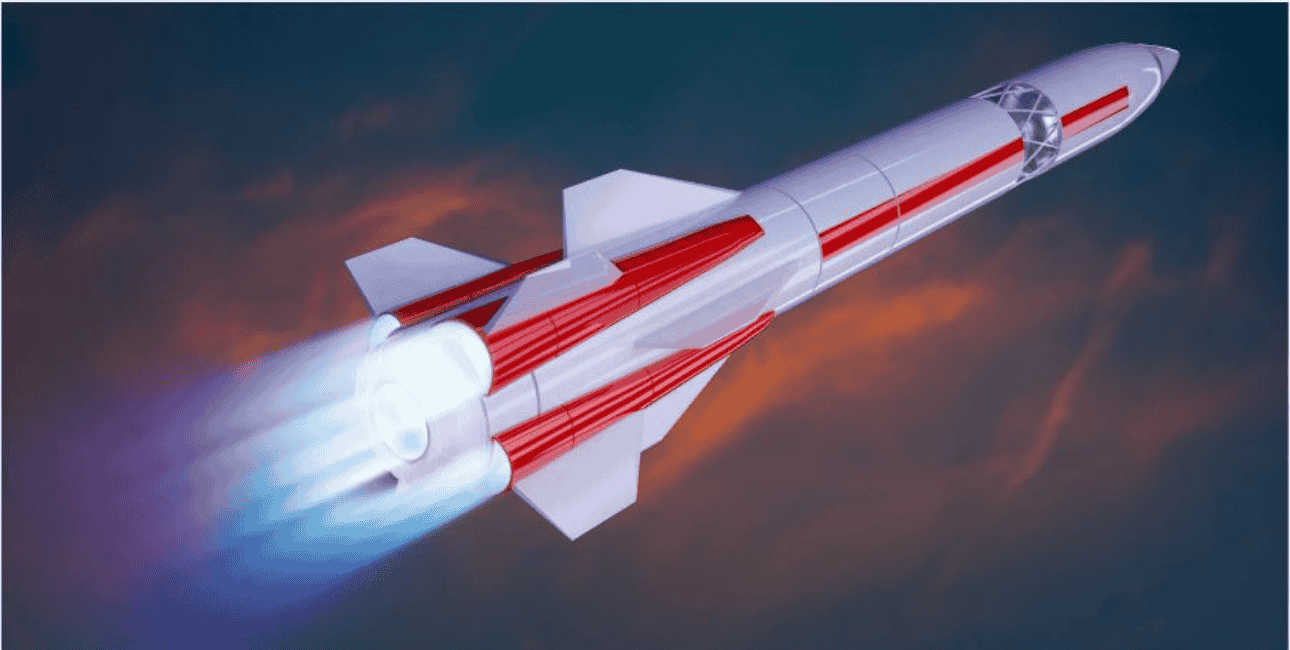
Together, these new weapons requirements highlight a shift in the Pentagon’s war philosophy and a newfound focus on stand-off strike munitions that can be produced at scale and are cheap enough to risk in battle zones.
This is especially critical for sustaining a high-intensity long war with near-peer adversaries, such as Russia and China.
Pentagon’s Plan To Procure 10,000 Low-Cost Cruise Missiles in Three Years
The Pentagon has revealed plans to acquire over 10,000 low-cost cruise missiles over the next three years, as well as a similar number of relatively ‘cheap’ Blackbeard hypersonic missiles.
In a press statement, the Pentagon announced that “The Department of War has reached new framework agreements with a slate of disruptive new entrants and commercial innovators to aggressively expand the United States military’s strike capabilities.”
“Agreements with Anduril, CoAspire, Leidos, and Zone 5 will launch the Low-Cost Containerized Missiles (LCCM) program, while a parallel agreement with Castelion advances an initiative to scale low-cost hypersonic solutions.”
The @DeptofWar has reached new framework agreements with a slate of disruptive new entrants to aggressively expand the United States military’s lethal cruise missile and hypersonic missile strike capabilities.
Low-Cost Containerized Missiles (LCCM) Program:
• Anduril
•… pic.twitter.com/Fr2xAnBM7y— Department of War CTO (@DoWCTO) May 13, 2026
These agreements will rapidly field effective and affordable kinetic mass for the Joint Force at scale, acting directly on the mandate from President Trump and Secretary Hegseth to strengthen America’s military with an unequivocally lethal Arsenal of Freedom, it said.
The Pentagon press statement underscores its new priorities: Cost, rapid and repeatable production of high-volume, scalability, and lethal strike capabilities.
“Designed to move at the speed of commercial industry, the agreements establish the terms for future firm-fixed-price production contracts. This effort positions the Department to procure over 10,000 low-cost cruise missiles across these portfolios in just three years, starting in 2027.”
“The Department is creating a pathway for rapid and repeatable production of high-volume, lethal strike capabilities,” it added.
Anduril has already announced that it has signed a contract with the Department of War (DoW) to rapidly deliver 3,000 Surface-Launched Barracuda-500M.
“Anduril has signed a production agreement with @DeptofWar to rapidly deliver Surface-Launched Barracuda-500M at scale. Affordable missiles designed for long-range precision strikes. We will deliver a minimum of 1,000 rounds per year for three years, with the first rounds shipping in H1 2027,” Anduril said in a statement.
https://twitter.com/anduriltech/status/2054591601717260331
Meanwhile, Leidos announced that it will develop and deliver 3,000 Leidos Low-Cost Containerized Munitions (LCCM) through a framework agreement with the Department of War.
Leidos said it will leverage the technologies from its AGM-190A Small Cruise Missile (SCM) program, also known as Black Arrow, which was developed for the U.S. Special Operations Command (SOCOM).
With @DeptofWar we're rapidly scaling production of an initial 3,000 Low-Cost Containerized Munitions. As part of @POTUS & @SecWar's Arsenal of Freedom initiative, this is a new system that went from concept to agreement in three months.
Read more ➡️ https://t.co/vtR0P990yk pic.twitter.com/x4NTfLwbnb
— Leidos (@LeidosInc) May 13, 2026
“Leidos started LCCM work in December, reaching a conceptual design with the Pentagon that is capable of achieving all mission objectives. Full system design, development and test will result in production beginning in 2027,” Leidos’ press release said.
“At approximately twice the size of the AGM-190A, the LCCM offers increased mission effectiveness and fuel capacity to maximize range,” it said.
“Building on the Leidos Small Cruise Missile’s heritage, the LCCM leverages key design features including a modular airframe and a common Weapon Open Systems Architecture (WOSA) to enable rapid integration, upgrades and mission adaptability.”
While initially ground-launched, LCCM’s modular design could also support maritime platform integration and air-launched variants, the statement added.
Zone 5, which has already developed cruise missile design for the US Air Force’s Extended Range Attack Munition (ERAM) program, known as Rusty Dagger, said it is proud to partner with the DoW on the LCCM program.
“Zone 5 is proud to partner with the Department of War on the Low-Cost Containerized Missiles program to deliver affordable, scalable strike capacity to our warfighters needed to deter and defeat emerging threats,” Thomas Akers, CEO of Zone 5 Technologies, said.
“Concurrently, once Castelion achieves testing and validation, the Department will award a two-year multi-year procurement contract for a minimum of 500 Blackbeard missiles annually, with options to extend for up to five years. To further encourage Castelion’s self-funded facility expansion, the Department is actively seeking the necessary authorizations and appropriations to purchase over 12,000 Blackbeard missiles over five years,” the DoW statement added.
Castelion has already been developing a ground-launched version of Blackbeard for the U.S. Army and has signed a separate contract with the US Navy to develop an air-launched version of the missile for the service’s F/A-18E/F Super Hornets.
“To kickstart this initiative, the Department will procure test missiles from all four LCCM companies starting in June 2026, laying the groundwork for the assessment phase of the program. These agreements were developed in close coordination with the United States Air Force Program Acquisition Executive Weapons, the Test Resource Management Center and multiple components across the War Department, including the Office of the Under Secretary of War for Acquisition and Sustainment.”
Most of the US Army’s existing long-range munitions are based on exquisite designs, have high-production costs, and require years of lead time for production and delivery.
To address these gaps, the DoW is focusing on low-cost, scalable solutions that can be rapidly produced and deployed in large volumes on the battlefield.
For these objectives, the DoW has signed contracts with “disruptive new entrants and commercial innovators,” rather than legacy US defense manufacturers, also known as the Big Five: Lockheed Martin, RTX (formerly Raytheon), Northrop Grumman, General Dynamics, and Boeing.
This strategy will help diversify the weapons industrial base, create healthy competition, and force legacy arms manufacturers to adopt new strategies.
For instance, Leidos’ statement underscores that the DoW contract demonstrates “Leidos’ ability to rapidly scale defense production and deliver decisive capabilities to the U.S. military.”
The Long-Awaited Successor to MQ-9 Reaper UAS
Meanwhile, the US Air Force has confirmed that it has finalized a new set of requirements for the successor to the MQ-9 Reaper fleet.
The replacement UAV must have more flexibility in terms of its mission spectrum, and must leverage new production technologies for rapid production at scale and at a lower price point than the MQ-9.
The lower price point will allow the USAF to procure this UAV in large numbers and to risk them more freely in battle zones.
The Medium-Altitude, Long-Endurance (MALE) Unmanned Aircraft System (UAS) has a per-unit cost of over US$35 million. And, while the UAS has been the workhorse for the USAF for years, in recent years, the MQ-9 Reaper drone has been increasingly vulnerable and has been shot down fairly frequently, even by mid-tier and low-tier powers like Iran and Yemen.
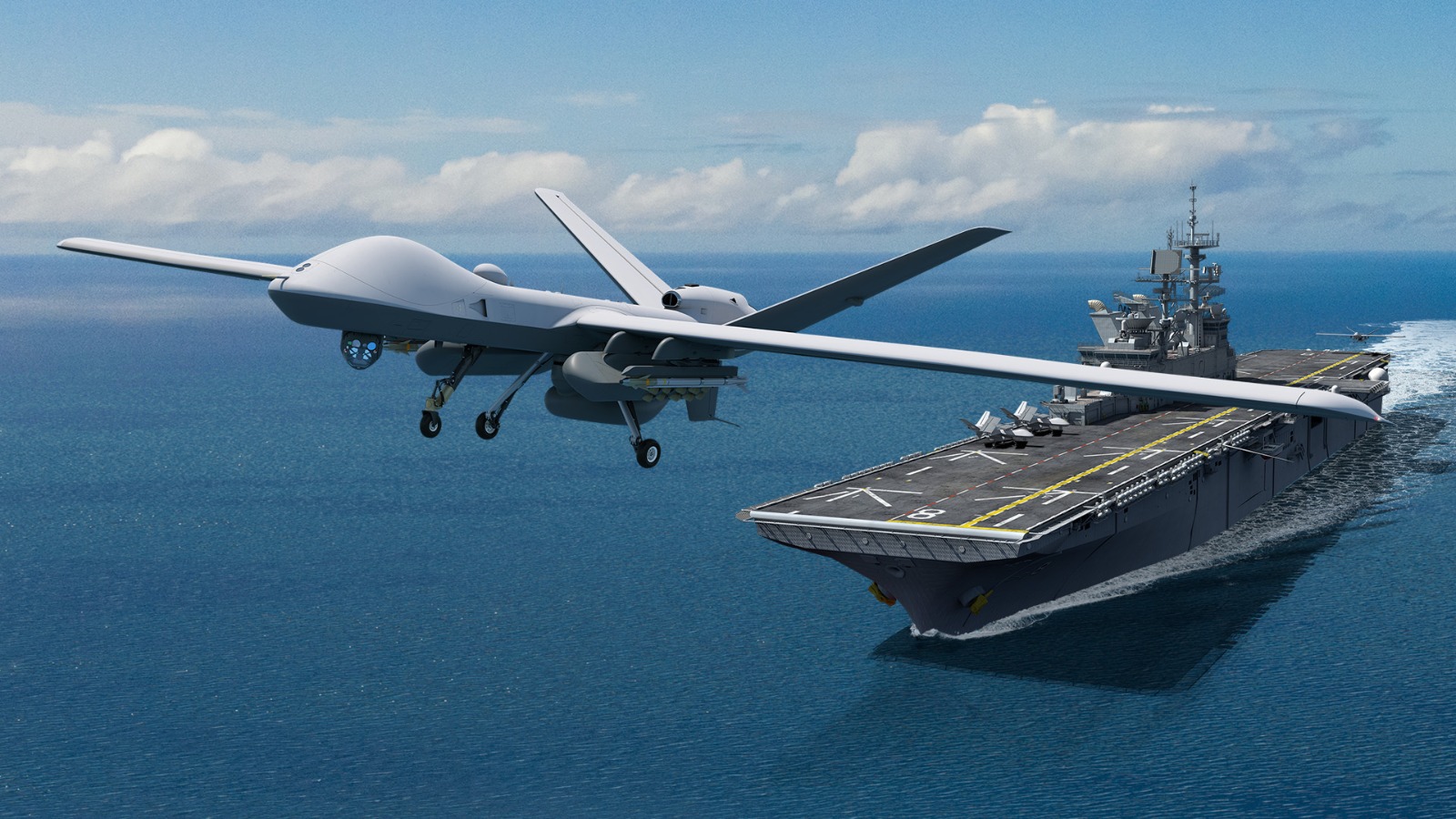
In the recent Iran War, as many as 24 MQ-9 Reapers were shot down, costing the USAF over US$800 million. Even in the Yemen operation last year, the Houthis were able to shoot down seven Reapers.
The new requirements suggest that the Pentagon has accepted that, in future combat, operational losses of such UAS cannot be avoided, and hence a shift toward quantity over quality.
Testifying before a Senate Armed Services Committee hearing on May 12, Maj. Gen. Christopher Niemi, the acting head of Air Force Futures, said that a new requirements document for an MQ-9 replacement had been approved.
“We believe what is possible is to take advantage of modern manufacturing technology so that we could buy something that is more flexible, lends itself more to open architecture, is more easy to produce in mass numbers, and then ultimately you could use in a more attritable way,” Niemi said.
The requirements document approval comes a month after the US Air Force surveyed industry for an attritable ISR UAS.
Potential attributes listed in the survey are a range of up to 1,500 km with 20-hour endurance. Attritable was defined as an aircraft that can perform 100 missions with a low-to-medium acquisition cost.
“Operators desire low-cost, fast-to-field, fast-to-deploy airborne ISR mass to increase mission flexibility and mission surging,” the market survey notice, released in April, said.
The US Air Force now operates more than 130 MQ-9As, enough to meet the operational requirement for 56 “combat lines” of deployable aircraft, an Air Force spokesperson told Aviation Week.
The Air Force plans to spend US$1.56 billion in fiscal 2027 to maintain the 56 combat lines, but long-term spending plans include no funding for the MQ-9A beyond fiscal 2027.
The industry has been waiting for an MQ-9 Reaper successor for many years now. The USAF requirements suggest that the new UAS is envisioned as less survivable than the Reaper, but it is also a silent acknowledgment of the harsh realities of the modern battlefield, especially against near-peer adversaries, where operational losses cannot be avoided.
- Sumit Ahlawat has over a decade of experience in news media. He has worked with Press Trust of India, Times Now, Zee News, Economic Times, and Microsoft News. He holds a Master’s Degree in International Media and Modern History from the University of Sheffield, UK.
- VIEWS PERSONAL OF THE AUTHOR.
- He can be reached at ahlawat.sumit85 (at) gmail.com