Automakers and aircraft manufacturers share a history that stretches back more than a century.
Many automakers have entered the production of aircraft, aircraft engines, components, and drones/UAVs, often spurred by wartime demands and by leveraging their shared expertise in engine engineering.
Big car brands such as Rolls-Royce, Renault, Ford, General Motors (GM), Chrysler, BMW, Alfa Romeo, Honda, and Fiat have been involved in aircraft engine and components production for years.
Brands such as Renault and Ford had delivered thousands of aircraft during World War II.
Swedish aviation major Saab had a flourishing car business for decades. Japanese Mitsubishi and Subaru started as aviation companies and remain active in both aviation and the automobile business.
Meanwhile, Turkish drone company Baykar started as a car garage company in Istanbul in the 1970s.
Given this shared history, it is no wonder that automobile companies have often taken inspiration from fighter jet cockpits to revolutionize their car design philosophy.
For instance, Lamborghini’s ‘red flip-cover start button,’ copied directly from aircraft and resembling a fighter jet’s missile launch button, has become the identity of the iconic supercar maker.
You have to flip up the red safety cover, exactly like aircraft weapon switches, before pressing the start button.
This feature is found in the Lamborghini Aventador, Huracán, Revuelto, Urus, and some special editions.
Even though the ‘red flip-cover start button’ offers little practical benefit, the feature has now become synonymous with Lamborghini cars, and the automaker believes that its dedicated users are unlikely to ever get tired of this feature even in the age of digital touchscreens.
The Italian supercar maker believes that this red flip start button evokes a certain emotion whenever drivers start their vehicles.
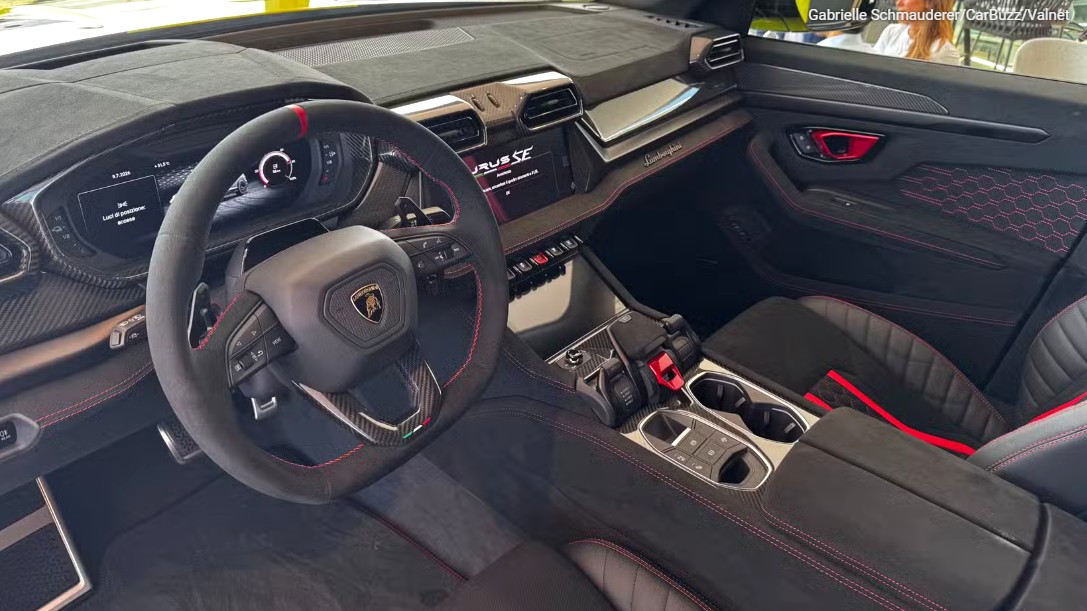
Combined with Lamborghini’s roaring and heavy engine throttle sound, this gives its riders a unique experience, akin to launching a missile from a fighter jet.
The feature was first introduced in Lamborghini’s Aventador back in 2011.
Speaking with CarBuzz earlier this week, Lamborghini’s design director Mitja Borkert said the start/stop switch found in the Temerario, Revuelto, and Urus creates “the right amount of emotions,” even though it makes the starting sequence a little slower.
Supercar performance has become easy to replicate with the rise of hybrid motors and cheaper performance parts, but Lamborghini knows that speed isn’t all that customers look for.
“For sure, there is a faster way to start the car, but is it fun?” Borkert asked.
“I think we are creating the right amount of emotions, and I think that belongs on such a car.”
However, some critics believe that this process could become a little tiresome when you have to do it over and over again.
Borkert, however, doesn’t think so.
“I don’t think so,” Borkert said, adding, “In the kitchen, you want to do something with quality. If you’re going fast, it’s not as enjoyable as when it takes a little bit of time. You need to feel a little bit involved.”
Sitting next to the latest Lamborghini Urus SE Performante at the Goodwood Festival of Speed, Borkert was keen to share that the theme is consistent across all three Lamborghini models, which brings synergy and familiarity for those with multiple Lamborghinis.
“We have the same philosophy in our supercars so that when you take your precious car out on the weekends, you’re not confused. You have an architecture that integrates you like a pilot.”
Borkert believes that features like these also make Lamborghini stand apart from its competitors.
These small physical elements remind the driver they are in a Lamborghini, even when they’re driving on electric range in the Revuelto.
Moreover, as more and more automakers replace physical switches with digital screens, Lamborghini sticking with its same old design philosophy will make its customers rejoice, he said.
“We are not the champions of screen sizes, but we have the right sizes to provide the modern visualization the driver or the pilot needs. We always keep our iconic keys, like the start/stop button,” Borkert said. When you step into a Lamborghini, you know you’re stepping into a Lamborghini – nothing else.
However, Lamborghini is not the only automobile maker that has taken inspiration from cockpit designs.
Automobile Interiors That Were Inspired by Cockpit Designs
Tesla’s Aircraft-Style Yoke Steering Wheel: Tesla borrowed this idea from airplane yokes and Formula 1 cars. Instead of a round wheel, it’s a rectangular “yoke” for a more pilot-like feel.
In a Joe Rogan interview, Elon Musk noted that “they use a yoke in Formula One.” He has also described future versions of Tesla as working “like the way aircraft and modern jets are controlled.”

However, Tesla says that the rectangular yoke also offers some practical advantages, such as an unobstructed view of the instrument cluster and the road ahead and a more futuristic, immersive feel.
Musk has famously called conventional round wheels “boring” and said they block the screen.
With Tesla’s success, many iconic brands such as the Lexus RZ, Mercedes-Benz, and MG Cyberster have adopted similar Yoke-style steering wheels.
Chevrolet C8 Corvette’s Fighter-Jet-Inspired Cockpit Layout: Chevrolet designers openly said the C8 Corvette’s interior was inspired by fighter jet cockpits, low dashboard, controls wrapped around the driver, and a very pilot-centric feel.
Chevrolet design team studied jet cockpits, where controls “wrap around” the pilot. This led to the long, sloping vertical strip of physical buttons running down the high center console, creating a driver-enveloping “cockpit” that partially separates the driver and passenger, much like an aircraft.
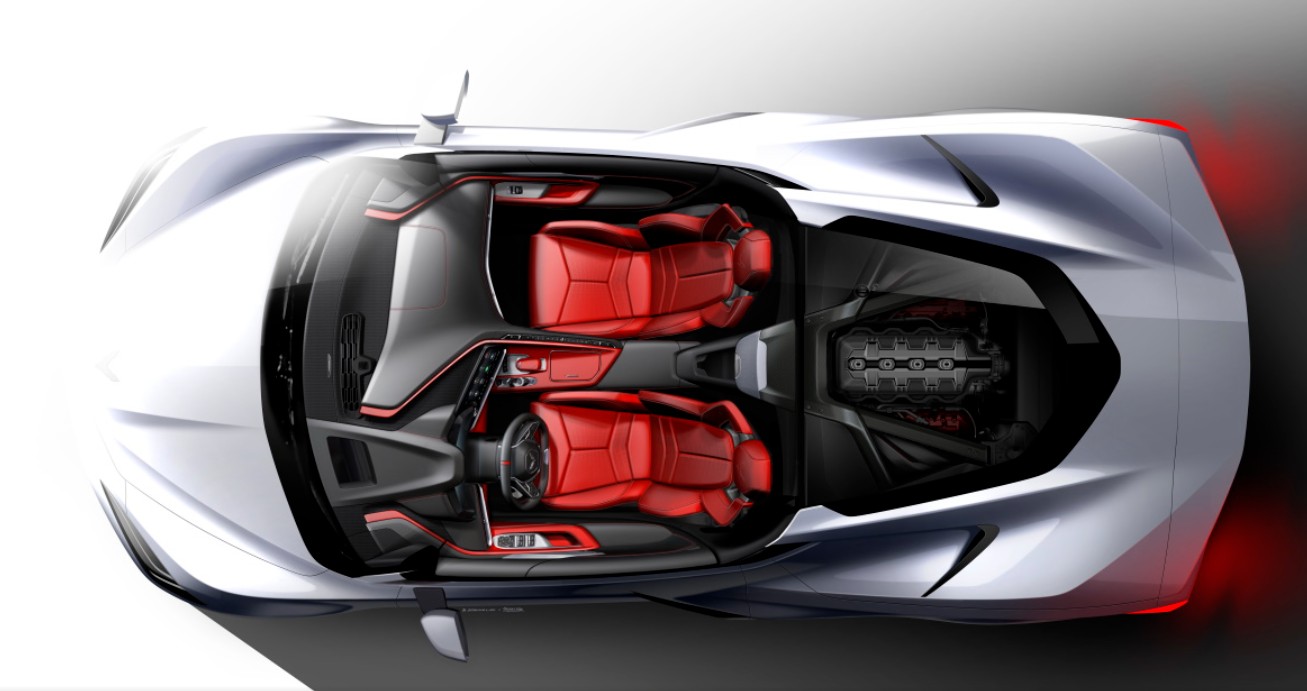
In fact, its exterior design also drew heavily from modern fighter jets, such as the F-22 Raptor and F-35 Lightning II, with a canopy-forward stance and aggressive proportions. Corvette has a long history of aircraft inspiration. Many astronauts owned earlier generations.
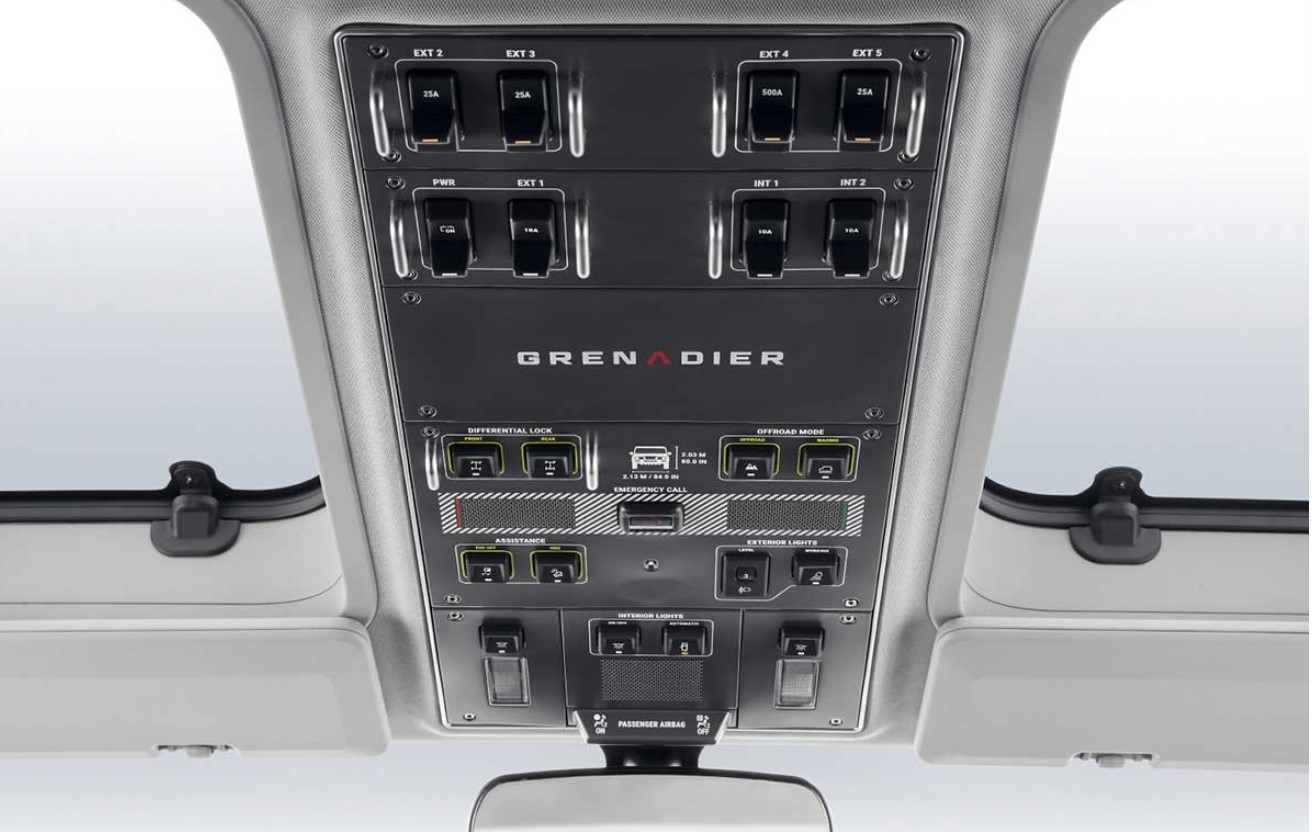
Airplane Ceiling Panels-Like Overhead Toggle Switches: The Ineos Grenadier placed many switches on the roof, just like in aircraft cockpits and military vehicles.
Tata Harrier Handbrake: Sometimes, cockpit-inspired design features look great, but aren’t received well due to large size or ergonomics.
India’s Tata Harrier’s handbrake was intentionally designed to look like an aircraft thrust lever. Tata officially described it as an “Aero-throttle styled” parking brake lever. Reviewers noted that the handbrake was deliberately designed to look like an aircraft thrust/throttle lever to give the cabin a more “cockpit-like” feel.
Though it looked distinctive, unique, and aesthetic, many users complained that the handbrake took too much space in the central console, interfered with the cup holders, felt awkward to operate, and criticized it for its poor ergonomics.
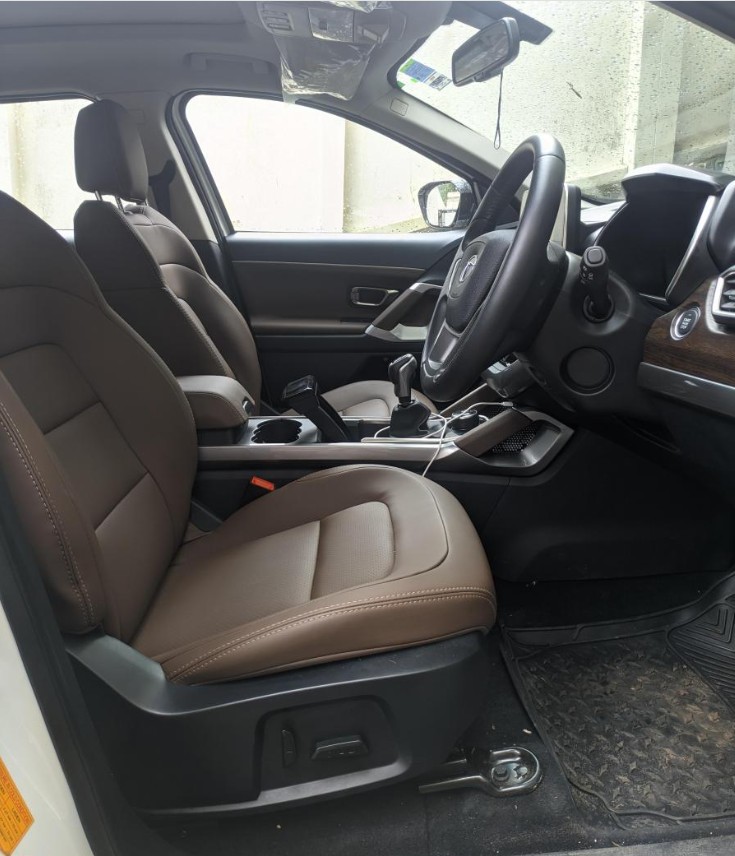
Therefore, from 2023 onwards, Tata replaced it in many of the new variants with a conventional electronic parking brake button + Auto Hold. The aircraft-style lever was discontinued.
Given the long association between automobile makers and aviation companies, it is only natural that car designers will adopt certain aircraft features to give the car a fighter jet cockpit feel.
However, such features must be adopted carefully, as they should not interfere with the overall design philosophy of the car’s interiors and must be easy to operate.
- Sumit Ahlawat has over a decade of experience in news media. He has worked with Press Trust of India, Times Now, Zee News, Economic Times, and Microsoft News. He holds a Master’s Degree in International Media and Modern History from the University of Sheffield, UK.
- He can be reached at ahlawat.sumit85 (at) gmail.com