When Iran downed an F-15E Strike Eagle fighter jet in April 2026, two US Air Force (USAF) aviators ended up behind enemy lines. While one of them was pulled out within hours, the other spent nearly two days until one of the most complex rescue operations in recent US military history got him home.
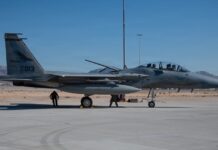
Nearly five weeks into the war, Iranian forces struck a US Air Force F-15E, call sign “Dude 44,” with a shoulder-fired missile on April 3, 2026.
Following the hit, the pilot (Alpha) and weapons systems officer (Bravo) ejected and parachuted into a mountainous desert region, landing about five miles apart.
Although the USAF rescued the pilot in a matter of hours, Bravo went missing, triggering a massive combat rescue operation, which eventually ended in his extraction.
In an interview with CBS 60 Minutes, Dude 44 Bravo has revealed details about the harrowing experience of being shot down, surviving, and finally being rescued all within a span of two days. In addition, the US declassified and released video footage of the high-risk combat search-and-rescue (CSAR) operations that recovered both crew members.
From Dude 44 Bravo’s Perspective
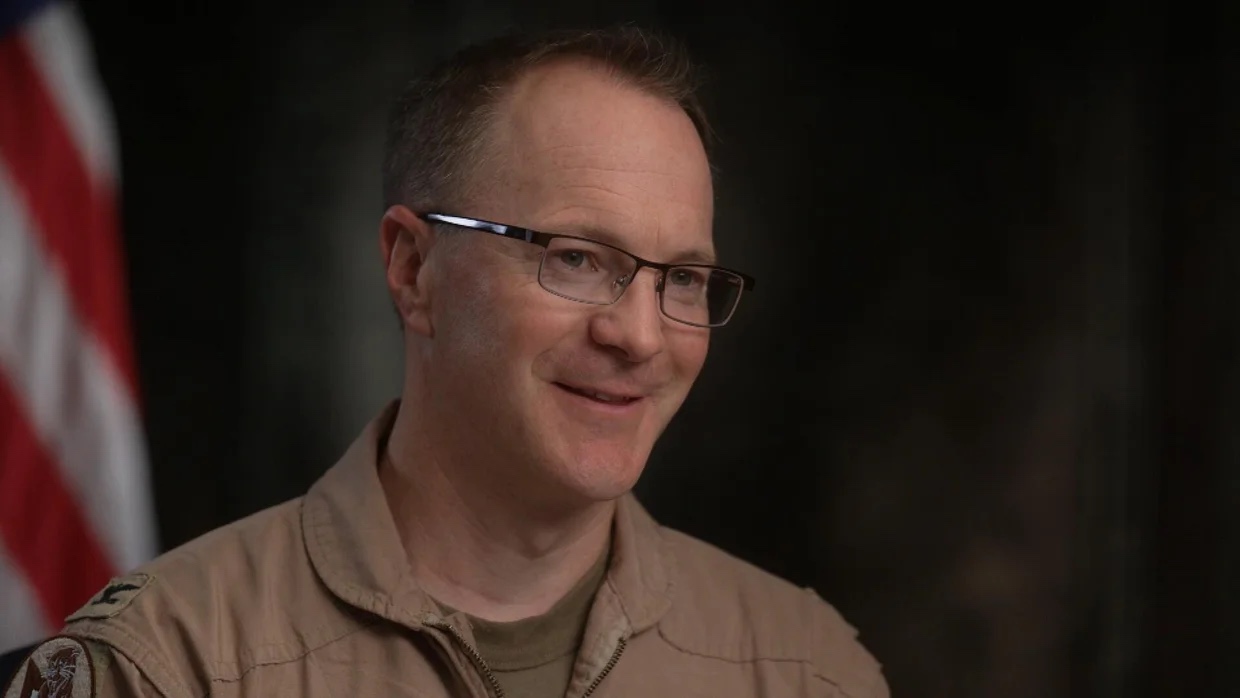
Bravo described the missile impact as feeling “like a freight train” in a conversation with Norah O’Donnell. “We do all we can to try to save the aircraft. It was evident that that wasn’t possible. And soon thereafter, we ejected and found ourselves floating over the heart of Iran,” he stated, adding that Alpha’s quick decision-making saved both their lives.
However, Bravo’s ordeal began at ejection as the missile that struck the jet had damaged his parachute. “At one point when I looked up and saw no parachute, that was the most terrifying thing I’ve ever seen,” he said. “So I paused, right then. And I prayed, ‘Lord, your will be done. But if I’m getting through this, I need help.’”
When asked if the experience was akin to a free fall, Bravo said, “Free-falling is a good way to put it. I wasn’t focused on the speed at which I was falling,” Bravo said. “I was instead focused on trying to correct the problems that were in front of me and doing anything I could to unfurl or pull pieces of the parachute loose. “We’re trained to work through problems, not only through the ejection sequence, but in any survival scenario and with considerations for parachute malfunctions,” he added.
He suffered a broken back, arm, and shoulder, a sprained ankle, and cuts and scrapes to his head and face, and told O’Donnell that his survival was a “miracle.” However, he added, “I had injuries, but we all train to adapt and overcome the things that we’re faced with. I moved as quickly as I could, despite the injuries, away from the place that I landed.”
MUST WATCH: The incredible true story of the U.S. Air Force officer shot down in Iran, his heroic rescue, and his faith that sustained him.
The greatest military in the history of the world.@60Minutes pic.twitter.com/syxehQFqmO
— Rapid Response 47 (@RapidResponse47) September 14, 2026
Iranian forces immediately began searching for both airmen, placing a bounty on their capture, as the EurAsian Times had also noted at the time.
Gen. Dan Caine, Chairman of the Joint Chiefs of Staff, told 60 Minutes that there was clear intent to seize the downed personnel. Meanwhile, Adm. Brad Cooper, CENTCOM commander, noted: “We were tracking Iranian forces like BBs. There were about 1,500 within a 10-mile radius, and we were watching them very closely.”
Six hours after the shootdown, U.S. forces launched a daylight combat rescue for Alpha. A 21-aircraft package — including A-10s, HC-130s, and rescue helicopters — entered Iranian airspace to recover him. Declassified Pentagon video shows two of those helicopters making the pickup under fire.
This is declassified video of the risky daytime raid to get Alpha, the pilot who was shot down over Iran. The U.S. deployed 21 aircraft for the mission. https://t.co/TiHYEpUxYq pic.twitter.com/RB2hgSiUuT
— 60 Minutes (@60Minutes) September 14, 2026
Bravo had landed in a valley flanked by cliffs. He climbed a 7,000-foot ridgeline despite his injuries. “Never let a lack of motivation put you on Iranian TV,” he told the correspondent. “I was focused on things like getting away from the enemy, finding the right place to communicate, finding the way to hide or defeat the ways that the enemy might track me.”
The US forces later reported coming within a few hundred meters of his position at times.
Furthermore, he told the interviewer that he delayed using his radio despite being struck behind enemy lines. “I had communication equipment with me, but I did not immediately take the opportunity to communicate. Where I found myself, I thought the priority should be getting away from that spot before someone else started showing up to look for me.”
On the first night, he transmitted: “I’m hurt, I’m moving” and “God is good.”
After 24 hours, the USAF launched a massive Combat Search and Rescue (CSAR) operation to recover the missing pilot even as the CIA ran a parallel effort involving specialized location technology and deception operations to mislead Iranian searchers.
Rescue forces landed at a temporary desert airfield in larger aircraft, then deployed smaller “Little Bird” helicopters to reach Bravo on the ridgeline. The declassified footage shows Air Force pararescue specialists (PJs) flanking him. “The moment a PJ showed up to me on that ridgeline was one of the greatest moments of my life. And I don’t know how to say it any more clearly than that. Thank you for all that they did,” Bravo said.
On the return, one aircraft’s landing gear became stuck in the sand. Bravo and more than 90 special operators were extracted by a covert Air Force unit. The stranded aircraft was later destroyed to prevent it from falling into Iranian hands.
First on 60 Minutes: Newly declassified video shows service members from U.S. Joint Special Operations Command rescuing Bravo, one of the two U.S. Air Force officers shot down over Iran in April. Bravo was stranded for two days – alone and badly wounded, behind enemy lines.… pic.twitter.com/jAfLa5tfL7
— 60 Minutes (@60Minutes) September 14, 2026
Speaking to O’Donnell, Bravo said he never doubted they would be recovered. “It’s what we do,” he said. “I have great faith in my creator. And second only to that is my faith in the men and women of the United States military.”
While Bravo’s rescue ranks among the most complex of its era, it continues a tradition of high-risk CSAR missions.
Earlier US Military CSAR Missions
On January 21, 1991—the initial days of Operation Desert Storm—Lt. Devon Jones was flying an F-14 (call sign Slate 46) when his aircraft was hit by an Iraqi SA-2 surface-to-air missile over central Iraq while returning from an escort mission.
Jones landed roughly 130–150 miles behind enemy lines in the Iraqi desert. To survive and avoid capture, he spent about eight hours on the ground digging a hide site.
“About 0900, I saw something blue and cylindrical, two miles away, like a parked car. As I approached it, I realized it was some sort of tank, maybe 20 ft long. It was time to stop and do something, so I went to a little wadi area, found a little mound, and started digging with my hands. I took out my survival knife. The dirt was neither hard nor soft, and I started digging a hole with my knife. I dug for an hour and ended up with a hole 4 ft long and 3 ft deep. My hands were blistered and bloodied, but it was a pretty good-sized hole, about 1,000 ft cast of that blue, metallic tank,” he later narrated.
Eventually, a coordinated combat search-and-rescue package involving A-10 “Sandy” aircraft for threat suppression and on-scene control and the MH-53J Pave Low helicopters from the Air Force’s 20th Special Operations Squadron located and extracted him.
Jones was recovered by the helicopter crew—marking the first successful CSAR mission of the Gulf War and the first since Vietnam
Captain O’Grady was flying an F-16C to enforce the no-fly zone over Bosnia during the Bosnian War was hit by a 2K12 Kub missile on June 2, 1995.
As soon as he touched down, he packed his survival kit and ran into the nearby woods even as he was pursued by the Serbian paramilitary forces. He evaded Serbian forces for six days, surviving on limited supplies and even ants and plants. On the sixth night, he established radio contact, as the EurAsian Times detailed in a previous report.
On the sixth night, O’Grady finally established radio contact. Finally, two US Marine CH-53E Super Stallion helicopters from the 24th Marine Expeditionary Unit flew far into Serb territory early on June 8, supported by AH-1W Cobra gunships, Harriers, and other aircraft, and extracted O’Grady despite the odds stacked up against them.
On the night of March 27, 1999, during NATO’s Operation Allied Force, USAF pilot Lt. Col. Darrell P. “Dale” Zelko was flying an F-117A Nighthawk (call sign Vega 31) on a strike mission near Belgrade when his aircraft was hit by a Serbian S-125 surface-to-air missile, marking the first combat loss of a stealth fighter.
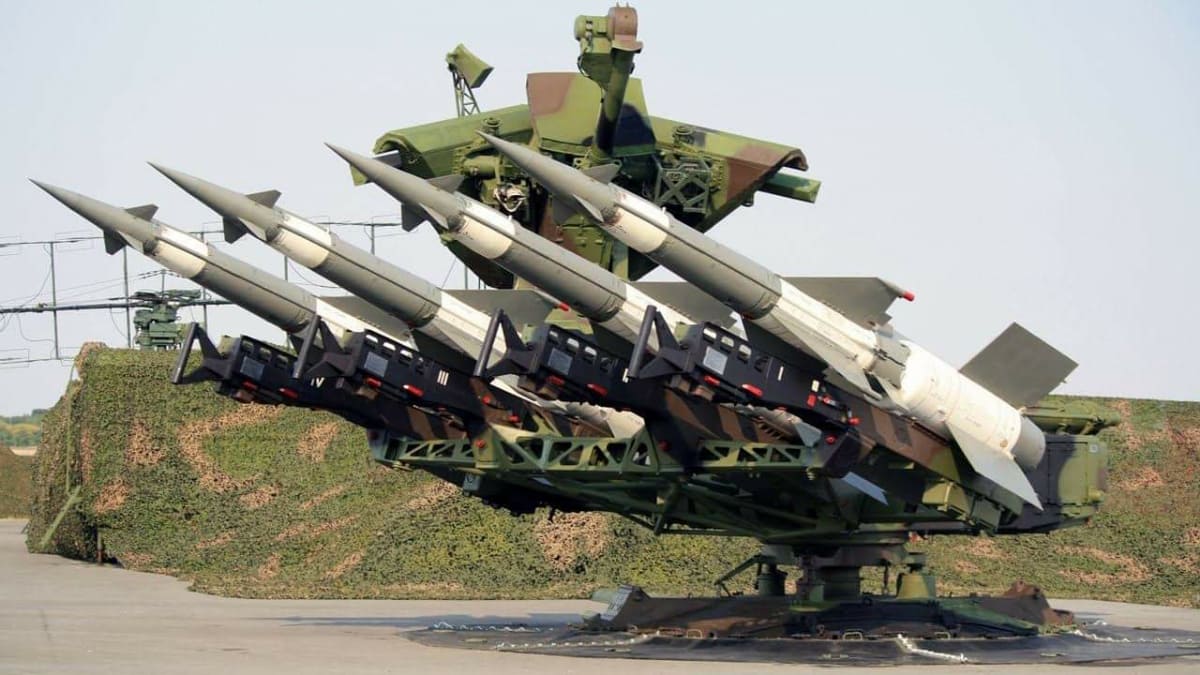
Zelko ejected safely into the frigid Serbian countryside near Ruma, immediately buried excess equipment, covered himself in dirt, and hid in an irrigation ditch.
In the rescue mission, roughly six to eight hours after ejecting, a U.S. Air Force combat search-and-rescue package of MH-53 Pave Low helicopters, supported by A-10s and pararescue specialists, landed nearby, extracted him in under a minute, and flew him to safety at Tuzla before he returned to Aviano Air Base.
On the night of May 2, 1999, during Operation Allied Force, Lt. Col. David L. Goldfein, commander of the 555th Fighter Squadron, was flying an F-16 on a SEAD mission over western Serbia when his aircraft was struck by a SA-3.
- Contact the author at sakshi.tiwari13 (at) outlook.com
- Follow EurAsian Times on Google News