In Taiwan, ever since the US’s Operation Absolute Resolve against Venezuela, everyone is asking the same question: can China pull off a Venezuela-style decapitating strike against the leadership of the self-ruled island state?
After all, the Communist Party of China (CCP) has never made a secret of its desire to unify Taiwan with mainland China, if necessary by force. In fact, reunifying the breakaway province of Taiwan with the mainland has been a stated goal of the CCP since 1949, the year it stormed to power in Beijing with the nationalists led by Chiang Kai-shek seizing the island of Formosa (Taiwan).
In recent times, the US has repeatedly warned that China may attempt to seize Taiwan by force as early as 2027.
There have been other ominous signs that China has been preparing for such a decapitating strike against the Taiwanese leadership for years.
For instance, the PLA’s Zhurihe military base in Inner Mongolia, used for training, includes mock structures of Taiwan’s Presidential Office Building, the Reserve Command building of the Ministry of National Defense, the Ministry of Foreign Affairs, and the Judicial Yuan.
Furthermore, during the Justice Mission 2025 military exercises around Taiwan in December, the PLA’s Eastern Theatre Command (ETC) published a short video, purportedly taken from an unmanned aerial vehicle, featuring the Taipei 101 skyscraper with the message “ready to visit Taipei”.
The US’s swift Venezuela mission, executed to perfection, has reignited such fears in Taiwan.
On January 5, Taiwanese Vice-Minister of National Defense Hsu Szu-chien warned that the PLA forces have been exercising for a decapitation operation against the Taiwanese presidency for years, and that the Taiwanese military has emergency responses ready to protect and evacuate the president in such an eventuality.
However, despite the fact that Beijing has entertained the idea of such a decapitating strike against the Taiwanese leadership for years, and despite the US setting a dangerous precedent by abducting the president of a sovereign country, such a PLA mission against Taiwan is highly unlikely, at least in the near future, for various reasons.
Why China Will Not Launch A Venezuela Style Operation Against Taiwan
Firstly, in Venezuela, the world’s strongest military was pitted against a third-rate, disorganised, and leaderless military force.
The US enjoyed a significant qualitative and quantitative capability gap against the Venezuelan military. Because of this wide capability gap, it was relatively easy for the US to neutralise command, control, communications, computers, intelligence, surveillance, and reconnaissance (C4ISR) systems, including critical communication channels, within the first hour of the conflict.
Due to the destruction of the C4ISR systems, the Venezuelan military could not effectively utilise even its limited resources.
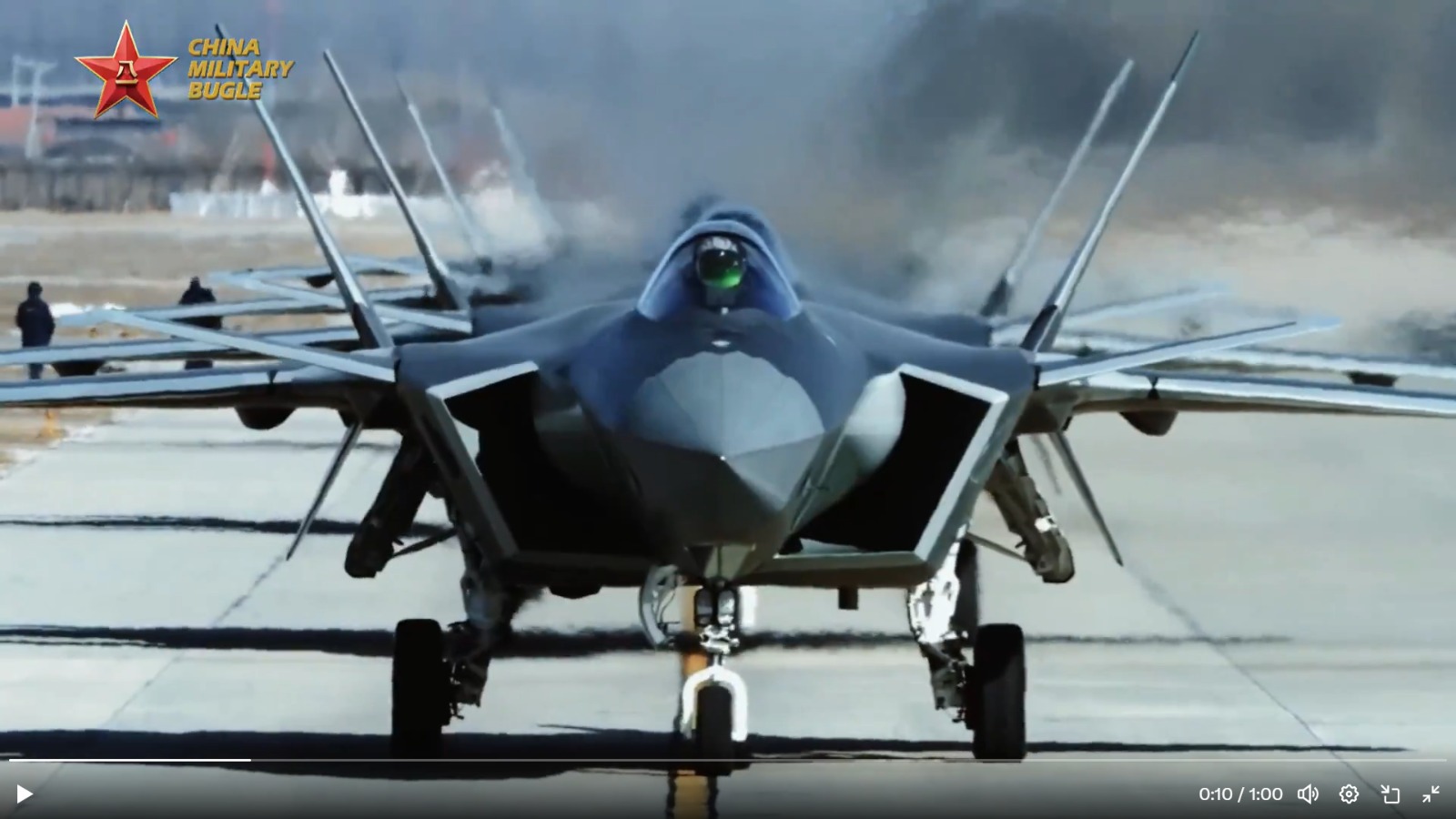
On the other side, the PLA, while rapidly modernising, still does not enjoy this wide capability gap against the Taiwanese military.
Furthermore, Taiwan will benefit from the US’s massive ISR capabilities, which could be a key differentiator.
There is also a massive capability gap between the Venezuelan and Taiwanese Air Forces.
For instance, while the Venezuelan Air Force had an active fleet of only 20-30 combat aircraft, primarily Su-30 MK2 multi-role fighter jets, the Taiwanese Air Force has a dedicated and well-maintained fleet of nearly 260 combat aircraft, including over 110 F-16s, many of them upgraded to Viper standard, and Mirage-2000s.
Taiwan has E-2K Hawkeye AEW aircraft (6 units) for superior situational awareness; Venezuela lacked a comparable capability.
Taiwan also operates nine combat-capable Patriot missile batteries as part of its layered air and missile defense network.
Taiwan’s Patriot force complements its indigenous systems, such as the Sky Bow.
Venezuela also had various air defense systems, such as the S-300, Buk-M2, Pantsir-S1, and Chinese JY-27A “anti-stealth” metric-wave radar, as well as JYL-1 3D surveillance radars.
However, Caracas failed to connect these systems to a unified network and a command-and-control structure, thereby creating a weak, layered air defense system.
In any case, the coordinated US kinetic strikes on the C4ISR network, coupled with electronic warfare, rendered most of these systems inoperable.
Another important factor is that, while a decapitating strike is tempting, it serves no long-term purpose for Beijing.
The US was not interested in regime change in Venezuela or occupying the country. In fact, after abducting President Nicolas Maduro, the US left most of the regime intact.

For China, however, the ultimate goal is full and final reunification of Taiwan with mainland China.
Thus, a decapitating strike without corresponding military action is useless for Beijing.
In fact, such a military action against the Taiwanese leadership will further rally anti-China sentiment in Taiwan.
Furthermore, Venezuela was effectively friendless, both within the region and globally. Its only friends were Russia and China. With Moscow already overstretched by the Ukraine War, Beijing was the only country that could have come to Caracas’ rescue.
However, that is not the case with Taiwan.
It is supported by the US. Recently, Japan also made strong statements supporting Taiwan’s independence and sovereignty, effectively signaling that Tokyo will stand by Taipei if Beijing attacks.
Unlike Beijing, which has virtually no military presence in Latin America, the US has a string of military bases in the region, including in Japan, South Korea, Guam, and the Philippines.
The U.S. Navy’s nuclear-capable USS George Washington (CVN-73) is permanently forward-deployed in Japan. The US has also deployed its most advanced stealth fighter jets in Japan.
A coordinated response by the US and Japan, perhaps with the help of other regional allies, is sufficient to blunt the chances of a swift, decapitating mission by China in Taiwan.
And, perhaps, most importantly, China should not lose sight of the fact that Venezuela was a deeply corrupt system, where the regime was mostly loathed by its citizens.
This provided easy openings for the US intelligence services to penetrate the highest echelons of power in the country. It has been suggested that the CIA has infiltrated even the personal bodyguards of Maduro.
However, China cannot expect similar levels of corruption in Taiwan’s defense circles.
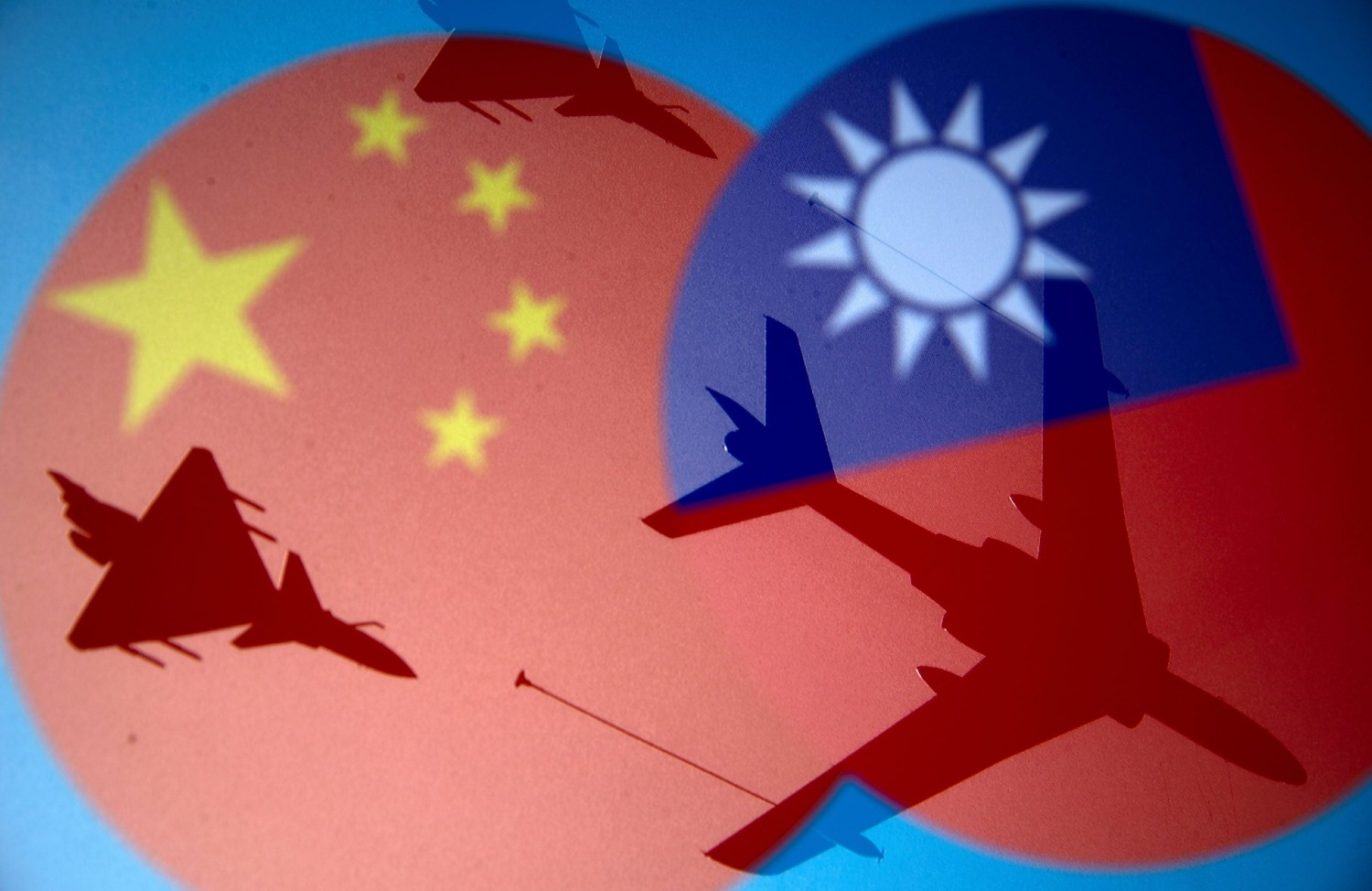
Any Chinese adventure will prompt a strong response from the Taiwanese armed forces. Furthermore, the Taiwanese military has been preparing for such an eventuality for the last seven decades.
Due to these factors, China will most likely try to persuade and coerce Taiwan and its citizens to convince them that joining the mainland is their only sensible choice, rather than engage in an active, high-intensity military confrontation.
China also understands that a prolonged conflict in Taiwan will provide countries like the US and Japan an opportunity to bleed Beijing through Taiwan, much like these countries are doing against Russia in Ukraine.
Considering these factors, there is very little chance of China considering a Venezuela-style raid against the Taiwanese leadership, at least in the near future.