“What’s in a name? That which we call a rose by any other name would smell as sweet,” argued Juliet in the famous lines from Shakespeare’s play Romeo and Juliet.
In geopolitics, however, names are everything.
Geographic nomenclature, whether for rivers, mountains, gulfs, or oceans, is rarely neutral. It quietly shapes perceptions of territory, sovereignty, and spheres of influence.
For instance, why should the Persian Gulf not be called the Arabian Gulf, since the gulf is bordered by Persia on the east and Arab countries such as Saudi Arabia, the UAE, Qatar, Kuwait, and Iraq on the west?
South Korea has always argued that the so-called ‘Sea of Japan’ is a colonial-era imposition and should instead be called the East Sea.
Similarly, the Philippines calls the ‘South China Sea’ the ‘West Philippine Sea’ to make the point that it has equal stakes in the region and that the waters do not exclusively belong to China, as Beijing often claims.
Therefore, how seriously should India interpret the U.S. Department of War’s decision to drop ‘Indo’ from the Indo-Pacific Command and revert it to the U.S. Pacific Command (USPACOM)?
Is the reversion from Indo-Pacific Command to USPACOM simply a symbolic restoration of historical nomenclature, similar to the renaming of the Gulf of Mexico to the Gulf of America, or does it indicate a deeper policy shift, such as reduced U.S. emphasis on the Indian Ocean Region (IOR) or a lower strategic priority for India in Washington’s broader Asia-Pacific approach?

Additionally, how might China interpret this development? Does it signal a renewed U.S. focus on strengthening security along the first and second island chains in the Western Pacific and South China Sea? Or does Beijing see it as evidence of Washington’s waning interest in the Quad and a broader retreat from the Indo-Pacific framework?”
Indo-Pacific to Pacific Command
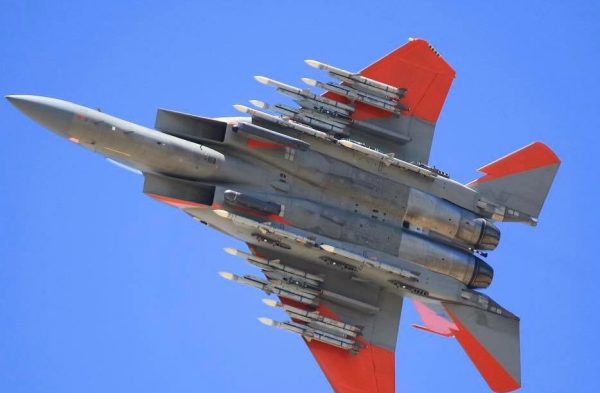
On June 17, the Department of War (DoW) restored the U.S. Pacific Command designation.
“The Department of War announced today that the U.S. Indo-Pacific Command (USINDOPACOM) will officially restore its name to the U.S. Pacific Command (USPACOM),” the DoW said in a statement.
“Originally established on January 1, 1947, by President Harry S. Truman, the command operated under the USPACOM banner for over 70 years, standing as the oldest and largest of the United States’ unified combatant commands,” it said.
The DoW explained the move as only restoring the older, historically accepted terminology.
“Restoring the legacy USPACOM designation honors the command’s deep historical roots, fostering a sense of pride and collective spirit among all who serve in the Pacific. From its critical role in establishing the post-WWII regional security architecture to its coordination of joint forces during the Korean War, the Vietnam War, and countless humanitarian operations, the USPACOM namesake carries decades of military heritage and enduring regional partnerships.”
Department of War Restores U.S. Pacific Command Designation.
CAMP H.M. SMITH, Hawaii — The Department of War announced today that the U.S. Indo-Pacific Command (USINDOPACOM) will officially restore its name to the U.S. Pacific Command (USPACOM).
Originally established on… pic.twitter.com/ZL0EL3q6Ph
— U.S. Pacific Command (@INDOPACOM) June 16, 2026
The statement also clarified that the change of name does not represent any change in the command’s responsibilities, commitments, or its Area of Responsibility (AOR).
“USPACOM’s vast area of responsibility—spanning from the waters off the West Coast of the United States to the western border of India—remains exactly the same.”
“The command’s fundamental mission and its unwavering commitment to maintaining a free and open theater alongside regional allies and partners are unchanged,” the statement added.
Though officially the name was changed on June 17, the Secretary of War, Pete Hegseth, had hinted at this change last month during his speech at the IISS Shangri-La Dialogue 2026 in Singapore, where he mostly referred to the “Pacific” region rather than explicitly using “Indo-Pacific” in his remarks.
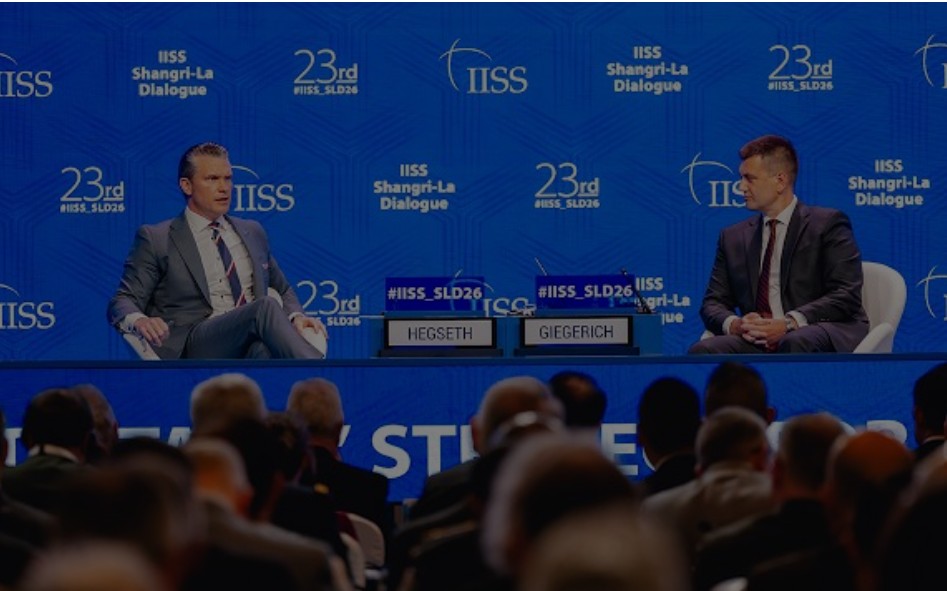
Even though the session was officially titled “United States’ Strategy for Peace in the Indo-Pacific”, Hegseth repeatedly used terms like the “Pacific,” “peace in the Pacific,” “Pacific allies and partners,” “balance of power in the Pacific,” etc.
The speech stressed U.S. commitment to the region, burden-sharing with allies (he specifically praised South Korea, Japan, the Philippines, and Australia), deterrence against China, and a “strong, quiet, and clear” approach.
Even more significant was that, in his 40-minute speech on the Indo-Pacific, Hegseth mentioned India only five times, and only in the context of South Asia.
Hegseth did not mention India even once when discussing U.S. allies in the Pacific, the U.S. Pacific strategy, or the proactive steps Washington is taking to strengthen the security of the Pacific region.
“And in South Asia, India is a critical anchor to hold the line. A powerful India, acting in its own self-interest, advances our shared goal of maintaining a balance of power across the region,” Hegseth said.
“India is modernizing its military to carry its share of the security burden, particularly in the Indian Ocean. It’s building out the heavy industrial and logistics capacity to sustain high-end military operations, including the ability to repair and maintain our shared platforms and support US Navy vessels operating forward in the theater.”
“We’ve also committed to pursuing co-production with India to advance capabilities like Javelin anti-tank guided munitions, real, tangible steps to improve the collective readiness of our forces,” he added.
This was the sum total of what Hegseth said about India in the speech.
It suggested that while the US sees India as an ally and is committed to supporting India’s defense modernization, for Washington, India’s security role is limited to South Asia and the Indian Ocean Region.
This represents a clear departure from the consistent U.S. policy pursued over the past decade.
Beginning with the Obama administration’s rebalance to Asia, and continuing through Donald Trump’s first term and the Biden administration, Washington consistently framed the Indian and Pacific Oceans as a single integrated strategic space, with India positioned as one of the central pillars for regional security.
This is when the term “Indo-Pacific” gained currency in geopolitical and strategic discussions and policy papers.
Short History of the Term “Indo-Pacific”
While the term “Indo-Pacific” has deep historical roots, it gained modern geopolitical prominence in the 2000s.
It was first used by the German geopolitician Karl Haushofer, who popularized it in works such as ‘Geopolitics of the Pacific Ocean’.
However, Indian Navy Captain Gurpreet S. Khurana is widely credited with introducing it in a contemporary geopolitical context.
In his January 2007 paper “Security of Sea Lines: Prospects for India–Japan Cooperation,” he used the term “Indo-Pacific” to better capture maritime security dynamics, especially given China’s growing dominance in the region.
His paper was influenced by former Japanese PM Shinzo Abe’s 2007 “Confluence of the Two Seas” speech in the Indian Parliament.
Australia adopted it in policy documents around 2012–2013; the US, under Obama, began referencing it; and it became central under Trump’s 2017 “Free and Open Indo-Pacific” and continued under Biden.
The US’s 2017 National Security Strategy, 2018 National Defense Strategy, and 2019 Indo-Pacific Strategy Report marked an inflection point in the evolution of the ‘Indo-Pacific’ concept.
The term highlighted the strategic connectivity between the Indian and Pacific Oceans, driven by trade routes, China’s rise, and the need to include India in broader Asian security frameworks.
The U.S. officially renamed U.S. Pacific Command (USPACOM) to U.S. Indo-Pacific Command (USINDOPACOM) on May 30, 2018.
However, the decision to revert to the US Pacific Command, now once again highlights Washington’s changing geopolitical priorities during Trump’s second term.
In fact, this name change should not be seen in isolation but in light of Washington’s waning interest in the QUAD.
During Trump’s first term (2017–2021), the Quadrilateral Security Dialogue (Quad) was revived and elevated from a dormant state to regular senior-official and working-level meetings (2017) and then to foreign-ministerial-level meetings (2019).
However, during Trump’s second term, the Quad has lost the urgency it once had in Washington’s eyes.
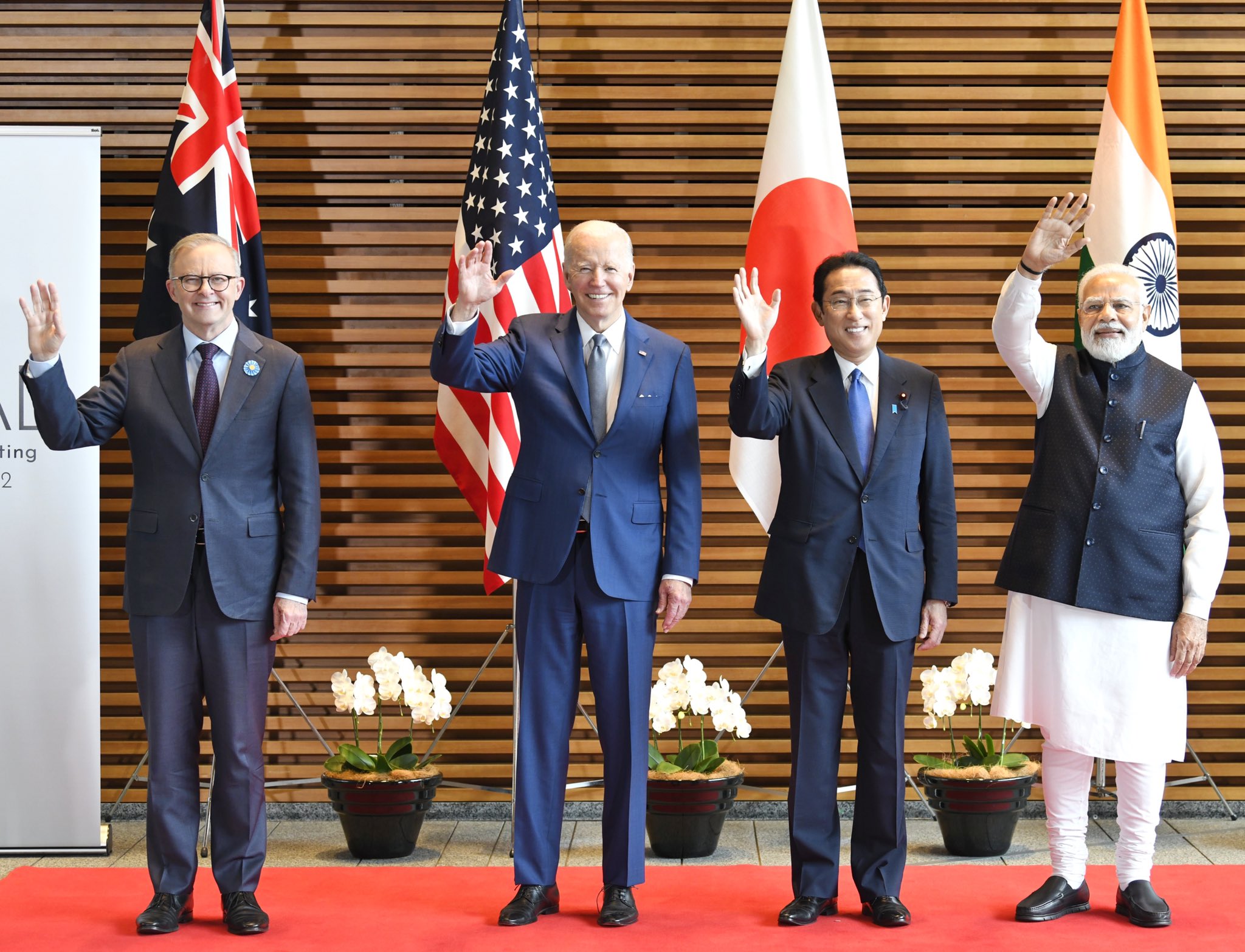
The 2025 Quad Leaders’ Summit (heads of state/government level), scheduled to be hosted by India in New Delhi (likely in November), has not yet taken place.
In fact, many are reading the renaming to USPACOM as further evidence of the US moving away from QUAD formulation.
Shashi Tharoor, an opposition Indian lawmaker and a former UN diplomat, called the development “the final nail in the coffin of the Quad?
One more nail in the coffin of the Quad? https://t.co/7QauDO0a3s
— Shashi Tharoor (@ShashiTharoor) June 17, 2026
Under Trump, the US is no longer interested in playing the role of the global security provider and is more interested in transactional business.
This sentiment, widely described by experts as a gradual U.S. withdrawal from the broader global security architecture, is also embodied in Trump’s ‘Donroe Doctrine,’ a 21st-century adaptation of the 19th-century Monroe Doctrine.
The Monroe Doctrine is a U.S. foreign policy established in 1823 that opposed European colonialism in Latin America and underscored U.S. primacy in the Western Hemisphere. It stated that any further European colonization or intervention in the Americas would be viewed as a hostile act against the United States.
The first US National Security Strategy (NSS) during Trump’s second term, released in December last year, said that after years of neglect, the United States will reassert and enforce the Monroe Doctrine to restore American preeminence in the Western Hemisphere.
Trump called this the ‘Donroe’ doctrine.
However, this same NSS also implicitly acknowledged that the US is no longer in a position to provide global security.
For instance, the report said that “After the end of the Cold War, American foreign policy elites convinced themselves that permanent American domination of the entire world was in the best interests of our country.”
“Yet the affairs of other countries are our concern only if their activities directly threaten our interests,” it said.
Furthermore, the report said that US elites badly miscalculated America’s willingness to shoulder global burdens forever, which the American people saw as having no connection to the national interest.
“They overestimated America’s ability to fund, simultaneously, a massive welfare-regulatory-administrative state alongside a massive military, diplomatic, intelligence, and foreign aid complex.”
“They placed hugely misguided and destructive bets on globalism and so-called “free trade” that hollowed out the very middle class and industrial base on which American economic and military preeminence depend.”
“In sum, not only did our elites pursue a fundamentally undesirable and impossible goal, in doing so they undermined the very means necessary to achieve that goal: the character of our nation upon which its power, wealth, and decency were built.”
There can hardly be a more concise acknowledgment that the US is slowly but surely coming to realize it can no longer dominate the world or serve as the global security provider.
Thus, the renaming of the U.S. Indo-Pacific Command back to U.S. Pacific Command should be viewed in the broader context of a gradual American retrenchment from multiple theatres, including Europe and parts of the Pacific, and a deliberate de-emphasis on the Quad.
All this must be music to China’s ears.
- Sumit Ahlawat has over a decade of experience in news media. He has worked with Press Trust of India, Times Now, Zee News, Economic Times, and Microsoft News. He holds a Master’s Degree in International Media and Modern History from the University of Sheffield, UK.
- VIEWS PERSONAL OF THE AUTHOR.
- He can be reached at ahlawat.sumit85 (at) gmail.com