The United States has sent two EA-37B Compass Call electronic attack aircraft to RAF Fairford in the UK, a key staging base for operations against Iran, as President Donald Trump considers a “massive attack” on the Islamic Republic
The aircraft, operating under callsigns FAZE21 and FAZE31, arrived at RAF Fairford on July 23 from Davis-Monthan Air Force Base in Arizona. The images of the EA-37B arriving at the British air base, often used as a staging base for US military operations against Iran, were posted on social media by plane spotters and aviation photographers.
The EA-37B is the newest Electronic Warfare system of the US Air Force (USAF) that made its combat debut during Operation Epic Fury in late March to early April 2026.
The latest deployment of these highly specialized EW aircraft coincides with renewed hostilities between the US and Iran after the ceasefire collapsed earlier this month. The US conducted its 13th consecutive day of strikes on Iranian targets on July 23, prompting retaliatory Iranian attacks on US allies, including Kuwait, Bahrain, and Jordan.
Meanwhile, Houthi rebels targeted Saudi ships in the Red Sea, opening another front and threatening the blockade of Bab al Mandeb.
#USAF United States Air Force
L3Harris EA-37B Compass Call II 2x#AE1436 19-5591 – FAZE 21#AE17CD 19-1587 – FAZE 31
Two EA-37s as FAZE 21/31 from Davis-Monthan Air Force Base are re-deploying this evening to the Middle East, likely via Bangor/Pease, and then the United… pic.twitter.com/IDVqselr9Z
— Armchair Admiral 🇬🇧 (@ArmchairAdml) July 22, 2026
The deployment of EA-37B comes as US President Donald Trump told Axios on July 23 that he is considering whether to unleash a “massive attack” against the Islamic Republic.
“I am considering a massive attack. Bigger than ever before. I am close to making a decision. We are all set for it,” the President stated. This has sparked speculation that the electronic aircraft has been deployed to support future operations against Iran.
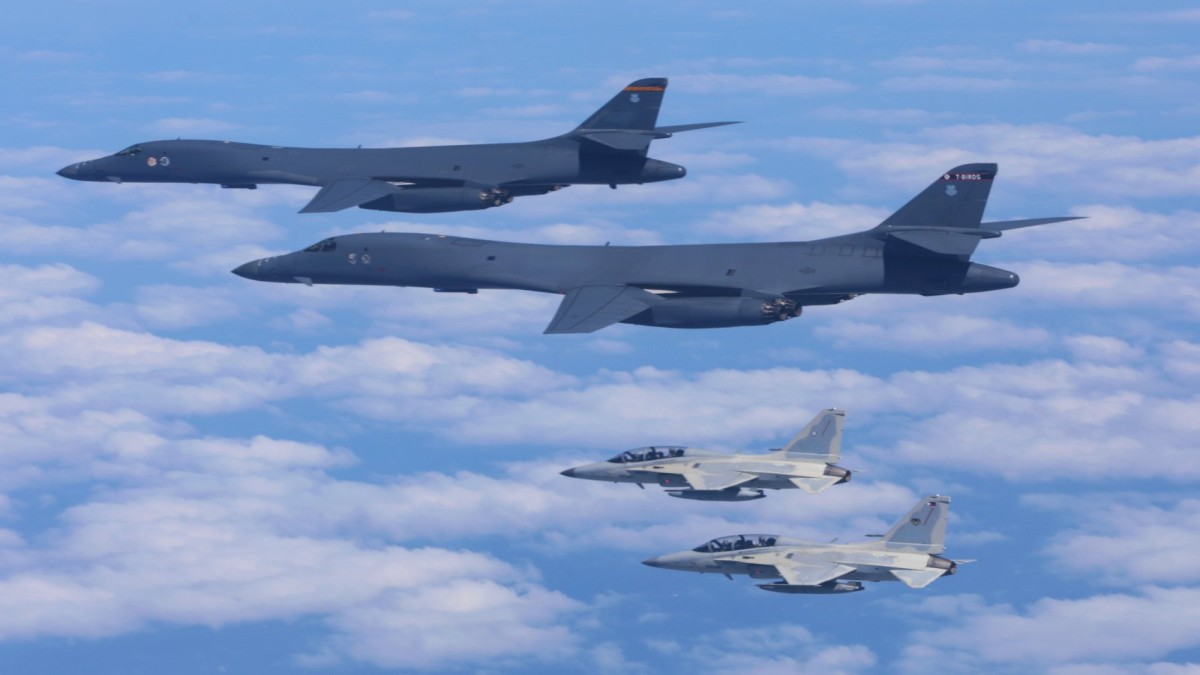
Earlier, the US military deployed a B-1 long-range bomber from RAF Fairford to hit Islamic Revolutionary Guard Corps (IRGC) targets.
Infuriated by the use of RAF Fairford, the IRGC warned the UK that any base used to facilitate attacks on Iranian territory would be considered a “legitimate target,” whereas the Foreign Ministry condemned it as complicity in aggression.
The arrival of the EA-37B, coupled with threats of further escalation by Trump, is expected to further heighten tensions in the region. Experts believe it is often the last resource deployed before major combat action is launched.
The EA-37B is the US Air Force’s modern electronic attack or electronic warfare (EW) aircraft, replacing the aging EC-130H Compass Call fleet.

Typically, Compass Call missions are tactical electromagnetic attack operations that disrupt enemy command-and-control communications, radar, and navigation systems to limit the adversary’s coordination, which is essential to enemy force management.
The EA-37B is based on the Gulfstream G550 business jet, which has been heavily modified with conformal antennas and advanced mission systems. It reportedly has an operational ceiling of 40,000 feet and a speed of 600 knots, or about 690 miles per hour.
The EA-37B can jam enemy communications, early-warning and acquisition radars, data links, GPS or navigation systems, and other electronic emitters. Additionally, it can support tactical air and ground operations by disrupting the adversary’s command and control, air defenses, and sensor networks.
It can also serve a secondary intelligence, surveillance, and reconnaissance (ISR) role, identifying, monitoring, and geolocating different types of emitters.
More importantly, though, the USAF earlier stated that the EA-37B will be able to employ its electronic warfare suite for more physically damaging attacks.
“If assets like EA-37B arrive, operations go beyond Tomahawk, and B-1/B-52 stand-off munition attacks, Patarames, an OSINT analyst focused on Iran, wrote on X. “After the F-15 was shot down, deep raids didn’t occur anymore. If the Compass Call arrives & F-22s are at Ovda, the USAF is preparing to engage seriously, should the order arrive,” he added
These aircraft will enhance US efforts to suppress Iranian air defenses, such as the S-300 and the formidable Bavar-373, disrupt IRGC command networks, degrade coastal radars, and protect strike packages, including bombers and tactical fighter jets.
In essence, the EA-37B will provide the US Central Command (CENTCOM) with non-kinetic electronic attack support for the ongoing precision strikes on military targets, drone storage, maritime capabilities, and infrastructure threats in or around the Strait of Hormuz—the epicenter of the latest conflict between the two sides.
This deployment is part of a broader US reinforcement of air and electronic warfare assets and signals Washington’s intent to maintain pressure on Iran.
Military Build-Up Continues
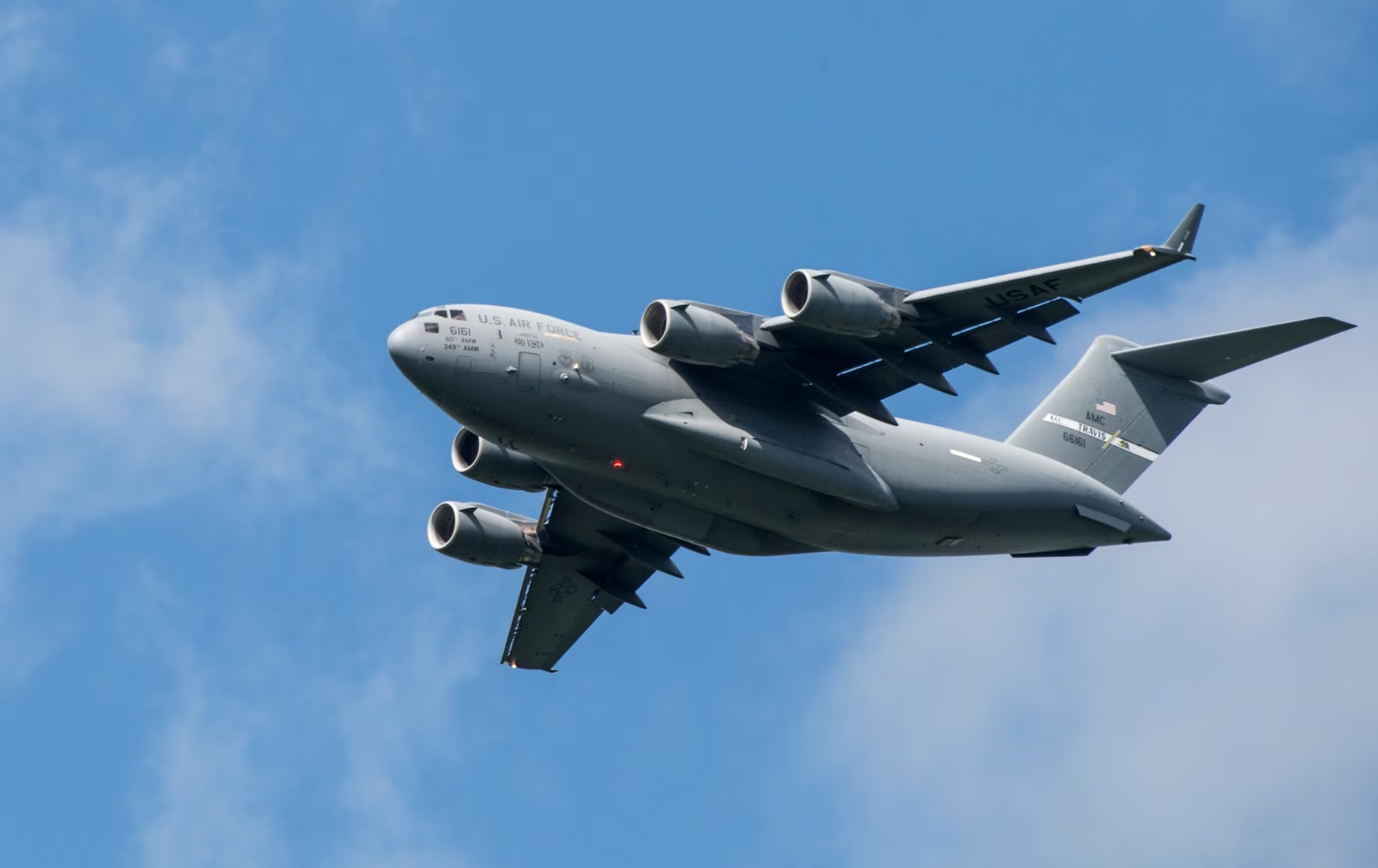
The EA-37B deployment is part of a larger reinforcement of US forces in the region. According to the latest open-source reporting, a full-scale air bridge has been activated, and dozens of cargo planes, including C-17s and other heavy-lift aircraft, are currently flying from European bases to the Middle East.
Furthermore, the buildup consists of fighters, long-range bombers, aerial refueling aircraft, and special operations forces. For example, about 12 F-16s were deployed from Spangdahlem Air Base in Germany to Muwaffaq Salti Air Base in Jordan, and F-35s from the 48th Fighter Wing at RAF Lakenheath in the UK have been moved to the Middle East.
Earlier this week, Israeli media reports hinted that about 14 US refueling aircraft arrived in Israel amid a fresh escalation in the war with Iran.
In addition, cargo planes have taken off from US bases used by special operations personnel to perform a variety of tasks, such as combat search and rescue. Simultaneously, about 150 medical staff have been dispatched to Germany’s Landstuhl Regional Medical Center, which serves as the primary center for treating US soldiers.
It is pertinent to note that the buildup currently underway is in addition to the tens of thousands of troops in the region, along with two aircraft carrier strike groups, 17 naval vessels, and a Marine expeditionary battalion
Some aircraft, including the F-22, F-15, A-10, and B-52, were previously withdrawn after an earlier phase of the conflict. It remains unclear whether they will be sent back on rotation amid heightened tensions in the region.
Former US Central Command leader and retired General Joseph Votel told the WSJ that the increase is not meant to signal that a major operation is imminent, but rather to give the President and Defense Secretary more flexibility.
Moreover, President Trump has issued several grave threats in the past, only to later withdraw them, which adds to the current uncertainty about the conflict.
Nonetheless, the deployment of the EA-37B is certain to stir up things in the region, where the Guards have vowed to fight the US.
- Contact the author at sakshi.tiwari13 (at) outlook.com
- Follow EurAsian Times on Google News