If anything, the just-concluded visit of Canadian foreign minister Anita Anand to India suggests that India and Canada have decided “to restore stability in the relationship” by drawing a “new road map”.
And in this road map, it seems that more than the factor of the Indian diaspora that has both good and ugly features, aspects that have played bigger roles happen to be bilateral trade and investment that includes oil, gas, and climate action; “refreshed collaboration” in higher education; and partnership on artificial intelligence.
If one scans through the 1200-word joint statement at the end of Anand’s talks with his Indian counterpart S Jaishankar, which was issued on October 13, the recent history of acrimony in the bilateral ties has been underemphasized. Emphasis has been on what India and Canada “will “ do in the future. As Jaishankar said, time “is to move forward with a positive mindset”.
Some of the important paragraphs of the “new road map” that were mentioned in the joint statement have been highlighted below:
1 – “The Ministers recognized that in the context of ongoing global economic uncertainty and rising geopolitical tensions, a strong and resilient Canada-India bilateral relationship is essential. Reviving this partnership will not only create opportunities for enhanced economic cooperation but also help mitigate vulnerabilities arising from shifting global alliances, ensure more reliable supply chains, and reinforce strategic stability in an increasingly complex international environment.
“The Ministers noted with satisfaction the substantial increase in bilateral trade, which reached $23.66 billion in 2024; and the expanding presence of Indian and Canadian enterprises in each other’s markets, generating jobs with significant potential for future growth”.
2 – “Acknowledging the pivotal role of energy transformation in meeting climate goals, enhancing energy security, and supporting sustainable economic development, the two sides reaffirmed their intention to support sector activities and deepen cooperation in advancing clean, secure, and equitable energy collaboration through the following activities:
-
Re-establish the Canada-India Ministerial Energy Dialogue, including the related Action Plan, at the earliest.
-
Promote two-way trade for LNG & LPG and investment in the oil and gas Exploration & Production sector, including clean technologies.
-
Collaborate on sustainable low-carbon fuels and technologies, such as green hydrogen, biofuels, Carbon Capture Utilization and Storage, and electric mobility—as well as strengthen supply chains, policy frameworks, and market access.
-
Exchange best practices on electricity system management to enhance grid safety, stability, and renewable integration.
-
Work together on emission reduction, environmental management, power sector digitalization, and disaster resilience.
-
Advance global energy efficiency process, including through multilateral fora such as the G20.
-
Promote dialogue among government, industry, and think tanks to identify how Canada’s mining expertise can provide India with critical minerals needed for energy security.
-
Welcome and appreciate ongoing discussions in civil nuclear cooperation in support of clean energy transitions.
-
Welcome discussions between India’s Department of Atomic Energy and Canadian uranium suppliers, from the standpoint of existing and proposed new mines.
-
Hold the first Critical Minerals Annual Dialogue on the margins of the Prospectors and Developers Association Conference in Toronto in March 2026.
3 – “Appreciating the role of innovation and technology in driving inclusive growth and global competitiveness, both sides agreed to deepen collaboration to unlock new frontiers in S&T, including AI and digital infrastructure. Early initiatives will include:
-
Relaunch the Joint Science and Technology Cooperation Committee.
-
Foster mutually beneficial partnerships to expand access to AI for everyone.
-
Encourage Canadian AI companies and researchers to participate in India’s forthcoming AI Impact Summit from February 19 to 20, 2026.
-
Explore opportunities for cooperation in digital public infrastructure.
4 – “Noting with satisfaction that people-to-people linkages are central to fostering mutual understanding and building long-term collaboration, both sides agreed to strengthen cooperation in education, tourism, cultural exchange, and professional mobility. Early initiatives in this regard will include:
-
Refreshed collaboration in higher education and research to reflect the increasingly deep talent pools and cutting-edge research in each country.
-
Emphasis on research partnerships in emerging technologies (such as AI, cybersecurity, and fintech), and to expand Canadian academic presence in India through overseas campuses.
-
Revitalized Joint Working Group on Higher Education as a means to further expand Canada–India academic networks and institutional ties.”
The importance of the above action plan is considerable, given the fact that India is Canada’s largest source country for most immigration categories, including 392,810 study permit holders with Indian citizenship in Canada in 2024.
As of the 2021 federal census, there are more than 1.8 million Canadians of Indian origin. That means there are more than 1 million non-resident Indians (NRIs with Indian passports) who work and study in Canada. An estimated 3,92,810 Indian students were studying in Canada as of 31st December 2024.
Similarly, the emphasis on energy in general and renewable energy like atomic power is noteworthy in the sense that a Nuclear Cooperation Agreement (NCA) was signed in June 2010 by the two countries that came into force in September 2013.
During Prime Minister Narendra Modiʼs visit to Canada (April 2015), the Department of Atomic Energy and M/s CAMECO Inc. signed an agreement for the supply of uranium ore concentrate to India, keeping in mind the relevant laws on nuclear safety and regulatory issues.
Of course, this road map was unimaginable a few months ago. Relations between New Delhi and Ottawa were strained for almost two years after then-Prime Minister Justin Trudeau accused New Delhi in 2023 of involvement in the killing of a Kahalistani separatist, Hardeep Singh Nijjar.
India denied Canada’s allegations of involvement in the murder and, in turn, accused Ottawa of fostering separatist groups on its soil.
This, in turn, resulted in worsening of the bilateral ties, which were marked by disrupted visa services, consulate closures, and stalled trade and investment.
But with the coming of the new Canadian Prime Minister, Mark Carney, things have changed. In June, Carney hosted Modi at the G7 summit in Kananaskis in the Canadian province of Alberta.
There, the two Prime Ministers had agreed to take calibrated measures to restore stability in the relationship and to pursue a constructive and balanced partnership grounded in respect for each other’s concerns and sensitivities.
Pursuant to this guidance, both sides initiated several steps, including the joint announcement of reinstatement of High Commissioners on August 28, 2025, meeting between the National Security Advisers of the two countries on advancing Canada-India security cooperation in New Delhi on September 18, 2025, and the agreement to continue senior official-level discussions on security and law enforcement cooperation, pre-Foreign Office Consultations between Secretary (East) and Canada’s Deputy Minister of Foreign Affairs in New Delhi on September 19, 2025, and a meeting between the two Foreign Ministers on the sidelines of the UN General Assembly high-level week in New York on September 29, 2025, and now the visit of Anand to India India from 12 – 14 October 2025.
It may sound ironic, but some credit is due to U.S. President Donald Trump for initiating the normalisation process regarding India-Canada relations. Until recently, the U.S. was the common strategic partner with booming cooperation on defense, security, trade, and investment. Trump’s second Presidency has changed all that.
America under Trump now has a new global security and economic recalibration that has badly affected the interests of Canada and India. Both now need more market access for their goods and services.
And both long for predictability in investment, technology, and commodities. Both want to reduce their dependence on the U.S. and diversify ties. And here they find the resources and capabilities to be mutually complementary and beneficial.
In fact, Canada’s official “Indo-Pacific Strategy” document, released in November 2022, had focused on five objectives: promoting peace, security, and resilience; expanding trade, investment, and supply chains; connecting people and communities; building a sustainable and green future; and acting as an engaged partner in the region.
Terming the Indo-Pacific, to which it also belongs, as “a new horizon of opportunity,” Canada, through this strategy, has identified India as one of the four focused areas, the other three being China, the North Pacific (Japan and Korea), and ASEAN (Association of Southeast Asian Nations).
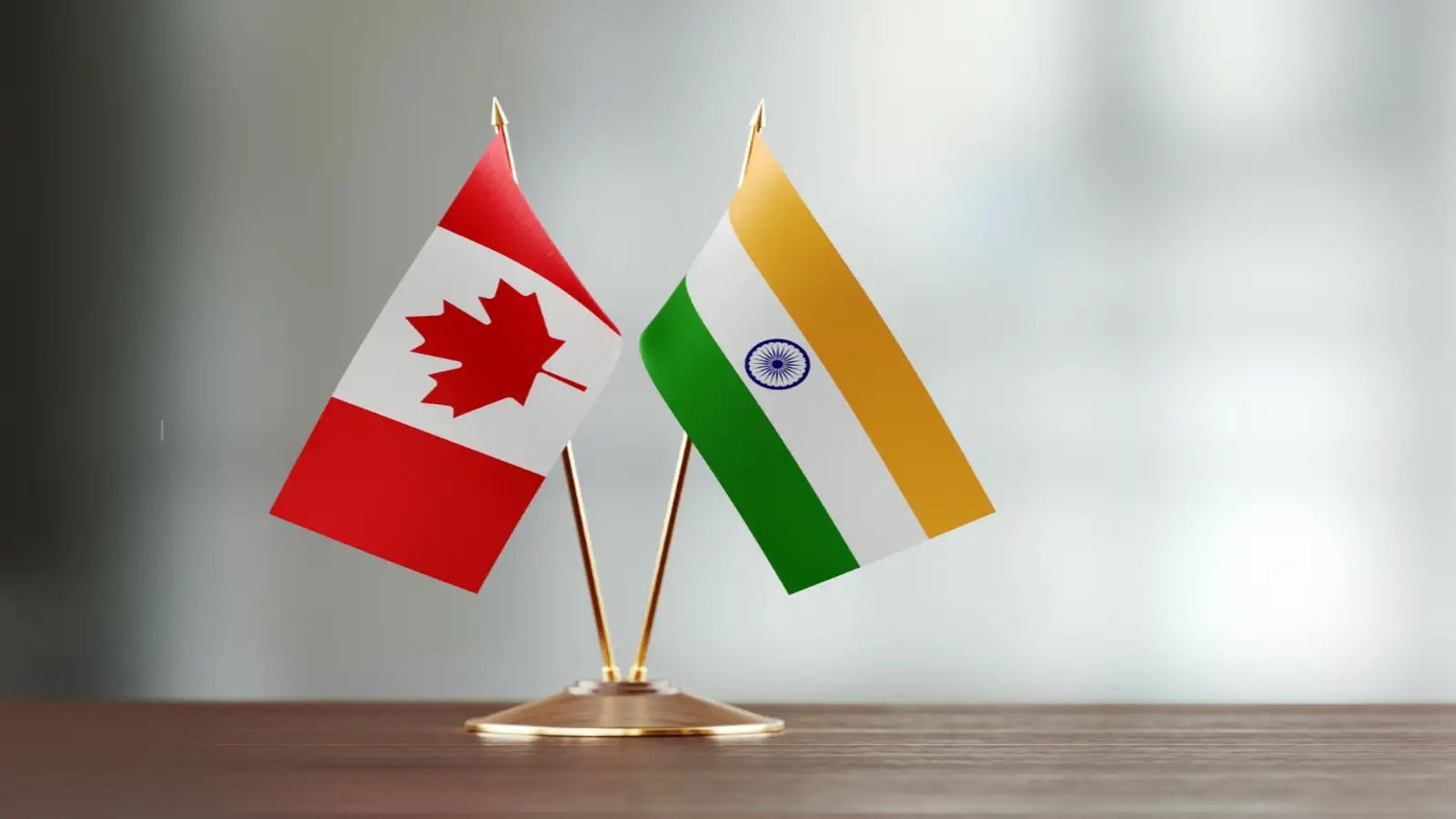
This document had said, “Canada and India have a shared tradition of democracy and pluralism, a joint commitment to a rules-based international system and multilateralism, mutual interest in expanding our commercial relationship, and extensive and growing people-to-people connections. India’s strategic importance and leadership—both across the region and globally—will only increase as India—the world’s biggest democracy—becomes the most populous country in the world and continues to grow its economy. Canada will seek new opportunities to partner and engage in dialogue in areas of common interest and values, including security”.
Both Prime Minister Mark Carney and Foreign Minister Anand have, in their recent interactions with the Press, highlighted Canada’s commitment to pursue the above Indo-Pacific strategy.
Consequently, the role of India in this strategy, which was totally diluted under Trudeau, needed a relook by the present government.
Another important factor behind this relook seemed to be changing public opinion in Canada toward India, of late. New data from the non-profit Angus Reid Institute, in partnership with the Asia Pacific Foundation of Canada, finds that Canadians believe – by a two-to-one margin (51% to 22%) – it was the “right move” to restore ties with India.
The above data also reveals that Canadians’ priorities in the relationship between Canada and India have also shifted in the wake of the economic upheaval caused by Trump’s tariffs.
When asked what should be most important to Canada in its relationship with India, Canadians are split evenly between saying the rule of law (52%, given Trudeau’s allegation of India interfering in Canada’s internal affairs by punishing Khalstani separatists) and trade opportunities (48%). Last year, the balance was much more towards the former (62%) than the latter (38%).
There are elements of truth that Trudeau had considerably dented India’s image among the Canadians, though it was India that had the grievance that he was soft on supporters of the Khalistan movement, which is banned in India but has support among a tiny section of the Sikh diaspora in Canada.
However, Anand’s trip, which was Canada’s first cabinet ministerial-level visit to India in two years, suggests that the Carney government will not allow anything on Canadian soil that threatens India’s security, unity, and integrity.
Trump has ‘unintentionally’ managed to get India-Canada relations back on track after helping restore very difficult India-China ties!
- Author and veteran journalist Prakash Nanda is Chairman of the Editorial Board of the EurAsian Times and has been commenting on politics, foreign policy, and strategic affairs for nearly three decades. He is a former National Fellow of the Indian Council for Historical Research and a recipient of the Seoul Peace Prize Scholarship.
- CONTACT: prakash.nanda (at) hotmail.com